1. Calculate
Choose your project scope and see the estimated price range.
Quote a 2026 unsecured personal loan monthly payment across credit tiers, terms, and purposes — then line up real offers from SoFi, LightStream, LendingClub, Upstart, Best Egg, Upgrade, and Discover.
Instant project estimate
The estimate is free. Additional details are optional.
Complete the project details and calculate to see a price range and next steps.
Clear next step
Choose your project scope and see the estimated price range.
Understand the cost drivers and what impacts your final quote.
Carry your scope into a local quote request if you choose.

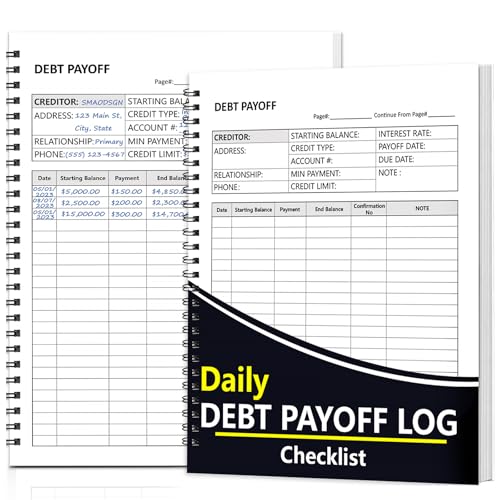

As an Amazon Associate, we earn from qualifying purchases.
Price as of Jul 24, 2026. Product prices and availability are accurate as of the date indicated and are subject to change. Any price and availability information displayed on Amazon at the time of purchase will apply.
As of April 2026, the overall average personal loan APR is 12.27% for a 700 FICO borrower on a $5,000 / 3-year loan, per NerdWallet and Bankrate rate surveys. Excellent credit (740+) unlocks the 6.5-12% band (LightStream starts at 6.49%, SoFi 7.99%, PenFed 6.09% with autopay). Good credit (670-739) lands 12-18% (Best Egg, LendingClub, Discover). Fair credit (580-669) pays 18-28% (Upstart AI-driven, Upgrade, Avant). Subprime under 580 tops out at 28-36% (LendingPoint, OneMain Financial) — 36% is the effective federal usury ceiling most state regulators enforce.
| Credit Tier | FICO Range | Typical APR | Sample $10K / 3-yr monthly |
|---|---|---|---|
| Excellent | 740+ | 6.5-12% | $307-$332/mo |
| Good | 670-739 | 12-18% | $332-$362/mo |
| Fair | 580-669 | 18-28% | $362-$412/mo |
| Subprime | Under 580 | 28-36% | $412-$454/mo |
Term is the second-biggest lever after credit tier. A $20,000 loan at 14% APR costs roughly $960/mo on a 2-year term, $684/mo on a 3-year term, $465/mo on a 5-year term, and $375/mo on a 7-year term. Every extension cuts the monthly payment 25-35% but adds thousands in total interest. The same $20K / 14% loan costs $3,030 in interest over 2 years versus $10,500 over 7 years — a 3.5x increase in total cost for a 60% lower monthly payment. Most mainstream borrowers choose 3-5 years as the balance between affordability and total cost.
| Term | $10K @ 14% APR | $25K @ 14% APR | $50K @ 14% APR | Total interest $25K |
|---|---|---|---|---|
| 2 years | $480/mo | $1,200/mo | $2,400/mo | $3,775 |
| 3 years | $342/mo | $854/mo | $1,708/mo | $5,740 |
| 5 years | $233/mo | $582/mo | $1,163/mo | $9,890 |
| 7 years | $187/mo | $469/mo | $937/mo | $14,365 |
For excellent-credit borrowers (740+), LightStream and PenFed start at 6.09-6.49% APR, undercutting SoFi’s 7.99-8.99% and Discover’s 7.99-24.99% floor. SoFi wins on loan ceiling ($100K vs LightStream $100K, Discover $40K) and zero fees across the board — no origination, late, or prepayment penalty. LendingClub runs 6.53-35.99% APR with 0-8% origination fee, making headline APR misleading. Upstart uses AI underwriting and approves thin-credit files at 7.80-35.99% but charges 0-12% origination. Best Egg sits at 8.99-35.99% APR with 0.99-8.99% origination.
| Lender | APR Range | Loan Amount | Origination Fee |
|---|---|---|---|
| LightStream | 6.49-25.29% | $5K-$100K | 0% |
| SoFi | 7.99-23.43% | $5K-$100K | 0% |
| Discover | 7.99-24.99% | $2.5K-$40K | 0% |
| LendingClub | 6.53-35.99% | $1K-$40K | 0-8% |
| Upstart | 7.80-35.99% | $1K-$50K | 0-12% |
| Best Egg | 8.99-35.99% | $2K-$50K | 0.99-8.99% |
An origination fee is an upfront charge (1-8% of principal, occasionally up to 12%) deducted from your loan proceeds to cover the lender’s underwriting costs. On a $20,000 loan with a 5% origination fee, you receive $19,000 in cash but owe $20,000 plus interest. This fee is baked into the APR (Annual Percentage Rate) but NOT into the posted interest rate, which is why APR comparison across lenders is the only apples-to-apples metric. Discover, SoFi, LightStream, and PenFed charge ZERO origination on all borrowers. LendingClub, Upstart, Best Egg, Upgrade, and Avant charge 1-8% origination that scales with credit risk — subprime borrowers pay the top of the range.
Yes, modestly. SoFi, LightStream, and Marcus offer 0.25-1% APR discounts specifically for debt consolidation and home improvement because both purposes correlate with responsible borrower behavior (paying down existing obligations and increasing home value). Medical loans and life-event loans (wedding, funeral, moving, adoption) price at the standard baseline. Cash-out / unspecified-purpose loans price slightly higher at some marketplaces because the underwriter can’t verify use. The purpose selected at application does NOT legally restrict how you spend the funds, but lying on the application can void the loan. Pair this quote with our debt consolidation calculator to see if consolidation math actually wins.
Lender ceilings are driven by debt-to-income ratio (DTI) and credit tier. Most mainstream lenders cap DTI at 40-50% including the new loan payment. For a $75K household income (~$6,250/mo gross), that’s $2,500-$3,125 total monthly debt — so if your existing debts (mortgage, car, credit cards) consume $2,000/mo, your personal loan payment can be $500-$1,100/mo. Credit tier caps loan amount directly: subprime borrowers rarely get above $15K, fair credit tops at $25-$35K, good credit reaches $40-$50K, excellent credit unlocks the full $100K ceiling at SoFi / LightStream. Always run a debt-to-income calculator before applying — a DTI above 43% triggers automatic decline at most lenders.
Inputs
Result
Mass-market profile hits the national average (~14.5% APR for 700 FICO per NerdWallet 2026 data). Debt consolidation purpose at SoFi or LightStream may shave 0.25-1% off, landing this borrower at $320-$340/mo if they shop three quotes.
Inputs
Result
Prime borrower on a longer term. LightStream (6.49% APR home improvement special) or PenFed autopay (6.09%) beat SoFi here. Compare against a HELOC quote before committing — home equity rates often beat personal loans at 5+ year terms.
Inputs
Result
Fair credit borrower should compare Upstart (AI underwriting favors thin-file borrowers) against Upgrade and Avant. Also check if the hospital offers a 0% interest payment plan before borrowing — many do for balances under $10K and the math always wins.
M = P × [r(1+r)^n] / [(1+r)^n - 1]Standard fixed-rate installment-loan amortization. P is principal, r is the monthly interest rate (APR / 12 expressed as decimal), n is the number of monthly payments (term in years × 12). The formula assumes equal monthly payments with interest calculated on the remaining balance each month. Origination fees are deducted from principal proceeds but repaid over the full term — they drive the effective APR upward without changing the monthly payment calculation.
Where:
M= Monthly payment in USD (the output)P= Loan principal — the amount borrowed ($1K-$100K typical)r= Monthly interest rate = APR / 12, expressed as decimal (12% APR = 0.01 monthly)n= Total number of monthly payments = term in years × 12APR tier= 740+ excellent: 6.5-12%; 670-739 good: 12-18%; 580-669 fair: 18-28%; subprime: 28-36%Origination= 0-8% upfront fee deducted from P but repaid over n months (adds to effective APR)Source: Standard amortization formula, Consumer Financial Protection Bureau (2026)
US unsecured personal loans in April 2026 average 12.27% APR for a 700 FICO borrower on a $5,000 / 3-year loan, per Bankrate and NerdWallet rate surveys. The rate you actually see quoted ranges from 6.49% at the excellent-credit floor (LightStream, PenFed) to 35.99% at the subprime ceiling (LendingPoint, OneMain Financial) — a 5.5x spread driven almost entirely by credit tier and debt-to-income ratio. A $10,000 loan priced at the national average pays roughly $340/mo over 3 years and $233/mo over 5 years; at the subprime ceiling the same $10,000 / 3-year loan jumps to $455/mo. Term selection is the second-biggest lever: a 7-year term cuts the monthly payment 45-50% versus a 2-year term at identical APR, but doubles or triples total interest paid.
Pricing is driven by five variables ranked by impact: credit tier (FICO score band), loan term in years, loan amount, loan purpose, and household income tier. Credit tier compresses or expands every other variable — a 740+ borrower on any term at any purpose pays 6.5-12% APR, while a subprime borrower at the same term pays 28-36% APR regardless of purpose. Purpose matters only at the margin: debt consolidation and home improvement unlock 0.25-1% APR discounts at SoFi, LightStream, and Marcus because both correlate with responsible borrower behavior. Origination fees (0-8% of principal) are a hidden lever — headline interest rate can look competitive while APR (which includes the fee) tells a different story. If you want to verify your quoted math against formulas rather than a marketplace estimator, plug your numbers into the personal loan calculator for full amortization schedule output.
| Credit Tier | FICO Range | Typical APR | $10K / 3-yr Monthly | $25K / 5-yr Monthly |
|---|---|---|---|---|
| Excellent | 740+ | 6.5-12% | $307-$332 | $489-$556 |
| Good | 670-739 | 12-18% | $332-$362 | $556-$635 |
| Fair | 580-669 | 18-28% | $362-$412 | $635-$773 |
| Subprime | Under 580 | 28-36% | $412-$454 | $773-$902 |
If a lender quotes you 20%+ APR with 740+ credit, something is wrong — either they pulled the wrong credit score, miscoded your DTI, or the loan purpose triggered a penalty. Re-quote with LightStream, SoFi, and Discover (three zero-fee lenders with transparent rate tables) before signing anything.
Credit tier is the single largest driver of your personal loan APR, and lenders cluster the 300-850 FICO range into four functional bands. Excellent credit (740+) is the 6.49-12% APR tier — LightStream starts at 6.49%, PenFed at 6.09% with autopay, SoFi at 7.99%, and Discover at 7.99%. These lenders compete hard for 740+ borrowers because default rates in this band run under 2% annually. Good credit (670-739) is the mass-market tier where most quotes land at 12-18% APR — Best Egg, LendingClub, Upgrade, and Marcus all price aggressively in this band with heavier fee structures (1-8% origination at LendingClub, 2.9-8.99% at Best Egg, 1.85-8.99% at Upgrade).
Fair credit (580-669) sees 18-28% APR and a different lender landscape. Upstart uses AI-driven underwriting that looks at education, employment, and cash flow patterns beyond FICO, which often unlocks better rates for thin-file borrowers than FICO-only underwriters. Avant, Upgrade, and OneMain also compete in this tier but charge higher origination (1-10%). Subprime (under 580) lands 28-36% APR at OneMain Financial, LendingPoint, and a handful of state-licensed lenders — 36% is the effective usury ceiling most state regulators enforce, so the top of this band is a hard cap rather than a market rate. Subprime borrowers should exhaust credit-union loans, 401(k) loans, and secured borrowing alternatives before signing at 30%+ APR, because a $10,000 / 3-year loan at 33% APR costs $10,100 in interest — more than the principal.
DTI (debt-to-income) ratio modifies your effective tier. A 700 FICO borrower with 50% DTI often prices at the good-credit-bottom band (17-18%) rather than the good-credit-top (12-14%), and a 680 FICO borrower with sub-30% DTI can price alongside 720+ borrowers. This is why running the debt-to-income calculator before applying matters — paying down one credit card can move you up a half-tier in pricing even without a FICO change. Finally, co-signers and co-borrowers can pull a fair-tier loan down into good-tier pricing if the co-signer is 740+ — SoFi, LightStream, and Upstart all support this structure.
Term length is the second-biggest lever and the one most borrowers underestimate. Using a $20,000 loan at 14% APR as the reference case: a 2-year term costs $960/mo with $3,030 total interest; a 3-year term costs $684/mo with $4,620 total interest; a 5-year term costs $465/mo with $7,910 total interest; and a 7-year term costs $375/mo with $11,515 total interest. The monthly payment drops 61% moving from 2-year to 7-year, but total interest paid rises 3.8x. On a $50,000 loan at the same 14% APR the numbers scale proportionally: $2,400/mo and $7,575 interest at 2 years, versus $937/mo and $28,788 interest at 7 years — a $21,200 cost difference for the same principal.
Term also affects rate directly. Most lenders add 1-3% APR for terms above 5 years because longer terms carry more risk of default and interest-rate environment change. SoFi prices 7-year loans roughly 2% above their 3-year equivalent; LightStream adds 0.75-1.5%; Discover caps at 7 years only for home-improvement and debt-consolidation purposes. The practical rule: pick the shortest term you can comfortably afford on monthly cash flow. Most CFPs recommend 3-year as the default and 5-year only when budget pressure forces it. 7-year should be reserved for home-improvement loans where the underlying asset appreciates, or as a temporary bridge before a planned refinance.
Prepayment matters here. Every mainstream US personal loan lender allows prepayment without penalty as of 2026 (enforced by the Dodd-Frank Act for loans under $25K and industry convention for larger). That means you can take a 5-year term for payment flexibility but pay extra principal each month to close the loan in 3 years — effectively getting 3-year total-cost math with 5-year monthly-payment safety. This is the most widely missed optimization in personal-loan borrowing. Compare this strategy against the more aggressive approach in our debt payoff calculator to see how avalanche-versus-snowball ordering stacks alongside term selection.
Loan purpose is a modest but real pricing driver. SoFi, LightStream, and Marcus all publish 0.25-1% APR discounts specifically for debt consolidation and home improvement loans. LightStream advertises a dedicated home-improvement APR grid that runs ~0.5% below its baseline; SoFi promotes a debt-consolidation rate that’s 0.25-0.5% below its general-purpose loan; Marcus by Goldman Sachs (before the 2024 wind-down, now Marcus/Apple retail banking) historically priced debt consolidation below baseline. The logic: borrowers consolidating high-APR credit-card debt into lower-APR installment debt are provably better credit risks than borrowers taking cash-out loans for discretionary purposes.
Medical loans and life-event loans (wedding, funeral, moving, adoption) price at the standard baseline with no discount or surcharge at most mainstream lenders. Two exceptions: medical-specialty lenders like CareCredit and Prosper Healthcare Lending offer purpose-specific products that sometimes undercut general personal-loan pricing, but they tie the loan to direct-pay arrangements with specific providers. Life-event loans have no specialty market and should be quoted the same as general-purpose loans. Cash-out / unspecified-purpose loans price 0.25-0.5% above baseline at some lenders (Upstart, Best Egg) because the underwriter cannot verify responsible use — but the purpose selected at application is not legally binding on fund usage after disbursement.
The practical move: select the purpose that most accurately matches your primary intended use, shop three lenders with that purpose, then spend the funds however you actually need them. A "debt consolidation" purpose at SoFi doesn’t force you to send funds directly to credit-card companies (though SoFi offers that as a convenience); a "home improvement" purpose at LightStream doesn’t require contractor receipts. Lying on the application (claiming home improvement for what is actually a Las Vegas trip) can void the loan and trigger fraud charges, but selecting the most favorable truthful purpose is standard practice. Pair this with the credit card calculator to quantify how much you’d save consolidating 20-29% APR credit-card debt into a 12-18% APR personal loan.
If you’re borrowing for debt consolidation, always calculate the break-even before applying: (weighted-average credit-card APR) × (balance) must exceed (new loan APR) × (balance) + origination fee by enough to cover the time value of restarting a loan clock. Consolidating 24% APR credit cards into an 18% personal loan with 6% origination is roughly break-even — not the slam dunk it looks like.
APR (Annual Percentage Rate) and interest rate are different numbers and the difference is where most borrowers overpay. Interest rate is the cost of borrowing the principal over time; APR includes the interest rate PLUS all mandatory upfront fees (origination, administrative, funding) expressed as an annualized percentage. A 10% interest rate with a 6% origination fee on a 3-year loan translates to roughly 14.5% APR — substantially different cost reality. Federal Truth in Lending Act requires lenders to disclose APR at quote time, but "teaser" marketing often emphasizes the interest rate. Always filter your quotes on APR when comparing across lenders, never on posted interest rate alone.
Zero-origination-fee lenders include Discover, SoFi, LightStream, PenFed Credit Union, Wells Fargo, and USAA (military-only). Every one of these publishes APR = interest rate because there are no hidden fees to annualize. Fee-charging lenders — LendingClub (0-8%), Upstart (0-12%), Best Egg (0.99-8.99%), Upgrade (1.85-8.99%), Avant (up to 9.99%) — scale origination with credit risk. Subprime borrowers routinely pay top-of-range origination, which means a "14% interest rate / 8% origination" loan at Upstart or LendingClub is effectively a 19-21% APR product. Late fees typically run $10-$39 or 5% of the past-due amount. Prepayment penalties are effectively extinct in the US personal loan market as of 2026 — every mainstream lender allows prepayment without penalty, which is why the "take 5-year term, prepay in 3 years" strategy works.
One more lever: autopay discounts. SoFi, LightStream, Discover, PenFed, and most credit unions offer 0.25-0.5% APR reduction for enrolling in autopay from a checking account. On a $25,000 / 5-year loan at 10% APR, a 0.25% autopay discount saves $172 over the life of the loan — free money for a keystroke. Stacked with direct-deposit discounts (SoFi Plus offers an additional 0.25%), prime borrowers can shave 0.5% off their published rate without changing lenders. For tooling alongside this estimator, the personal loan calculator handles exact APR amortization with fee inputs, and the debt payoff calculator handles the prepayment-acceleration math.
Pull your credit score before quoting
Use Experian, Credit Karma, or your bank’s free FICO tool. Quoting with the wrong tier in mind wastes hard inquiries and produces mismatched offers.
Lock a target monthly payment before picking a term
Most borrowers reverse-engineer this — they pick a loan amount and term, then discover the monthly payment is too high. Start with "I can afford $400/mo" and work backward.
Quote three zero-fee lenders first (Discover, SoFi, LightStream)
Zero-fee means APR = interest rate, which eliminates origination-fee math confusion. Three quotes on identical amount/term/purpose is the baseline apples-to-apples comparison.
Then quote three fee-charging lenders (LendingClub, Upstart, Best Egg)
For subprime and fair-credit borrowers, these may beat zero-fee lenders on APR despite the origination fee. Always compare APR, not interest rate.
Verify the actual disbursement amount
If a loan has an 8% origination fee on a $20K loan, you receive $18,400 in your bank account. Make sure the quoted "loan amount" is the post-fee disbursement you actually need, not the gross face amount.
Enroll in autopay at funding
0.25-0.5% APR discount is free money. On a $25K / 5-year loan that’s $150-$300 in lifetime savings for one keystroke.
Personal-loan scams are a real and growing problem as of 2026. Five red flags should end any application: upfront fees paid BEFORE loan disbursement (legitimate origination fees are always deducted from loan proceeds, never paid separately); lenders who guarantee approval regardless of credit (regulated US lenders cannot legally do this); requests for gift cards, wire transfers, or cryptocurrency as "insurance deposits" (always fraud); unsolicited calls or emails offering pre-approval for loans you never applied for (credit-monitoring or data-broker exploitation); and lenders without a physical US address, state-license number, or BBB record. Legitimate personal-loan marketplaces (SoFi, LightStream, LendingClub, Upstart, Best Egg, Upgrade, Discover, Marcus, Wells Fargo) all maintain state-by-state license disclosures and publish their APR ranges transparently.
A personal loan is also sometimes the wrong tool for the job. For credit-card debt consolidation, compare against a 0% balance transfer card (typical 18-21 month intro period, 3-5% transfer fee) — if you can pay off the debt within the intro window, the balance transfer almost always wins. For home improvement, compare against a HELOC (home equity line of credit) or cash-out refinance — both are secured by your home and price 1-3% below unsecured personal loans at the same tier, but they put the home at risk. For medical debt, ALWAYS ask the hospital or provider about 0% interest internal payment plans before borrowing — most US hospitals offer 6-24 month interest-free plans for balances under $10,000, and nonprofit hospitals are legally required to offer financial-hardship arrangements. For small emergencies under $2,000, a 401(k) loan or credit-union personal loan often beats marketplace rates, especially in the subprime tier.
The hardest case: if you’re being quoted 28-36% APR, you are in payday-loan-adjacent pricing territory and the math is usually against you. A $5,000 / 3-year loan at 33% APR costs $4,870 in interest alone — 97% of principal paid back as interest. Before signing, exhaust every alternative: credit-union emergency loans (capped at 28% APR by federal regulation for federally-chartered credit unions), employer payroll advances (DailyPay, Payactiv, Earnin — zero to low-cost), family loans with a written repayment agreement, and nonprofit debt-counseling services (NFCC.org). The personal-loan estimate on this page is accurate for what the market charges; whether that market price is a rational decision for your specific situation is a separate question the calculator cannot answer. When in doubt, talk to a CFP or an accredited NFCC counselor before signing any loan documents above 25% APR.
If you’re quoted 30%+ APR and your only alternative is a payday loan, the personal loan is still the better choice — but exhaust credit-union emergency loans, 401(k) loans, and nonprofit counseling (NFCC.org) first. A 33% APR loan is not a solution to a cash-flow problem; it is a tax on not having other options.
Read our guide
Read our guide
Read our guide
Price mortgages, loans, credit cards, debt payoff, taxes, and savings goals with 100+ finance-specific calculators.
Last Updated: Jul 24, 2026
This calculator is provided for informational and educational purposes only. Results are estimates and should not be considered professional financial, medical, legal, or other advice. Always consult a qualified professional before making important decisions. UseCalcPro is not responsible for any actions taken based on calculator results.