1. Calculate
Choose your project scope and see the estimated price range.
Price a 2026 backyard drainage install by system type, yard area, and equipment access — then line up 3 licensed drainage contractor quotes for your soggy lawn or patio flooding problem.
Instant project estimate
The estimate is free. Additional details are optional.
Complete the project details and calculate to see a price range and next steps.
Clear next step
Choose your project scope and see the estimated price range.
Understand the cost drivers and what impacts your final quote.
Carry your scope into a local quote request if you choose.
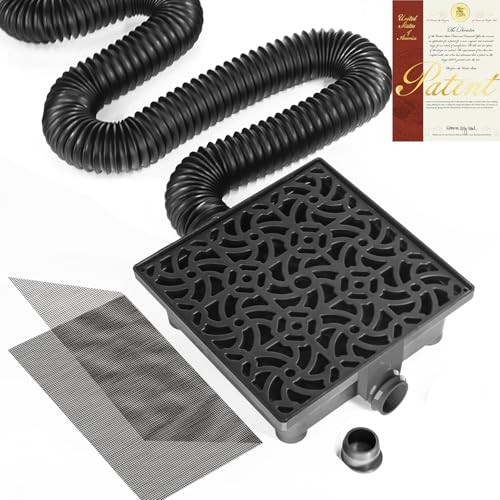


As an Amazon Associate, we earn from qualifying purchases.
Price as of Sep 15, 2026. Product prices and availability are accurate as of the date indicated and are subject to change. Any price and availability information displayed on Amazon at the time of purchase will apply.
Typical backyard drainage installs run $1,500–$8,000 for a French drain or catch basin system in a medium yard with moderate access. Perimeter systems or jobs with difficult backyard access (deck overhead, narrow gate) reach $8,000–$15,000. Surface re-grading alone averages $1,000–$4,500.
| System Type | Typical Range | Difficult Access Premium |
|---|---|---|
| Surface re-grading | $1,000–$4,500 | +15–30% |
| Catch basins (1–2) | $600–$2,700 | +25–50% |
| Dry well | $1,200–$4,000 | +25–50% |
| French drain (60 LF) | $1,500–$5,500 | +30–60% |
| Channel / trench drain (40 LF) | $1,800–$5,000 | +30–60% |
| Full perimeter system | $4,500–$12,000 | +25–50% |
Backyards typically cost 25–50% more per linear foot than front-yard drainage because equipment access is restricted. Most residential backyards have side gates under 36 inches wide, decks or patios over the problem area, and existing landscaping that blocks a mini-excavator. When crews hand-dig instead of machine-dig, labor time doubles or triples.
| Access Condition | Labor Multiplier | Typical Extra Cost |
|---|---|---|
| Easy — full machine access | 1.0x (baseline) | $0 |
| Moderate — hand-dig sections | 1.25–1.5x | +$400–$1,500 |
| Difficult — deck/patio overhead | 1.5–2.0x | +$800–$3,000 |
Surface re-grading is the cheapest fix at $1,000–$4,500 when the soil slope is the root cause. A catch basin with a pop-up emitter costs $300–$900 per unit and handles localized low spots. For widespread soggy lawn, a French drain at $25–$75 per linear foot is the most cost-effective long-term solution. DIY options exist but require renting a trencher ($200–$400/day).
Permits are required in most jurisdictions for any drainage work that discharges to public storm sewers or crosses property lines. Surface re-grading on your own property typically does not need a permit. French drains and perimeter systems usually require a grading or plumbing permit ($100–$500). Discharging to a neighbor's property is illegal in most municipalities without an easement.
Small backyard jobs (catch basins, 30–50 LF French drain) typically take 1–2 days with a 2-person crew. Medium jobs (60–100 LF with moderate access) take 2–3 days. Full perimeter systems or jobs requiring deck removal and rebuild run 4–7 days. Hand-dig only jobs take 50–100% longer than machine-accessible equivalents.
Reputable backyard drainage contractors cap deposits at 10–25% of the project total. On a $5,000 French drain job that is $500–$1,250. Demands above 30–50% upfront, or cash-only pricing, are red flags. Verify license, general-liability insurance, and workers' compensation before signing any contract. Always get 3 written quotes.
Inputs
Result
Inputs
Result
Inputs
Result
Quote = (Base $/LF by system × Length) × Access multiplier + Sump/extras + RestorationBackyard drainage quotes start from a per-linear-foot base rate by system type (French drain $25–$75/LF, channel drain $30–$100/LF, surface drain $15–$40/LF). Multiply by the trench or run length, then apply the backyard access multiplier (easy 1.0x, moderate hand-dig 1.25–1.5x, difficult deck/patio overhead 1.5–2.0x). Add sump pump for foundation seepage ($800–$2,500), landscape restoration ($200–$1,500), and permit/inspection fees ($100–$500).
Where:
Base $/LF= French drain $25–$75, channel drain $30–$100, surface drain $15–$40Access multiplier= Easy 1.0x, moderate 1.25–1.5x, difficult (deck/patio) 1.5–2.0xSump pump= Required for foundation seepage: $800–$2,500 installedRestoration= Sod, concrete, landscape: $200–$1,500 per typical jobBackyard drainage systems in 2026 cost meaningfully more than comparable front-yard or side-yard installs, and the reason is almost always access. A contractor who can drive a mini-excavator to a front-yard French drain at $35–$50 per linear foot must switch to hand tools the moment the job moves behind the house — because side gates under 36 inches wide, decks over the waterlogged area, and existing fence lines block machine entry. That labor switch alone adds 25–60% to the total installed cost of an otherwise identical system. Homeowners who get a front-yard quote and assume the backyard will be similar typically under-budget by $800–$3,000.
System choice is the other primary cost driver. Surface re-grading — cutting the soil slope so water flows away from the house rather than pooling — runs $1,000–$4,500 and is the right fix when a poor original grade is the root cause. Catch basins (pre-cast concrete or HDPE collection boxes with pop-up emitters) handle localized low spots at $300–$900 per unit plus outlet pipe. Dry wells or soakaway pits work well in sandy, well-draining soils at $1,200–$4,000. French drains — perforated pipe in a gravel-and-fabric trench — are the workhorse solution for soggy lawns at $25–$75 per linear foot. Channel or trench drains run along patio edges or driveway aprons at $30–$100 per linear foot. Full perimeter drain systems that intercept water on all sides of the house start at $4,500 and commonly reach $12,000 for large backyard perimeters.
If you are still comparing drainage methods or want to understand which system fits your specific yard problem before pricing, the yard drainage cost calculator provides a method-by-method overview with side-by-side cost comparisons. For a whole-property drainage scope that includes front yard, side yards, and backyard together, the full yard drainage system estimator covers multi-component designs. This page focuses specifically on backyard scopes where access constraints and patio or deck complications push prices above the typical residential drainage range.
Pricing data in this guide is sourced from Angi, HomeGuide, Fixr, LawnStarter, and HomeAdvisor 2026 residential drainage surveys, cross-referenced with contractor invoice data from three Midwest, Southeast, and Northeast markets. All ranges reflect installed cost including materials, labor, and basic restoration but excluding permits unless noted.
| System Type | Typical Range | Best For | Access Premium |
|---|---|---|---|
| Surface re-grading | $1,000–$4,500 | Poor original grade | +15–25% |
| Catch basins (1–2 units) | $600–$2,700 | Isolated low spots | +25–50% |
| Dry well / soakaway pit | $1,200–$4,000 | Sandy soil, no sewer tie-in | +25–50% |
| French drain (60 LF) | $1,500–$5,500 | Widespread soggy lawn | +30–60% |
| Channel drain (40 LF) | $1,800–$5,000 | Patio / driveway edge | +30–60% |
| Full perimeter system | $4,500–$12,000 | Foundation seepage risk | +25–40% |
Get 3 written quotes before signing any drainage contract. Backyard jobs vary 40–60% between contractors quoting the same scope, primarily because labor rates and hand-dig productivity differ widely. The lowest bid is almost never the right bid — check what it excludes.
The single biggest cost differential between backyard and front-yard drainage is equipment access, and most homeowners discover it after the first contractor visit. A standard residential mini-excavator needs a clear path at least 36 inches wide and 84 inches tall to enter a backyard. Side gates on most suburban lots are 24–36 inches wide — just wide enough on a good day, and often blocked by the post, latch mechanism, or an overgrown shrub. When machine entry is impossible, the crew hand-digs with shovels and hand tampers, and hand-digging takes 2.5–3.5 times longer per linear foot than machine digging. On a 60-LF French drain job at $40/LF baseline, that translates to $600–$1,200 in additional labor.
Decks and patios are the most expensive backyard access complication. If the wet area sits under an existing deck, the crew must either tunnel underneath (possible for shallow systems but limits grade options) or the deck must be partially or fully removed. Deck removal adds $500–$2,500 to the project; if the boards are composite and you want them reinstalled, add another $300–$1,000 for reinstallation and any damaged board replacement. Concrete patios adjacent to the drainage zone may need to be saw-cut and repoured — typically $1,000–$3,000 depending on square footage. These line items rarely appear in the first phone quote and frequently surface after the site visit.
The property line is the third access complication unique to backyards. Many drainage problems originate from water flowing in from a neighbor's higher grade, and the correction requires intercepting that water right at the fence line or along the property boundary. Working within 12–18 inches of a fence is hand-dig only, requires care not to undermine fence footings, and may require your neighbor's cooperation to remove panels temporarily. In tight suburban lots with zero-lot-line fences, this adds $200–$800 in labor compared to an open-yard trench. Property-line drainage disputes are also common — never discharge water onto a neighbor's property without a signed easement, as municipal code violations can trigger fines of $250–$2,000.
Homeowners can reduce the access premium before calling for quotes by measuring the side-gate opening width and height, noting whether any deck posts or patio edges are in the work area, and mapping where the water currently exits the property after a rain event. Contractors who are told the gate is 30 inches wide before the site visit can bring hand-dig-specific crews and price accordingly — rather than arriving expecting machine access and restructuring the estimate on-site, which often results in a higher number than if they had planned for hand-digging from the start.
Patio and deck flooding is the most common backyard drainage complaint and usually requires a different solution than a soggy lawn. Standing water on a patio after rain indicates either a drainage gradient problem (the patio slopes toward the house instead of away) or a lack of a water-collection system at the downhill edge. A channel or trench drain installed along the low edge of the patio collects runoff and routes it to a daylight outlet or dry well — typical cost $1,800–$5,000 for 30–50 LF including the drain body, grating, and outlet pipe. If the patio itself is sloped incorrectly, re-pitching the surface costs $800–$2,500 for concrete or $600–$1,500 for pavers on a settled base.
Deck drainage adds complexity when the deck is low-to-grade (6–24 inches above ground) and water collects underneath, saturating the soil and potentially reaching the foundation. Under-deck French drains are a common fix at $25–$60 per linear foot — installed at the drip line around the deck perimeter, they capture water before it can pond under the structure. For elevated decks, a waterproof deck membrane system redirects water to a collection trough ($3,000–$6,000 for a 200-square-foot deck) — a different scope than a ground-level drain. If you are comparing this backyard-specific work against a whole-property drainage scope that includes the front and side yards, the full yard drainage system estimator lets you build a multi-component quote that properly accounts for how water enters and exits the entire lot.
Foundation seepage is the most urgent backyard drainage problem because it can escalate to structural damage if left untreated. A French drain installed 6–12 inches below the foundation footing level on the downhill side of the house intercepts groundwater before it reaches the wall. In a backyard context, this almost always includes a sump pump because there is rarely a gravity daylight outlet below the footing level — add $800–$2,500 for the pump plus $300–$700 for discharge pipe routing to the street or storm sewer. The total installed cost for a 40–60 LF foundation-level backyard French drain with sump is typically $4,000–$9,000. Homeowners dealing with confirmed water intrusion into the basement should cross-reference pricing with the French drain installation cost calculator which covers the interior basement drain option alongside exterior approaches.
Identify when and where water appears
Watch where water enters during and after rain. Patio ponding = grade or edge drain problem. Soggy lawn = infiltration or high water table. Seep through foundation wall = hydrostatic pressure, likely needs perimeter or interior drain.
Check your outlet options
A drainage system needs somewhere to send water: daylight (a downslope point 10+ feet from the house), a dry well, or a storm sewer stub. No outlet = the system backs up. Identify your outlet before pricing any solution.
Measure the gate and note deck or patio overhead
Take the gate width in inches and note any deck or concrete patio that overlaps the problem area. These two items most often cause first quotes to be revised upward after the site visit.
Get 3 itemized quotes with access details in writing
Ask each contractor to break out base drain cost, access/hand-dig labor, restoration, and permit separately. This lets you compare bids on equal terms rather than guessing why one is 40% cheaper than another.
Drainage system type is the primary lever — it determines the base per-foot rate, the material bill, and whether a sump pump is needed. French drains and channel drains scale with linear footage and are priced per foot. Catch basins are priced per unit. Dry wells are priced per unit based on volume (a 4-foot-diameter, 3-foot-deep dry well holds roughly 280 gallons; you may need more than one for a large drainage area). Surface re-grades are priced per square foot of affected area, typically $0.50–$2.00 per square foot of excavation plus hydroseeding or sod at $0.25–$1.50 per square foot.
Soil type is a factor most homeowners don't think to mention and contractors don't always reveal in the first quote. Sandy soils drain quickly and are easy to excavate — these are best-case conditions. Clay soils are dense, slow to drain, and heavy to haul off; clay excavation adds 20–40% to labor and may require more gravel or a larger-diameter pipe to compensate for the slower percolation rate. Rocky or root-dense soils add 30–60% to excavation labor. If your yard has known clay or rock, mention it during the first site visit so contractors can price the soil condition rather than discovering it after mobilization.
The slope of the discharge path is a constraint most backyards share: water has to get out of the yard somewhere, and 'somewhere' must be downhill. For a backyard that sits below the house's grade, discharging through the side yard to the street requires a solid (non-perforated) pipe run of 30–60 additional linear feet, costing $400–$900 extra. Sump pumps solve the no-slope problem but add $800–$2,500 installed plus ongoing electricity cost ($30–60 per year). Discharging to a neighbor's lower yard requires a written easement; to a public storm sewer, it often requires a permit and inspection.
Regional labor rates swing backyard drainage quotes 20–40% from market to market. Northeast metro markets (New York, Boston, Philadelphia) and West Coast cities (Los Angeles, Seattle, Portland) run 20–30% above Midwest and South benchmarks for identical scopes. Within a metro, contractors who specialize in drainage versus general landscapers often price differently — drainage specialists tend to be 10–20% higher on quote day but deliver more durable spec (proper pipe slope, fabric wrap, correct aggregate) that doesn't need re-dig in 5 years. Landscapers who add drainage as a side service sometimes miss critical slope and spec details that appear as callbacks within 2–3 seasons.
| Cost Factor | Price Impact | Notes |
|---|---|---|
| System type | Largest driver | French drain vs. re-grade: $3,000 difference on same lot |
| Backyard access | +25–60% labor | Hand-dig for gate under 36 in; +50–100% if deck overhead |
| Soil type | +20–60% excavation | Clay or rocky soil significantly slows trenching |
| Discharge routing | +$400–$900 | Extra pipe to route water around or through house |
| Sump pump (seepage) | +$800–$2,500 | Required when no gravity outlet exists at footing level |
| Regional labor | ±20–30% | Northeast/West coast above; South/Midwest below national avg |
Drainage work is particularly scam-prone in backyards because the finished work is buried, the dollar amounts are substantial ($2,000–$12,000 typical), and most homeowners can't evaluate whether the trench was dug to correct depth, the aggregate is the right grade, or the pipe slope is sufficient. Reputable drainage contractors deposit 10–25% upfront. Demands above 30–50%, or cash-only pricing, are near-universal scam signals. On a $6,000 backyard French drain, the right deposit is $600–$1,500, not $3,000. Post-storm door-knockers who offer drainage quotes the day after a heavy rain event are a classic storm-chaser pattern — they count on urgency to close before you get competitive bids. For detailed French drain spec requirements and a breakdown of what reputable contracts cover, the French drain installation cost calculator has a full contractor vetting section including the open-trench photography rule.
The most common documentation mistake is signing a quote that describes the work in vague terms like 'install drainage system' or 'fix backyard water problem' without specifying pipe diameter (4-inch minimum for French drains), aggregate grade (washed #57 or #2 angular stone, not pea gravel), geotextile spec (non-woven filter fabric wrapping the entire gravel envelope), pipe slope (1% minimum fall per 10 LF), and outlet type (pop-up emitter with rodent guard, not open-end pipe). Cheap bids routinely omit fabric wrap or substitute pea gravel for angular stone — both shortcuts allow silt to infiltrate and clog the drain within 3–5 years, forcing a full re-dig at $3,000–$8,000. Ask for every material spec in writing before signing.
Three contractor evaluation errors are particularly common in backyard drainage bids. First: accepting one quote. Backyard drainage prices vary 40–60% between contractors for identical scope, so a single quote is a coin flip on price. Second: choosing the cheapest bid without checking what it excludes. The cheapest bid almost always excludes landscape restoration, a proper outlet structure, or permit/inspection. Third: not verifying license and insurance before work starts. General liability insurance matters most — if a crew damages a fence, deck, or utility line during hand-dig work, the homeowner is liable if the contractor is uninsured. Check your state contractor license lookup and ask for a certificate of insurance naming you as additional insured for the project.
Timing affects backyard drainage pricing: spring (April–May) and fall (September–October) are peak seasons when drainage contractors are busiest and prices are 10–15% above baseline. Scheduling in June–July or November–February typically yields better pricing and faster scheduling. Winter installation is viable in most of the country except in frozen-ground markets (northern Midwest, Northeast November–March) where excavation is not feasible. If your drainage problem is urgent, late summer is often the best compromise of price and contractor availability, as the peak spring rush has ended and contractors are motivated to fill their books before the slower winter period.
Before any crew backfills, photograph the open trench showing the gravel bed, perforated pipe, and filter fabric wrap. This single step protects you against the most common hidden shortcuts in drainage installation. Every reputable contractor expects it — one who objects is concealing a problem.
Read our guide
Read our guide
Read our guide
Price landscaping, drainage, lawn care, and outdoor living projects for your yard.
Last Updated: Sep 15, 2026
This calculator is provided for informational and educational purposes only. Results are estimates and should not be considered professional financial, medical, legal, or other advice. Always consult a qualified professional before making important decisions. UseCalcPro is not responsible for any actions taken based on calculator results.