1. Calculate
Choose your project scope and see the estimated price range.
Compare 2026 installed costs across all five drainage methods — French drain, channel drain, dry well, regrading, and downspout extension — then get matched quotes from licensed drainage contractors.
Instant project estimate
The estimate is free. Additional details are optional.
Complete the project details and calculate to see a price range and next steps.
Clear next step
Choose your project scope and see the estimated price range.
Understand the cost drivers and what impacts your final quote.
Carry your scope into a local quote request if you choose.
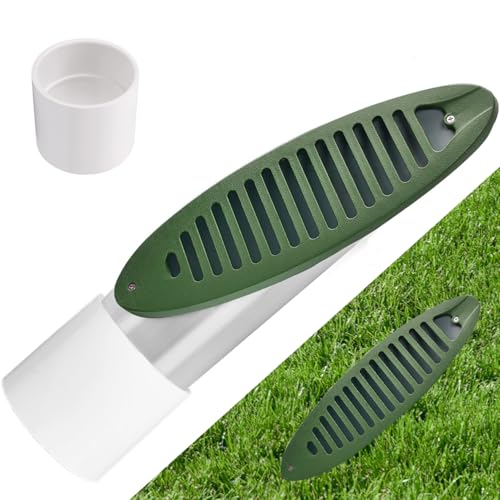

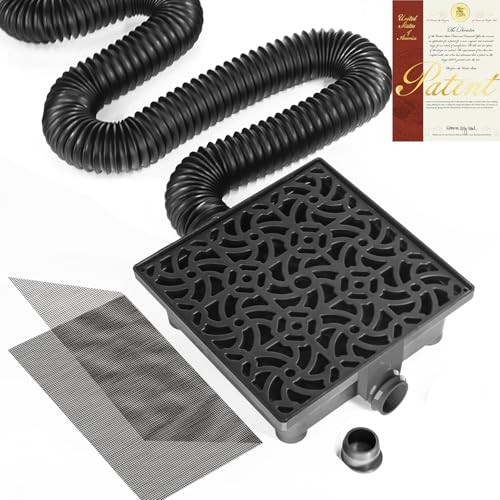
As an Amazon Associate, we earn from qualifying purchases.
Price as of Sep 15, 2026. Product prices and availability are accurate as of the date indicated and are subject to change. Any price and availability information displayed on Amazon at the time of purchase will apply.
Yard drainage cost depends on the method. French drains run $20–$80 per linear foot installed ($1,500–$8,000 for a typical residential job). Surface/channel drains cost $800–$4,500 installed. Dry wells run $1,000–$3,000 per well. Regrading costs $1,000–$5,000. Downspout extensions are the cheapest at $300–$1,200. Most homeowners spend $2,000–$5,500 on a complete single-method fix.
| Method | Typical Cost | Best Problem to Solve |
|---|---|---|
| French drain | $1,500–$8,000 | Yard pooling, foundation seepage |
| Channel/surface drain | $800–$4,500 | Patio, driveway, hardscape runoff |
| Dry well | $1,000–$3,000 | Concentrated downspout runoff |
| Regrading | $1,000–$5,000 | Grade slopes toward house |
| Downspout extension | $300–$1,200 | Gutters dumping at foundation |
Downspout extensions are the cheapest fix at $300–$1,200 but only solve gutter-runoff problems where gutters are dumping water near the foundation. Dry wells are the next cheapest at $1,000–$3,000 for small, concentrated runoff. Regrading at $1,000–$5,000 is the cheapest permanent fix for lot-grading errors. French drains are often necessary for broad yard pooling but are more expensive. Choosing the cheapest method that doesn’t actually fit your problem is the most expensive mistake in drainage work.
| Method | Min Cost | Works in Clay Soil? |
|---|---|---|
| Downspout extension | $300 | Yes |
| Regrading | $1,000 | Yes (harder, costs more) |
| Dry well | $1,000 | No — clay won't absorb |
| Channel drain | $800 | Yes (drains to outlet) |
| French drain | $1,500 | Yes (with more gravel) |
A French drain is needed when you have broad yard pooling, water seeping through foundation walls, or a large area of saturated soil. A dry well is better when the drainage problem is concentrated — a single downspout, a small low spot, or a patio corner. The critical limitation of dry wells is percolation: in clay-heavy soil, water enters faster than the surrounding soil can absorb it, and the dry well sits full for days. Do a percolation test before committing to a dry well in any clay soil yard.
Most residential drainage jobs take one to three days. A 75 LF French drain with a clean trench line and easy access typically takes one long day or two short days. Dry wells are usually a half-day to full-day job. Regrading small to medium yards takes one to two days with a small skid steer. Interior channel drains that require concrete cutting take two to three days including cure time before the concrete can be walked on. Large multi-method systems — perimeter French drain plus regrading plus channel drains — can take a full week.
Standard homeowners insurance does not cover yard drainage installation. Drainage is classified as a preventive home improvement, not a covered repair. Insurance may pay for interior water damage caused by a sudden covered event (burst pipe, ice dam) but not for the drainage work that would have prevented it. Some states mandate flood insurance disclosure, but that covers flood-event damage, not drainage infrastructure. HELOC financing and FHA 203(k) renovation loans can both fund drainage work as part of a broader home-improvement scope.
Inputs
Result
Inputs
Result
Inputs
Result
Quote = Base cost by method + Size multiplier + Soil/obstacle surcharge + Regional labor adjustmentDrainage quotes start from a base rate that depends on the chosen method: French drain $20–$80/LF, channel drain $800–$4,500 lump, dry well $1,000–$3,000 per well, regrading $1,000–$5,000 lump, downspout extension $300–$1,200. Clay soil adds 15–30% to French drain and dry well jobs because trenching is slower and gravel beds must be thicker. Site obstacles (buried utilities, concrete saw-cuts, bedrock, tight access) add 25–100% to the trench cost. Northeast and West Coast labor runs 20–30% above Midwest and South baseline rates.
Where:
Base by method= French drain $20–$80/LF; channel drain $800–$4,500; dry well $1,000–$3,000; regrading $1,000–$5,000; downspout extension $300–$1,200Soil multiplier= Sandy soil 1.0x; loam 1.0x; clay-heavy +15–30% on trench-based methodsObstacle surcharge= Open yard 1.0x; moderate obstacles (landscaping, walkway saw-cut) +25–60%; difficult (utilities, rock, tight access) +50–100%Regional multiplier= Midwest/South = baseline; Northeast/West Coast +20–30% for labor and disposalYard drainage problems in 2026 span a wide range of solutions and price points. The five main installed methods — French drains, surface channel drains, dry wells, regrading, and downspout extensions — each solve different root causes at very different costs. French drains, the most versatile solution for persistent yard pooling or foundation seepage, run $20–$80 per linear foot installed, with a typical residential job landing between $1,500 and $8,000. Surface and channel drains collect water at targeted low points and cost $800–$4,500 installed. Dry wells capture concentrated downspout or area runoff in an underground absorption pit and cost $1,000–$3,000 per well. Regrading — mechanically re-contouring the yard’s slope so water flows away from the structure — runs $1,000–$5,000 for most residential lots. Downspout extensions and buried conductor pipes, the simplest targeted fix, cost $300–$1,200. The calculator above narrows your estimate once you select your problem type, preferred solution, soil type, and location.
Prices for the same solution can vary 50–80% depending on three factors: the size and scope of the affected area, the soil composition, and your region. Clay-heavy soils — common across the Midwest, Southeast, and parts of the Pacific Northwest — are harder to trench, drain more slowly, and require deeper gravel beds, adding 15–30% to French drain and dry well projects. Northeast and coastal California labor runs 20–30% above Midwest and South benchmarks due to higher disposal tipping fees and mobilization costs. Permits for drainage work that connects to the municipal storm system typically cost $150–$500 and are often required for exterior French drains, channel drain tie-ins, and regrading that alters runoff direction to a neighboring property. If your drainage project is part of a larger outdoor improvement — a deck rebuild, new patio, or full landscape redesign — scope the full project with the landscape design service cost calculator before getting individual drainage bids.
This guide covers all five drainage methods with 2026 installed price data drawn from Angi, HomeGuide, Fixr, and LawnStarter pricing surveys. If your drainage work is part of a full multi-component system design — connecting multiple drains, underground collector pipes, and catch basins across the full property — the full yard drainage system cost calculator provides an end-to-end multi-method estimate. Homeowners dealing specifically with backyard pooling and access challenges can find more targeted backyard-specific guidance with the backyard drainage cost calculator.
| Method | Typical Installed Cost | Cost Basis | Best Application |
|---|---|---|---|
| French drain | $1,500–$8,000 | $20–$80/LF | Yard pooling, foundation seepage |
| Surface/channel drain | $800–$4,500 | Lump sum | Patio, driveway, pool deck runoff |
| Dry well | $1,000–$3,000 | Per well | Concentrated downspout runoff |
| Regrading | $1,000–$5,000 | Lump sum | Yard slopes toward house |
| Downspout extension | $300–$1,200 | Lump sum | Gutters discharging at foundation |
Choosing the method that fits your problem matters more than finding the cheapest option. A $500 downspout extension does nothing for clay-soil yard pooling. A $5,000 French drain is overkill for a single downspout causing a concentrated wet spot.
Matching the right drainage method to your specific problem is the most important decision in any drainage project. French drains are the right choice when you have broad yard pooling across a large or medium area, water seeping through foundation walls from chronically saturated soil, or a persistent low point in the yard that fills after every rain event. They work by capturing both surface and subsurface water in a perforated pipe laid in a gravel-lined trench, then routing it via gravity to a discharge point (a daylight outlet, a dry well, or a storm drain connection). The longer and deeper the trench and the more clay-heavy the soil, the higher the cost. A standard 50–75 linear foot exterior French drain in loam soil in the Midwest runs $2,500–$5,000 installed, including gravel, filter fabric, perforated pipe, and a pop-up emitter discharge. For detailed pricing on French drain projects specifically — including the interior versus exterior depth trade-off and the sump pump add-on for basement systems — the French drain installation cost calculator provides a more granular estimate.
Surface and channel drains are the right fix when water pools on a hard surface rather than in the soil. An HDPE channel drain installed along the low edge of a driveway, patio, or pool deck captures surface runoff before it spreads and routes it to a storm outlet. Channel drains install faster than French drains because no deep trench is required, but they do require saw-cutting the adjacent hardscape and connecting the outlet to a drain pipe. Total cost including saw-cut and restoration runs $800–$4,500 for a typical residential installation. Dry wells are best when the drainage volume is predictable and concentrated: a single downspout or small yard low spot that floods and then dries between rain events. A properly sized dry well — at least 20 cubic feet of absorption capacity per 1,000 square feet of contributing roof or yard area — fills after a rain and empties over the next 24–48 hours. They are not suitable for clay soils where the percolation rate exceeds 60 minutes per inch, because the collected water cannot absorb fast enough. Regrading is the right solution when the grade itself is wrong: the yard slopes toward the house rather than away from it, or decades of soil settling have created channels that direct surface water toward the foundation. Most regrading jobs take one to two days with a small skid steer and cost $1,000–$5,000 depending on lot size, soil type, and how much material needs to be moved. For yard drainage problems specifically in the back yard — where lot access is tighter, grades are often more complex, and neighbors’ drainage patterns interact — the backyard drainage cost calculator covers the backyard sub-scope in more detail.
The biggest variable in any drainage quote is scope: how many linear feet of trench are needed, how many dry wells, and whether the work is confined to one area or spread across the yard. French drain projects price per linear foot, so a 50 LF job and a 150 LF job on the same lot produce very different totals even at the same per-foot rate. Under 50 LF almost always carries a minimum-trip surcharge of $400–$800 from drainage contractors because the mobilization cost — equipment transport, permits, crew travel, and staging — does not change with scope. Over 100 LF often earns a 10–15% volume discount because the crew is already staged and working. Regrading and dry well quotes are lump-sum by project, so bid variance between contractors is typically wider than for per-linear-foot work — getting three bids is especially important for these methods.
Soil type affects labor cost directly and significantly. In clay soil, trenching is slower and sometimes requires a chain-trencher or hand-digging in sections where the clay is too dense for a standard ride-on machine. The gravel envelope around the perforated pipe must be thicker in clay to create enough storage volume to handle the slow percolation rate, adding 15–30% to materials cost. The filter fabric specification also matters more in clay: fine-particle clay infiltrates standard woven monofilament fabric and clogs the drain in three to five years. Non-woven geotextile at minimum 4 oz per square yard is the correct fabric in clay soil. Sandy soil is the easiest to trench and drain but requires a quick percolation check before committing to a dry well — in very porous sandy lots, a dry well may over-fill during heavy rain if the inlet pipe is undersized. Obstacles add costs quickly: concrete walkways that must be saw-cut add $12–30 per linear foot to the trench cost; buried utilities requiring hand-digging add $15–40 per linear foot; bedrock adds 50–100% to the trench cost in the affected section.
Regional labor explains most of the city-to-city price variation for identical scopes. The same 75 LF French drain that costs $3,500 in Kansas City runs $5,200–$6,000 in Boston or Seattle because tipping fees, permit costs, and crew wage rates are higher in dense metropolitan markets. Seasonal timing adds another 10–20% swing: spring after the ground thaws and early fall are peak seasons when drainage contractors are busiest and least negotiable on price. Booking mid-summer or in late fall — after the spring backlog clears and before the pre-freeze urgency window — often produces 10–15% better pricing and faster scheduling. Permits for drainage connecting to the municipal storm system typically cost $150–$500 and add two to four weeks to project start time if the municipality requires an engineering review. Always confirm whether the permit fee is included in the bid or invoiced separately at the end.
| Cost Add-On | Typical Range | When Triggered |
|---|---|---|
| Minimum trip surcharge (under 50 LF) | $400–$800 | Any trench job under 50 linear feet |
| Clay soil gravel surcharge | +15–30% on trench cost | Clay-heavy soil requiring thicker stone envelope |
| Concrete walkway saw-cut + repour | $12–30/LF extra | Trench crossing a concrete surface |
| Buried utility hand-dig | $15–40/LF extra | Utilities within 18 in of planned trench |
| Bedrock excavation | +50–100% in affected section | Shallow bedrock or surface rock |
| Permit + municipal review | $150–$500 | Storm-system connection, grade alteration |
| Landscape restoration | $200–$1,200 | Sod, plants, or hardscape replacement after trench |
The method comparison comes down to where the water comes from, where it needs to go, and what the lot geometry allows. French drains are the workhorse choice because they handle both surface and subsurface water, can be routed around obstacles, and discharge water downhill to a daylight outlet or into a dry well at the end of the run. Their limitation is length: a long French drain installation on a large lot can run $6,000–$12,000 or more, and the per-foot cost climbs sharply when obstacles or deep excavation are involved. Dry wells are the fastest and cheapest install when the water source is concentrated and the soil drains, but they depend entirely on the surrounding soil’s absorption capacity. In clay lots, they fill and sit full for days after a heavy rain, which defeats the purpose. Channel drains solve a different problem than French drains — they handle surface water on hard impervious surfaces where there is no soil to drain through. They are often combined with French drains: a channel drain at the edge of a patio captures hardscape runoff, while a French drain in the adjacent soil captures groundwater seeping up from the water table. For properties where the full drainage solution spans multiple connected systems across the entire property — channel drains, French drains, catch basins, and underground collector pipes all linked together — the full yard drainage system cost calculator provides a comprehensive multi-method estimate that accounts for the combined scope.
Regrading is the only method that fixes the root cause of drainage problems created by lot-grading errors. When a builder grades the lot to slope toward the house rather than away from it, or when years of soil settling have created low spots that redirect water toward the structure, no amount of piping will permanently solve the problem — the water will keep finding its way toward the foundation because gravity is still pointing the wrong way. A proper residential grade slopes away from the foundation at 6 inches of drop in the first 10 feet (a 5% grade), then can level off or slope more gently after that. Most regrading jobs do not require permits unless they change runoff direction to a neighboring lot or alter a drainage easement. Regrading is almost always the right first step before installing a French drain: putting a drain in a yard that still slopes toward the house intercepts some water but leaves the grade problem intact. Downspout extensions and buried conductor pipes are the simplest and most cost-effective fix for one specific problem — gutters discharging water at or near the foundation — and cost $300–$1,200. They do nothing for yard-wide pooling or subsurface seepage. For drainage problems concentrated in the backyard specifically — where access for heavy equipment is often limited and the grade is influenced by fences, detached garages, and neighboring lot patterns — the backyard drainage cost calculator covers the backyard-specific scope in detail.
Drainage work is scam-prone for the same reason as waterproofing: the finished work is completely buried, there is no way to verify after backfill whether the contractor installed the correct pipe slope, proper stone grade, or any filter fabric at all. Reputable drainage contractors cap deposits at 10–25% of the project total. On a $4,500 installed French drain that is $450–$1,125 at signing. Demands above 30–50% upfront, cash-only pricing, or door-knocking solicitations after a heavy rain event are near-universal red flags. Post-storm traveling crews are the most common yard drainage scam pattern: they knock after a big rain event, quote a low number on the spot, collect a large deposit, backfill a shallow gravel trench with no pipe or fabric, and leave. Always hire from a permanent local company with a verifiable business license, a general-liability insurance certificate, and workers’ compensation coverage before any crew steps on your property.
Get the technical specification in writing before signing any contract. The spec must include: pipe diameter and material (4-inch or 6-inch schedule 35 or 40 PVC, or corrugated HDPE), stone specification (washed #57 or #2 angular stone — NOT pea gravel, which compacts and restricts flow), filter fabric specification (minimum 4 oz per square yard non-woven geotextile in clay soils; woven acceptable in sandy soils), minimum pipe slope (1% minimum — that is 1 inch of fall per 10 feet of run; anything less silts up within a few years), and outlet type and location (pop-up emitter with rodent exclusion grate, at least 10 feet from any structure, legally permitted to discharge). Cheap bids that skip the fabric wrap or use pea gravel instead of angular washed stone produce drains that silt up in three to five years and require a full re-dig at 80–90% of the original installed cost. The spec conversation upfront costs nothing; the re-dig conversation in year four costs thousands.
Before the contractor backfills the trench, photograph the open excavation with the pipe, stone, and fabric visible. Every professional drainage contractor expects this inspection step and will offer it proactively — a contractor who pressures you to allow backfill before you have confirmed the specified materials are in place is almost certainly hiding a shortcut. Ask about the warranty on workmanship: a reputable contractor stands behind drainage installations for one to five years and will return to inspect or repair if the drain backs up or the outlet fails within that window. Get at least three written bids and ask each contractor whether they have pulled a permit — unpermitted drainage work that was installed without the required inspection can become your liability to correct at your cost when you sell the property or refinance.
Buried drainage work is the easiest place to cut corners on any job site. Photograph the open trench with stone, pipe, and filter fabric visible before the crew backfills. No professional drainage contractor refuses this step — it protects both sides of the contract.
Read our guide
Read our guide
Read our guide
Price landscaping, drainage, lawn services, pool installs, and more outdoor improvement projects.
Last Updated: Sep 15, 2026
This calculator is provided for informational and educational purposes only. Results are estimates and should not be considered professional financial, medical, legal, or other advice. Always consult a qualified professional before making important decisions. UseCalcPro is not responsible for any actions taken based on calculator results.