1. Calculate
Choose your project scope and see the estimated price range.
Enter your area, fake grass grade, and ZIP code to get a calibrated 2026 local installer quote — then compare bids from fake grass pros near you.
Instant project estimate
The estimate is free. Additional details are optional.
Complete the project details and calculate to see a price range and next steps.
Clear next step
Choose your project scope and see the estimated price range.
Understand the cost drivers and what impacts your final quote.
Carry your scope into a local quote request if you choose.
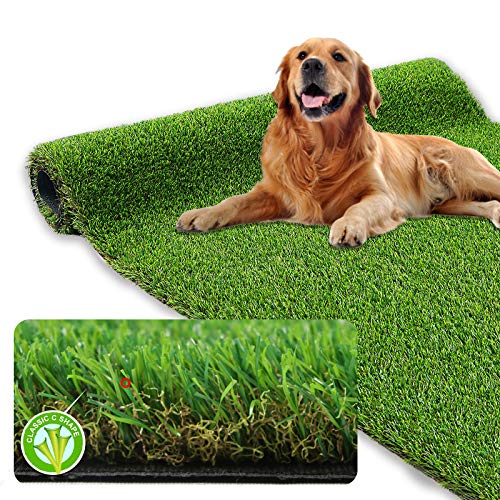


As an Amazon Associate, we earn from qualifying purchases.
Price as of Sep 15, 2026. Product prices and availability are accurate as of the date indicated and are subject to change. Any price and availability information displayed on Amazon at the time of purchase will apply.
Local fake grass installation runs $8–$22 per square foot installed in 2026, with most homeowners spending $8,000–$18,000 on a 500–1,500 sqft residential project. Landscape-grade is $8–$14/sqft, pet-grade $12–$18/sqft, and athletic-grade $18–$30/sqft. California, Pacific Northwest, and New York metro areas run 25–35% above these ranges; Southeast and rural Midwest markets come in 10–20% below. A 1,000 sqft Phoenix backyard with existing grass removal typically quotes $9,000–$14,000 installed.
| Grade | $/sqft installed | 1,000 sqft total |
|---|---|---|
| Landscape-grade (standard) | $8–$14 | $8,000–$14,000 |
| Pet-grade (antimicrobial) | $12–$18 | $12,000–$18,000 |
| Athletic-grade (shock pad) | $18–$30 | $18,000–$30,000 |
| Small job (<400 sqft) | $14–$22 | $5,600–$8,800 est. |
Square footage is the biggest lever: under 400 sqft pays a 15–25% per-sqft small-job premium; over 2,000 sqft earns 10–20% volume discounts. Grass grade is the second factor. Regional labor rates swing costs 25–40% between the cheapest (rural Southeast, Midwest) and priciest (California, Hawaii) markets. Existing-surface removal adds $1.50–$3/sqft for natural grass and $0.50–$1.50/sqft for concrete. Sub-base prep ($2–$4/sqft) is mandatory on soil installs and should be itemized in every local bid.
| Factor | Low-cost scenario | High-cost scenario |
|---|---|---|
| Project size | 2,000+ sqft (−10–20% per-sqft) | <400 sqft (+15–25% per-sqft) |
| Grade | Landscape $8–$14/sqft | Athletic $18–$30/sqft |
| Region | SE / Midwest −10–20% | CA / HI / NY +25–35% |
| Existing surface | Bare soil (no removal) | Grass removal +$1.50–$3/sqft |
Get 3–5 written quotes from licensed synthetic turf installers within 30 miles. Each quote must itemize sub-base depth (minimum 3–4 inches), base material spec (Class II road base, not pea gravel), turf brand and face weight in oz/sqyd, infill type and weight per sqft, and workmanship warranty duration (1–5 years standard). Require current general liability insurance ($1M minimum) and workers compensation. Pay no more than 30% deposit upfront; stagger the balance until after a drainage test.
| Check | Good sign | Red flag |
|---|---|---|
| Deposit | 10–30% upfront | Full payment demanded upfront |
| Sub-base spec | Names depth + material in writing | Says "we prep properly" (vague) |
| References | 3+ jobs at least 2 years old | Only fresh portfolio photos |
| Bid detail | Itemized line-by-line | Lump-sum only |
Professionally installed fake grass lasts 15–20 years in temperate climates and 10–15 years in heavy-traffic pet areas or hot-sun Southwest markets. The compacted gravel sub-base outlasts the turf at 25–30 years when built correctly. Turf installed without a proper sub-base settles and fails in 3–5 years regardless of climate. Fiber warranty industry standard is 8–15 years; workmanship warranty is 1–5 years. In freeze-line climates (USDA zones 1–5), a 6-inch base prevents freeze-heave damage that would otherwise lift seams within 3–5 years.
| Climate / use | Expected lifespan | Key risk factor |
|---|---|---|
| Temperate (standard residential) | 15–20 years | UV fade after year 12 |
| Hot / Southwest (AZ, CA, NV) | 12–18 years | Surface heat; organic infill helps |
| Pet-heavy use (daily) | 10–15 years | Fiber mat-down; antimicrobial infill critical |
| Freeze-line climates | 15–20 years | Heave damage if base <6 inches |
Break-even depends on local water costs and mowing prices. In Phoenix, Las Vegas, or Southern California, fake grass saves $600–$1,500 per year in water costs, implying a 10–20 year payback on a $12,000 install. When mowing savings ($780–$1,800/year) are added, combined payback shortens to 6–13 years in most Sun Belt markets. In water-abundant Southeast markets, payback is driven by mowing savings alone. Natural sod wins when you plan to sell within 3–5 years in markets where buyers prefer real grass.
| Factor | Fake grass | Natural sod |
|---|---|---|
| Install cost | $8–$22/sqft | $0.80–$2/sqft |
| Annual water (1,000 sqft, drought market) | Near $0 | $300–$800/yr |
| Annual mowing + fertilization | $0 | $1,200–$2,600/yr |
| Life expectancy | 15–20 years | Indefinite if maintained |
Inputs
Result
Inputs
Result
Pet-grade adds antimicrobial infill and drainage layer over landscape baseline. California regional labor runs 25–30% above national median.
Inputs
Result
Local quote = Turf material + Sub-base + Labor + Infill + Removal/prepA fake grass installation quote decomposes into turf roll material ($2–$15/sqft), compacted gravel sub-base ($2–$4/sqft), installation labor ($4–$12/sqft), infill material ($0.30–$2.50/sqft), and existing-surface removal ($0–$3/sqft). Regional labor multiplier shifts the total 25–40% from national median based on ZIP code market. Labor and sub-base together run 40–55% of total on landscape-grade jobs.
Where:
Turf material= Landscape $2–$5/sqft, pet $4–$8/sqft, athletic $6–$15/sqft roll stockSub-base= 3–4-inch compacted Class II gravel, $2–$4/sqft materials + laborLabor= Install crew $4–$12/sqft depending on complexity and regional wage rateInfill= Silica $0.30–$0.80/sqft, rubber $0.80–$1.50/sqft, organic cork $1.50–$2.50/sqftRemoval/prep= Existing sod +$1.50–$3/sqft; concrete prep +$0.50–$1.50/sqft; bare soil $0 extraFake grass installation near you in 2026 runs $8–$22 per square foot installed, with most homeowners spending $8,000–$18,000 on a 500–1,500 sqft residential project. National medians from Angi and HomeGuide put landscape-grade (standard) at $8–$14/sqft installed all-in, pet-grade at $12–$18/sqft including antimicrobial infill and flow-through drainage backing, and athletic-grade at $18–$30/sqft with shock-pad sub-layer and monofilament fiber. Labor alone runs 30–45% of the total on a typical install; the compacted gravel sub-base ($2–$4/sqft) and existing-lawn removal ($1.50–$3/sqft for natural grass) are the two line items that most consistently surprise buyers who compare headline per-sqft rates without reading the full scope. For a grade-by-grade cost breakdown across all artificial turf types, see the artificial turf install cost calculator.
Local pricing swings 25–40% depending on your market. California, Hawaii, and Pacific Northwest metros sit 25–35% above the national range; Southeast and rural Midwest markets come in 10–20% below. Arizona and Texas track near the national average on labor but face higher material freight costs because most synthetic turf rolls are distributed from coastal warehouses. A Phoenix homeowner might see $9,000–$14,000 on a 1,000 sqft backyard while a Los Angeles homeowner with the same scope receives $13,000–$18,000. This 40–50% regional spread is the primary reason this calculator asks for your ZIP code: the estimate adjusts regional labor multipliers before producing your quote range, giving you a number that reflects what local installers actually charge, not a national average that undershoots or overshoots your market by $4,000–$6,000 on a typical project.
The most useful follow-up after getting your calculator estimate is to request three written bids from licensed installers within 30 miles. Budget 2–3 weeks for the bidding process on residential jobs and plan further ahead during spring and fall peak seasons when installer schedules fill fast. For homeowners planning a full backyard overhaul combining fake grass with landscape design, planting beds, or hardscape, the landscape design service cost calculator helps scope the full project for a single combined reference price before reaching out to local firms.
Metro-area installed prices for fake grass in 2026 range from $7–$12/sqft in rural Southeast and Midwest markets to $14–$24/sqft in dense Pacific Coast metros. That spread is driven primarily by installation crew wages, not material costs: turf roll stock has similar distributor pricing nationwide, but a two-person install crew in San Francisco earns 50–60% more per hour than the same crew in rural Georgia or Ohio. Large Sun Belt cities (Phoenix, Dallas, Denver, Las Vegas) sit near the national median at $9–$16/sqft because warm climates create a year-round installation season that keeps crews busy and competitive, limiting the wage premium that cold-weather scarcity produces in northern markets.
Regional material freight is a secondary cost factor. Most residential-grade synthetic turf is produced in Asia and distributed through West Coast and East Coast ports; dealers in interior states pay $0.30–$0.80 per sqft more in freight than coastal markets, partially offsetting the labor cost advantage those markets would otherwise enjoy. Permit requirements also vary sharply by municipality: some cities in California, Colorado, and Oregon require a grading permit for sub-base excavation, adding $150–$500 to the project cost and 1–2 weeks to the timeline. Ask every local bidder to confirm whether permits apply to your address and whether the permit fee is included in the quote or billed as a separate pass-through.
The most reliable benchmark for your market is getting three local quotes at the same written spec. Normal bid-to-bid variation between legitimate licensed installers on the same job is 15–25%; spreads above 30% almost always indicate that the low bidder is cutting sub-base depth, substituting thinner-pile turf, or reducing infill weight. If your three quotes are $9,000, $11,500, and $16,000 on a 1,000 sqft job, the $16k bid is likely overpriced; the $9k bid should be scrutinized for missing spec. For context on what natural grass alternatives cost in your area, the sod install cost calculator gives a direct side-by-side comparison before you commit to synthetic.
| Market type | Landscape-grade ($/sqft) | Pet-grade ($/sqft) | 1,000 sqft all-in range |
|---|---|---|---|
| Pacific Coast (CA, WA, OR, HI) | $12–$18 | $16–$24 | $14,000–$24,000 |
| Northeast (NY, MA, CT, NJ) | $11–$17 | $15–$22 | $11,000–$22,000 |
| Sun Belt (AZ, TX, NV, CO) | $9–$15 | $13–$19 | $9,000–$19,000 |
| Mountain / Midwest (MN, OH, IL) | $8–$14 | $12–$18 | $8,000–$18,000 |
| Southeast (FL, GA, NC, SC) | $7–$13 | $11–$17 | $7,000–$17,000 |
Request quotes in early spring (February–March) or fall (September–October) when installer demand is lower in most US regions. Peak summer months in Southern states and peak spring in the Pacific Northwest add 5–15% to local installer pricing from schedule pressure alone.
Square footage is the most powerful lever in any local fake grass quote. A 500 sqft dog-run install runs $4,000–$9,000 while the same quality turf on 2,000 sqft drops 10–20% per sqft because crew mobilization, base-prep equipment, and infill spreading costs are fixed regardless of project scale. Jobs under 400 sqft pay a 15–25% per-sqft premium; installers typically charge a minimum mobilization fee of $400–$800 on very small projects that appears as inflated per-sqft pricing. Grass grade is the second variable: landscape-grade ($8–$14/sqft installed) covers the roughly 70% of residential installs that are visual-only lawns with light foot traffic. Pet-grade ($12–$18/sqft) is required for any yard with regular dog bathroom use. Athletic-grade ($18–$30/sqft) is appropriate only for dedicated sports surfaces and is overbuilt for all other applications.
Existing surface removal is the line item that surprises most buyers when they compare headline quotes. Removing natural grass and sod adds $1.50–$3 per sqft to the scope — a 1,000 sqft backyard adds $1,500–$3,000 before the first turf roll is laid. Bare soil is the cheapest starting point because it needs only grading and base prep with no haul-away. Concrete or hardscape installation skips the sub-base phase on some projects: turf bonds directly to concrete via adhesive and a drainage mat, saving $2–$4/sqft in base materials but adding $0.50–$1.50/sqft in adhesive and drainage mat. The sub-base specification is both a major cost and the most important quality variable: a correct 3–4 inch layer of compacted Class II road base adds $2–$4/sqft to the legitimate quote and is the single biggest differentiator between an installation that lasts 20 years and one that settles and fails in 3.
Regional labor rate is the factor most outside a buyer's control, but it is the most ZIP-code-responsive variable in your estimate. Crew wages in California metros run $35–$55/hour per installer versus $18–$28/hour in rural Midwest markets — this single difference explains most of the 25–40% regional price spread. Buyers in high-cost Pacific Coast or Northeast markets can reduce costs by (1) increasing project scope to amortize mobilization over more square footage, (2) choosing landscape-grade over pet-grade when pet use is infrequent rather than daily, or (3) sourcing turf roll stock directly from a distributor and hiring an install-only crew. For projects that combine fake grass with irrigation removal or drip system transition, the irrigation install cost calculator covers the plumbing scope so both can be bundled into a single contractor bid.
A complete local bid for fake grass installation itemizes at minimum six specifications: (1) turf product name, manufacturer, and face weight in ounces per square yard; (2) sub-base depth in inches and base material by name — Class II road base or decomposed granite, never pea gravel, which rounds and will not compact properly; (3) infill type and application weight in lbs per sqft; (4) existing-surface removal method and disposal fee; (5) perimeter edging type (bender board, steel nail-strips, or concrete border) with linear footage; (6) workmanship warranty duration (1–5 years typical). Any installer who provides a single lump-sum number without these line items is leaving room to cut corners on invisible quality factors. Require itemized spec in writing before signing any agreement, and confirm the warranty covers seam lift, drainage failure, and surface rippling specifically.
Pay structure is the second evaluation point. Never pay more than 30% upfront ($2,400–$4,500 on a $12,000 job); the standard for established local contractors is a deposit to secure the schedule, a progress draw when the sub-base is compacted and inspected, and final balance after the drainage test and walk-through. Cash-only demands or full-upfront requirements are documented BBB scam indicators for synthetic turf specifically — the BBB has logged dozens of fake-turf cases where installers collected full payment then ghosted. Pay by credit card through the final milestone for chargeback protection. Full upfront by check or cash has no recourse if work is not completed.
Run the drainage test before releasing final payment: five minutes of garden hose on the finished turf surface should drain completely within three minutes of stopping. Any surface pooling or standing water indicates sub-base failure or backing obstruction that the installer must correct before you pay the balance. Get a final walk-through checklist in writing: seam visibility check (seams should be invisible from standing height), infill depth check (fibers should be upright, not laying flat), perimeter edging security, and a final drainage verification. For homeowners bundling fake grass with complementary landscaping — mulched beds, ground cover in shaded areas — the mulch delivery cost calculator covers bed material pricing alongside your turf quote.
Before signing any contract, ask each bidder: What sub-base depth and material? What turf brand and face weight? What infill type and weight per sqft? Installers who cannot answer in writing within 24 hours are signaling room to cut corners on invisible quality factors that you cannot verify after installation is complete.
The fake-grass-versus-sod break-even calculation shifts dramatically by local water rates, mowing market prices, and climate. In drought-prone markets — Phoenix, Las Vegas, Tucson, Southern California, and parts of central Texas — fake grass typically saves $600–$1,500 per year on water for a 1,000 sqft lawn. At Phoenix upper-tier water rates, a 1,000 sqft lawn consuming 15,000–20,000 gallons per year costs $300–$800 annually; eliminating that cost against a $11,000 fake-grass install produces a 14–37 year payback on water savings alone. However, adding mowing savings ($30–$60/visit × 26–30 visits/year = $780–$1,800/year) shortens combined payback to 6–13 years in most Sun Belt markets — a strong ROI case for a 15–20 year product that also eliminates fertilization, aeration, and overseeding costs.
In water-abundant markets — the Pacific Northwest, Great Lakes, Southeast, and New England — water savings are minimal because natural lawn maintenance is already inexpensive per gallon. The value proposition shifts entirely to maintenance cost elimination: professional lawn mowing at $30–$60/visit times 26–30 annual visits plus $400–$800/year in fertilization and aeration totals $1,200–$2,600/year in savings with fake grass. Against a $10,000–$14,000 install, that produces a 4–12 year payback in Southeast and Midwest markets — competitive even without meaningful water savings. The sod install cost calculator helps quantify what re-sodding would cost as a direct baseline: if sod at $1–$2/sqft provides adequate coverage for 5–10 years in your use case, it may beat fake grass on pure ROI for shorter-horizon homeowners.
Three situations where natural sod wins financially over fake grass near you: first, if you plan to sell within 3–5 years in a Midwest or Southeast market — buyer perception of synthetic turf in those regions is neutral to slightly negative for single-family residential, and appraisers rarely add value for it; second, if the yard exceeds 60% shade coverage — fake grass still collects debris and needs occasional cleaning but produces no water savings in shaded zones; third, if the yard is primarily used for food gardening, barefoot play, or natural-surface activities where real grass provides a sensory and functional benefit no synthetic product matches at any price. For properties where fake grass makes sense in sunny zones and planted beds make sense in shaded areas, the mulch delivery cost calculator covers bed-fill materials for a hybrid approach where each surface type does what it does best.
| Factor | Fake grass | Natural sod |
|---|---|---|
| Install cost | $8–$22/sqft | $0.80–$2/sqft |
| Annual water (1,000 sqft, drought market) | Near $0 | $300–$800/yr |
| Annual mowing + fertilization | $0 | $1,200–$2,600/yr |
| Life expectancy | 15–20 years | Indefinite if maintained |
| Combined payback (drought market) | 6–15 years | No payback — lower install cost |
| Resale value (Midwest / SE) | Neutral to slightly negative | Generally positive |
Read our guide
Read our guide
Read our guide
Price fake grass, sod, irrigation, landscape design, pools, and other outdoor service projects.
Last Updated: Sep 15, 2026
This calculator is provided for informational and educational purposes only. Results are estimates and should not be considered professional financial, medical, legal, or other advice. Always consult a qualified professional before making important decisions. UseCalcPro is not responsible for any actions taken based on calculator results.