1. Calculate
Choose your project scope and see the estimated price range.
Price grass seed by variety (fescue, bluegrass, bermuda, zoysia), coverage need, and quality tier — then find the best local retail price near you.
Instant project estimate
The estimate is free. Additional details are optional.
Complete the project details and calculate to see a price range and next steps.
Clear next step
Choose your project scope and see the estimated price range.
Understand the cost drivers and what impacts your final quote.
Carry your scope into a local quote request if you choose.

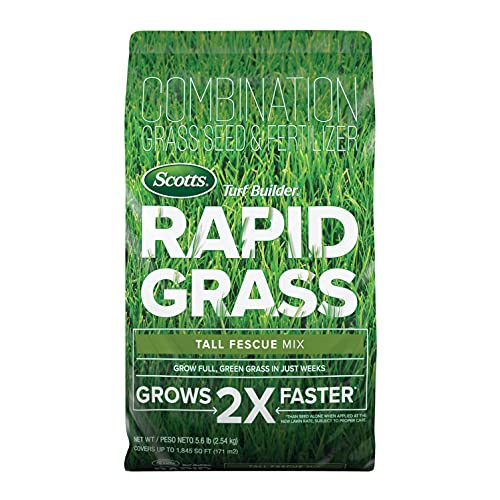


As an Amazon Associate, we earn from qualifying purchases.
Price as of Sep 15, 2026. Product prices and availability are accurate as of the date indicated and are subject to change. Any price and availability information displayed on Amazon at the time of purchase will apply.
Grass seed runs $1-$20 per pound in 2026 depending on variety and quality tier. Tall fescue standard grade: $2-$6/lb. Kentucky bluegrass standard: $4-$8/lb, certified: $10-$20/lb. Perennial ryegrass: $2-$6/lb. Bermuda (hulled): $3-$8/lb. Zoysia: $6-$15/lb. Bahia: $1-$3/lb.
| Grass Variety | Price per lb | Seeding Rate (new lawn) | Cost per 1,000 sqft |
|---|---|---|---|
| Tall fescue (standard) | $2-$6 | 6-8 lbs | $12-$48 |
| Kentucky bluegrass | $4-$16 | 2-3 lbs | $8-$48 |
| Perennial ryegrass | $2-$6 | 8-10 lbs | $16-$60 |
| Bermuda (hulled) | $3-$8 | 1-2 lbs | $3-$16 |
| Zoysia | $6-$15 | 1-2 lbs | $6-$30 |
| Bahia | $1-$3 | 4-6 lbs | $4-$18 |
Seeding rates per 1,000 sqft for new lawn: tall fescue 6-8 lbs, perennial ryegrass 8-10 lbs, Kentucky bluegrass 2-3 lbs, bermuda hulled 1-2 lbs, zoysia 1-2 lbs, bahia 4-6 lbs. Overseeding uses 40-60% of the new-lawn rate. Spot repair uses 20-30%.
| Coverage Need | Tall Fescue | Kentucky Bluegrass | Bermuda (hulled) |
|---|---|---|---|
| New lawn (bare soil) | 6-8 lbs | 2-3 lbs | 1-2 lbs |
| Overseeding | 3-4 lbs | 1-1.5 lbs | 0.5-1 lb |
| Spot repair | 2 lbs/1,000 patch sqft | 0.8 lbs | 0.4 lbs |
Farm co-ops and feed stores (Tractor Supply, Rural King, Southern States) typically offer the lowest per-pound prices on bulk 25-50 lb bags — 15-30% below big-box retail. Big-box clearance in late October and mid-June offers 20-40% discounts. Online bulk seed suppliers run 15-25% below retail in non-peak months.
| Seed Source | Discount vs. Big-Box | Best Bag Size | Best For |
|---|---|---|---|
| Farm co-op / feed store | 10-30% cheaper | 25-50 lb bulk | Projects over 5,000 sqft |
| Big-box clearance (Oct / June) | 20-40% off | All sizes | Any project with storage |
| Online bulk supplier | 15-25% below retail | 25-50 lb | 10,000+ sqft, 1-2 week lead |
| Local garden center | 0-10% above big-box | Various | Local cultivar selection |
PLS = purity percentage × germination rate. A bag with 93% purity and 85% germination has 79% PLS. Premium certified seed typically shows 85-92% PLS versus 70-78% PLS on budget store-brand, meaning the premium bag delivers 10-20% more viable seed per pound.
| Seed Quality Tier | PLS Range | Weed Seed Content | Price vs. Budget |
|---|---|---|---|
| Budget / store-brand | 70-78% | Up to 0.5% | Baseline |
| Name-brand premium | 80-88% | Under 0.2% | +30-60% |
| Certified professional | 85-95% | Under 0.02% | +80-150% |
Best deals: late October clearance (20-40% off) after fall seeding rush; mid-June clearance after spring window closes. Buy at these windows and store airtight in a cool dry location — properly stored seed maintains 80%+ germination for 18-24 months, bridging two full planting seasons.
| Buying Window | Price vs. Peak | Availability | Best Use |
|---|---|---|---|
| Late October clearance | 20-40% off | Limited end-of-season | Store for next fall seeding |
| Mid-June clearance | 20-35% off | Limited warm-season | Warm-season seed storage |
| January-February pre-season | 0-10% off | Pre-order available | Lock in certified variety |
| March-April peak | Full price | Best in-stock selection | Immediate spring seeding |
Seeding is 4-10x cheaper on material: tall fescue seed for 5,000 sqft runs $60-$200 standard grade versus $5,000-$12,500 for professional sod installation. The trade-off is time: sod is usable in 2-3 weeks, seed requires 8-12 weeks to fill in. Seed wins on budget; sod wins on timeline.
| Method | 5,000 sqft cost | Time to full lawn |
|---|---|---|
| DIY seeding (standard fescue) | $60-$200 | 8-12 weeks |
| Hydroseeding (hired) | $750-$1,750 | 4-8 weeks |
| Sod (professionally installed) | $5,000-$12,500 | 2-3 weeks |
Inputs
Result
5,000 sqft ÷ 1,000 = 5 units × 6-8 lbs/unit = 30-40 lbs total. Standard tall fescue at $3-$4.50/lb = $90-$180 seed material only.
Inputs
Result
Overseeding rate: 1-1.5 lbs per 1,000 sqft (40-50% of new-lawn). 3 units × 1.25 lbs avg = 3.75 lbs. Premium bluegrass at $14-$20/lb (certified) = $53-$75; with regional premium add 10-20%.
Inputs
Result
8 units × 1-2 lbs/unit = 8-16 lbs total. Standard hulled bermuda at $3.50-$6.50/lb in Texas (below national avg for warm-season) = $28-$104; typical midpoint $40-$100.
Seed Cost = (Lawn Area ÷ 1,000) × Seeding Rate (lbs/1,000 sqft) × Price per PoundGrass seed cost is determined by three variables: the lawn area in square feet, the seeding rate for the chosen variety (pounds needed per 1,000 sqft, higher for new lawn than overseeding), and the retail price per pound based on variety and quality tier. A 5,000 sqft new-lawn seeding of standard tall fescue at 7 lbs/1,000 sqft and $4/lb = 35 lbs × $4 = $140 total seed cost.
Where:
Lawn Area= Measured sqft of the area to be seeded, divided by 1,000 to get coverage unitsSeeding Rate= Lbs of seed per 1,000 sqft for the chosen variety — new lawn uses full rate, overseeding uses 40-60%, spot repair 20-30%Price per Pound= Retail cost per pound by variety and quality tier: fescue $2-$14, bluegrass $4-$20, bermuda hulled $3-$8, zoysia $6-$15Grass seed retail prices in 2026 run $1-$20 per pound depending on variety, quality tier, and whether you buy hulled or unhulled seed. Standard tall fescue — the most common cool-season grass sold across the northern US — retails for $2-$6 per pound at big-box garden centers, with budget house-brand bags running $30-$60 for a 3,000 sqft new lawn and certified pure-live-seed product reaching $80-$160 for the same footprint. Warm-season bermuda hull can be bought for $1-$4 per pound, while premium zoysia seed runs $6-$15 per pound at specialty suppliers and farm co-ops. Knowing the price-per-pound figure and the seeding rate for your chosen variety is the only reliable way to compare bags of different sizes fairly at checkout.
Bag sizes create deliberate confusion at retail. A 3 lb bag of tall fescue at $14 covers 1,000 sqft for overseeding — about $14 per 1,000 sqft — while the same brand's 20 lb bulk bag at $68 covers 5,000-6,500 sqft at a per-1,000-sqft rate of $10-$14. The real unit-price bargain appears at the 50 lb contractor bag that regional farm co-ops and independent garden centers carry each spring: the same certified fescue variety runs $4-$6 per pound in bulk, delivering a 5,000 sqft new-lawn seeding for $120-$240 versus $200-$400 for the equivalent volume in small retail bags. Comparing cost per pound on the tag rather than total shelf price is the single most important buying skill for any homeowner seeding more than 2,000 sqft.
This calculator scopes seed material cost only — not labor, spreading, or straw-mulch application. If you are hiring a professional landscaping crew to handle the full seeding job, material typically represents 25-40% of the total quote, with the remainder covering prep labor, equipment, and a starter fertilizer application. Use the sod installation cost calculator if you want to compare the seed approach against an instant sod lawn at $1.00-$2.50 per sqft installed, or price a full professional seeding job with the lawn care service cost calculator. Grass seed remains the most budget-friendly path to a new lawn — roughly one-quarter to one-tenth the installed cost of sod for the same square footage.
Cool-season grasses dominate the northern US and the mid-Atlantic transition zone and anchor the grass seed market by volume. Tall fescue is the highest-volume cool-season product: standard-grade retail bags run $2-$4 per pound, and name-brand certified seed with a published germination rate above 85% and weed-seed content below 0.5% runs $5-$10 per pound. A 5,000 sqft new-lawn seeding at the standard 6-8 lb per 1,000 sqft rate requires 30-40 lbs of tall fescue, putting standard-grade material cost at $60-$160 and premium certified at $150-$400. Tall fescue thrives in USDA hardiness zones 3-7 and is the default variety recommended by most cooperative extension services for residential use throughout the Midwest, Southeast transition zone, and mid-Atlantic states.
Kentucky bluegrass commands a price premium because the seed is slower-growing and produced in smaller volumes than fescue. Standard-grade bluegrass runs $4-$8 per pound; NTEP-certified elite turf-type cultivars used on golf courses reach $10-$20 per pound. The per-1,000-sqft material cost is partially offset by a lower seeding rate: bluegrass requires only 2-3 lbs per 1,000 sqft for a new lawn (versus 6-8 lbs for fescue), putting a 5,000 sqft installation at 10-15 lbs total and $40-$120 for standard grades or $100-$300 for premium. Perennial ryegrass is the fast-germination option used for fall overseeding and sports fields: germination in 5-7 days versus 14-21 for fescue, with standard-grade seed at $2-$5 per pound and a higher seeding rate of 8-10 lbs per 1,000 sqft for new lawn establishment.
Warm-season grasses carry the widest price variation in the seed market. Bermuda hull — the standard form for seeding rather than sodding — retails at $3-$8 per pound for quality coated product, with a low seeding rate of 1-2 lbs per 1,000 sqft making it one of the cheapest material options at $3-$16 per 1,000 sqft. Zoysia seed runs $6-$15 per pound but carries low germination rates (50-65%) and a 2-3 season establishment timeline, which is why most homeowners choose zoysia plugs or sod rather than seed. Bahia is the budget warm-season option for large acreage in the Southeast Gulf Coast region, running $1-$3 per pound with a seeding rate of 4-6 lbs per 1,000 sqft and a forgiving dry-soil germination profile.
| Grass Variety | Climate Zone | Price per lb | Seeding Rate (new lawn) | Cost per 1,000 sqft |
|---|---|---|---|---|
| Tall fescue (standard) | Cool (zones 3-7) | $2-$6 | 6-8 lbs | $12-$48 |
| Tall fescue (premium) | Cool (zones 3-7) | $5-$14 | 6-8 lbs | $30-$112 |
| Kentucky bluegrass | Cool (zones 3-6) | $4-$16 | 2-3 lbs | $8-$48 |
| Perennial ryegrass | Cool (zones 3-7) | $2-$6 | 8-10 lbs | $16-$60 |
| Bermuda (hulled) | Warm (zones 7-10) | $3-$8 | 1-2 lbs | $3-$16 |
| Zoysia | Warm (zones 7-10) | $6-$15 | 1-2 lbs | $6-$30 |
| Bahia | Warm (zones 7-11) | $1-$3 | 4-6 lbs | $4-$18 |
The right quantity depends on whether you are starting from bare soil or refreshing an existing lawn. New-lawn seeding from bare soil uses the highest seeding rate: tall fescue 6-8 lbs per 1,000 sqft, perennial ryegrass 8-10 lbs, Kentucky bluegrass 2-3 lbs, bermuda hulled 1-2 lbs, and bahia 4-6 lbs. Overseeding — spreading seed over a thin existing lawn — uses 40-60% of the new-lawn rate because established root systems fill in naturally with less competition. Spot repair of small dead patches uses 20-30% of the new-lawn rate applied only to the bare areas. The lawn seed calculator computes exact pounds from measured sqft and your chosen seeding rate so you can buy the right bag size without guessing.
Seed viability adds a time dimension to buying decisions. Under typical garage storage conditions, grass seed loses 15-25% germination rate per year. A bag rated at 85% germination when purchased drops to 60-70% after 18 months in an uncontrolled environment, meaning you need 20-30% more seed by weight to achieve the same stand density on aging product. If you buy clearance seed in October for the following fall, store it in an airtight five-gallon bucket or sealed bag in a cool dry basement or conditioned space: properly stored seed maintains viability above 80% germination for 18-24 months, bridging two full planting seasons. Always check the test date on the seed tag before buying and avoid product with a test date older than 12 months unless it was professionally batch-tested after storage.
A 5,000 sqft standard tall fescue new-lawn project at 6-8 lbs per 1,000 sqft requires 30-40 lbs total. Standard-grade seed at $3-$5 per pound puts material cost at $90-$200; premium certified at $7-$12 per pound runs $210-$480. The wide range is driven almost entirely by quality tier and bag format: buying the same certified variety in a 25-50 lb contractor bag from a farm co-op typically saves 25-40% versus multiple small retail bags. Always buy 10-15% extra above the calculated minimum to cover irregular lawn edges, slopes that demand higher-density application, and any reseeding passes needed if germination fails in a low-spot section.
| Coverage Type | Tall Fescue | Kentucky Bluegrass | Bermuda (hulled) |
|---|---|---|---|
| New lawn (bare soil, 1,000 sqft) | 6-8 lbs | 2-3 lbs | 1-2 lbs |
| Overseeding (existing thin lawn) | 3-4 lbs | 1-1.5 lbs | 0.5-1 lb |
| Spot repair (bare patches only) | 2 lbs/1,000 patch sqft | 0.8 lbs | 0.4 lbs |
Always buy at least 10-15% more seed than your exact coverage calculation. Under-seeded lawns thin out by 20-30% in year one from foot traffic, bird feeding, and germination failures in low spots — and a second overseeding costs nearly the same per sqft as the original purchase.
Regional price variation for grass seed is modest at the national-brand level: major manufacturers (Jonathan Green, Scotts, Pennington, Barenbrug) sell standardized product at near-uniform shelf prices through big-box retailers nationwide. Meaningful price differences emerge at the local independent garden center and farm co-op level, where regional cultivars bred for your specific climate often outperform national brands at similar or lower prices. The Southeast carries the best selection and prices for warm-season seed (bermuda, bahia, centipede) because production farms are concentrated nearby; the Northeast and Mountain West carry the widest certified fescue and bluegrass variety selection. Farm supply stores routinely carry the same certified cultivars as specialty turf suppliers at 10-20% lower prices due to higher agricultural volume.
Seasonal timing is the most powerful price lever available to shoppers. Big-box retailers cut grass seed 20-40% starting in late October after the prime fall seeding window closes, and again in mid-June after the spring window ends. These clearance events are excellent stock-up opportunities for homeowners who can store seed correctly: an airtight five-gallon bucket or sealed Mylar bag in a cool dry basement keeps germination rates above 80% for 18-24 months. If you are planning soil improvement before seeding next spring, the topsoil delivery cost calculator prices the amendment layer — ordering topsoil and seed during the same fall clearance window can produce 30-50% combined project savings versus peak-season pricing in March and April.
Online seed suppliers undercut big-box pricing by 15-30% on equivalent-quality product in most seasons, with the largest savings on bulk 25-50 lb bags purchased outside of peak demand months. The trade-off is lead time: prime-season March and April orders ship 1-2 weeks out when demand peaks, and oversold lots sometimes force order cancellations. Local purchase provides same-day availability, local cultivar expertise from staff who know your regional soil and climate conditions, and easy return options if the product is mislabeled or defective. For most homeowners seeding under 3,000 sqft, buying locally is worth the slight premium. For projects above 10,000 sqft, per-pound savings on bulk online orders typically exceed $75-$250 and justify the planning buffer.
Every grass seed bag sold legally in the US carries a state-required seed analysis tag that discloses purity percentage, germination rate, weed seed content, and the date the seed was tested. The single most important figure on that tag is Pure Live Seed percentage, or PLS: it multiplies purity (the fraction that is actually the named variety, not inert matter or other crop) by germination rate (the fraction that will actually sprout). A bag showing 93% purity and 85% germination has a PLS of 79%. Premium certified bags typically show 85-92% PLS versus 70-78% PLS on budget store-brand product — meaning the premium bag delivers 10-20% more viable seed per pound of purchase weight, often closing most of the apparent per-pound price gap.
Weed seed content is the hidden quality variable that separates a clean establishment from a frustrating first season. The legal retail threshold in most states is 0.5% weed seed by weight, meaning a bag that is technically compliant but cheap can still deliver 25 times more weed contamination than premium product held to 0.02%. A 5,000 sqft new-lawn seeding with contaminated seed introduces 200-400 weed seeds per sqft, generating a patchy, weedy stand that typically requires herbicide treatment and a second overseeding investment within 12-18 months — negating the original cost saving entirely. The per-bag price premium for certified low-weed-seed product is typically $5-$20 on a homeowner purchase, far less expensive than a remediation campaign.
The most common buying mistakes that inflate total grass seed cost: buying the wrong variety for your USDA hardiness zone (warm-season bermuda planted in a zone 5 Ohio lawn dies the first winter); under-buying and ending up with a thin stand requiring a second full overseeding at nearly full rate; skipping the soil amendment that doubles establishment success rates on compacted or clay-heavy ground; and ignoring the seed test date (expired data equals unknown viability). If you plan to hire someone to apply starter fertilizer and post-germination treatments, the lawn fertilization service cost calculator prices the professional applications that determine whether your seed investment reaches full density in year one.
Read our guide
Read our guide
Read our guide
Price grass seed, sod installation, lawn care services, irrigation, and other outdoor projects.
Last Updated: Sep 15, 2026
This calculator is provided for informational and educational purposes only. Results are estimates and should not be considered professional financial, medical, legal, or other advice. Always consult a qualified professional before making important decisions. UseCalcPro is not responsible for any actions taken based on calculator results.