1. Calculate
Choose your project scope and see the estimated price range.
Price a 2026 formal hedge trim by linear footage, height, and species — then compare quotes from local landscapers.
Instant project estimate
The estimate is free. Additional details are optional.
Complete the project details and calculate to see a price range and next steps.
Clear next step
Choose your project scope and see the estimated price range.
Understand the cost drivers and what impacts your final quote.
Carry your scope into a local quote request if you choose.


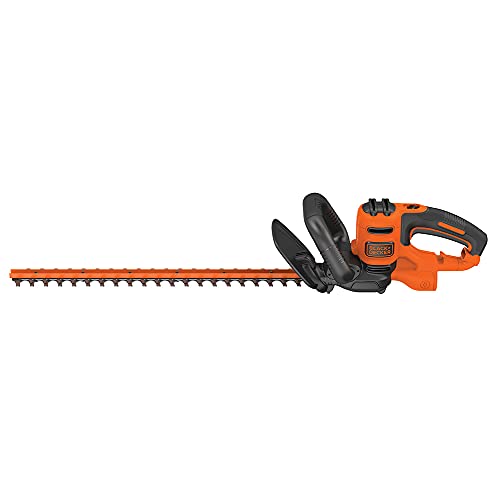
As an Amazon Associate, we earn from qualifying purchases.
Price as of Sep 15, 2026. Product prices and availability are accurate as of the date indicated and are subject to change. Any price and availability information displayed on Amazon at the time of purchase will apply.
Hedge trimming averages $1.00–$2.00 per linear foot for standard 4–8 ft hedges in 2026. Low borders under 4 ft run $0.50–$1.00/lf and tall hedges over 8 ft cost $2.00–$3.50/lf due to ladder or lift equipment. Most residential jobs (50–150 linear feet) total $100–$450.
| Hedge Height | Light Shaping ($/lf) | Standard Trim ($/lf) | Reduction ($/lf) |
|---|---|---|---|
| Under 4 ft | $0.40–$0.75 | $0.50–$1.00 | $0.90–$1.50 |
| 4–8 ft | $0.75–$1.25 | $1.00–$2.00 | $1.75–$3.00 |
| 8+ ft (tall) | $1.25–$2.00 | $2.00–$3.50 | $3.00–$5.00 |
Hedge trimming prices continuous planted rows by linear footage, making it highly predictable. Shrub pruning is priced per individual plant, typically $15–$60 per shrub for freestanding ornamentals. If you have a formal hedge row, use linear-foot pricing. If you have scattered foundation shrubs, per-plant pricing applies.
| Service | Pricing Model | Typical Job Range |
|---|---|---|
| Hedge trimming | Per linear foot | $100–$450 (100 lf) |
| Shrub pruning | Per plant | $75–$300 (5 shrubs) |
| Tree trimming | Per tree | $200–$2,500 per tree |
Leyland cypress and privet are the most expensive to trim because both are extremely fast growers requiring 3–6 passes per year. Leyland cypress also grows 3–5 ft per year and frequently exceeds 10 ft without annual trimming, pushing labor into the tall-hedge rate tier. Boxwood is slowest, needing only 2–4 trims per year.
Yes. Tall hedges over 8 ft require a ladder or towable lift, which adds crew setup time and, for hedges 12 ft and over, lift rental ($150–$400/day). The rate tier jumps from $1.00–$2.00/lf to $2.00–$3.50/lf for standard trim, and reduction on tall Leyland cypress can exceed $5.00/lf. The cost is largely driven by the time the crew spends at height.
| Height | Standard Trim ($/lf) | Reduction ($/lf) |
|---|---|---|
| Under 4 ft | $0.50–$1.00 | $0.90–$1.50 |
| 4–8 ft | $1.00–$2.00 | $1.75–$3.00 |
| 8–12 ft | $2.00–$3.00 | $3.00–$4.50 |
| 12+ ft | $2.50–$3.50 | $4.00–$6.00+ |
For hedges needing 3+ trims per year (privet, Leyland cypress), an annual contract typically saves 10–20% versus booking individual visits. Contractors build route efficiency into the contract rate. For slow-growing boxwood or arborvitae needing 1–2 annual trims, single-visit pricing is often more competitive — compare both quotes.
Late fall and early winter (November–February) are the slowest months for most landscapers, and many offer 10–15% discounts to fill schedule gaps. Spring (April–May) is peak demand and carries the highest rates. Dormant-season trimming is also ideal for most deciduous hedge species, with faster wound closure and lower disease transmission risk.
Inputs
Result
Inputs
Result
Arborvitae at 10 ft enters the tall-hedge rate tier, requiring two-person ladder work. Northeast labor adds 20–25% above national rates.
Inputs
Result
Quote = Linear footage × Per-foot rate (height tier) + Scope premium + Debris handling + Minimum chargeFormal hedge trimming is priced by linear footage multiplied by a per-foot rate that scales with hedge height. Standard 4–8 ft hedges run $1.00–$2.00/lf; tall hedges over 8 ft run $2.00–$3.50/lf due to ladder or lift crew requirements. A scope premium of 50–100% applies to hard reduction or rejuvenation cuts. Debris chipping or hauling adds $40–$150 depending on volume. A minimum service charge of $75–$150 applies to any visit regardless of footage.
Where:
Per-foot rate= Under 4 ft: $0.50–$1.00/lf; 4–8 ft: $1.00–$2.00/lf; 8+ ft: $2.00–$3.50/lfScope premium= Light shaping: base rate; Standard: +0%; Reduction: +50–100%Debris handling= On-site chipping $40–$100; haul-off $80–$150Minimum charge= $75–$150 per visit regardless of hedge sizeFormal hedge trimming in the US runs $0.75–$2.50 per linear foot for most residential jobs in 2026, with the specific rate driven primarily by hedge height, species density, and trim scope. A typical 75-foot privet hedge trimmed to a neat 5-foot profile costs $90–$170 in the Midwest, while the same footage in a tall 10-foot arborvitae privacy screen in the Northeast runs $250–$430 once the ladder-crew premium and regional labor markup are factored in. Most homeowners pay $120–$400 per visit for 50–150 linear feet of standard hedge maintenance, and nearly all contractors apply a minimum service charge of $75–$150 regardless of how small the job is.
The reason hedge trimming prices so predictably by linear foot is that formal hedges are continuous planted rows, and contractors price them like a production job: so many feet of material to clip per hour at a given height. This is fundamentally different from how individual shrub pruning is priced (per plant, based on species and condition) or how tree trimming is priced (per tree, based on height, canopy volume, and access difficulty). When you have a hedge row, measure its total linear footage and height — those two numbers define 70% of your quote before the landscaper sets foot in the yard.
Pricing data in this guide is sourced from LawnStarter, HomeGuide, and Angi quotes aggregated from 2025–2026 landscaping bids across 40+ US markets. Rates vary 20–30% by region: the South and Midwest run 10–20% below the national midpoint, while the Northeast and coastal West run 15–30% above. Use the calculator above to scope your specific hedge, then read on for the height tiers, species cost differences, and the factors that most frequently inflate a hedge trimming quote beyond the initial estimate.
Low-profile hedges under 4 feet — including formal boxwood borders, low privet, and clipped yew rows — are the cheapest to maintain at $0.50–$1.00 per linear foot for standard trimming. At this height, a single landscaper with hand shears and a step stool can work at roughly 20–30 linear feet per hour, so a 50-foot low boxwood border takes under two hours of labor plus travel and setup. The 2026 national midpoint for this bracket is about $0.70 per foot, though formal boxwood that requires crisp geometric lines with box shears commands the higher end of the range because precision work is slower than rough shaping.
Standard 4–8 foot hedges — the most common residential category, covering mid-height privet, arborvitae at 5–8 feet, and established boxwood screens — average $1.00–$2.00 per linear foot. The crew moves at 15–20 linear feet per hour because both sides and the top must be cut, and a gas or electric hedge trimmer handles the bulk while detail work requires hand tools. Arborvitae is slightly more expensive than privet in this tier because its layered branch structure requires more passes to achieve a clean finish. Leyland cypress in the 5–8 foot range also prices here but grows so quickly that it frequently crosses into the tall-hedge tier without annual maintenance.
Tall hedges over 8 feet are the most expensive category due to the equipment and crew-size requirements. Any hedge above 8 feet typically requires a two-person crew with an extension ladder; hedges above 12 feet often require a towable aerial lift ($150–$350/day rental cost that the contractor absorbs or passes through). The rate tier jumps to $2.00–$3.50 per linear foot for standard trimming and $3.50–$5.50 for hard reduction. A 100-foot Leyland cypress screen at 12 feet, trimmed annually to shape, typically runs $250–$420 in the Midwest and $330–$560 in the Northeast.
| Hedge Type | Under 4 ft ($/lf) | 4–8 ft ($/lf) | 8+ ft ($/lf) |
|---|---|---|---|
| Boxwood | $0.60–$1.25 | $1.00–$2.00 | Rarely this tall |
| Privet | $0.50–$1.00 | $0.90–$1.75 | $2.00–$3.00 |
| Arborvitae | $0.65–$1.10 | $1.00–$2.00 | $2.00–$3.25 |
| Leyland Cypress | n/a | $1.25–$2.00 | $2.25–$3.50 |
| Mixed / Other | $0.50–$1.00 | $0.90–$1.75 | $1.75–$3.00 |
Minimum service charges of $75–$150 apply to virtually every hedging job regardless of size. A 20-foot boxwood at $0.70/lf only totals $14 in material labor, but the crew still charges the minimum to cover travel, setup, and equipment haul. Plan for at least a $75–$150 base cost per visit.
Linear footage and height are the primary cost drivers, but six additional factors routinely push quotes 20–60% above the per-foot baseline. Access difficulty is the first: hedges running along a fence line on two sides (left and right of the row) require the crew to work around physical barriers, while a freestanding hedge in an open lawn is faster. Hedges bordering a driveway, patio, or structure where clippings cannot be allowed to fall freely require tarping or careful hand-gathering of debris, adding $30–$80 to cleanup time per visit.
Species growth rate is the second major factor and determines how often you need to book a visit. Privet and Leyland cypress grow 2–4 feet per year untrimmed and need 3–6 maintenance visits annually to stay tidy, while arborvitae grows 1–2 feet per year and needs only 1–2 annual trims. Hedges that have gone 2+ years without trimming present a significantly larger job than routine maintenance: a 100-foot privet that was last trimmed 3 years ago may require a full reduction pass before shaping, doubling the labor cost on the first visit. Debris volume is directly related — heavy reduction cuts produce 2–3x more green waste than a light shaping pass, and haul-off runs $80–$200 for substantial loads.
Regional labor is the third driver: coastal metros (Boston, New York, Seattle, San Francisco) run 20–35% above the national midpoint, while rural South and Midwest markets run 10–20% below. The final factor is bundling: landscapers who are already on your property for lawn mowing, mulch, or other services often discount hedge trimming 10―20% when added to an existing service agreement. If you plan to refresh your mulch beds at the same time, the mulch delivery cost calculator can help you scope that companion line item and potentially negotiate a bundled visit rate with your landscaper.
The three most commonly confused landscaping services — hedge trimming, shrub pruning, and tree trimming — are priced with completely different models and require different crew skills. Formal hedge trimming is a production-line task: the contractor moves along a continuous row and clips to a defined profile. It prices by linear foot because that is directly proportional to how long the job takes. The shrub pruning cost calculator handles the different scenario of individually spaced foundation plants, ornamental shrubs, or mixed border plantings where each plant is assessed individually and priced per shrub ($15–$60 per plant depending on size and species).
Tree trimming is an entirely separate discipline requiring ISA-certified arborists for health pruning, rope-rigging of large limbs, crane or bucket-truck access for tall specimens, and liability coverage appropriate to climbing operations. The tree trimming cost calculator handles single specimen trees priced per tree ($75–$2,500+ per tree). If you have a large hedge row that has grown out of control and is now behaving more like a row of individual trees, you may need a hybrid quote: a landscape crew for the routine hedge work plus a separate arborist visit for any specimen that has developed a dominant central leader and requires health-focused pruning.
Many residential properties have all three: a formal boxwood border along the driveway (hedge trimming by the foot), several ornamental Japanese maples in the garden beds (shrub pruning per plant), and one or two large shade trees overhanging the yard (tree trimming per tree). The key to accurate budgeting is getting separate line items for each service type in your quote — many landscapers bundle them, which makes it harder to compare bids apples to apples. Request that the quote break out the hedge row (with footage and per-foot rate), the individual shrubs (with plant count and per-plant rate), and any tree work separately.
Rule of thumb: if the plants are in a continuous row that defines a boundary or screen, it is hedge trimming priced by the foot. If the plants are individually spaced accent plants in a bed, it is shrub pruning priced per plant. If any plant has a trunk, it may need an arborist.
A well-structured hedge trimming quote should specify: total linear footage measured, the height tier being quoted, the trim scope (light shaping, standard maintenance, or reduction), the per-foot rate or lump sum, whether debris removal is included or a line item, and the contractor license and insurance status. Quotes that give only a lump sum with no footage or rate breakdown are difficult to compare against competing bids and leave you with no recourse if the crew underperforms. Insist on a written scope that includes linear footage — this protects both parties.
For tall hedges, verify whether the quote includes or excludes lift equipment rental. Some contractors own aerial equipment and absorb the cost; others rent and pass it through as a separate line. A $300 hedge trimming quote that is missing a $200 lift rental is not a better deal than a $450 all-inclusive quote. Similarly, check the debris handling terms: green waste disposal is a real cost, and contractors who skip it are either hauling to an unlicensed dump or leaving the clippings on your lawn. Standard debris handling (chipping on site and blowing clean) should be included in the base price for most jobs.
Bundling hedge trimming with other landscape services frequently produces the best per-foot economics. If your landscaper is already visiting weekly for mowing, adding a quarterly hedge trim to the service agreement typically runs 10–20% below standalone rates. For property refreshes that combine trimming with new mulch or bed edging, the landscape design service cost calculator can help scope the broader project and give you a reference point for a bundled service quote that covers the full landscape maintenance scope.
Measure your hedge
Walk the full length of each hedge row and record linear footage. Measure height at the tallest point. Note which sides are accessible (both sides vs. one side against a fence).
Define the scope
Decide whether you need light shaping (minor touchup), standard maintenance trim (remove new growth to restore profile), or reduction (cut back significantly into old wood). Reduction adds 50–100% to cost.
Get three written quotes
Request quotes specifying per-foot rate, footage measured, scope, debris handling, and insurance. Minimum three bids from licensed landscape contractors.
Verify insurance
Require general liability insurance minimum $500,000 and workers compensation for all crew. An uninsured landscaper injured on your property may become your liability.
Compare all-in totals
Add debris removal and lift equipment to any quote that excludes them before comparing. All-in total is the only apples-to-apples metric.
Privet and Leyland cypress are the highest-maintenance hedge species in US residential gardens. Privet grows 2–3 feet per year and, without regular trimming, becomes a rangy thicket rather than a formal screen. Most formal privet hedges need 3–4 trimming visits per year to maintain a tidy profile: one main cut in late spring after the first flush of growth, a mid-summer touchup, and a light fall shaping. An annual maintenance contract for 100 linear feet of privet typically runs $350–$600 for three visits, which is significantly cheaper than three separate on-demand bookings at peak rates. Leyland cypress is even more aggressive at 3–5 feet of growth per year and can quickly exceed safe trimming height without a lift — annual trimming is essential to keep it in the standard-height cost tier.
Arborvitae is the most forgiving hedge plant from a maintenance cost perspective. 'Emerald Green' arborvitae grows only 6–12 inches per year and needs only one main trim annually — typically in late spring after any winter deadwood is visible and before summer heat. 'Green Giant' arborvitae grows 3–5 feet per year and needs 1–2 trims. Boxwood is the slowest grower of the common formal hedge species at 4–6 inches per year for most cultivars, requiring 2–3 light shaping visits per year to maintain crisp geometry. Despite slow growth, formal boxwood hedges should not be skipped for 2+ years — boxwood blight and environmental stress cause dieback that becomes visible in a neglected hedge.
The best trimming season for most formal hedges is late spring (May–early June) when the first flush of growth has hardened off but before summer heat stress. A second cut in late summer (August–early September) allows new growth to harden before frost. Avoid trimming in late fall within 4–6 weeks of first frost — new growth triggered by a late-season trim is vulnerable to freeze damage and may brown out over winter. For scheduling purposes, booking spring trimming in February–March typically secures the best rates before peak-season demand drives up landscaper pricing.
| Hedge Species | Annual Growth | Trims Needed/Year | Best Season |
|---|---|---|---|
| Privet | 2–3 ft/yr | 3–4 visits | Late spring + summer + fall |
| Leyland Cypress | 3–5 ft/yr | 2–3 visits | Late spring + late summer |
| Arborvitae (Green Giant) | 3–5 ft/yr | 1–2 visits | Late spring |
| Arborvitae (Emerald Green) | 6–12 in/yr | 1 visit | Late spring |
| Boxwood | 4–6 in/yr | 2–3 visits | Late spring + late summer |
Read our guide
Read our guide
Read our guide
Price hedge work, lawn services, irrigation, pool builds, and other outdoor service projects.
Last Updated: Sep 15, 2026
This calculator is provided for informational and educational purposes only. Results are estimates and should not be considered professional financial, medical, legal, or other advice. Always consult a qualified professional before making important decisions. UseCalcPro is not responsible for any actions taken based on calculator results.