1. Calculate
Choose your project scope and see the estimated price range.
Get a realistic 2026 estimate for a professional facial by treatment type, day spa vs med spa, and add-ons — then compare quotes from local skincare clinics.
Instant project estimate
The estimate is free. Additional details are optional.
Complete the project details and calculate to see a price range and next steps.
Clear next step
Choose your project scope and see the estimated price range.
Understand the cost drivers and what impacts your final quote.
Carry your scope into a local quote request if you choose.


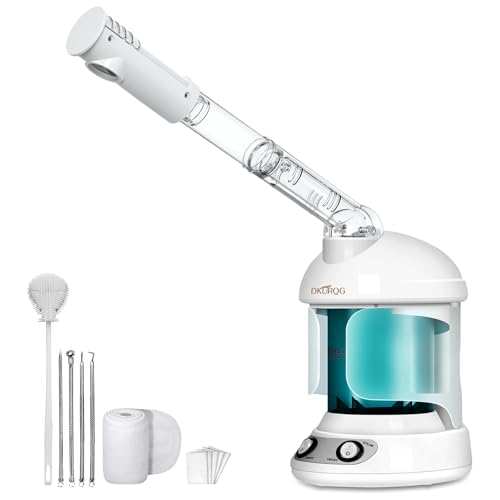
As an Amazon Associate, we earn from qualifying purchases.
Price as of Sep 17, 2026. Product prices and availability are accurate as of the date indicated and are subject to change. Any price and availability information displayed on Amazon at the time of purchase will apply.
A professional facial costs $90 to $300 per visit in 2026 for most clients: a classic facial runs $75 to $150, a HydraFacial $150 to $350, microdermabrasion $100 to $200, dermaplaning $75 to $150, and a chemical peel $100 to $350. Med spas run 20 to 40 percent above day spas, boosters add $25 to $150 each, and an 18 to 20 percent tip adds $15 to $60.
Most clients pay $90 to $300 per visit for a professional facial in 2026. A classic relaxing facial runs $75 to $150, a HydraFacial $150 to $350 (about $225 on average), microdermabrasion $100 to $200, dermaplaning $75 to $150, and a chemical peel $100 to $350 depending on strength. Price scales with the treatment type, whether you book a day spa or a med spa, the add-on boosters you choose, and your region, so a basic facial in a low-cost market sits near the floor while a Platinum HydraFacial in a major metro lands at the top.
| Facial Type | Typical Per Visit | Best For |
|---|---|---|
| Classic / basic facial | $75–$150 | Maintenance, relaxation |
| HydraFacial | $150–$350 | Hydration, glow, all skin types |
| Microdermabrasion | $100–$200 | Texture, dullness, fine lines |
| Chemical peel | $100–$350 | Pigment, acne, deeper resurfacing |
| Dermaplaning | $75–$150 | Peach fuzz, smooth makeup base |
A day spa is cheaper for the same named service — a classic facial is $75 to $150 at a day spa versus $120 to $250 at a med spa — because med spas operate under medical supervision and use stronger, medical-grade products and devices. The trade-off is depth: med spas can perform deeper chemical peels, prescription-strength serums, and combination treatments a day spa is not licensed to do. For relaxation and basic skin maintenance a day spa is the better value, while results-driven treatments for acne, pigment, or aging usually justify the med-spa premium.
Yes — tipping is customary for facials at day spas and salons. The standard gratuity is 15 to 20 percent of the pre-tip service price, which adds about $15 to $60 on a typical facial. Tip on the original price, not a discounted membership or package rate, and tip the esthetician directly. The main exception is a physician-owned med spa, where some clinics fold gratuity into the price or have a no-tip policy for medical procedures — always ask at checkout so you neither over- nor under-tip.
If you get facials monthly, a membership or package almost always saves money. Monthly memberships run $99 to $179 and typically include one treatment plus discounted boosters, saving $30 to $50 per session versus walk-in pricing. Series packages of 5 to 10 sessions save 10 to 25 percent up front. The math favors a plan once you book roughly six or more facials a year; below that, paying per visit avoids locking up cash in unused sessions. Read the fine print on rollover, freeze, and cancellation terms before committing.
Add-on boosters are where a quoted facial price quietly climbs. Common upgrades — LED light therapy, dermaplaning, a brightening or peptide booster, lymphatic drainage, or an enzyme exfoliation — each add $25 to $150, and a HydraFacial Platinum can stack several. Two boosters can push a $200 HydraFacial past $300 before tip. Add-ons are optional and results often come from consistency rather than piling on extras, so prioritize one targeted booster for your main concern instead of accepting every upsell at the chair.
Inputs
Result
A standard relaxing facial at a day spa in a mid-cost market sits near the national midpoint. With no boosters, the only add to the base service is an 18 percent tip on the pre-tip price.
Inputs
Result
A med-spa HydraFacial in a premium metro starts above the national average, a targeted booster and LED therapy stack on top, and an 18 percent tip is added on the combined pre-tip total.
Inputs
Result
A monthly membership locks a recurring HydraFacial at a discounted rate with a complimentary booster. The effective per-session cost drops $30 to $50 below walk-in pricing for anyone who treats monthly.
Visit price = Base treatment fee + Add-on boosters + Setting premium + Gratuity − Plan discountA facial is priced from a base treatment fee for the chosen service, then adjusted up for med-spa setting and boosters, reduced by any membership or package discount, and finished with gratuity on the pre-tip price.
Where:
Base treatment fee= Classic $75–$150, HydraFacial $150–$350, microdermabrasion $100–$200, dermaplaning $75–$150, chemical peel $100–$350Add-on boosters= LED, dermaplaning, brightening or peptide boosters add $25–$150 eachSetting premium= Med spas run roughly 20–40% above day spas for a comparable servicePlan discount= Memberships save $30–$50 per session; series packages save 10–25%Gratuity= 15–20% of the pre-tip service price, about $15–$60, at day spas and salonsBreak-even visits = Membership monthly fee ÷ (Walk-in price − Member price)To decide whether a membership pays off, divide what the plan costs by the per-session savings. If you book at least that many facials, the membership is cheaper than paying per visit.
Where:
Membership monthly fee= Typical $99–$179 per month, usually including one treatmentWalk-in price= The standard per-visit price for the same service, e.g. $175–$250 for a HydraFacialMember price= The discounted included-session rate, typically $30–$50 lowerBreak-even visits= Most plans break even around six or more facials per yearA facial is one of the most popular professional skincare treatments in the US, and the price you pay swings widely depending on what you book. In 2026, most clients spend $90 to $300 per visit, but the honest answer is that "a facial" covers everything from a $75 relaxing cleanse at a neighborhood day spa to a $400-plus med-spa HydraFacial loaded with boosters. The headline range is useful for budgeting, but the real number comes down to five inputs: treatment type, day spa versus med spa, add-on boosters, whether you pay per visit or on a plan, and gratuity.
Treatment type is the single biggest driver. A classic facial — cleanse, exfoliate, extract, mask, and moisturize — runs $75 to $150 and is the entry point for most spas. A HydraFacial, the device-based treatment that cleanses and infuses serums in one pass, runs $150 to $350 and averages about $225 nationally. Microdermabrasion lands at $100 to $200, dermaplaning at $75 to $150, and a chemical peel anywhere from $100 to $350 depending on the strength of the acid. Use the calculator above to land on a figure for your specific treatment, then read on to see what each input is actually pricing.
It also helps to know what the quoted price does and does not include. The base fee covers the esthetician's time, the products, and the room — but boosters, LED therapy, and dermaplaning are almost always separate line items, and at day spas a 15 to 20 percent tip is expected on top. When you compare two quotes, confirm whether boosters and gratuity are bundled or added, because those two lines alone can swing the out-the-door price by $50 to $150.
| Facial Type | Typical Per Visit | What It Targets | Best For |
|---|---|---|---|
| Classic / basic facial | $75–$150 | Cleansing, hydration | Maintenance, relaxation |
| HydraFacial | $150–$350 | Hydration, glow | All skin types, events |
| Microdermabrasion | $100–$200 | Texture, dullness | Fine lines, rough skin |
| Chemical peel | $100–$350 | Pigment, acne, aging | Resurfacing, tone |
| Dermaplaning | $75–$150 | Peach fuzz, smoothness | Makeup base, glow |
Most spas quote a base treatment price and then upsell boosters at the chair. Ask for the all-in price including any add-ons and tip before you book, so the number at checkout matches the number you budgeted.
Two people can walk into two different spas, ask for "a facial," and pay prices that differ by a hundred dollars or more. The variance is rarely random — it tracks a handful of predictable factors. Understanding them lets you read any quote critically and decide where it is worth paying more and where you are simply being upsold.
Run every quote against the list below. If a provider cannot explain why their facial costs what it does — what tier of products, what device, what boosters are included — the price is likely padded with extras you may not need. The base treatment, the setting, and one well-chosen booster should account for most of a fair price.
Ask whether dermaplaning, LED, or a booster is included or billed separately before you sit down. The single most common surprise on a facial invoice is an add-on the client assumed came with the base service.
Once you know roughly what your facial should cost, the next decision is where to get it — and the three realistic options serve different goals. A day spa or salon is built around relaxation and routine maintenance: a classic facial there is the most affordable professional option, and it is the right call if your skin is generally healthy and you want a calming reset. The spa day cost calculator helps if a facial is just one part of a larger pampering visit with massage and amenities bundled in.
A med spa operates under medical supervision and is the right setting for results-driven concerns — stubborn acne, melasma, deeper wrinkles, or sun damage — that need medical-grade peels, prescription serums, or device treatments a day spa cannot legally perform. You pay 20 to 40 percent more, but you are buying clinical depth and a provider who can adjust the protocol to your skin. At-home skincare is the third tier: a solid routine of cleanser, retinoid, vitamin C, and SPF costs a fraction of a single facial spread across months and does most of the day-to-day work, with professional facials acting as periodic boosters rather than the foundation.
The practical sequence most people follow is to build a consistent at-home routine first, add periodic facials for maintenance, and step up to med-spa treatments only when a specific concern demands clinical intervention. Paying for the most aggressive treatment a stage too early rarely pays off — a healthy maintenance facial every four to six weeks delivers most of the visible benefit for far less than a stack of premium med-spa sessions.
| Option | Typical Cost | Best Stage |
|---|---|---|
| At-home routine | $20–$80/mo in products | Daily foundation for everyone |
| Day spa facial | $75–$200/visit | Maintenance, relaxation |
| Med spa facial | $150–$400/visit | Acne, pigment, aging |
| Membership plan | $99–$179/mo | Monthly regulars |
Buy the treatment your skin actually needs, not the most advanced one on the menu. A consistent at-home routine plus a maintenance facial beats sporadic premium treatments for both results and budget.
If facials are part of your regular routine, the per-visit price is the wrong number to optimize — the annual total is. A walk-in HydraFacial at $200 every month is $2,400 a year, while the same treatment on a $149 membership runs about $1,800, a $600 difference for identical service. Memberships typically bundle one treatment per month plus discounted boosters and save $30 to $50 per session; series packages of five to ten sessions save 10 to 25 percent paid up front. The break-even point is roughly six facials a year — below that, paying per visit avoids locking up cash in sessions you may not use.
Beyond plans, several levers cut the cost of any single facial without sacrificing results. Book the base treatment and add just one targeted booster instead of accepting every upsell. Watch for new-client specials and slower-season promotions, which often discount a first HydraFacial by 20 to 40 percent. Tip on the pre-discount service price rather than padding it, and skip the impulse retail products at checkout — the same actives are usually cheaper online. The massage therapy cost calculator and IV therapy cost calculator use the same logic if you are budgeting a broader wellness routine.
Finally, treat your esthetician relationship as ongoing. A provider who knows your skin recommends the right cadence — often less frequent and less expensive than the standard upsell — and steers you toward the boosters that actually move the needle for your concern. A spa that pushes the most expensive package on every visit, regardless of how your skin is responding, is selling treatments rather than results, and that is the fastest way to overspend on facials.
Never join a membership on the spot at your first visit. Pay per session two or three times to confirm you like the spa and will actually use a monthly treatment before locking up cash in a recurring plan.
Read our guide
Read our guide
Read our guide
Price facials, massage, spa days, and wellness treatments, then plan a realistic self-care and skincare budget.
Last Updated: Sep 17, 2026
This calculator is provided for informational and educational purposes only. Results are estimates and should not be considered professional financial, medical, legal, or other advice. Always consult a qualified professional before making important decisions. UseCalcPro is not responsible for any actions taken based on calculator results.