1. Calculate
Choose your project scope and see the estimated price range.
Get a realistic 2026 all-in estimate for a post-pregnancy combination procedure by procedure package and surgeon credentials — then connect with board-certified plastic surgeons near you.
Instant project estimate
The estimate is free. Additional details are optional.
Complete the project details and calculate to see a price range and next steps.
Clear next step
Choose your project scope and see the estimated price range.
Understand the cost drivers and what impacts your final quote.
Carry your scope into a local quote request if you choose.
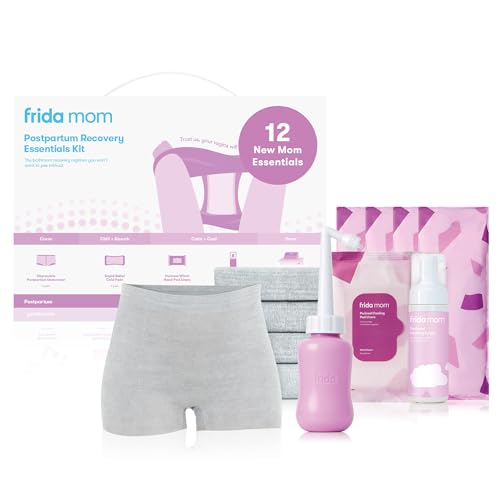


As an Amazon Associate, we earn from qualifying purchases.
Price as of Sep 20, 2026. Product prices and availability are accurate as of the date indicated and are subject to change. Any price and availability information displayed on Amazon at the time of purchase will apply.
A mommy makeover costs $10,000–$30,000 all-in in 2026 depending on the procedure combination: breast plus tummy tuck averages $12,000–$20,000, breast plus liposuction $10,000–$18,000, and a full makeover combining breast surgery, tummy tuck, and liposuction runs $18,000–$30,000. These figures include surgeon, anesthesia, and facility fees. A board-certified plastic surgeon adds a 20–28% premium.
A mommy makeover costs $10,000 to $30,000 all-in in 2026 depending on the procedures combined, the surgeon's credentials, and geographic location. The most common combination — breast procedure plus tummy tuck — runs $12,000 to $20,000 at a cosmetic surgery center, and up to $25,600 with a board-certified plastic surgeon. Adding liposuction to breast surgery costs $10,000 to $18,000. A full makeover (breast plus tummy tuck plus liposuction) ranges from $18,000 to $30,000 at a cosmetic center and up to $38,400 with an ABPS-certified surgeon.
| Procedure Combination | Cosmetic Center Range | Board-Certified PS Range |
|---|---|---|
| Breast + tummy tuck | $12,000–$20,000 | $14,400–$25,600 |
| Breast + liposuction | $10,000–$18,000 | $12,000–$23,040 |
| Full makeover (all three) | $18,000–$30,000 | $21,600–$38,400 |
A mommy makeover is not a single standardized procedure — it is a surgeon-customized combination of two or more post-pregnancy restorative operations performed in a single anesthesia session to address changes to the breasts and abdomen. The breast component covers augmentation (implants to restore lost volume), mastopexy (lift to correct ptosis or drooping), or augmentation-lift (both together). The abdominal component covers a full abdominoplasty (tummy tuck) addressing the entire abdominal wall including navel repositioning and muscle repair, or a mini-tummy tuck for the lower abdomen only. Liposuction of the flanks, outer thighs, or lower back may be included as a third element. The exact combination is determined at the pre-operative consultation based on the patient's anatomy, goals, and medical history.
| Component | What It Fixes | Typical Stand-Alone Cost |
|---|---|---|
| Breast augmentation | Volume loss | $4,500–$8,500 |
| Breast lift (mastopexy) | Drooping/ptosis | $5,000–$9,500 |
| Augmentation-lift | Volume + drooping | $7,000–$12,000 |
| Full tummy tuck | Skin laxity + muscle separation | $6,000–$10,000 |
| Liposuction (1–2 zones) | Stubborn fat deposits | $4,500–$8,000 |
For a mommy makeover — which combines two or three major procedures in a single general anesthesia event — the board-certified plastic surgeon (ABPS) premium of 20 to 28 percent is most clearly justified. A breast-plus-tummy-tuck case at a cosmetic center priced at $16,000 runs $19,200 to $20,480 with an ABPS surgeon. The premium reflects longer residency and fellowship training specifically in reconstructive and aesthetic surgery, higher malpractice overhead, and deeper operative judgment for complex combined cases. The value case is strongest for abdominoplasty (where asymmetric skin removal, muscle plication, and navel positioning all require nuanced intraoperative decisions) and for augmentation-lift (where balancing implant size with the degree of lift avoids common outcomes like bottoming out or asymmetric nipple position). For straightforward cases on patients at stable weight with mild skin laxity and good tissue quality, an experienced cosmetic surgery center with a strong track record can be a defensible alternative.
| Provider Type | Typical Premium | Best For |
|---|---|---|
| Cosmetic surgery center | Baseline | Simpler breast-only or lipo-focused cases, good anatomy |
| Board-certified PS (ABPS) | 20–28% above baseline | Tummy tuck, aug-lift, full makeover, revisions |
The procedure combination is the single largest cost driver. Breast-plus-tummy-tuck is typically the most expensive two-procedure combination because abdominoplasty has a long operative time (two to three hours) and requires more facility resources than liposuction of equivalent zones. Breast-plus-liposuction is generally less expensive because liposuction of one to three moderate zones takes one to two hours, cutting anesthesia and OR time. The full makeover adds liposuction to the breast-plus-tummy-tuck combination, increasing session length, facility time, and anesthesia exposure — resulting in the highest total. The financial logic of combining procedures is that anesthesia and facility overhead are shared: doing three procedures in one session costs substantially less than three separate sessions, each with its own anesthesia and facility fees.
| Combination | All-In Range (2026) | Typical Session Time |
|---|---|---|
| Breast + tummy tuck | $12,000–$20,000 | 3–5 hours |
| Breast + liposuction | $10,000–$18,000 | 2–4 hours |
| Full makeover (breast + tummy tuck + lipo) | $18,000–$30,000 | 4–6 hours |
Standard health insurance does not cover elective cosmetic procedures, including the breast augmentation, breast lift, and cosmetic liposuction components of a mommy makeover. A narrow exception applies to the tummy tuck component when the surgeon documents and the insurer confirms that the procedure is medically necessary — for example, to treat a symptomatic pannus (a large skin overhang causing chronic skin infections, rashes, or back pain) or to repair a significant diastasis recti causing functional impairment. In those cases, the medically necessary portion may receive partial coverage while the cosmetic components remain self-pay. Financing is widely available through medical lending programs. Any combination involving 100% elective procedures should be budgeted as entirely self-pay.
| Component | Insurance Typically Covers? | Exception Condition |
|---|---|---|
| Breast augmentation | No | None |
| Breast lift | No | None (rarely, post-mastectomy reconstruction) |
| Tummy tuck | Rarely | Symptomatic pannus, documented diastasis |
| Liposuction | No | Lipedema diagnosis (rare) |
Geographic location shifts the total cost by 25 to 45 percent above or below the national average. Coastal metros — New York City, Los Angeles, Miami, San Francisco, and Chicago — command the highest prices, driven by commercial rent, physician demand, and local market expectations. Mid-size cities and most of the Midwest and Southeast run near national averages. A board-plus-tummy-tuck case priced at $14,000 in Dallas or Charlotte might run $18,000 to $22,000 in Manhattan or Beverly Hills. Medical tourism to countries like Mexico, Colombia, the Dominican Republic, and Turkey offers 40 to 60 percent savings relative to US prices — but significantly complicates follow-up care, complication management, and access to revision if needed. Most surgeons will not take on a revision of another surgeon's work from abroad without a full consultation and their own pricing.
| Region | Cost vs National Average | Example City |
|---|---|---|
| Major coastal metro | +25–40% | NYC, LA, Miami, SF |
| Mid-size Sun Belt city | Near average | Dallas, Atlanta, Phoenix |
| Midwest / rural Southeast | −10–20% | Columbus, Memphis, Tulsa |
| Medical tourism abroad | −40–60% | Bogotá, Monterrey, Istanbul |
Inputs
Result
The most common mommy makeover combination at a cosmetic surgery center runs $12,000 to $20,000 all-in under general anesthesia. This reflects the base range for this combination at the baseline surgeon tier with no regional adjustment applied.
Inputs
Result
Applying the board-certified plastic surgeon multiplier of 1.20–1.28 to the $10,000–$18,000 base range yields $12,000 (10,000 × 1.20) at the low end and $23,040 (18,000 × 1.28) at the high end.
Inputs
Result
The full makeover base of $18,000–$30,000 multiplied by 1.20–1.28 yields $21,600 (18,000 × 1.20) to $38,400 (30,000 × 1.28). At major coastal metros add another 25–40% on top of the ABPS figure.
Total = Surgeon fee + Anesthesia fee + Facility feeThe total out-the-door cost is the sum of three separately billed components, just like any cosmetic surgery. Combined-procedure quotes bundle all three into a single number, but individual components can still be requested as a line-item breakdown to compare clinics accurately.
Where:
Surgeon fee= 45–55% of total; scales with procedure scope, session length, and surgeon credentialsAnesthesia fee= 10–20% of total; mommy makeovers almost always require general anesthesia ($1,500–$2,500)Facility fee= 25–35% of total; licensed outpatient surgical center for 3–6-hour combined sessionsBoard-certified total = Base cost × 1.20 to 1.28Board-certified plastic surgeons (ABPS) command a 20–28% premium above cosmetic surgery center pricing for equivalent combinations, reflecting deeper surgical training, higher malpractice premiums, and the judgment demanded by complex combined procedures.
Where:
Base cost= All-in combined-procedure quote from a cosmetic surgery center1.20–1.28= ABPS credential multiplier; higher end for full makeover and aug-lift casesSavings ≈ (Separate session overhead × n-1) where n = number of proceduresPerforming multiple procedures in one session avoids paying anesthesia and facility fees multiple times. Each additional procedure in the same session adds surgeon time only, not a full new anesthesia-and-OR overhead.
Where:
Separate session overhead= Anesthesia + facility fees per session: typically $2,000–$4,000n-1= Number of additional procedures beyond the first; a three-procedure makeover avoids 2 extra overheadsThe figures this calculator produces are informational estimates based on 2026 US market data. As noted in the disclaimer above, actual procedure costs vary significantly by provider, location, individual anatomy, and complications. With that framing in mind, here is what the US mommy makeover market looks like in 2026. The most commonly requested combination — a breast procedure combined with a full abdominoplasty (tummy tuck) — runs $12,000 to $20,000 all-in at a cosmetic surgery center, covering the surgeon's fee, general anesthesia, and the outpatient surgical facility. Choosing breast surgery combined with liposuction instead of a tummy tuck typically costs $10,000 to $18,000, because liposuction of one to three modest zones has a shorter operative time and lower facility overhead than an abdominoplasty. The most comprehensive option — a full makeover combining breast surgery, tummy tuck, and liposuction in a single session — ranges from $18,000 to $30,000 at a cosmetic center, with a board-certified plastic surgeon's premium pushing the upper end to $38,400.
Those ranges are wide for good reasons. On the breast side, surgery can mean augmentation alone (implants, $4,500–$8,500), a breast lift alone (mastopexy, $5,000–$9,500), or an augmentation-lift combining both ($7,000–$12,000). On the abdominal side, a full abdominoplasty with muscle repair and navel repositioning costs $6,000–$10,000, while a mini-tummy tuck addressing only the lower abdomen runs $4,000–$6,500. On the liposuction side, a single small zone adds $3,000–$5,000 while three zones in the same session run $6,000–$10,000. A surgeon who gives you a headline price of 'a mommy makeover costs $15,000' without specifying which breast procedure, which tummy tuck type, and which liposuction zones is quoting a starting anchor, not a case-specific estimate. The calculator above applies your combination selection and surgeon preference to a consistent all-in base so you arrive at consultations with a defensible planning number.
The financial logic of combining procedures is that anesthesia and the operating room are shared across the session. If a tummy tuck and a breast lift were booked as two separate procedures on two different days, you would pay general anesthesia fees and surgical facility fees twice — adding $2,000 to $4,000 or more in duplicated overhead. Performing both in a single session eliminates that duplication. The trade-off is a longer procedure (three to six hours for full makeovers), a more demanding recovery, and a higher single-session risk profile driven by anesthesia duration and total surgical stress. Most board-certified plastic surgeons cap a combined session at four to six hours of operating time to keep risk within acceptable bounds. Combinations that would exceed that limit are best staged across two sessions spaced three to six months apart.
| Procedure Combination | All-In Range (2026) | Typical Session Length |
|---|---|---|
| Breast + tummy tuck | $12,000–$20,000 | 3–5 hours |
| Breast + liposuction | $10,000–$18,000 | 2–4 hours |
| Full makeover (breast + tummy tuck + lipo) | $18,000–$30,000 | 4–6 hours |
Always request a combined-procedure quote rather than adding individual prices. Surgeons typically discount anesthesia and facility fees when combining procedures in a single session — the combined quote is almost always lower than the sum of the standalone prices.
The breast-plus-tummy-tuck combination is the most frequently requested mommy makeover package because it addresses the two anatomical changes most commonly associated with pregnancy and nursing: the breasts (which may lose volume, develop ptosis, or both) and the abdomen (which may have excess skin, muscle separation from diastasis recti, or both). In this combination the breast component most commonly means an augmentation-lift, which addresses both volume loss and drooping in a single operation and typically runs $7,000 to $12,000 as a stand-alone breast procedure. The tummy tuck component adds $6,000 to $10,000 for a standard full abdominoplasty, which repositions the umbilicus, removes a horizontal ellipse of skin between the navel and pubic hairline, and tightens the rectus abdominis muscles if diastasis is present. General anesthesia for the three-to-five-hour combined session adds $1,500 to $2,500. The licensed outpatient surgical facility adds another $1,500 to $3,000. Totaling those components yields a realistic all-in range of $12,000 to $20,000 at a cosmetic center, or up to $25,600 with a board-certified plastic surgeon's 20–28% premium applied.
The breast-plus-liposuction combination suits patients who are at or near their goal weight with localized fat deposits that do not respond to diet and exercise — commonly the flanks, outer thighs, or lower back — alongside breast changes from pregnancy. Because liposuction of one to three moderate zones has a shorter operative time than a full tummy tuck (one to two hours versus two to three hours), the combined session is shorter (two to four hours total), reducing anesthesia exposure and facility overhead. This is also the appropriate combination for patients who have maintained a reasonably firm abdominal wall without significant skin laxity — patients for whom a tummy tuck would be over-treatment. The liposuction component in this combination contributes $4,500 to $8,000 for one to three zones. Adding the breast procedure yields an all-in range of $10,000 to $18,000 at a cosmetic center, or $12,000 to $23,040 with a board-certified surgeon.
The full mommy makeover — breast surgery, tummy tuck, and liposuction combined — is the most comprehensive post-pregnancy restoration, but also the longest, costliest, and most recovery-intensive option. Operating time runs four to six hours under general anesthesia throughout. The patient requires a licensed surgical center with dedicated recovery monitoring, compression garments covering both the torso and liposuction zones, and a recovery period of four to six weeks of restricted physical activity before returning to demanding work or childcare. The price reflects the scope: $18,000 to $30,000 at a cosmetic center, with a board-certified surgeon pushing the upper end to $38,400. Any surgeon recommending this combination should articulate precisely which breast procedure, which tummy tuck type, and which liposuction zones are included — not as an upsell exercise, but because the scope selection drives both the result and the risk profile for your specific anatomy.
| Procedure Component | Typical Stand-Alone Cost Range | Notes |
|---|---|---|
| Breast augmentation | $4,500–$8,500 | Implant type, size, and placement affect cost |
| Breast lift (mastopexy) | $5,000–$9,500 | Anchor, lollipop, or crescent technique |
| Augmentation-lift (aug-lift) | $7,000–$12,000 | Most complex and most common breast option |
| Standard tummy tuck | $6,000–$10,000 | Includes muscle repair (plication) if needed |
| Mini tummy tuck | $4,000–$6,500 | Lower abdomen only, no navel repositioning |
| Liposuction (1–3 zones, combined) | $4,500–$8,000 | Priced lower when bundled vs. stand-alone |
Ask your surgeon which breast procedure and which tummy tuck type they recommend for your anatomy — the answer changes the cost, recovery time, and final result significantly. Do not assume 'breast surgery' and 'tummy tuck' are single standardized procedures with identical pricing.
The largest single price fork in mommy makeover pricing is surgeon credentials. Board-certified plastic surgeons holding American Board of Plastic Surgery (ABPS) certification typically charge 20 to 28 percent more than cosmetic surgery centers, which may employ physicians with general surgery, family medicine, obstetrics, or other non-plastic-surgery backgrounds. For a $16,000 breast-plus-tummy-tuck case at a cosmetic center, the same procedures with an ABPS surgeon run $19,200 to $20,480. For a full makeover at $24,000 through a cosmetic center, the ABPS total reaches $28,800 to $30,720. The premium is driven by higher malpractice premiums, longer postgraduate training (six or more years of residency and fellowship specifically in reconstructive and aesthetic surgery), and the practice overhead of a physician-owned specialty practice. Whether that premium is worth it for your case depends primarily on what you are having done.
A mommy makeover combines two to three major surgeries in a single general anesthesia event, and each of those surgeries involves decisions that compound on each other. Abdominoplasty requires intraoperative judgment about how much skin tension is achievable while maintaining flap perfusion, where to set the reconstructed navel, and how aggressively to plicate the abdominal muscles. These decisions cannot be fully templated in advance; they depend on tissue quality, bleeding behavior, and the anatomy the surgeon finds once the incisions are made. An augmentation-lift adds the challenge of simultaneously placing an implant and repositioning the nipple-areolar complex to a symmetric location — two variables that interact, and where a miscalculation in one affects the other. ABPS board certification reflects the training requirements designed to develop judgment for exactly these scenarios. Cosmetic surgery centers with experienced, high-volume surgeons can deliver excellent results, but the quality variation across non-board-certified physicians is much wider than the variation across ABPS-certified surgeons, making pre-operative vetting of the specific surgeon more critical.
Vetting a provider for a mommy makeover starts with confirming the credential of the operating surgeon — not the medical director, the clinic's reputation, or the surgeon's social media following, but the actual physician who will be in the operating room for your entire procedure. Confirm ABPS board certification at abplasticsurgery.org. Review before-and-after photographs showing results on patients with body proportions similar to yours, specifically looking for tummy tuck results at twelve months (not six weeks) where the scar maturity and final contour are visible. Ask how many mommy makeovers the surgeon performs per year — a surgeon completing 40 or more per year has meaningfully more accumulated judgment than one completing fewer than ten. Ask about the complication and revision protocol: if the result needs adjustment in the first year, what is the policy? Finally, confirm the surgical facility holds AAAHC or JCAHO accreditation. The question is free and the answer is a basic safety data point you should not skip.
| Provider Type | Typical Premium | Best For |
|---|---|---|
| Cosmetic surgery center | Baseline | Breast-only or lipo-focused cases, straightforward anatomy, strong track record required |
| Board-certified PS (ABPS) | 20–28% above baseline | Tummy tuck, aug-lift, full makeover, revisions, complex anatomy |
The surgeon performing your case — not a supervising physician in an adjacent room — should be the one whose credentials, board certification, and before-and-after portfolio you reviewed. Ask at the consultation: 'Who will be in the OR for my entire procedure?' If the answer is unclear, seek another opinion.
The estimates this calculator produces are starting-point planning figures, not quotes and not medical guidance. A mommy makeover is a combination of major surgical procedures performed under general anesthesia, each carrying its own risk profile — and those risks compound when procedures are performed in a single session. Abdominoplasty and augmentation-lift are not low-risk outpatient procedures: they involve real recovery, real potential for complications including seroma, infection, wound dehiscence, asymmetry, implant-related issues, and rare but serious adverse events. No cost calculator can assess whether you are a surgical candidate, which procedures are appropriate for your anatomy and health history, or what realistic outcomes look like for your specific body. Only an in-person consultation with a licensed, board-certified plastic surgeon can provide that assessment.
When selecting a provider for a consultation, confirm ABPS board certification (abplasticsurgery.org) for combined-procedure work. Verify the surgical facility's accreditation status (AAAHC or JCAHO). Confirm that the anesthesia provider is a dedicated anesthesiologist or CRNA assigned solely to monitoring you — not the surgeon doubling as sedation monitor. Review before-and-after photographs at twelve months post-operatively, not at six weeks. Ask about the complication and revision protocol: how are post-operative concerns handled, who covers after-hours calls, and what is the policy if a second procedure is needed. A thorough consultation should take 45 to 60 minutes and should feel like a medical assessment, not a sales appointment. If it feels like the latter, seek a second opinion before committing.
If cost is a deciding factor in your provider selection, consider medical financing through CareCredit, Alphaeon Credit, or Prosper Healthcare Lending rather than compromising on surgeon credentials or facility accreditation to reduce the upfront cost. A complication, poor result, or the need for a revision procedure typically costs far more than the price difference between a cosmetic center and a board-certified plastic surgeon. This calculator is an informational planning tool to help you arrive at consultations with realistic expectations about the cost landscape. It is not a substitute for the professional medical assessment that only a qualified physician can provide, and it does not predict your individual result, risk, or surgical suitability.
This calculator provides cost estimates for informational purposes only — it is not medical advice. Consult a licensed, board-certified plastic surgeon before making any surgical decision. Your health, anatomy, and goals require a professional assessment this tool cannot replace.
Read our guide
Read our guide
Read our guide
Price cosmetic procedures, wellness services, and personal-care costs, then plan your aesthetic and health budget with confidence.
Last Updated: Sep 20, 2026
This calculator is provided for informational and educational purposes only. Results are estimates and should not be considered professional financial, medical, legal, or other advice. Always consult a qualified professional before making important decisions. UseCalcPro is not responsible for any actions taken based on calculator results.