UseCalcPro
Home
MathFinanceHealthConstructionAutoPetsGardenCraftsFood & BrewingToolsSportsMarineEducationTravel
Blog
  1. Home
  2. Marine

Fishing Weight Calculator

Calculate sinker weight from current, depth, and line

Units

Required Sinker Weight

0.68 oz

19.1 grams

Nearest Standard

3/4 oz

Sinker Type Max

8 oz

Weight by Depth

10 ft0.23 oz
20 ft0.45 oz
30 ft0.68 oz
50 ft1.13 oz
75 ft1.69 oz
100 ft2.25 oz

Sinker Type Selection Guide

Sinker TypeWeight RangeBest ForBottom Type
Split Shot1/32-1 ozLight freshwater, finesseAny
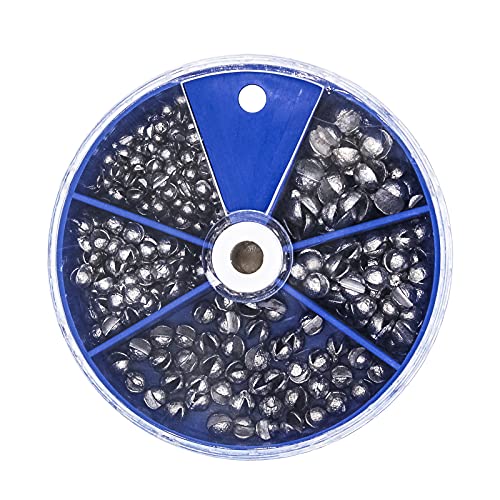
Egg Sinker1/8-8 ozSlip rig, catfishingSand, mud
Bullet Weight1/16-2 ozTexas rig bass fishingGrass, rock
Bank Sinker1/2-16 ozBottom fishing, surfSand, mud
Pyramid Sinker1-16 ozSurf fishing, strong currentSand
Bell Sinker1/4-6 ozCasting, pier fishingAny

Frequently Asked Questions

Q

How do I calculate the right fishing sinker weight?

Sinker weight depends on current speed, water depth, and line diameter. The formula multiplies current speed squared by line diameter and depth, then divides by a calibration constant. Stronger current and deeper water require heavier weights.

  • Still water: 1/8–1/2 oz is usually sufficient for most depths
  • Light current (0.5–1 mph): 1/2–1 oz for depths under 30 ft
  • Moderate current (1–2 mph): 1–3 oz for 20–50 ft depth
  • Strong current (2–3 mph): 3–8 oz for 30–75 ft depth
  • Braided line needs about 30% less weight than monofilament due to lower drag
Current SpeedDepth 20 ftDepth 40 ftDepth 60 ft
0.5 mph1/4 oz1/2 oz3/4 oz
1.0 mph1/2 oz1 oz1.5 oz
1.5 mph3/4 oz1.5 oz2 oz
2.5 mph2 oz4 oz6 oz
Q

What type of sinker should I use?

Sinker type depends on your fishing technique and bottom conditions. Egg sinkers are the most versatile for slip rigs. Pyramid sinkers hold best in current on sandy bottoms. Bank sinkers work well for general bottom fishing.

  • Split shot: light-duty, clamp on line, best for finesse presentations up to 1 oz
  • Egg sinker: slip rig staple, slides on line for natural bait movement, up to 8 oz
  • Bullet weight: Texas rig bass fishing, slides through grass without snagging, up to 2 oz
  • Bank sinker: versatile bottom weight, good on rock and mixed bottoms, up to 16 oz
  • Pyramid sinker: digs into sand, holds position in strong surf current, up to 16 oz
Q

How does line type affect sinker weight needed?

Line type significantly affects how much weight you need. Braided line has a much smaller diameter for its strength, creating roughly 30% less water resistance. This means you need about 30% less lead weight with braid compared to monofilament.

  • Monofilament: baseline drag coefficient (1.0), most water resistance per lb test
  • Fluorocarbon: slightly more drag (1.05) due to stiffer material, similar diameter to mono
  • Braided line: 30% less drag (0.70), much thinner diameter for same strength
  • 30 lb braid has the diameter of 8 lb mono (~0.28 mm vs ~0.50 mm)
  • In strong current, switching to braid can save 1–2 oz of sinker weight
Q

How does current speed affect sinker weight?

Current has a squared relationship to required weight—doubling current speed requires four times the sinker weight. At 1 mph you might need 1 oz, but at 2 mph you need 4 oz for the same depth and line setup.

  • Still water (0 mph): weight only needed to reach depth, minimal weight
  • Drift (0.5 mph): light weight, bait will slowly drift downstream
  • Moderate current (1–1.5 mph): most common river/tidal conditions
  • Strong current (2–3 mph): heavy weights, pyramid sinkers hold best
  • Extreme current (3+ mph): consider a different fishing spot or technique
Q

Should I use lead or non-lead sinkers?

Lead sinkers are being phased out in many areas due to environmental concerns. Several states ban lead weights under 1 oz. Tungsten, steel, bismuth, and tin are common alternatives. Tungsten is denser than lead, allowing smaller profiles.

  • Lead: cheapest, softest, toxic if ingested by wildlife, banned in some states under 1 oz
  • Tungsten: 1.7x denser than lead, smallest profile, expensive (~5x lead cost)
  • Steel: inexpensive, less dense than lead, larger for same weight
  • Bismuth: similar density to lead, brittle, moderate cost
  • Tin: lightweight, non-toxic, needs larger sizes for same weight as lead

Example Calculations

1Moderate Current Bottom Fishing with Mono

Inputs

Current Speed1.5 mph
Line Diameter0.35 mm (15 lb mono)
Water Depth30 ft
Line TypeMonofilament
Sinker TypeEgg Sinker

Result

Required Weight0.68 oz
Weight (grams)19.2 g
Nearest Standard3/4 oz

Weight = (1.5² × 0.35 × 30 × 1.0) / 35 = (2.25 × 0.35 × 30) / 35 = 23.63 / 35 = 0.68 oz. Round up to 3/4 oz standard egg sinker.

2Strong Current Deep Water with Braid

Inputs

Current Speed2.5 mph
Line Diameter0.50 mm (30 lb braid)
Water Depth50 ft
Line TypeBraided Line
Sinker TypePyramid Sinker

Result

Required Weight3.13 oz
Weight (grams)88.7 g
Nearest Standard3 oz

Weight = (2.5² × 0.50 × 50 × 0.70) / 35 = (6.25 × 0.50 × 50 × 0.70) / 35 = 109.38 / 35 = 3.13 oz. A 3 oz pyramid sinker is the nearest standard size.

Formulas Used

Required Sinker Weight

Weight (oz) = (Current² × Line Dia × Depth × Drag Coeff) / K

Calculates the minimum sinker weight needed to hold bottom at a given current, depth, and line setup.

Where:

Current= Water current speed in miles per hour
Line Dia= Line diameter in millimeters
Depth= Water depth in feet
Drag Coeff= Line type drag factor (1.0 mono, 1.05 fluoro, 0.70 braid)
K= Calibration constant (35) based on empirical testing

Choosing the Right Fishing Sinker Weight

Getting your bait to the strike zone and keeping it there is fundamental to bottom fishing success. Too little weight and your bait drifts away from structure; too much weight and you lose sensitivity to bites. The right sinker weight balances these factors based on current speed, water depth, and your line setup.

Current speed has the most dramatic effect on required sinker weight because drag force increases with the square of velocity. Doubling the current speed from 1 to 2 mph quadruples the force pushing your sinker off the bottom. This is why experienced anglers carry a wide range of sinker sizes—conditions can change quickly with tides and river flow.

Line choice plays a bigger role than most anglers realize. Switching from 20 lb monofilament (0.40 mm) to 30 lb braid (0.28 mm diameter) reduces line drag by roughly 30%. In strong current situations, this can mean the difference between holding bottom with 3 oz versus needing 5 oz, dramatically improving bite detection.

Related Calculators

Fishing Hook Size Calculator

Hook size for species

Trolling Speed Calculator

Optimal trolling pace

Fish Pond Stocking Calculator

Pond stocking rates

Boat Fuel Calculator

Fuel burn and range

Fishing Line Calculator

Calculate recommended fishing line test weight, type, and diameter for your target species and technique. Mono, fluoro, and braid comparison included.

Boat Speed Calculator

Calculate boat speed over ground, speed through water, and velocity made good to windward. Determine current set and drift from GPS and log speed differences.

Related Resources

Fishing Hook Size Calculator

Match hook size to species and bait

Trolling Speed Calculator

Optimal trolling speed and lure depth

Boat Fuel Calculator

Estimate fuel burn and cruising range

More Marine Calculators

Explore all marine and boating tools

View All

Last Updated: Mar 25, 2026

This calculator is provided for informational and educational purposes only. Results are estimates and should not be considered professional financial, medical, legal, or other advice. Always consult a qualified professional before making important decisions. UseCalcPro is not responsible for any actions taken based on calculator results.

UseCalcPro
FinanceHealthMath

© 2026 UseCalcPro