1. Calculate
Choose your project scope and see the estimated price range.
Get a realistic 2026 estimate for renting a bounce house, water slide, combo, or obstacle course by unit type, rental length, delivery distance, and add-ons.
Instant project estimate
The estimate is free. Additional details are optional.
Complete the project details and calculate to see a price range and next steps.
Clear next step
Choose your project scope and see the estimated price range.
Understand the cost drivers and what impacts your final quote.
Carry your scope into a local quote request if you choose.
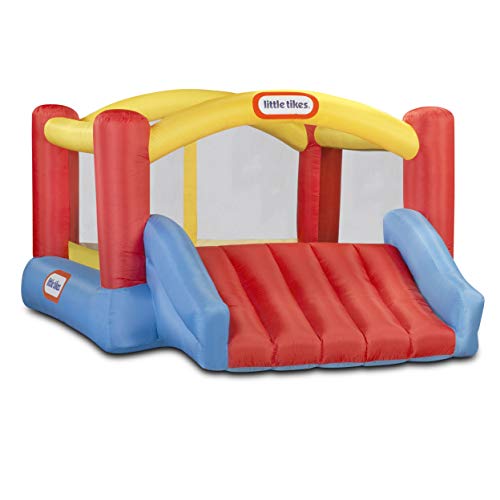
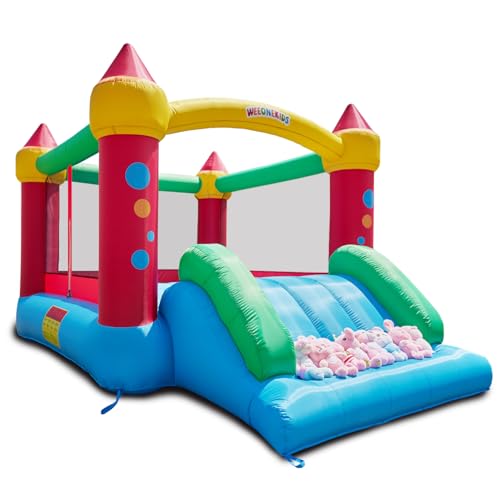

As an Amazon Associate, we earn from qualifying purchases.
Price as of Sep 17, 2026. Product prices and availability are accurate as of the date indicated and are subject to change. Any price and availability information displayed on Amazon at the time of purchase will apply.
A bounce house rental costs $150-$350 per day in 2026 for a standard 13x13 bouncer. Combo units run $225-$450, water slides $250-$575, and obstacle courses $275-$450, with delivery, a generator, or an attendant adding $50-$150 each.
A standard 13x13 bounce house rents for $150-$350 per day in 2026, with most families paying around $200-$300 in a typical metro market. Hourly rates run $20-$50 per hour, so a six-hour party often lands at $140-$280. Bigger and themed units, water slides, and obstacle courses cost more, and weekend dates run 10-20% above weekday pricing. Most local companies include delivery and setup within their service area, but a generator, an attendant, or a long-distance delivery each add $50-$150.
| Inflatable Type | Typical Day Rate | Best For |
|---|---|---|
| Standard bouncer | $150-$350 | Toddler and kid birthdays |
| Combo (bounce + slide) | $225-$450 | Mixed-age parties |
| Water slide | $250-$575 | Summer and pool events |
| Obstacle course | $275-$450 | School and church field days |
Most local bounce house companies include delivery, professional setup, a safety inspection, and same-day pickup within their core service area, which is usually a 10-20 mile radius. Beyond that radius, expect a delivery surcharge of $50-$100, and some companies add a small fee for setups on concrete because they must use sandbags instead of ground stakes. Always confirm whether the advertised price is delivered-and-set-up or just the unit rental, because that one detail can change the real total by $75 or more.
The most common extras are a generator, an attendant, and tables and chairs. A generator is required when there is no power outlet within about 100 feet and runs $50-$150 per event. A staffed attendant who supervises the inflatable costs $25-$50 per hour and is often mandatory for school, church, or public events. Tables and chairs bundle in at $50-$100, and extra rental hours add $25-$50 each. Themed or oversized units also carry a premium over the base bouncer price.
Inflatable water slides run $250-$575, with a 12-foot single-lane slide near the bottom and a 25-foot dual-lane tropical slide near the top. They need a water hookup and a larger, level setup area. Obstacle courses start around $275 for a toddler course and run $335-$450 for a 30-foot single-lane unit, climbing higher for tournament-style double-lane courses. Both are larger and heavier than a standard bouncer, so they require more space and occasionally a second crew member for setup.
Book a weekday or off-peak date to skip the 10-20% weekend premium, and reserve early in spring before the summer rush locks up inventory. Choose a unit that fits your guest count instead of the biggest one available, set up near an outdoor outlet to avoid a generator fee, and bundle tables and chairs with the same vendor rather than renting them separately. Finally, get two or three quotes that each spell out delivery, setup, and pickup, because the lowest sticker price often hides a delivery or fuel surcharge.
Inputs
Result
A standard 13x13 bouncer on grass within the local service area is the most common backyard rental. Delivery and setup are bundled, so the total sits right around the national midpoint for a six-hour party.
Inputs
Result
A combo unit ($225-$450) plus a full-day rate, a generator for the driveway with no nearby outlet, and a mild distance surcharge push this toward the upper-middle of the range.
Inputs
Result
A tall dual-lane water slide ($400-$575) on a weekend, plus a required attendant for a public school event, lands at the top of typical pricing. Insurance and a certificate for the venue may add a small fee.
Total = Base unit rate + Duration adjustment + Delivery surcharge + Add-ons + Weekend premiumInflatable rentals are priced from a base unit day rate, then adjusted for how long you keep it, how far it travels, any extras, and whether it is a peak weekend date. Start from the unit midpoint and layer the other drivers on top.
Where:
Base unit rate= Standard bouncer $150-$350, combo $225-$450, water slide $250-$575, obstacle course $275-$450 per dayDuration adjustment= Half-day weekday near the floor; full-day or extra hours add $25-$50 per hourDelivery surcharge= Usually $0 within 10-20 miles, then $50-$100 beyond the service areaAdd-ons= Generator $50-$150, attendant $25-$50/hr, tables and chairs $50-$100Weekend premium= Friday-Sunday dates typically run 10-20% above weekday pricingCost per child = Total rental / Number of kids; compare to $8-$15 entertainment benchmarkTo sanity-check whether a rental is worth it versus other party entertainment, divide the all-in rental cost by the number of children attending and compare to typical per-child entertainment spend.
Where:
Total rental= The delivered, set-up, all-in price including any add-onsNumber of kids= Children who will actually use the inflatable during the event$8-$15 benchmark= A bounce house usually beats per-head venue or activity pricing for 12+ kidsA bounce house is the single biggest entertainment line item on most kids' parties, so it pays to know the real number before you call around. In 2026, a standard 13x13 bounce house rents for $150 to $350 for the day, with the typical metro-market price landing around $200 to $300. Priced by the hour, most companies charge $20 to $50, which means a six-hour party usually runs $140 to $280. Those figures almost always include delivery, professional setup, a safety inspection, and same-day pickup within the company's local service area.
The single biggest driver of price is the type of inflatable you rent. A plain bouncer is the floor; a combo unit that adds a slide and a climbing wall runs $225 to $450; a water slide runs $250 to $575 depending on height and how many lanes it has; and an obstacle course runs $275 to $450 and up for tournament-style double-lane units. Use the calculator above to land on a figure for your specific unit, date, and add-ons, then read on to understand what each input is really pricing.
It also helps to know what the quoted price does and does not include. A standard rental covers the unit, delivery, setup, and pickup within the service area. It usually excludes a generator (needed when there is no outlet within about 100 feet), an attendant to supervise the inflatable, tables and chairs, and any long-distance delivery surcharge. When you compare two quotes, confirm whether each one is a delivered-and-set-up price or just the bare unit, because that one detail can swing the real total by $75 or more.
| Inflatable Type | Typical Day Rate | Hourly Equivalent | Best For |
|---|---|---|---|
| Standard bouncer (13x13) | $150-$350 | $20-$50 | Toddler / kid birthdays |
| Combo (bounce + slide) | $225-$450 | $35-$70 | Mixed-age parties |
| Water slide | $250-$575 | $45-$90 | Summer / pool events |
| Obstacle course | $275-$450 | $50-$80 | School / church field days |
Most local companies include delivery, setup, a safety check, and same-day pickup in the day rate. Always ask whether the price you are quoted is delivered-and-set-up or just the unit, because the gap is where surprise fees hide.
Two families renting on the same weekend can get quotes that differ by a hundred dollars, and the variance is rarely random. Rental companies price from a base unit rate and then adjust for the work and the date your specific event creates. The bigger and heavier the unit, the farther it travels, and the more peak the date, the more it costs to staff and deliver against your booking.
Read every quote against the list below. If a company cannot explain how your delivery distance, surface, or date maps to their price, that is a sign the number is a placeholder that will be revised upward once they see the details of your event.
Ask up front whether your setup surface changes the price. A concrete driveway or a venue that bans ground stakes means sandbags, and some companies tack on a small fee or refuse the booking entirely without enough open, level space.
The word "bounce house" gets used for everything inflatable, but the four main unit types buy very different experiences and price points, and overpaying happens when families order a unit bigger than the party needs. A plain bouncer is the cheapest and the right call for a toddler or young-kid birthday where jumping is the whole point. A combo unit adds a slide and a climbing wall, which keeps a wider age range entertained and is the most popular upgrade for mixed-age parties.
Water slides and obstacle courses are a different product again. A water slide is the summer favorite, but it needs a hose hookup, a larger level footprint, and a spot where runoff is fine. An obstacle course is built for groups and competition, which is why schools, churches, and field days rent them. The table below shows what each type fits and what it costs, so you can match spend to the party you are actually throwing. The birthday party calculator helps you slot the rental into the overall budget once you have picked a unit.
There is also a practical sequence most hosts follow. A young-kid party starts with a bouncer, upgrades to a combo as the kids get older and a slide becomes the draw, and graduates to a water slide for summer dates or an obstacle course once the guest list is big enough to need a group activity. Paying for the biggest unit a stage too early rarely pays off, because a half-empty obstacle course costs more and entertains the same eight kids a $200 bouncer would.
| Type | What It Adds | Day Rate | Right Party |
|---|---|---|---|
| Standard bouncer | Open jumping area | $150-$350 | Toddlers, small kid birthdays |
| Combo unit | Slide + climb + hoop | $225-$450 | Mixed ages, 8-20 kids |
| Water slide | Wet slide, needs hose | $250-$575 | Summer, pool-side, 10+ kids |
| Obstacle course | Race / group play | $275-$450 | Schools, churches, 20+ kids |
Right-size the unit to your guest count and the kids' ages, not to the most impressive option. A combo unit entertains a wider age range than a plain bouncer for only $75-$100 more, but a giant obstacle course for a six-kid party is money spent on empty lanes.
Beyond the unit itself, the inputs that most often surprise a first-time renter are delivery distance and add-ons. Most companies fold delivery, setup, and pickup into the day rate within a 10-to-20-mile radius of their warehouse. Step outside that radius and you will see a $50-to-$100 delivery surcharge, sometimes framed as a fuel fee. Booking with the closest reputable company is the simplest way to keep that line item at zero, and the event rental calculator helps you bundle tables and chairs with the same vendor so you are not paying two delivery fees.
The most common paid extras are a generator, an attendant, and seating. A generator is non-negotiable when there is no power outlet within roughly 100 feet of the setup spot, and it runs $50 to $150 for the event. An attendant who supervises the inflatable costs $25 to $50 per hour and is frequently required for school, church, park, or other public events that need a staffed unit and a certificate of insurance. Tables and chairs bundle in at $50 to $100, and each extra hour beyond the standard window adds $25 to $50.
Surface and timing round out the picture. Grass is the default and the cheapest, because the crew anchors with ground stakes. A concrete driveway, an asphalt lot, or an indoor gym means sandbag anchoring, which occasionally adds a $25-to-$50 fee and always requires the host to confirm the company will set up there. Finally, weekend and peak-summer dates run 10 to 20 percent above weekday and shoulder-season pricing, so a flexible date is one of the easiest ways to lower the total.
| Cost Item | Typical Charge | When It Applies |
|---|---|---|
| Local delivery & setup | Included | Within 10-20 mile service area |
| Distance surcharge | $50-$100 | Beyond the service radius |
| Generator | $50-$150 | No outlet within ~100 ft |
| Attendant | $25-$50/hr | School, church, or public events |
| Tables & chairs | $50-$100 | Bundled seating package |
| Extra hours | $25-$50/hr | Beyond the standard window |
Set up near an outdoor outlet whenever you can. A generator is one of the most common surprise fees, and it is entirely avoidable when the inflatable's blower can reach a standard household outlet within about 100 feet.
The cheapest rental is the one that shows up safe, clean, and on time, so vet companies on reliability and transparency rather than the headline price alone. Get two or three written quotes that each spell out the unit, the delivery and pickup window, what is included, and any surcharge for distance, generator, attendant, or surface. A quote that is dramatically below the others usually excludes delivery or assumes a shorter rental window, and the gap reappears as a fee on the invoice or a unit that arrives late and leaves early.
Confirm safety and insurance before you put down a deposit. Ask whether the unit is cleaned and inspected between rentals, whether the company carries liability insurance, and whether they can provide a certificate of insurance if your venue requires one. Check the cancellation and rain policy too, since weather is the number-one reason outdoor inflatable bookings fall through, and a fair company will offer a reschedule or refund for storms. The party food calculator and the rest of the tools category use the same compare-the-real-total discipline for the other party line items.
Finally, book early and lock the details in writing. Spring and early summer inventory sells out fast for weekend dates, so reserving four to six weeks ahead protects both availability and price. Confirm the setup spot dimensions, the surface, the power source, and the exact delivery and pickup times in the booking, and clear the area of pet waste, sprinkler heads, and low branches before the crew arrives. A few minutes of prep keeps the setup fast and avoids the rescheduling fee that comes with an unusable yard.
Never book on price alone. A no-show or a filthy, un-inspected unit ruins the party far more than the $30-$50 you saved picking the cheapest quote, and a reputable company that confirms insurance and a rain policy is worth the small premium.
Pick the unit and date
Match the inflatable type to the kids' ages and guest count, then choose a weekday or off-peak date to dodge the weekend premium.
Collect two to three quotes
Insist each one states delivery, pickup, included hours, and any generator, attendant, distance, or surface surcharge.
Verify safety and insurance
Confirm the unit is cleaned and inspected between rentals and that the company can supply a certificate of insurance if your venue needs one.
Check the cancellation and rain policy
Make sure storms trigger a free reschedule or refund, since weather is the top reason outdoor bookings fall through.
Prep the setup area
Confirm dimensions, surface, and a power source within ~100 ft, and clear the yard of debris, sprinklers, and low branches before delivery.
Read our guide
Read our guide
Read our guide
Plan budgets, food, rentals, and entertainment for birthdays, graduations, and backyard parties in one place.
Last Updated: Sep 17, 2026
This calculator is provided for informational and educational purposes only. Results are estimates and should not be considered professional financial, medical, legal, or other advice. Always consult a qualified professional before making important decisions. UseCalcPro is not responsible for any actions taken based on calculator results.