1. Calculate
Choose your project scope and see the estimated price range.
Get a realistic 2026 biohazard remediation estimate by cleanup type, severity, and region — then connect with certified local contractors.
Instant project estimate
The estimate is free. Additional details are optional.
Complete the project details and calculate to see a price range and next steps.
Clear next step
Choose your project scope and see the estimated price range.
Understand the cost drivers and what impacts your final quote.
Carry your scope into a local quote request if you choose.


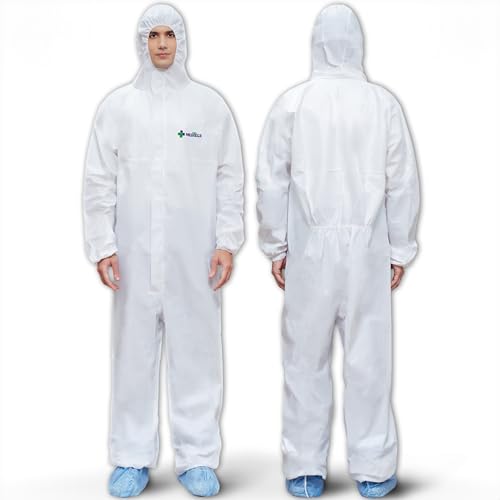
As an Amazon Associate, we earn from qualifying purchases.
Price as of Sep 18, 2026. Product prices and availability are accurate as of the date indicated and are subject to change. Any price and availability information displayed on Amazon at the time of purchase will apply.
Most residential biohazard remediation jobs in the US run $1,500–$5,000. Sewage backup cleanup averages $800–$2,500; trauma scene decontamination runs $1,500–$5,000; chemical spill remediation starts at $2,000 and can reach $8,000 or more. Severe scenes involving structural penetration, decomposition, or multi-room scope can reach $10,000–$25,000. Technician labor ranges from $75–$250 per hour, and manifested hazardous waste disposal adds $50–$500 per container.
| Cleanup Type | Single Room (Light) | Multi-Room (Moderate) |
|---|---|---|
| Sewage Backup | $800–$2,500 | $1,700–$5,250 |
| Blood / Trauma | $1,500–$5,000 | $3,150–$10,500 |
| Chemical Spill | $2,000–$7,000 | $4,200–$14,700 |
| Hoarding (Light) | $1,000–$3,500 | $2,100–$7,350 |
Homeowners and renters insurance frequently covers biohazard cleanup when the event is sudden and accidental. Sewage backup coverage is common under water damage or sewer backup endorsements. Trauma scene cleanup is often covered under personal liability or additional living expense riders. Chemical incidents caused by an insured party may also qualify. Age-related contamination or neglect is generally excluded. Always file the claim before cleanup begins so an adjuster can document the scope.
| Event Type | Typically Covered | Typically Excluded |
|---|---|---|
| Sewage backup | Yes (with endorsement) | Gradual seepage |
| Blood/trauma | Often (liability rider) | Pre-existing conditions |
| Chemical spill | Sometimes (accidental) | Intentional or illegal acts |
| Hoarding | Rarely | Neglect/maintenance |
Severity and affected area are the two largest cost drivers. A light surface-level contamination in a single room typically runs $1,500–$5,000; the same cleanup type at severe severity spanning multiple rooms can cost $10,000–$25,000. PPE level is the next major factor: standard Level C equipment is baseline, but Level A or Level B suits with manifested hazardous waste disposal adds 25–45% to the total. Regional labor rates also swing 25–35% between rural areas and coastal metros.
Only hire companies that hold OSHA 29 CFR 1910.1030 (bloodborne pathogens) compliance certification and carry general liability plus workers’ compensation insurance. Ask for a written scope of work listing every step: containment, removal, decontamination, disposal manifest, and post-cleaning air or surface clearance testing. Verify the contractor disposes of biohazardous waste through a licensed medical waste transporter and provides a DOT waste manifest. Reputable firms typically offer 24/7 response and will work with your insurance adjuster directly.
Most single-room biohazard cleanups take 4–16 hours of technician time, completed in one day. Multi-room or severe scenes requiring structural removal may take 2–5 days. Chemical spill remediation timelines depend on the substance: neutralization of pH hazards can finish in hours, while volatile organic compound (VOC) off-gassing remediation may require 3–7 days with repeated air clearance tests. The property is typically not re-occupiable until the contractor issues a written clearance certificate.
Yes. Biohazard remediation follows OSHA, EPA, and DOT regulatory requirements that standard cleaning services do not meet. Technicians use regulated PPE, apply EPA-registered hospital-grade disinfectants, and dispose of contaminated materials through licensed medical waste channels. Standard cleaning services cannot legally handle blood, sewage, or chemical waste as biohazardous material. Using an uncertified cleaner creates liability and may void an insurance claim.
Inputs
Result
A confined single-room trauma scene with surface-level contamination and standard Level C PPE lands in the national residential range. File an insurance claim before work begins to preserve coverage eligibility.
Inputs
Result
Sewage backup base ($800–$2,000) × moderate severity (1.4) × multi-room scope (1.5) = $1,680–$4,200. Drywall below the waterline typically requires removal to prevent mold; confirm this is in the written scope.
Inputs
Result
Chemical spill base ($2,000–$7,000) × severe (2.0) × multi-room (1.5) × extensive PPE/disposal (1.3) = $7,800–$27,300. Hazmat disposal manifests and post-remediation air clearance tests are non-negotiable — verify they are itemized in the contractor quote.
Estimate = Base(cleanup_type) × Severity × Area × PPE/DisposalThe remediation quote is built from a cleanup-type base range, then scaled by severity (how deeply contamination has penetrated), affected area (number of rooms/spaces), and the level of personal protective equipment and waste disposal required.
Where:
Base(cleanup_type)= Flat dollar range by contamination type: sewage $800–$2,000; hoarding $1,000–$3,500; blood/trauma $1,500–$5,000; chemical $2,000–$7,000Severity= Light (surface) = 1.0; moderate (partial demo) = 1.4; severe (structural) = 2.0Area= Single room = 1.0; multiple rooms = 1.5; whole property = 2.5PPE/Disposal= Standard Level C = 1.0; extensive Level A/B plus manifested waste = 1.3Labor = Technician hours × Hourly rateBiohazard technician labor is priced hourly and typically represents 50–65% of the total quote. Rates vary by hazard class, certification level, and region.
Where:
Technician hours= Single-room light: 4–16 hrs; multi-room moderate: 16–40 hrs; severe structural: 40–100+ hrsHourly rate= $75–$150/hr for standard decon; $150–$250/hr for hazmat Level A/B operations; coastal metros run 25–35% higherRegional quote = Base estimate × Regional multiplierApply a regional multiplier to the national average to account for local labor market differences before severity and scope adjustments.
Where:
South / Plains= 0.85–0.95 (lowest labor rates)Midwest / Mountain= 0.95–1.05Northeast= 1.15–1.30California / Pacific / NYC metro= 1.20–1.35The most common residential biohazard cleanup scenarios and their 2026 cost ranges are: sewage backup (single room, surface-level) $800–$2,500; blood or trauma scene (single room, contained) $1,500–$5,000; hoarding cleanup with biological material (light, single room) $1,000–$3,500; chemical spill or hazmat event (single room) $2,000–$8,000. These figures assume standard Level C PPE (respirator, gloves, Tyvek suit) and standard municipal waste disposal. When contamination is moderate to severe, or when the affected area spans multiple rooms or an entire property, costs multiply quickly.
A multi-room trauma scene at moderate severity typically lands at $3,000–$10,000. A severe whole-property chemical contamination requiring Level A or Level B hazmat suits and DOT-manifested waste disposal can reach $15,000–$25,000 or more. Technician labor is $75–$250 per hour depending on hazard class and region, and manifested hazardous waste disposal adds $50–$500 per container. The table below summarizes the cost matrix across cleanup types and scope.
| Cleanup Type | Single Room (Light) | Multi-Room (Moderate) | Severe / Whole Property |
|---|---|---|---|
| Sewage Backup | $800–$2,500 | $1,700–$5,250 | $5,000–$12,500 |
| Blood / Trauma | $1,500–$5,000 | $3,150–$10,500 | $7,500–$25,000 |
| Chemical Spill | $2,000–$7,000 | $4,200–$14,700 | $10,000–$25,000 |
| Hoarding (Light) | $1,000–$3,500 | $2,100–$7,350 | $5,000–$15,000 |
File your homeowners or renters insurance claim before hiring a contractor. Adjusters need to document the pre-remediation condition to process coverage, and this step frequently covers $1,500–$5,000 of the bill.
Biohazard remediation quotes are built from four multiplying factors, not a simple per-square-foot rate. Understanding each one lets you interpret a contractor’s line items rather than accepting a single number at face value.
Factor one is cleanup type: the category of contamination determines the regulatory requirements, the chemical products required, and the hazard class of the waste stream. Sewage backup and hoarding are the lowest-cost categories. Blood and trauma scenes require OSHA bloodborne pathogen protocols. Chemical spills may require hazmat identification, neutralization, and DOT-regulated disposal of multiple waste streams. Factor two is severity: light contamination is surface-confined and can be decontaminated without structural removal. Moderate severity typically requires removing drywall, flooring, or cabinetry below the contamination line. Severe events involve structural penetration, subfloor saturation, or decomposition — these multiply the base cost by 1.5–2.5x. Factor three is affected area: single-room is the baseline; each additional room or floor adds roughly 50–80% to technician hours and material costs. Factor four is PPE and disposal level: standard Level C operations (respirator, gloves, Tyvek suit, municipal waste disposal) are the baseline. Scenes requiring Level A encapsulating suits or Level B supplied-air equipment plus DOT-manifested hazardous waste disposal add 25–45% to the total.
Homeowners and renters insurance policies cover more biohazard cleanup scenarios than most policyholders realize — but only if you follow the right steps. The critical rule is to file the claim before any cleanup work begins. Insurance adjusters need to photograph and document the pre-remediation condition to price the scope. Starting cleanup without notifying your insurer can result in a denied claim or a reduced payout.
Sewage backup is the most commonly covered scenario, typically under a sewer/drain backup endorsement (often an optional rider costing $40–$100/year). Trauma scene cleanup may fall under personal liability coverage if the event occurred at your property, or under additional living expense (ALE) coverage if the property is temporarily uninhabitable. Chemical spills caused accidentally by a covered party are sometimes covered under personal liability; intentional acts or illegal activity are always excluded. Mold resulting from a biohazard moisture event is typically excluded unless it is directly tied to a covered water-damage claim. Your deductible will apply, typically $500–$2,500 depending on your policy.
Ask your insurer specifically about “sewer backup endorsement” and “additional living expense” riders before an incident — adding these at renewal can cost $40–$100/year and save thousands in a claim.
Biohazard remediation is not a service where the lowest bid is automatically safe. The regulatory requirements are significant, and using an uncertified contractor creates legal and health liability for the property owner. Here is what to verify before signing a contract.
Every contractor should hold OSHA 29 CFR 1910.1030 compliance certification (bloodborne pathogen standard) and carry both general liability insurance and workers’ compensation. For chemical or hazmat events, also verify OSHA HAZWOPER (29 CFR 1910.120) training. Ask for proof of insurance, not just a verbal confirmation. Request a written scope of work that itemizes every step: initial containment and access control, removal of contaminated materials, chemical decontamination treatment, disposal (with the name of the licensed medical waste transporter), and post-cleaning clearance testing (ATP swab results or air samples). The written scope should also specify how waste will be transported and disposed of — the contractor should provide a DOT waste manifest at job completion.
Avoid any contractor who quotes a final price over the phone without a site assessment, who cannot name their waste disposal partner, or who asks for full payment before work is complete. A reputable firm will work with your insurance adjuster directly and be willing to provide references from comparable past jobs.
The actions you take in the first hour after discovering a biohazard event have a significant impact on both health outcomes and cost. The first priority is to keep people and pets away from the affected area. Do not attempt to clean blood, sewage, or chemical spills with household products — improper handling increases pathogen exposure, may spread contamination, and will invalidate an insurance claim.
Step one: restrict access and ventilate if it is safe to do so (open windows in uncontaminated areas). Step two: photograph the scene without entering it, for insurance documentation. Step three: call your insurance company to open a claim and ask whether you should wait for an adjuster or proceed immediately with a certified contractor. Step four: contact a certified biohazard remediation firm. Most reputable companies offer 24/7 emergency response. Step five: document all contractor communications and retain every invoice, waste manifest, and clearance certificate for your insurance file.
Do not use household cleaners, bleach, or fans near sewage or chemical contamination before the contractor arrives — improper aeration can spread airborne pathogens and void your insurance coverage.
Read our guide
Read our guide
Read our guide
Estimate costs for biohazard cleanup, mold remediation, sewage restoration, roofing, and other residential and commercial projects.
Last Updated: Sep 18, 2026
This calculator is provided for informational and educational purposes only. Results are estimates and should not be considered professional financial, medical, legal, or other advice. Always consult a qualified professional before making important decisions. UseCalcPro is not responsible for any actions taken based on calculator results.