1. Calculate
Choose your project scope and see the estimated price range.
Get a realistic 2026 biohazard remediation estimate by scene type, contamination level, and affected area — then connect with licensed specialists who handle the process with care and discretion.
Instant project estimate
The estimate is free. Additional details are optional.
Complete the project details and calculate to see a price range and next steps.
Clear next step
Choose your project scope and see the estimated price range.
Understand the cost drivers and what impacts your final quote.
Carry your scope into a local quote request if you choose.


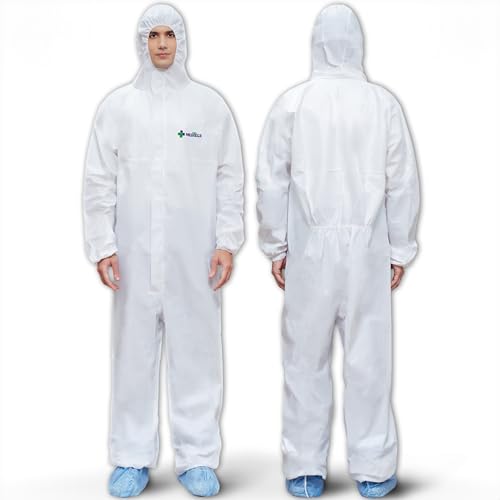
As an Amazon Associate, we earn from qualifying purchases.
Price as of Sep 18, 2026. Product prices and availability are accurate as of the date indicated and are subject to change. Any price and availability information displayed on Amazon at the time of purchase will apply.
Professional crime scene cleanup costs $1,500–$5,000 for a typical single-room scene in 2026. Specialist crews charge $400–$600/hr. Homeowners insurance and state victim compensation funds often cover part or all of the cost — contact your insurer before scheduling service.
Professional biohazard remediation in 2026 typically costs $1,500–$5,000 for a single-room trauma scene at moderate contamination on hard surfaces. Costs rise significantly with severity: severe contamination, carpet or absorbent materials, and larger affected areas can push totals to $10,000–$25,000. Specialist crews bill $400–$600 per hour, and mandatory biohazard disposal fees of $300–$800 are added to every job regardless of size.
| Scene Type | Typical Low | Typical High |
|---|---|---|
| Accident (single room, light) | $800 | $2,500 |
| Trauma / unattended death (single room, moderate) | $2,000 | $5,000 |
| Hoarding / biohazard accumulation (multi-room) | $5,000 | $15,000 |
| Severe contamination, whole property | $15,000 | $30,000 |
Many standard homeowners and renters insurance policies do cover professional biohazard remediation costs, but coverage depends on your specific policy and the cause of the loss. Sudden, accidental events are more commonly covered than situations involving extended-period neglect. Victim compensation funds at the state level may also apply. Always contact your insurance carrier before signing a service agreement, because pre-approved vendor lists can significantly reduce your out-of-pocket cost.
| Coverage Type | Typically Covered? | Notes |
|---|---|---|
| Homeowners (sudden event) | Often yes | Subject to deductible; call carrier first |
| Renters insurance | Partial | Property damage to personal belongings |
| State victim compensation fund | May apply | Varies by state; applies to crime victims’ families |
| Landlord / property owner policy | Depends | Dwelling coverage may include remediation |
Responsibility depends on the situation. Law enforcement agencies clean up only what is needed for their investigation and are not responsible for full restoration. In most cases, the property owner bears the primary cost. However, if the incident was a crime, the victim’s family may qualify for state victim compensation funds that cover remediation expenses. Homeowners and landlord insurance policies are usually the most accessible path to coverage. Some non-profit organizations also provide financial assistance to qualifying families.
A licensed biohazard remediation service handles the full decontamination process, including removal of affected materials, application of EPA-registered disinfectants, odor neutralization, and compliant disposal of all biohazardous waste under OSHA and EPA regulations. IICRC-certified firms follow industry standards for testing and verification. The goal is to return the property to a safe, livable condition. Reputable companies also offer discreet, unmarked vehicles and work outside of normal business hours if requested.
A single-room scene with light to moderate contamination on hard surfaces typically takes 4–12 hours for a certified two-person crew. Severe contamination involving absorbent materials, subfloor damage, or structural involvement can extend timelines to 2–5 days. Whole-property remediation for extended-period cases may take a week or more. The service company provides a written scope of work and timeline estimate before starting.
| Scenario | Typical Duration | Primary Driver |
|---|---|---|
| Single room, hard floor, light | 4–12 hours | Surface area and disinfection cycles |
| Single room, carpet, moderate | 1–2 days | Carpet removal and subfloor inspection |
| Multi-room, severe | 3–5 days | Volume of affected materials and disposal runs |
| Whole property, extended period | 1–2 weeks | Structural remediation and air quality testing |
It is strongly discouraged and in many cases illegal. Biohazardous materials are regulated under OSHA Bloodborne Pathogen Standard (29 CFR 1910.1030) and EPA guidelines. Improper handling creates serious health risks from pathogens including hepatitis B, hepatitis C, and HIV, which can survive in dried biological material for days to weeks. Unlicensed disposal of regulated biohazardous waste carries significant fines. Professionals carry the required personal protective equipment, training, and licensed waste disposal contracts that are legally required for this work.
Inputs
Result
A single-room trauma scene on hardwood floors with moderate contamination is the most common single-incident call. Hard surfaces reduce labor time versus carpet. Insurance may cover the full range after the deductible.
Inputs
Result
Severe hoarding scenes with carpet across multiple rooms require licensed haul-off of large volumes of regulated waste and potentially subfloor replacement. Get written scope with a line-item breakdown before signing.
Inputs
Result
A minor accident on a tile floor with limited contamination is the least complex biohazard call. Even simple scenes require licensed disposal of any biological materials, which sets a cost floor around $800 even for short jobs.
Total ≈ Base Rate (scene type) × Contamination Multiplier × Area Multiplier × Surface Multiplier + Disposal FeesProfessional biohazard cleanup pricing starts from a scene-type base rate (reflecting crew hours and complexity), then scales with contamination severity, number of affected rooms, and surface material. Mandatory biohazard disposal fees are added regardless of scope.
Where:
Base Rate= Starting range by scene type: trauma $1,500–$4,000; accident $800–$2,500; hoarding $2,000–$6,500; other biohazard $1,200–$3,500Contamination Multiplier= Light ×1.0; Moderate ×1.25; Severe ×1.75 (deep penetration into porous or structural materials)Area Multiplier= Single room ×1.0; Multiple rooms ×1.6; Whole property ×2.8Surface Multiplier= Hard surface ×1.0; Carpet / absorbent ×1.35 (removal, bagging, and regulated haul-off required)Disposal Fees= OSHA / EPA regulated biohazardous waste disposal: $300–$800 per job, included in most professional quotesTotal hours × Crew rate ($400–$600/hr) + Disposal + MaterialsMany remediation companies quote by the job rather than by the hour, but the underlying labor cost is $400–$600 per hour for a certified two-person crew including equipment, PPE, and overhead. Understanding the hourly model helps evaluate whether a flat quote is reasonable.
Where:
Crew rate= $400–$600 per hour for a certified 2-person team; rural markets may run $300–$450; metro coastal areas $550–$700Total hours= Single room light: 4–12 hr; single room severe: 8–24 hr; multi-room: 16–48 hr; whole property severe: 40–120 hrDisposal= Regulated biohazardous waste disposal: $300–$800 per job for standard cases; $800–$2,000 for large-volume extended casesMaterials= PPE, EPA-registered disinfectants, containment materials, deodorizing agents: typically $200–$600 per jobProfessional biohazard remediation pricing is built around four primary variables: the type of scene, the extent of contamination, the number of rooms or areas affected, and the primary surface material. Each factor can meaningfully shift the total cost, and understanding them helps you evaluate whether a quote is reasonable for your situation.
Scene type sets the starting baseline. A minor accident scene on a hard floor may run $800–$2,500, while a trauma or unattended-death scene in a single room typically falls in the $1,500–$5,000 range. Hoarding or extended-period biohazard accumulation cases are substantially more complex, often reaching $7,000–$20,000 for multi-room properties. The contamination level then applies a multiplier on top of the base: severe contamination that has penetrated porous materials or subfloor can increase costs by 60–80% versus a contained surface-level situation.
Surface material is a significant practical driver. Hard surfaces such as tile, sealed hardwood, or concrete can be decontaminated in place using EPA-registered disinfectants. Carpet, padding, drywall, and other absorbent materials must be physically removed, packaged as regulated biohazardous waste, and transported to a licensed disposal facility. That process adds both labor time and regulated disposal fees to the total.
| Cost Factor | Typical Range of Impact |
|---|---|
| Scene type baseline | $800–$6,500 starting range |
| Moderate contamination vs. light | +20–25% to baseline |
| Severe contamination vs. light | +60–80% to baseline |
| Multi-room vs. single room | +50–70% to baseline |
| Whole property vs. single room | +150–200% to baseline |
| Carpet / absorbent vs. hard surface | +30–40% to baseline |
| Mandatory biohazard disposal fee | $300–$800 per job (every project) |
| Metro / coastal labor premium | +15–25% over rural rates |
Even the smallest biohazard cleanup job carries a floor cost of $800–$1,000 driven by required PPE, EPA-registered disinfectants, and regulated waste disposal — these cannot be skipped under OSHA Bloodborne Pathogen regulations.
One of the most important steps before scheduling remediation is understanding your payment options. In many cases, you will not be paying out of pocket, or the out-of-pocket portion will be limited to your deductible.
Homeowners and landlord insurance policies frequently cover biohazard remediation tied to sudden, covered events. Coverage varies by policy and carrier, so the first call after law enforcement clears the scene should be to your insurance company. Ask specifically about biohazard or crime scene remediation coverage, and ask whether they have a preferred vendor list. Using a pre-approved vendor can sometimes mean the insurance carrier pays the company directly, with no payment required from you beyond your deductible.
State victim compensation funds are available in all 50 states and can cover remediation costs when the incident involved a crime. These programs are administered through state attorneys general or victim services offices and are designed to help families who face unexpected costs because of a criminal act. Processing times vary, and most programs require a police report and a completed application, so it is worth starting that process in parallel with insurance.
In cases where neither insurance nor victim compensation applies, some remediation companies offer payment plans. Non-profit organizations such as the National Organization for Victim Assistance (NOVA) can also provide referrals to local resources. The remediation company itself can often advise on documentation needed for insurance claims, as they work with insurance adjusters regularly.
Not all cleaning companies are equipped or licensed to perform biohazard remediation. When selecting a provider, there are several credentials and practices to look for that indicate a company operates to professional and legal standards.
IICRC certification (Institute of Inspection Cleaning and Restoration Certification) is the most recognized credential in the remediation industry. IICRC-certified technicians have completed standardized training in biohazard remediation and follow documented decontamination protocols. Companies with ABRA (American Bio Recovery Association) membership adhere to an additional code of ethics specific to crime scene and biohazard work.
Any legitimate firm must carry general liability insurance and workers’ compensation coverage. Ask for certificates before work begins. They must also hold proper licensing for regulated biohazardous waste transportation and disposal — typically issued at the state level. A company that cannot produce these documents should not be handling regulated waste on your property.
Cost should not be the only criterion. The lowest quote may reflect missing credentials, unlicensed disposal, or inadequate cleanup that leaves pathogens in porous materials. Ask specifically whether the final scope includes post-cleaning testing and whether a clearance document is provided at completion. A written scope of work with line-item pricing is standard practice from reputable firms.
Reputable crime scene cleanup companies understand the sensitivity of their work. Most offer unmarked vehicles, flexible scheduling outside business hours, and discreet billing. Do not hesitate to ask for these accommodations.
After you contact a certified remediation firm, they will schedule a site assessment — in many cases within hours for emergency situations. The technician will evaluate the affected area, identify the full scope, and provide a written estimate. You do not need to make any decisions without a written quote.
During the work, the affected area will be isolated with containment barriers to prevent cross-contamination. The crew will wear full personal protective equipment throughout. Affected porous materials are carefully removed, sealed, and labeled as regulated biohazardous waste. Hard surfaces receive multiple applications of EPA-registered hospital-grade disinfectants at prescribed dwell times. Odor neutralization treatments are applied at the end of the process.
At completion, the company provides documentation confirming that surfaces have been decontaminated to professional standards. This documentation is useful for insurance claims and can provide peace of mind. If structural materials were removed, you may also receive a referral to a licensed contractor for the subsequent reconstruction work, which is a separate cost not included in the remediation quote.
While the primary cost drivers are scene type, contamination level, and area size, regional labor rates introduce a meaningful secondary variation. Rural markets and the South and Plains states typically run 10–20% below the national midpoint for comparable jobs. Metro areas and coastal markets — California, the Northeast, Pacific Northwest — run 15–25% above the national midpoint.
This variation is driven entirely by local labor rates for specialist workers. Biohazard disposal fees are governed by state environmental regulations and vary less by region, though urban disposal facilities may charge slightly more than rural ones for tipping fees. When comparing quotes across companies in the same area, large price differences more likely reflect scope differences or credential gaps than regional variation.
| Region | Approximate Adjustment | Example: Single Room, Moderate Contamination |
|---|---|---|
| South / Plains (rural) | −10–20% | $1,500–$4,000 |
| Midwest / Mountain | Baseline | $1,875–$5,000 |
| Northeast | +15–20% | $2,150–$6,000 |
| California / West Coast | +20–25% | $2,250–$6,250 |
Read our guide
Read our guide
Read our guide
Estimate costs for remediation, renovation, roofing, flooring, and other property services — from emergency restoration to planned remodels.
Last Updated: Sep 18, 2026
This calculator is provided for informational and educational purposes only. Results are estimates and should not be considered professional financial, medical, legal, or other advice. Always consult a qualified professional before making important decisions. UseCalcPro is not responsible for any actions taken based on calculator results.