1. Calculate
Choose your project scope and see the estimated price range.
Get a compassionate, accurate 2026 estimate for professional remediation services — then connect with licensed specialists in your area.
Instant project estimate
The estimate is free. Additional details are optional.
Complete the project details and calculate to see a price range and next steps.
Clear next step
Choose your project scope and see the estimated price range.
Understand the cost drivers and what impacts your final quote.
Carry your scope into a local quote request if you choose.


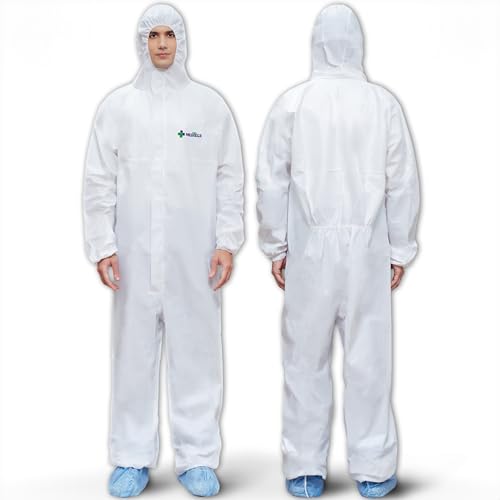
As an Amazon Associate, we earn from qualifying purchases.
Price as of Sep 19, 2026. Product prices and availability are accurate as of the date indicated and are subject to change. Any price and availability information displayed on Amazon at the time of purchase will apply.
Professional unattended death cleanup typically costs $2,000 to $25,000 in 2026, with most cases falling in the $3,000 to $10,000 range. The final cost depends on four factors: how long the death went undiscovered (decomposition stage), the number of rooms affected, the types of surfaces involved, and the geographic location. Early discovery in a single room with hard surfaces can be resolved for $2,000 to $4,500; advanced cases requiring porous material removal across multiple rooms can reach $20,000 to $30,000.
| Decomposition Stage | Typical Low | Typical High |
|---|---|---|
| Early (under 3 days) | $2,000 | $4,500 |
| Moderate (3–7 days) | $4,000 | $12,000 |
| Advanced (over 1 week) | $8,000 | $25,000 |
Most standard homeowners insurance policies cover professional biohazard remediation following an unattended death under the dwelling or personal property coverage section, less any deductible. Coverage is typically triggered when the contamination is considered sudden and accidental rather than a pre-existing condition. Renters insurance may also apply for damage to personal property. It is important to contact your insurer before cleanup begins, as some carriers require pre-authorization and their own adjuster to document the scope of work.
| Coverage Type | Typically Covers | Typical Deductible |
|---|---|---|
| HO-3 / HO-5 homeowners | Structural remediation, odor treatment | $500–$2,500 |
| Renters insurance | Damaged personal property | $250–$1,000 |
| State victim fund | Varies by state and circumstance | None in most states |
Neither the coroner, medical examiner, nor law enforcement is responsible for cleaning the property after the decedent has been removed. Their role is limited to determining cause of death and documenting the scene. Once the body has been released by the medical examiner and law enforcement, the legal responsibility for remediation falls to the property owner or estate. Families often work through a funeral director or estate attorney who can refer qualified biohazard remediation companies.
Licensed biohazard remediation companies follow OSHA and EPA guidelines to safely and thoroughly restore the property. The process typically includes containment of the affected area, removal and disposal of contaminated materials, application of EPA-registered disinfectants, deodorization (including thermal fogging or ozone treatment), air quality testing, and a final clearance inspection. All waste is transported as regulated biohazardous material. Most projects take one to three days for moderate cases, up to a week for advanced cases requiring structural material removal.
Look for companies that hold current ABRA (American Bio Recovery Association) membership or IICRC biohazard certification, carry general liability and workers’ compensation insurance, and are licensed to transport regulated biohazardous waste in your state. Reputable firms provide written itemized estimates before beginning, work directly with your insurance carrier, and never require full payment upfront. Avoid companies that pressure families at the scene, lack documentation of proper waste disposal, or cannot produce a certificate of decontamination on completion.
The four primary cost drivers are decomposition stage, affected area size, surface material type, and regional labor rates. Decomposition stage is the single largest variable — early discovery in under three days can cost $2,000 to $4,500 for a single room, while advanced cases discovered after more than a week require HVAC decontamination, structural material removal, and extended odor treatment that can push costs to $25,000 or more. Porous materials such as carpet, subfloor, drywall, and insulation absorb fluids deeply and typically must be removed and replaced rather than cleaned in place.
Inputs
Result
An early-stage case discovered within 72 hours, confined to a single room with sealed hardwood floors and painted walls, is the most straightforward remediation scenario. Hard surfaces can be thoroughly disinfected without removal. At Midwest or Southern labor rates, most families pay $2,000 to $4,500 before their insurance deductible.
Inputs
Result
A case discovered after 3 to 7 days with odor spread into adjacent rooms requires carpet removal, subfloor disinfection (and likely subfloor replacement), and deodorization treatment. The calculator derives this estimate from the moderate base range ($4,000–$9,000) multiplied by area (1.35×) × surface type (1.25×) × time elapsed (1.20×) = 2.025× combined multiplier, yielding $8,100–$18,225. Note that subfloor and flooring replacement is a separate contractor expense billed after biohazard clearance.
Estimated Cost = Base (severity) × Area multiplier × Surface multiplier × Time multiplierProfessional remediation companies price unattended death cleanup based on decomposition severity as the primary driver, then apply multipliers for affected area size, surface porosity, and time elapsed since discovery. Regional labor rates add a further 25–40% in high-cost markets.
Where:
Base (severity)= Early: $2,000–$4,500 | Moderate: $4,000–$9,000 | Advanced: $7,000–$22,000Area multiplier= Single room: 1.0× | Multiple rooms: 1.35× | Whole property: 1.9×Surface multiplier= Hard surfaces: 1.0× | Carpet/subfloor: 1.25× | Porous removal: 1.55×Time multiplier= Under 3 days: 1.0× | 3–7 days: 1.2× | Over 1 week: 1.5×Family out-of-pocket = Max(0, Remediation cost − Insurance payout + Deductible)Most homeowners policies cover professional biohazard remediation. The family’s actual out-of-pocket cost is typically limited to the deductible ($500–$2,500) plus any expenses not covered by the policy, such as structural repairs or contents disposal.
Where:
Remediation cost= Contractor quote for biohazard cleanup and deodorizationInsurance payout= Dwelling coverage minus depreciation (ACV) or full replacement (RCV)Deductible= Policy deductible: typically $500–$2,500 for most HO-3/HO-5 policiesThe price of professional unattended death remediation is driven primarily by decomposition stage — a direct function of how long the death went undiscovered. Early discovery (under 72 hours) is the most contained scenario: decontamination is typically limited to one room, hard surfaces can be disinfected without removal, and odor has not yet penetrated porous building materials or the HVAC system. At this stage, most families pay $2,000 to $4,500 at baseline regional rates.
Moderate-stage cases (discovered after 3 to 7 days) involve partial decomposition and odor that has begun to migrate into adjacent rooms and soft furnishings. Carpet, padding, and subfloor often require removal and replacement. The remediation scope expands significantly, and quotes in this range typically run $4,000 to $12,000 for a single-room origin point, and $8,000 to $18,000 when spread to multiple rooms.
Advanced cases — where discovery occurred more than one week after the passing — require the most comprehensive intervention. Fluids and gases may have penetrated drywall, insulation, and structural wood framing. HVAC decontamination is frequently necessary to eliminate odor from the air handling system. Whole-property remediation involving porous material removal can cost $20,000 to $30,000. The table below summarizes the 2026 cost ranges by decomposition stage.
| Stage | Discovery Window | Single Room | Multiple Rooms | Whole Property |
|---|---|---|---|---|
| Early | Under 3 days | $2,000–$4,500 | $3,500–$7,000 | $5,000–$10,000 |
| Moderate | 3–7 days | $4,000–$9,000 | $8,000–$18,000 | $12,000–$22,000 |
| Advanced | Over 1 week | $7,000–$18,000 | $14,000–$25,000 | $22,000–$30,000 |
These figures cover remediation only — structural repairs such as drywall replacement, flooring installation, or painting are separate costs billed by a general contractor after the biohazard clearance certificate is issued.
Understanding what moves the quote helps families ask the right questions and evaluate bids critically. The four main cost levers are decomposition stage, affected area size, surface material type, and regional labor rate.
Decomposition stage is the dominant factor because it determines how deeply contaminants have penetrated materials and how much structural removal is required. Each additional week without discovery increases remediation complexity by roughly 1.2 to 1.5 times compared to the previous tier.
Surface type is the second most significant lever. Hard, sealed surfaces — glazed tile, sealed concrete, polyurethane-coated hardwood — can be thoroughly disinfected in place. Carpet, carpet padding, and subfloor are absorptive; once contaminated beyond a certain depth, removal and replacement is the only remediation pathway that meets OSHA clearance standards. Porous materials such as unfinished drywall, insulation, and untreated wood framing present the most challenging scenario and require controlled demolition within the affected zone.
This is the question families most urgently need answered, and the good news is that most standard homeowners insurance policies do cover professional biohazard remediation following an unattended death. Coverage is typically located under the dwelling protection or additional coverages section, which includes sudden and accidental contamination. The key word is accidental — the contamination resulting from an undetected natural death almost always qualifies, as opposed to contamination from a pre-existing or ongoing condition.
The process for using insurance begins immediately: call your carrier before authorizing any cleanup work. Most insurers require pre-authorization and will send an adjuster to document the scope and pre-approve the remediation company. Some carriers maintain preferred vendor networks; using a non-approved company may result in partial reimbursement only. The estate or property owner typically pays the deductible ($500 to $2,500 for most HO-3 and HO-5 policies) and the insurer covers the balance up to policy limits.
Renters insurance operates differently. A renter’s policy protects the tenant’s personal property, not the building structure. If a tenant passed away in a rented property, it is the landlord (as property owner) who is responsible for remediation costs and whose homeowners or landlord policy applies to the structural cleanup. The estate of the deceased renter may be liable for damages to personal property under the lease terms, which is a matter for the estate attorney to advise on.
File your insurance claim before any cleanup begins. Unauthorized early cleanup can complicate or invalidate coverage. Keep all receipts and the certificate of decontamination as required claims documentation.
It is important for families to understand the distinct and limited roles of the officials who respond to an unattended death. The coroner or medical examiner is a licensed public official whose authority covers determining the cause and manner of death, issuing the death certificate, and authorizing the release of the body to a funeral home. Once that authority is exercised and the body has been removed, the coroner’s involvement with the property ends.
Law enforcement (police or sheriff’s deputies) respond to secure the scene, determine whether a criminal investigation is warranted, and document conditions. If the death is ruled natural or accidental, the scene is typically released to the property owner within hours to days. If an investigation is ongoing, the property may be held as a crime scene and families must wait for the official release before remediation can begin.
Neither coroners, medical examiners, nor law enforcement provide or are responsible for cleaning the property after their work is complete. The responsibility for hiring and paying for professional remediation rests with the property owner or, if the deceased was the owner, the estate. In most cases, a funeral director or estate attorney can refer families to certified biohazard remediation companies and advise on insurance documentation.
Not all restoration companies have the training, certification, or legal authority to perform biohazard remediation. Selecting an unqualified contractor can result in inadequate decontamination, regulatory violations, and a property that does not pass clearance testing. The most important credential is certification from the Institute of Inspection, Cleaning and Restoration Certification (IICRC) in biohazard remediation, or membership in the American Bio Recovery Association (ABRA), which maintains professional standards for this specialty.
Beyond certification, verify that the company holds a state permit to transport regulated biohazardous waste — a requirement in every US state that not all general restoration contractors carry. Ask for proof of general liability insurance and workers’ compensation coverage before signing any authorization. Reputable firms provide a written, itemized estimate before beginning work, work directly with insurance adjusters to streamline billing, and deliver a signed certificate of decontamination and, where applicable, an air quality clearance report when the project is complete.
Families are often under emotional stress when making these decisions, which makes predatory or under-qualified contractors a real risk. If a company pressures you for immediate authorization, requires full payment before any work has begun, or cannot produce licensing and insurance documentation on request, choose a different provider. Most legitimate remediation companies understand the family’s situation and proceed with professionalism and discretion at every step.
Professional unattended death remediation follows a structured protocol governed by OSHA’s Bloodborne Pathogen Standard (29 CFR 1910.1030) and EPA disinfection guidance. All technicians wear full personal protective equipment, and the affected area is contained to prevent cross-contamination during the process. The work is conducted discreetly, and most companies can begin within 24 hours of authorization.
The process begins with a professional assessment and documentation of the affected area, which is also used to support the insurance claim. Contaminated materials — soft goods, flooring, and structural elements identified for removal — are packaged as regulated biohazardous waste and transported by permitted vehicles to licensed disposal facilities. Remaining surfaces are treated with EPA-registered disinfectants formulated for bloodborne pathogen remediation. Odor elimination follows, typically using thermal fogging, ozone treatment, or hydroxyl generator technology depending on the severity and materials involved.
The project concludes with post-remediation air quality testing and a written clearance report confirming that pathogen and odor levels meet OSHA and public health standards. This certificate is required by most insurance carriers as proof that remediation was completed to code, and it is an important document for the property’s future sale or rental. Families should request and retain the original certificate. Most single-room early-stage cases are completed within one day; moderate cases typically require two to three days; advanced whole-property cases may take four to seven days depending on scope.
Read our guide
Read our guide
Read our guide
Estimate costs for remediation, renovation, and restoration projects with our construction cost calculators.
Last Updated: Sep 19, 2026
This calculator is provided for informational and educational purposes only. Results are estimates and should not be considered professional financial, medical, legal, or other advice. Always consult a qualified professional before making important decisions. UseCalcPro is not responsible for any actions taken based on calculator results.