1. Calculate
Choose your project scope and see the estimated price range.
Get a realistic 2026 estimate for fixing a wobbling, dead, noisy, or remote-controlled ceiling fan by problem type, fan style, and ceiling height — then compare local quotes.
Instant project estimate
The estimate is free. Additional details are optional.
Complete the project details and calculate to see a price range and next steps.
Clear next step
Choose your project scope and see the estimated price range.
Understand the cost drivers and what impacts your final quote.
Carry your scope into a local quote request if you choose.


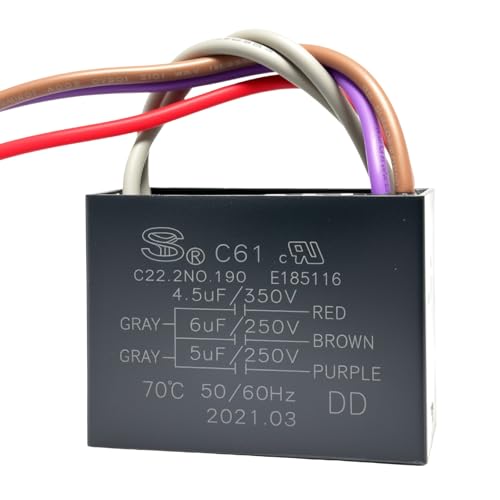
As an Amazon Associate, we earn from qualifying purchases.
Price as of Jul 24, 2026. Product prices and availability are accurate as of the date indicated and are subject to change. Any price and availability information displayed on Amazon at the time of purchase will apply.
Ceiling fan repair costs $88 to $198 for most US homeowners in 2026, with a national average near $141. Simple pull-chain and wobble fixes run $50 to $150, capacitor or motor replacement runs $100 to $350, and high or vaulted ceilings add $50 to $150 for access.
Most US homeowners pay $88 to $198 to repair a ceiling fan in 2026, with a national average around $141. Simple jobs like a new pull chain or a balance/wobble fix run $50 to $150, while a capacitor or motor replacement runs $100 to $350. Electricians typically charge a $100 to $200 service call plus $50 to $130 per hour, so the first hour usually covers a basic repair. Vaulted ceilings, large industrial fans, and multi-part diagnoses push the total toward $300 to $400 or more.
| Repair Type | Typical Cost | Notes |
|---|---|---|
| Pull chain / switch | $50 to $120 | Cheapest, often handyman work |
| Wobble / balance | $100 to $150 | Tighten, clean, balance blades |
| Capacitor / motor | $100 to $350 | Motor is the priciest fix |
| Remote / receiver | $75 to $200 | Universal kit plus labor |
Fixing a wobbling ceiling fan averages about $145, covering an electrician or handyman tightening the mounting and canopy screws, cleaning the blades, checking blade weight, and balancing the assembly. Wobble is usually caused by loose hardware, warped or unevenly weighted blades, or a bent blade iron rather than a failing motor, so it is one of the cheaper repairs. A simple balance kit costs only a few dollars, but the labor and ladder access are what you are really paying for.
Repair usually wins when the fix is a pull chain, capacitor, remote, or balance issue, all of which land under $200. Replacement makes more sense once the motor fails on an older fan, because a new motor can cost $100 to $350 installed while a brand-new mid-range fan runs $100 to $300 plus $150 to $350 to install. On fans over 10 years old, parts are often discontinued, so paying for a motor or specialty part rarely pays off versus a fresh fan with a new warranty.
| Scenario | Repair Cost | Replace Cost |
|---|---|---|
| Bad pull chain | $50 to $120 | Not worth replacing |
| Dead capacitor | $100 to $200 | Repair usually wins |
| Failed motor (old fan) | $200 to $350 | $250 to $650 new + install |
A fan that won't spin usually has one of three problems: a broken pull chain or wall switch ($50 to $120 to replace), a failed start capacitor ($100 to $200), or a burned-out motor ($150 to $350). A non-responsive remote or receiver is a fourth culprit and runs $75 to $200 for a universal kit and labor. An electrician diagnoses which one it is during the service call, so even a cheap part fix carries the $100 to $200 visit fee. If the fan hums but doesn't turn, the capacitor is the most likely cause.
Yes. A standard 8 to 9 foot ceiling is a simple ladder job, but a 10 foot or higher vaulted ceiling requires an extension ladder, scaffold, or two-person crew, which adds roughly $50 to $150 to any repair. The same wobble fix that costs $130 at standard height can run $200 to $280 over a stairwell or in a great room. Large industrial or commercial fans add cost too, both because the parts are bigger and because they are usually mounted high. Always tell the contractor the mounting height when you request a quote.
Inputs
Result
A wobble on a standard fan at normal ceiling height is the most common repair. The electrician tightens hardware, cleans and balances the blades, and the cost sits right at the national average.
Inputs
Result
A fan that hums but won't turn usually needs a start capacitor. The part is cheap, but the diagnosis and the $100 to $200 service call drive most of the total.
Inputs
Result
A failing motor on a large fan over a vaulted great room combines the priciest part with scaffold access and premium West Coast labor. At this point a new fan is often the smarter buy.
Repair cost = Service call + Labor hours x Rate + Parts + Access surchargeA repair quote starts from the flat service call, adds labor at the hourly rate, then layers in the part and any surcharge for height or fan size. Most basic fixes finish within the first billed hour.
Where:
Service call= Flat visit fee, typically $100 to $200, charged before any laborLabor hours x Rate= Electrician time at $50 to $130 per hour; most repairs take under 1.5 hoursParts= Capacitor $10 to $30, pull chain a few dollars, motor $80 to $250, remote kit $20 to $60Access surcharge= Vaulted ceilings or large industrial fans add roughly $50 to $150 for ladders, scaffold, or a second techReplace if Repair cost > 0.5 x (New fan + Install) OR fan age > 10 yearsCompare the repair quote to half the all-in cost of a new fan plus installation. If the repair is more than half, or the fan is old enough that parts are discontinued, replacement is usually the better value.
Where:
Repair cost= Quoted parts plus labor for the specific failureNew fan= Mid-range replacement fan, typically $100 to $300Install= Professional ceiling fan installation, typically $150 to $350Fan age= Over 10 years, parts are often obsolete and a motor fix rarely pays offA ceiling fan is one of the cheaper fixtures in a home to repair, which is exactly why it pays to know the going rate before a contractor quotes you. In 2026, the typical US homeowner spends $88 to $198 to fix a ceiling fan, with a national average right around $141. Simple jobs can dip to $50, while a worn-out motor on a high-end or hard-to-reach fan can climb past $350. The spread comes down to one thing: what actually failed, and how hard the fan is to get to.
The single biggest driver is the part. A broken pull chain or wall switch is the cheapest fix at $50 to $120, a wobble or balance problem runs $100 to $150, a dead remote or receiver runs $75 to $200, and a failed start capacitor or motor is the priciest at $100 to $350. Layered on top of the part is labor: electricians charge a $100 to $200 service call plus $50 to $130 per hour, and most repairs finish inside the first billed hour. Use the calculator above to land on a figure for your specific symptom and ceiling, then read on to understand each input.
It helps to know what a repair quote does and does not include. The flat service call covers the trip and diagnosis, so you pay it even if the fix turns out to be a cheap part. The hourly labor covers the actual work, and parts are billed on top, usually at a small markup over retail. What a basic repair quote will not include is access equipment for very high ceilings or a second technician for an oversized industrial fan, both of which are added as a surcharge once the contractor sees the mounting height.
| Repair Type | Typical Cost | Common Cause | Best For |
|---|---|---|---|
| Pull chain / switch | $50 to $120 | Worn or snapped chain | DIY-shy homeowners |
| Wobble / balance | $100 to $150 | Loose or warped blades | Most common call |
| Capacitor | $100 to $200 | Fan hums, won't spin | Mid-life fans |
| Motor | $150 to $350 | Burned-out windings | Older or premium fans |
| Remote / receiver | $75 to $200 | Dead receiver module | Remote-only models |
The $100 to $200 service call is charged whether the fix costs $20 in parts or $250. If you have more than one fan or fixture acting up, batch the work into a single visit so you pay the trip fee once.
Two homeowners with the same fan can get quotes that differ by a hundred dollars, and the variance is rarely random. A repair is priced from the failed part, then adjusted for how hard the fan is to reach, how big it is, how old it is, and what your local labor rate is. The more access and diagnosis a job needs, the more hours the contractor staffs against it, and labor is the majority of what you pay.
Read every quote against the list below. If a contractor cannot tell you which part they expect to replace or how the ceiling height changes the price, the quote is a guess that will likely be revised upward once they are on the ladder looking at the fan.
Tell the contractor the mounting height and the fan brand when you call. Those two details are what turn a confident flat quote into an accurate one, and they prevent the surprise access surcharge after the truck arrives.
The symptom is the fastest way to predict the bill, because each one points to a different part. A wobble almost always means loose hardware, warped blades, or a bent blade iron, and the fix is a $100 to $150 balance and tighten. A fan that hums but will not spin is the classic sign of a failed start capacitor, a $10 to $30 part that costs $100 to $200 to diagnose and install. A fan that is completely dead with no hum is more likely a broken pull chain, switch, or receiver, which lands at $50 to $200.
Noise is the symptom that splits the widest. A light rattle is usually a loose canopy or blade screw, fixed for the price of a service call. A persistent grinding or growling, on the other hand, points to failing motor bearings or worn windings, and that is the $150 to $350 motor repair that often tips an older fan into replace-it territory. The remaining culprit, a fan light that flickers or stays dark, is usually a bad light kit, socket, or wiring connection and runs $40 to $150.
If the fan is controlled by a remote, add the receiver to your suspect list. A dead or glitchy remote, an unresponsive wall canopy receiver, or a frequency conflict with another fan all present as won't turn on or won't change speed. A universal remote and receiver kit costs $20 to $60 in parts and $75 to $200 installed, and replacing it is often cheaper than chasing an intermittent original module.
| Symptom | Likely Part | Typical Cost | Repair or Replace |
|---|---|---|---|
| Wobble | Balance / blades | $100 to $150 | Repair |
| Hums, won't spin | Start capacitor | $100 to $200 | Repair |
| Dead, no hum | Pull chain / switch | $50 to $120 | Repair |
| Grinding / growling | Motor bearings | $150 to $350 | Often replace |
| Light out | Light kit / socket | $40 to $150 | Repair |
| Remote dead | Receiver module | $75 to $200 | Repair |
If the fan hums but the blades won't move, try giving them a gentle push. If they spin freely once started, the start capacitor is almost certainly the culprit, and that is a sub-$200 repair worth making.
Every repair eventually crosses the line where buying new makes more sense, and the math is simple. Compare the repair quote to half the all-in cost of a replacement. A new mid-range fan runs $100 to $300, and professional installation runs $150 to $350, so the all-in is roughly $250 to $650. If your repair quote is more than about half of that, or the fan is over 10 years old, replacement usually wins because you also reset the warranty and gain a quieter, more efficient motor.
Cheap fixes almost never justify replacement. A pull chain, capacitor, remote, or balance job all land under $200, well below half the cost of a new install, so you fix them and move on. The decision only gets interesting with a motor failure on an older fan, where the $150 to $350 repair starts to rival a fresh fan. At that point the deciding factors are sentimental value, an unusual size or finish that is hard to match, and whether replacement parts are even still made. If you do replace it, the ceiling fan installation cost calculator prices the new install by ceiling height and wiring, and the light fixture installation cost calculator covers a swap if you are changing the fan light at the same time.
| Situation | Repair Cost | Replace All-In | Smart Move |
|---|---|---|---|
| Pull chain or remote | $50 to $200 | $250 to $650 | Repair |
| Capacitor | $100 to $200 | $250 to $650 | Repair |
| Motor, fan under 10 yrs | $150 to $350 | $250 to $650 | Usually repair |
| Motor, fan over 10 yrs | $200 to $350 | $250 to $650 | Replace |
Once a fan is over 10 years old, check whether the motor and blades are still sold before paying for a diagnosis. Discontinued parts are the most common reason a cheap-sounding repair turns into a forced replacement anyway.
The cheapest repair is the one you do not have to redo, so vet contractors on transparency rather than headline price. Get two or three quotes that state the assumed failure, the service call fee, the hourly rate, and whether ladder or scaffold access for your ceiling is included. A quote that is dramatically lower than the others usually assumes a standard ceiling and a simple part, and the gap reappears as a change order once the tech sees a vaulted mount or a seized motor.
Decide who you actually need on the job. A handyman at $50 to $80 per hour is fine for a pull chain, a balance, or a blade swap. Anything touching the wiring, the capacitor, the motor, or the wall switch should go to a licensed electrician, both for safety and because a miswired fan can trip breakers or fail inspection. Batch small jobs into one visit to spread the service call, and have the brand and model number ready so the tech can bring the right capacitor or remote kit instead of making a second trip.
Finally, weigh the do-it-yourself option honestly. A pull chain or a universal remote kit is a genuine DIY repair for a confident homeowner, and the parts cost under $30. A capacitor or motor swap means working at the ceiling with live wiring, and the savings rarely justify the risk if you are not comfortable at the panel. If a fan failure is part of a larger cleanout or renovation, the junk removal service cost calculator prices hauling away the old fan and any other debris in the same pass.
Never pick a contractor on price alone for anything touching the wiring. A miswired fan or a cheap capacitor installed wrong can damage the motor, and the redo costs far more than the few dollars you saved on the first quote.
Identify the symptom
Note whether the fan wobbles, hums, is silent, grinds, or has a dead light or remote so the contractor can quote the right part.
Collect two to three quotes
Insist each one lists the service call fee, hourly rate, expected part, and whether high-ceiling access is included.
Match the pro to the job
Handyman for chains and balancing; licensed electrician for capacitor, motor, switch, or wiring work.
Batch the visit
Group multiple fans or fixtures into one appointment so you pay the $100 to $200 trip fee only once.
Run the repair-vs-replace check
If the quote tops half the cost of a new fan and install, or the fan is over 10 years old, replace it instead.
Read our guide
Read our guide
Read our guide
Price repairs, installs, and home-improvement labor across the construction category, then compare quotes from local pros.
Last Updated: Sep 17, 2026
This calculator is provided for informational and educational purposes only. Results are estimates and should not be considered professional financial, medical, legal, or other advice. Always consult a qualified professional before making important decisions. UseCalcPro is not responsible for any actions taken based on calculator results.