1. Calculate
Choose your project scope and see the estimated price range.
Get a realistic 2026 estimate for dishwasher installation labor and connection work by job type, unit style, and existing hookup — then compare quotes from local pros.
Instant project estimate
The estimate is free. Additional details are optional.
Complete the project details and calculate to see a price range and next steps.
Clear next step
Choose your project scope and see the estimated price range.
Understand the cost drivers and what impacts your final quote.
Carry your scope into a local quote request if you choose.


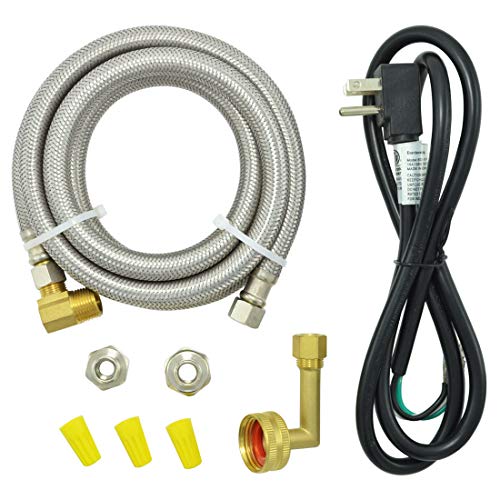
As an Amazon Associate, we earn from qualifying purchases.
Price as of Sep 17, 2026. Product prices and availability are accurate as of the date indicated and are subject to change. Any price and availability information displayed on Amazon at the time of purchase will apply.
Dishwasher installation costs $130-$300 in labor for a straight replacement into an existing hookup in 2026, and $300-$1,300 for a first-time install with no prior dishwasher, plus $25-$150 to haul away the old unit.
Installing a dishwasher costs $130-$300 in labor when you are swapping a new unit into an existing hookup, the most common job. A first-time install where no dishwasher existed runs $300-$1,300 in labor because it adds a cabinet cutout, a water-line tap, a drain connection, and power. Big-box retailers like Lowe's and Home Depot often install for $130-$200 (sometimes free with the appliance), while independent plumbers charge $200-$500. Add $25-$150 to haul away the old machine.
| Scenario | Typical Labor | Best For |
|---|---|---|
| Replacement, existing hookup | $130-$300 | Like-for-like swap |
| Retailer bundled install | $130-$200 | Buying the unit in-store |
| First-time install | $300-$1,300 | No prior dishwasher |
| Install + new electrical & plumbing | $600-$1,800 | New location |
A replacement reuses the hot-water valve, drain, and dedicated outlet that are already under the sink, so a pro only disconnects the old unit, slides in the new one, and reconnects three lines in about an hour. A first-time install has none of that. It needs a cabinet opening cut to 24 inches, a hot-water line tapped and run, a drain line tied into the sink trap or disposal, and electrical added. Each of those is a separate trade task, which is why labor jumps to $300-$1,300 and the total can clear $1,500 once materials and permits are counted.
Yes. A standard 24-inch built-in is the baseline and fits the labor numbers above. A panel-ready or fully integrated unit costs more to install because the installer must mount a custom cabinet panel and align it flush with your cabinetry, adding $75-$250 in labor. Drawer dishwashers (single or double) have a different mounting and plumbing layout and also run $75-$200 above a standard built-in. Portable and countertop units are the cheapest because they need no permanent connection, but most kitchens use a built-in.
For a straight like-for-like replacement with an existing hookup, the retailer service is usually the better deal: Lowe's and Home Depot charge $130-$200, and the fee is sometimes waived when you buy the dishwasher in-store. Hire an independent plumber ($200-$500, or $45-$150 per hour) when the job is non-standard: a first-time install, a new location, a unit that needs new electrical or plumbing, or a panel-ready model that needs careful fitting. Retailer crews often refuse or upcharge heavily for anything beyond a basic swap.
Several line items stack on top of base labor. Haul-away and disposal of the old unit adds $25-$150. New electrical (outlet $150-$350 or a dedicated circuit $250-$900) and new plumbing ($45-$150 per hour) appear on first-time installs. A new water-supply line and braided hose kit runs $20-$40, and an air gap or high-loop drain fitting required by some local codes adds $15-$50. If the cabinet opening is the wrong size, carpentry to widen it can add $100-$300.
Inputs
Result
A like-for-like swap into an existing hookup is the cheapest job — about an hour of labor plus old-unit removal. Retailer install often lands at the low end of this range.
Inputs
Result
A panel-ready model needs the installer to mount and align a cabinet panel flush with surrounding cabinetry, plus a higher-cost West Coast labor rate pushes this above a standard swap.
Inputs
Result
Adding a dishwasher where none existed means cabinet work, a tapped water line, a drain tie-in, and a dedicated circuit — three trades that combine to the top of the range even in a lower-cost region.
Total = Base labor + Unit-type adjustment + Added electrical + Added plumbing + Haul-awayInstallation is priced from a base labor figure set by job type, then adjusted for the dishwasher style and any new electrical or plumbing the job requires, with old-unit removal added on top.
Where:
Base labor= Replacement into existing hookup $130-$300; first-time install $300-$1,300Unit-type adjustment= Panel-ready +$75-$250, drawer +$75-$200 over a standard built-inAdded electrical= New outlet $150-$350 or dedicated circuit $250-$900 when no power is presentAdded plumbing= New water line and drain billed at $45-$150 per hour on first-time installsHaul-away= Removing and disposing of the old unit adds $25-$150First-time premium = First-time labor - Replacement labor (roughly $170-$1,000 more)The single biggest cost driver is whether a hookup already exists. Quantify the gap by comparing replacement labor to first-time labor before you compare any two quotes.
Where:
Replacement labor= $130-$300 because water, drain, and power are already in placeFirst-time labor= $300-$1,300 because cabinet, water, drain, and electrical are all newFirst-time premium= The added cost of creating connections that a replacement reusesPermit= New electrical may require a $50-$150 permit not needed on a swapInstalling a dishwasher is one of those jobs that looks identical on the surface but can cost anywhere from a hundred dollars to well over a thousand depending on a single question: does a hookup already exist? In 2026, swapping a new dishwasher into an existing connection costs $130 to $300 in labor — about an hour of a pro's time. Putting a dishwasher where none was before runs $300 to $1,300 in labor because it adds cabinet, plumbing, and electrical work that a simple replacement never touches.
Most homeowners are doing a replacement, so the headline number for the typical job is modest. Big-box retailers like Lowe's and Home Depot install for $130 to $200, and the fee is often waived entirely when you buy the dishwasher in the store. Independent plumbers and appliance installers charge $200 to $500 for the same swap, but they take on the trickier jobs that retailers decline. Use the calculator above to land on a figure for your specific job, then read on to understand what each input is really pricing.
It helps to separate the install cost from the price of the appliance itself. A new built-in dishwasher costs $400 to $1,500 at retail, and that is a separate line from the $130 to $1,300 you pay to install it. When a guide quotes a $600 to $1,700 'replacement cost,' it is usually bundling the unit and the labor together. This calculator estimates only the installation and connection work, which is the part that varies most by your kitchen's existing setup.
| Scenario | Typical Labor | Common Add-Ons | Best For |
|---|---|---|---|
| Replacement, existing hookup | $130-$300 | Haul-away $25-$150 | Like-for-like swap |
| Retailer bundled install | $130-$200 | Often free with purchase | Buying unit in-store |
| First-time install | $300-$1,300 | Cabinet cutout $100-$300 | No prior dishwasher |
| Install + new electrical & plumbing | $600-$1,800 | Permit $50-$150 | New kitchen location |
The appliance and the install are two different costs. A $700 dishwasher with a free retailer install is cheaper all-in than a $500 dishwasher that needs a $900 first-time install with new wiring — always price the connection work separately.
Two kitchens can get install quotes that differ by a thousand dollars, and the variance is almost never random. Installers price from a base labor figure set by the job type, then add for every connection the job creates and every non-standard unit they have to fit. The more new plumbing, wiring, and custom cabinetry your install requires, the more separate trade tasks the pro has to staff against the job.
Read every quote against the list below. If an installer cannot explain why your job is a replacement-rate swap or a first-time-rate project, that is a sign the quote is a guess that will be revised upward once they see the space under your sink.
Ask whether the quote assumes an existing hookup before you book. The most common surprise is an installer arriving for a 'replacement,' finding no dedicated circuit, and rebilling the job at the first-time-install rate on the spot.
The words 'install a dishwasher' describe two very different jobs, and confusing them is the fastest way to be shocked by a quote. A replacement reuses everything already under your sink: the hot-water shutoff valve, the drain connection at the disposal or trap, and the dedicated outlet inside the cabinet. A pro disconnects the old unit, slides the new one into the same opening, levels it, and reconnects three lines — typically under an hour of work, which is why the labor sits at $130 to $300.
A first-time install starts from nothing. The cabinet opening usually has to be cut to a standard 24-inch width, a hot-water line has to be tapped off the sink supply and run to the unit, a drain line has to be tied into the trap or disposal, and a power source has to be added. Each of those is a discrete task, and some require a licensed electrician or plumber, so labor climbs to $300 to $1,300 before materials. If your situation falls in between — say a replacement that needs a new water-supply valve or a code-required air gap — you land in the middle of the range.
There is also a sequence most homeowners follow. They start with a replacement, discover the old hookup is not up to current code, and end up paying for a partial first-time install anyway. If your home has never had a dishwasher, budget for the full first-time figure and get a plumber or electrician to scope the work before you buy the appliance, so the connection cost does not blindside you after the box is already in your kitchen.
| Task | Replacement | First-Time Install |
|---|---|---|
| Cabinet opening | Reused | Cut to 24 in. ($100-$300) |
| Water supply | Existing valve | New line tapped ($45-$150/hr) |
| Drain | Existing tie-in | New tie-in to trap/disposal |
| Electrical | Existing outlet | Outlet $150-$350 or circuit $250-$900 |
| Typical labor | $130-$300 | $300-$1,300 |
If your kitchen has never had a dishwasher, get the connection work scoped before you buy the unit. The appliance is the easy part — the plumbing and electrical are what determine whether you pay $300 or $1,300 to install it.
Beyond the hookup question, the style of dishwasher you choose moves the install labor. A standard 24-inch built-in is the baseline that the figures above assume, and it is what fits most kitchens. Choosing a fancier unit adds fitting work, and that work is labor the installer bills on top of the base rate regardless of whether it is a replacement or a first-time job.
Panel-ready and fully integrated dishwashers are designed to disappear into your cabinetry, which means the installer has to mount a custom wood panel on the door and align it flush with the surrounding cabinets — fiddly work that adds $75 to $250. Drawer dishwashers, single or double, use a different mounting bracket and plumbing layout and run $75 to $200 above a standard built-in. Portable and countertop units are the cheapest to set up because they connect to a faucet and need no permanent plumbing, but they are the exception in most kitchens.
Match the unit to the job you are actually doing. If you are weighing whether the old machine is worth keeping at all, the dishwasher repair cost calculator prices a repair so you can compare it against buying and installing a new one. And if the install is going to need new water and drain work, the plumbing repair service cost calculator estimates that portion at typical plumber hourly rates.
Once you know whether your job is a simple swap or a full first-time install, the next decision is who does the work. The three realistic options are a big-box retailer's install crew, an independent plumber or appliance installer, and DIY. Each fits a different job, and picking the wrong one either overpays or leaves you with a unit nobody will warranty.
Retailer install through Lowe's or Home Depot is the value pick for a straight like-for-like replacement: $130 to $200, frequently free when you buy the dishwasher in-store, and they handle haul-away of the old unit for a small added fee. The catch is that retailer crews are scoped for basic swaps only — they routinely decline or heavily upcharge anything involving new electrical, new plumbing, or a panel-ready unit. An independent plumber costs more ($200 to $500, or $45 to $150 per hour) but takes on the first-time installs, new locations, and code upgrades that retailers refuse. DIY can drop the labor to near zero if you are comfortable with a wrench and a few connections, but a leaking supply line or a tripped circuit erases the savings fast.
| Installer | Typical Cost | Best Job |
|---|---|---|
| Retailer crew (Lowe's/Home Depot) | $130-$200, often free | Basic like-for-like swap |
| Independent plumber/installer | $200-$500 or $45-$150/hr | First-time install, new location |
| Handyman | $150-$400 | Simple swap, no permits |
| DIY | $0 labor + parts | Confident homeowner, existing hookup |
Retailer install is the deal on a basic swap, but confirm in writing that your job qualifies. The moment new wiring or plumbing is involved, a licensed plumber or electrician is both safer and usually required by local code.
The cheapest install is the one that does not turn into a change order halfway through, so vet the job before anyone shows up. Look under your sink first: confirm there is a hot-water shutoff valve, a drain connection, and a dedicated outlet or hardwire box inside the cabinet. If all three are present, you have an existing hookup and should be quoted at the replacement rate. If any are missing, tell the installer up front so the quote reflects the real scope rather than getting revised on your kitchen floor.
Get two or three quotes that spell out the base labor, whether haul-away is included, and exactly what is assumed about your hookup. A quote that is dramatically below the others usually assumes a simple swap when your job needs new connections — the gap reappears as an on-site upcharge. For first-time installs, ask whether a permit is required for the new electrical and who pulls it, because a $50 to $150 permit and an inspection can add a day to the timeline. The steps below walk the decision in order.
Finally, do not skip the small consumables that make the install last. A fresh braided stainless supply line and hose kit ($20 to $40) prevents the slow leaks that old rubber lines develop, and a code-required air gap or high-loop drain fitting ($15 to $50) stops dirty sink water from siphoning back into the dishwasher. Spending a few extra dollars on parts is far cheaper than the water-damage repair a failed connection causes a year later.
Never choose an installer on price alone for a job that needs new connections. A botched water or drain hookup can cause hundreds of dollars in floor and cabinet damage — far more than the $100 to $300 you saved on the lowest bid.
Inspect the hookup
Check under the sink for a hot-water valve, a drain connection, and a dedicated outlet so you know if this is a replacement or a first-time job.
Decide who installs
Use a retailer crew for a basic swap; hire a licensed plumber or electrician for new connections, new locations, or panel-ready units.
Collect two to three quotes
Insist each one states base labor, haul-away, and what it assumes about your existing hookup and unit type.
Confirm permits
For new electrical or plumbing, ask whether a permit and inspection are required and who is responsible for pulling them.
Budget the consumables
Add a braided supply line and hose kit ($20-$40) and any code-required air gap ($15-$50) so the connection lasts.
Read our guide
Read our guide
Read our guide
Price appliance installs, repairs, plumbing, and full remodels, then compare contractor quotes before you book the job.
Last Updated: Sep 17, 2026
This calculator is provided for informational and educational purposes only. Results are estimates and should not be considered professional financial, medical, legal, or other advice. Always consult a qualified professional before making important decisions. UseCalcPro is not responsible for any actions taken based on calculator results.