1. Calculate
Choose your project scope and see the estimated price range.
Get a realistic 2026 estimate for fire damage cleanup and structural restoration — then connect with licensed restoration contractors near you.
Instant project estimate
The estimate is free. Additional details are optional.
Complete the project details and calculate to see a price range and next steps.
Clear next step
Choose your project scope and see the estimated price range.
Understand the cost drivers and what impacts your final quote.
Carry your scope into a local quote request if you choose.


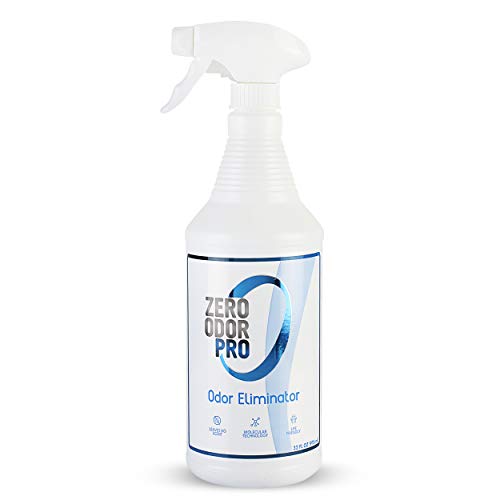
As an Amazon Associate, we earn from qualifying purchases.
Price as of Sep 18, 2026. Product prices and availability are accurate as of the date indicated and are subject to change. Any price and availability information displayed on Amazon at the time of purchase will apply.
Fire damage restoration costs $3,000–$10,000 for minor damage, $10,000–$30,000 for moderate structural damage, and $30,000–$55,000+ for severe or whole-home fires. The national average for a mid-severity house fire is roughly $18,000 including smoke remediation and water extraction.
| Damage Level | Typical Low | Typical High | What It Covers |
|---|---|---|---|
| Minor | $3,000 | $10,000 | Soot wipe-down, odor, surface refinish |
| Moderate | $10,000 | $30,000 | Partial drywall, structural patch, smoke clean |
| Severe | $30,000 | $55,000 | Structural repair, rebuild sections, full remediation |
| Catastrophic | $55,000 | $120,000+ | Near-total rebuild + water extraction + mold protocol |
Standard homeowners insurance (HO-3 policies) covers fire damage to your dwelling and personal property from accidental fires. You pay your deductible (typically $1,000–$2,500) and insurance pays the balance up to your dwelling coverage limit. Always file your claim before authorizing restoration work so the adjuster can document the full scope.
| Coverage Type | What It Pays | Common Limit |
|---|---|---|
| Dwelling (Coverage A) | Structural repair and rebuild | Full replacement cost value |
| Personal Property (Coverage C) | Furniture, clothing, appliances | 50–70% of Coverage A |
| ALE (Coverage D) | Hotel, meals, temporary rent | 20–30% of Coverage A / 12–24 months |
| Other Structures (Coverage B) | Detached garage, fence | 10% of Coverage A |
Minor fire damage (single-room, surface smoke) typically takes 1–2 weeks. Moderate structural damage with smoke remediation and drywall replacement runs 3–6 weeks. Severe fires requiring partial or full reconstruction take 3–6 months, and some catastrophic losses exceed 12 months if permitting, structural engineering, or supply-chain delays stack up.
| Damage Severity | Restoration Timeline | Key Phase |
|---|---|---|
| Minor | 1–2 weeks | Cleaning + odor removal |
| Moderate | 3–6 weeks | Drywall + structural patch + repaint |
| Severe | 3–6 months | Partial rebuild + MEP replacement |
| Catastrophic | 6–18 months | Full gut + structural engineering + permits |
Restoration follows a documented sequence: emergency board-up and stabilization within 48 hours, structural assessment, water extraction and drying (if suppression water is present), smoke and soot cleaning, odor treatment (ozone or thermal fogging), structural repair or rebuild, and final cleaning and cosmetic refinishing. Each phase must be completed and documented before the next begins.
| Restoration Phase | Typical Cost Share | Who Does It |
|---|---|---|
| Emergency stabilization | 5–10% | Restoration contractor |
| Water extraction + dry-out | 10–15% | Water mitigation crew |
| Smoke + soot cleaning | 15–25% | Remediation technicians |
| Structural rebuild | 40–60% | General contractor |
| Cosmetic finish | 10–20% | Painters, flooring, trim |
Light smoke damage (surface soot, localized odor) typically adds $2,000–$6,000 on top of structural repair. Heavy smoke that penetrates insulation, HVAC ductwork, and wall cavities adds $5,000–$15,000+ because duct cleaning, ozone treatment of every room, and potential insulation replacement are required. Ignoring smoke damage leads to persistent odor and indoor air quality problems that surface months later.
| Smoke Treatment Method | Best For | Typical Cost |
|---|---|---|
| HEPA vacuuming + wet wipe | Surface soot on walls/ceilings | $1,500–$4,000 |
| Ozone treatment | Persistent odor in enclosed spaces | $200–$1,000 per room |
| Thermal fogging | Whole-home penetrating odor | $500–$2,500 |
| HVAC duct cleaning | Smoke in forced-air system | $300–$1,000 |
| Insulation replacement | Saturated attic or wall insulation | $1.50–$4/sqft |
Red flags include demanding full payment before work begins, refusing to provide a written scope-of-work, offering to waive your insurance deductible (illegal in most states), using scare tactics about mold to upsell unneeded services, and subcontracting all work without disclosing it. Always verify IICRC certification, active state license, and proof of general liability and workers’ compensation insurance.
| Credential | What It Means | How to Verify |
|---|---|---|
| IICRC FSRT | Fire & Smoke Restoration Technician | iicrc.org certificate lookup |
| IICRC WRT | Water Restoration Technician | iicrc.org certificate lookup |
| State contractor license | Legal authorization to do structural work | State licensing board website |
| General liability insurance | Covers property damage during work | Request certificate of insurance (COI) |
| Workers' comp | Covers injuries to crew on your property | Request COI with policy number |
Inputs
Result
A kitchen fire with smoke spreading to two adjacent rooms but no sprinkler flooding lands squarely in the moderate tier. Light smoke treatment keeps costs near the low end of that range in the Midwest where labor rates run close to the national average.
Inputs
Result
Whole-home severe fires in Southern California combine high structural labor rates (25–35% above the national average) with extensive water extraction and deep smoke remediation of HVAC, adding substantial cost on top of the already high severe-tier base range.
Inputs
Result
Single-room minor fire with light smoke is the least expensive scenario. In the Southeast where labor costs track below the national average, the total often falls at the lower end of the $3,000–$10,000 minor tier, sometimes reaching the sanity floor for very localized scorching.
Total = Base(severity) × Scope factor × Smoke factor × Water factor × Regional multiplierFire restoration contractors price primarily by severity tier (minor / moderate / severe) and then apply multiplicative adjustments for scope, secondary smoke damage, firefighting water, and regional labor rates. Unlike per-sqft models, restoration cost is driven more by damage type than square footage because remediation is labor-intensive at the affected areas.
Where:
Base(severity)= Minor $3K–$10K | Moderate $10K–$30K | Severe $30K–$55K — the anchoring range before scope and secondary adjustmentsScope factor= Single-room ×0.65 | Multi-room ×1.0 (baseline) | Whole-home ×1.30 — drives linear labor scalingSmoke factor= Light ×1.0 | Heavy ×1.15 — deep smoke adds fogging, duct cleaning, insulation replacementWater factor= None ×1.0 | Some ×1.12 | Extensive ×1.30 — extraction, drying, and mold-prevention protocolRegional multiplier= South/Plains ×0.85–0.95 | Midwest ~1.0 | Northeast ×1.15–1.30 | CA/West ×1.20–1.35Smoke cost = Affected area (sqft) × $2–$6/sqft + HVAC cleaning + Odor treatmentSmoke damage is priced separately from structural repair. Surface-only soot wipe-down runs $2–$4 per square foot; deep penetration requiring chemical sponges, ozone, or insulation replacement runs $4–$6/sqft. HVAC systems add a flat $300–$1,000 per system, and thermal fogging or ozone treatment adds $200–$1,000 per room.
Where:
Affected area (sqft)= Square footage of smoke-affected walls, ceilings, and floors — not floor area alone$2–$6/sqft rate= Low end = surface soot; high end = deep penetration into drywall cavities and insulationHVAC cleaning= $300–$1,000 per forced-air system; required when smoke has circulated through ductworkOdor treatment= Ozone $200–$1,000/room or thermal fogging $500–$2,500 whole-homeRestoration contractors in 2026 price fire damage work in three broad tiers anchored to damage severity rather than square footage. Minor fires (contained to a small area with surface smoke) run $3,000–$10,000. Moderate fires (partial structural charring, multi-room smoke) run $10,000–$30,000. Severe fires (load-bearing damage, roof compromise, or near-total structural loss) run $30,000–$55,000 before secondary water and smoke adjustments are factored in.
The table below shows how those tiers translate to real-world quotes once regional labor rates and secondary damage factors are applied. A whole-home catastrophic fire in a coastal metro with firefighting water flooding multiple rooms can reach $80,000–$120,000 after mold prevention protocols, HVAC replacement, and structural engineering fees are added.
| Damage Level | Base Range | With Heavy Smoke + Water | Timeline |
|---|---|---|---|
| Minor | $3,000–$10,000 | $4,500–$14,000 | 1–2 weeks |
| Moderate | $10,000–$30,000 | $12,000–$40,000 | 3–6 weeks |
| Severe | $30,000–$55,000 | $45,000–$85,000 | 3–6 months |
| Catastrophic | $55,000+ | $80,000–$120,000+ | 6–18 months |
Restoration costs have risen 10–15% since 2023 due to labor shortages in certified remediation technicians and increased material costs for drywall, insulation, and structural lumber. Quotes from 2022 or 2023 are no longer reliable benchmarks.
Two homes with the same fire severity can receive quotes $20,000 apart. Understanding which inputs drive that spread helps you evaluate bids critically and negotiate with your insurance adjuster.
Damage severity is the primary cost driver, but the scope of affected areas multiplies it significantly. A severe fire confined to a single room costs far less than a moderate fire that spread smoke to every room through an open floor plan. Secondary factors — smoke depth and firefighting water — together account for 20–40% of many restoration invoices.
Certified restoration contractors follow a documented sequence defined by IICRC S700 (fire and smoke restoration) and S500 (water damage) standards. Each phase must be completed and documented before the next begins, both for quality control and to satisfy insurance adjuster requirements.
Understanding each step helps you evaluate whether a contractor is cutting corners. If a bid skips water extraction or jumps straight to rebuild without odor treatment documentation, the underlying problem will resurface within months.
Most homeowners insurance policies (HO-3 and HO-5) cover accidental fire damage to the dwelling structure and personal property. Filing your claim correctly protects the full payout; mistakes at the start of the process can reduce your settlement by thousands of dollars.
The most common owner mistake is authorizing extensive repair work before the insurance adjuster visits. Secure the property (board-up, tarping) but do not remove debris, tear out drywall, or discard damaged belongings until the adjuster has completed the scope documentation. Your insurer must agree to the full scope before you can recover those costs.
| Insurance Step | Timeline | What to Do |
|---|---|---|
| File the claim | Within 24–48 hours of fire | Call your insurer; get claim number and adjuster assignment |
| Document everything | Before any cleanup | Photo and video every affected area; list damaged items |
| Emergency stabilization only | 24–48 hours | Board-up, tarp — do not remove debris or begin rebuild |
| Adjuster visit | 2–10 days after claim | Walk through with adjuster; point out all secondary damage |
| Scope agreement | After adjuster | Review scope of loss document carefully before signing |
| Authorize restoration | After scope approval | Select IICRC-certified contractor; get written scope-of-work |
Ask your insurer for Replacement Cost Value (RCV) coverage rather than Actual Cash Value (ACV). ACV deducts depreciation — a 15-year-old roof that costs $12,000 to replace may only yield a $4,800 ACV check after depreciation.
The fire restoration industry has a documented storm-chaser problem: unlicensed contractors appear at disaster scenes within hours, using pressure tactics to get homeowners to sign work authorization forms before insurance adjusters can assess the damage. Signing prematurely can lock you into a contractor your insurer refuses to pay.
Verify credentials before signing anything. The IICRC (Institute of Inspection, Cleaning and Restoration Certification) maintains a public certificate lookup at iicrc.org — a legitimate fire restoration firm employs at least one FSRT (Fire & Smoke Restoration Technician) and, if water is present, one WRT (Water Restoration Technician).
Smoke remediation and firefighting water extraction are billed as separate line items on most restoration invoices. Understanding what drives each sub-cost helps you evaluate whether a contractor is itemizing fairly or padding.
Smoke remediation is priced by surface area affected and depth of penetration. Surface soot on walls and ceilings runs $2–$4 per square foot. Heavy smoke that has penetrated into wall cavities, insulation, or HVAC ductwork requires chemical cleaning agents, ozone or thermal-fogging treatment, and sometimes insulation replacement, pushing the rate to $4–$6/sqft plus $300–$1,000 for each HVAC system. Firefighting water adds an extraction and structural drying phase that runs $3–$7 per square foot of wet area, plus commercial dehumidifiers running 3–5 days.
| Secondary Damage Type | Cost Per Square Foot | Flat-Rate Items | Timeline |
|---|---|---|---|
| Light smoke (surface soot) | $2–$4/sqft | Odor treatment $400–$1,200 | 3–5 days |
| Heavy smoke (HVAC + walls) | $4–$6/sqft | HVAC cleaning $300–$1,000 | 5–8 days |
| Some water (suppression) | $3–$5/sqft wet area | Dehumidifiers included | 3–5 days drying |
| Extensive water (flooding) | $5–$7/sqft wet area | Subfloor inspection + mold protocol | 5–10 days drying |
If firefighting water sat in your home for more than 24–48 hours before extraction began, request a mold-prevention treatment (antimicrobial application) as a line item in the scope — mold colonies can establish in 24–72 hours in wet drywall.
Read our guide
Read our guide
Read our guide
Price restoration, renovation, roofing, foundation, and structural repair projects with contractor-verified 2026 cost data.
Last Updated: Sep 18, 2026
This calculator is provided for informational and educational purposes only. Results are estimates and should not be considered professional financial, medical, legal, or other advice. Always consult a qualified professional before making important decisions. UseCalcPro is not responsible for any actions taken based on calculator results.