UseCalcPro
Home
MathFinanceHealthConstructionAutoPetsGardenCraftsFood & BrewingToolsSportsMarineEducationTravel
Blog
  1. Home
  2. Construction

Mulch Calculator

Calculate mulch for landscaping and garden beds

Units

Mulch Needed

1.85 yd³

Bags (2 cf)

25

Cost

$140

Area

200 sq ft

Include Delivery

Delivery fees: $75 (≤5 yd³), $100 (≤10 yd³), $150 (>10 yd³)

Recommended Mulch Depth

2"

Fine Mulch / Annual Refresh

Shredded bark, compost top-dressing

3"

Standard Application

Most flower beds and shrubs

4"

Heavy Coverage

Weed suppression, pathways, wood chips

Cubic Feet

50.0

Bags (2 cf)

25

Bags (3 cf)

17

Total Cost

$140

Volume

Area Coverage200 sq ft
Cubic Yards1.85 yd³
Cubic Feet50.0 ft³

Bag Options

2 cu ft bags25
3 cu ft bags17
Bulk (cubic yards)1.85

1 bulk load (12 yd³ each)

Cost Breakdown

Mulch (Shredded Bark Mulch)$65
Delivery$75
Total$140

What You'll Need

GARDEN STAR 5 Cu Ft Poly Tray Wheelbarrow

GARDEN STAR 5 Cu Ft Poly Tray Wheelbarrow

$65-$904.4
View on Amazon
VIVOSUN 3-in-1 Soil pH/Moisture/Light Tester

VIVOSUN 3-in-1 Soil pH/Moisture/Light Tester

$10-$154.3
View on Amazon
Stainless Steel Garden Hoe Rake Weeding Tool

Stainless Steel Garden Hoe Rake Weeding Tool

$30-$354.5
View on Amazon
Weed Barrier Landscape Fabric Heavy Duty 6.5ftx300ft

Weed Barrier Landscape Fabric Heavy Duty 6.5ftx300ft

$65-$754.5
View on Amazon
Stanley FatMax 25ft Magnetic Tape Measure

Stanley FatMax 25ft Magnetic Tape Measure

$18-$254.8
View on Amazon
IRWIN Carpenter Square 8x12"

IRWIN Carpenter Square 8x12"

$10-$154.7
View on Amazon
GARDEN STAR 5 Cu Ft Poly Tray Wheelbarrow

GARDEN STAR 5 Cu Ft Poly Tray Wheelbarrow

$65-$904.4
View on Amazon
VIVOSUN 3-in-1 Soil pH/Moisture/Light Tester

VIVOSUN 3-in-1 Soil pH/Moisture/Light Tester

$10-$154.3
View on Amazon
Stainless Steel Garden Hoe Rake Weeding Tool

Stainless Steel Garden Hoe Rake Weeding Tool

$30-$354.5
View on Amazon
Weed Barrier Landscape Fabric Heavy Duty 6.5ftx300ft

Weed Barrier Landscape Fabric Heavy Duty 6.5ftx300ft

$65-$754.5
View on Amazon
Stanley FatMax 25ft Magnetic Tape Measure

Stanley FatMax 25ft Magnetic Tape Measure

$18-$254.8
View on Amazon
IRWIN Carpenter Square 8x12"

IRWIN Carpenter Square 8x12"

$10-$154.7
View on Amazon

As an Amazon Associate, we earn from qualifying purchases.

Frequently Asked Questions

Q

How do I calculate how much mulch I need?

Cubic yards = Length (ft) × Width (ft) × Depth (inches) ÷ 324. For bags: Multiply cubic yards × 13.5 for 2 cu ft bags. Example: 100 sq ft bed at 3" = 100 × 3 ÷ 324 = 0.93 cubic yards = 13 bags.

  • Formula: Sq ft × Depth (in) ÷ 324 = Cubic yards
  • 1 cubic yard = 27 cubic feet
  • 1 cubic yard = ~13.5 bags (2 cu ft each)
  • 1 cubic yard covers ~108 sq ft at 3" deep
  • Add 5-10% for uneven ground
Area (sq ft)2" Deep3" Deep4" Deep
1000.6 cu yd (8 bags)0.9 cu yd (12 bags)1.2 cu yd (16 bags)
2501.5 cu yd (20 bags)2.3 cu yd (31 bags)3.1 cu yd (42 bags)
5003.1 cu yd (42 bags)4.6 cu yd (62 bags)6.2 cu yd (84 bags)
10006.2 cu yd (84 bags)9.3 cu yd (125 bags)12.3 cu yd (167 bags)
Q

How deep should mulch be?

2-3 inches is ideal for most applications. Too shallow: Won't suppress weeds. Too deep: Can suffocate roots and cause rot. Keep mulch 2-3 inches away from plant stems and tree trunks.

  • 2": Fine shredded mulch, annual flowers
  • 3": Standard depth, good weed suppression
  • 4": Coarse mulch, paths, playground areas
  • Never pile mulch against trunks (causes rot)
  • Thin layer OK near perennials emerging in spring
DepthBest ForCoverage per Cu Yd
2 inchesFine mulch, shredded bark162 sq ft
3 inchesMost gardens, wood chips108 sq ft
4 inchesCoarse mulch, playgrounds81 sq ft
Q

Bulk mulch vs bags: Which is cheaper?

Bulk saves 40-60% for 2+ cubic yards. Bagged: $4-7 per 2 cu ft bag = $54-95/yard. Bulk: $25-50/yard + delivery ($50-100). Break-even: ~2 cubic yards. Bags are easier but more expensive.

  • *Prices vary by location and mulch type
  • Bulk delivery: Often minimum 2-3 yards
  • Bulk: Need wheelbarrow and labor to spread
  • Bags: Convenient, no delivery needed
  • For 2+ yards: Bulk is usually worth it
Amount NeededBagged Cost*Bulk Cost*Savings
1 cubic yard$60-80 (14 bags)$75-125 (with delivery)Bags cheaper
2 cubic yards$120-160$100-150About equal
5 cubic yards$300-400$175-300Bulk saves $100+
10 cubic yards$600-800$300-500Bulk saves $300+
Q

What type of mulch should I use?

Hardwood bark: Best for landscaping, decomposes slowly. Cedar: Repels insects, aromatic. Cypress: Durable, resists decay. Rubber: Permanent, playgrounds. Pine straw: Acidic, good for azaleas. Avoid dyed mulch near edibles.

  • Organic mulch: Improves soil as it decomposes
  • Dyed mulch: May leach chemicals, avoid near food
  • Free mulch: Many cities offer free wood chips
  • Rubber: Doesn't attract termites, doesn't decompose
Mulch TypeCost/YardLifespanBest For
Hardwood bark$30-451-2 yearsLandscape beds
Cedar$40-602-3 yearsInsect-prone areas
Pine straw$4-6/bale1 yearAcid-loving plants
Rubber mulch$80-15010+ yearsPlaygrounds
Rock/stone$50-100PermanentLow-maintenance areas
Q

When is the best time to apply mulch?

Spring (after soil warms) is ideal for vegetable gardens. Fall application protects roots for winter. Avoid applying over frozen ground. Refresh existing mulch in late spring after weed germination dies down.

  • Spring: After soil warms (perennials emerge)
  • Fall: Before first frost, protects roots
  • Avoid: Winter on frozen ground
  • Before mulching: Remove weeds, edge beds
  • Wet soil: Apply mulch after rain for best coverage
Q

How many square feet does one bag of mulch cover?

Standard 2 cu ft bag covers: 12 sq ft at 2" deep, 8 sq ft at 3" deep, 6 sq ft at 4" deep. 3 cu ft bag covers 50% more. Calculate total area, divide by coverage for number of bags.

  • Standard bag: 2 cubic feet
  • Large bag: 3 cubic feet
  • Home Depot/Lowes: Usually 2 cu ft bags
  • Landscape supply: Often 3 cu ft bags
  • Always check bag volume before buying
Bag Size2" Deep3" Deep4" Deep
2 cu ft bag12 sq ft8 sq ft6 sq ft
3 cu ft bag18 sq ft12 sq ft9 sq ft
Q

How much mulch do I need for common bed sizes?

A 4×4 ft bed needs 0.15 cubic yards at 3" depth, a 4×8 ft bed needs 0.30 cubic yards, and an 8×8 ft bed needs 0.59 cubic yards. Depth is the biggest factor — doubling depth doubles the material needed.

  • 4×4 bed at 3": ~4 bags (2 cu ft each)
  • 4×8 bed at 3": ~8 bags (2 cu ft each)
  • 8×8 bed at 3": ~16 bags (2 cu ft each)
  • Multiple beds: Add all areas together before calculating
  • For 2+ cubic yards, bulk delivery saves 40-60%
Bed Size2" Depth3" Depth4" Depth
4×4 ft (16 sq ft)0.10 cu yd0.15 cu yd0.20 cu yd
4×8 ft (32 sq ft)0.20 cu yd0.30 cu yd0.40 cu yd
8×8 ft (64 sq ft)0.40 cu yd0.59 cu yd0.79 cu yd
10×10 ft (100 sq ft)0.62 cu yd0.93 cu yd1.23 cu yd
10×20 ft (200 sq ft)1.23 cu yd1.85 cu yd2.47 cu yd

Find a Contractor Near You

Get free quotes from licensed contractors in your area

Angi
Angi4.7/5

Verified reviews & background checks

Get Free Quotes

Showing results for your area

Example Calculations

1Garden Bed with Shredded Bark Mulch

Inputs

Length20 ft
Width10 ft
Depth3 inches
Mulch TypeShredded Bark ($35/yd)
DeliveryYes

Result

Mulch Needed1.85 cubic yards
Area200 sq ft
Cubic Feet50.0
2 cu ft Bags25
3 cu ft Bags17
Total Cost$140

Area = 20 × 10 = 200 sq ft. Cubic feet = 200 × (3/12) = 50. Cubic yards = 50 / 27 = 1.85. Mulch cost = 1.85 × $35 = $65. Delivery = $75. Total = $140.

2Large Landscape with Cedar Mulch

Inputs

Length30 ft
Width15 ft
Depth4 inches
Mulch TypeCedar Mulch ($55/yd)
DeliveryYes

Result

Mulch Needed5.56 cubic yards
Area450 sq ft
Cubic Feet150.0
2 cu ft Bags75
3 cu ft Bags50
Total Cost$406

Area = 30 × 15 = 450 sq ft. Cubic feet = 450 × (4/12) = 150. Cubic yards = 150 / 27 = 5.56. Mulch cost = 5.56 × $55 = $306. Delivery (>5 yd) = $100. Total = $406.

3Small Garden Bed with Hardwood Mulch

Inputs

Length10 ft
Width5 ft
Depth2 inches
Mulch TypeHardwood Mulch ($40/yd)
DeliveryNo

Result

Mulch Needed0.31 cubic yards
Area50 sq ft
Cubic Feet8.3
2 cu ft Bags5
3 cu ft Bags3
Total Cost$12

Area = 10 × 5 = 50 sq ft. Cubic feet = 50 × (2/12) = 8.33. Cubic yards = 8.33 / 27 = 0.31. Mulch cost = 0.31 × $40 = $12. No delivery. Total = $12. For small amounts, bags are more practical than bulk.

Formulas Used

Mulch Volume

Cubic Yards = (Length × Width × Depth) / 324

Calculates the volume of mulch needed in cubic yards from area dimensions in feet and depth in inches.

Where:

Length= Bed length in feet
Width= Bed width in feet
Depth= Mulch depth in inches

Bags Needed

Bags (2 cu ft) = ceil(Cubic Feet / 2)

Calculates the number of standard 2 cubic foot bags needed.

Where:

Cubic Feet= Length × Width × (Depth / 12)

Mulch Cost

Total Cost = (Cubic Yards × Price per Yard) + Delivery Fee

Estimates total cost including mulch material and optional delivery.

Where:

Price per Yard= Cost per cubic yard for the selected mulch type
Delivery Fee= $75 for up to 5 yd³, $100 for up to 10 yd³, $150 for more

Complete Guide to Mulch Calculation, Types, and Application

1

How Much Mulch Do You Actually Need? The 324 Formula

One cubic yard of mulch covers 108 sq ft at 3 inches deep, 162 sq ft at 2 inches, and 81 sq ft at 4 inches. The quick formula is: Area (sq ft) × Depth (inches) ÷ 324 = Cubic Yards. A 200 sq ft garden bed at 3 inches deep needs 200 × 3 ÷ 324 = 1.85 cubic yards, or 25 standard 2 cu ft bags.

Irregular bed shapes are the most common source of estimation error. Break kidney-shaped, circular, and L-shaped beds into simpler geometric sections. A curved border bed measuring 40 ft long by 4 ft average width covers roughly 160 sq ft — much less than the 40 × 6 ft bounding rectangle. Overestimating the area by 30–50% is one of the top reasons homeowners order too much mulch.

Always add 5–10% for settling and uneven ground. Mulch compresses 10–15% in the first month as it absorbs moisture and packs under its own weight. A bed that looks perfectly covered at 3" depth will settle to 2.5–2.7" within weeks. That extra 5–10% cushion ensures you maintain the minimum 2.5" threshold needed for effective weed suppression.

Bed Size2" Deep (cu yd)3" Deep (cu yd)4" Deep (cu yd)Bags at 3" (2 cu ft)
100 sq ft0.620.931.2313
250 sq ft1.542.313.0931
500 sq ft3.094.636.1763
1,000 sq ft6.179.2612.35125
2

Mulch Types Compared: Cost, Lifespan, and Best Uses

Shredded hardwood bark ($30–$45 per cubic yard) is the most popular residential mulch. It knits together to resist wind and water displacement, decomposes in 1–2 years to improve soil, and provides a neat, dark appearance. For a 500 sq ft landscape project at 3" depth (4.63 cu yd), hardwood bark costs $139–$208 for material alone.

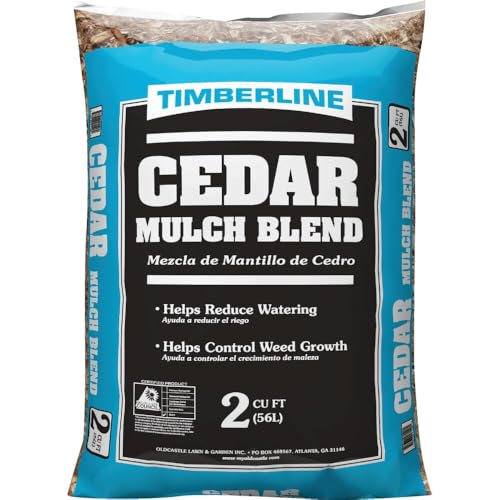
Cedar mulch ($40–$60 per cu yd) contains natural oils that repel insects including termites, ants, and some beetle species. It lasts 2–3 years before needing replenishment — 50–100% longer than hardwood — making its higher per-yard price cost-competitive on a per-year basis. Cedar is the top choice for foundation beds where termite protection matters.

Rubber mulch ($80–$150 per cu yd) from recycled tires lasts 10+ years without decomposing, making it the only truly permanent organic mulch alternative. It is the CPSC-recommended surface for playground areas, providing fall protection at 4–6" depth. However, rubber does not improve soil, retains heat (reaching 130°F+ in direct sun), and should never be used around edible plants. For permanent rock alternatives, see our landscape stone calculator.

Prices are for bulk delivery. Bagged mulch costs 40–70% more per cubic yard.
Mulch TypeCost/cu ydLifespanBest For
Shredded Hardwood$30–$451–2 yearsLandscape beds, general use
Cedar$40–$602–3 yearsFoundation beds, insect-prone areas
Pine Straw$4–$6/bale1 yearAcid-loving plants (azaleas, blueberries)
Wood Chips$25–$402–4 yearsPaths, large areas, free from arborists
Rubber$80–$15010+ yearsPlaygrounds, permanent installations
3

Bulk Delivery vs. Bagged: When Each Makes Sense

Bagged mulch at $4–$7 per 2 cu ft bag translates to $54–$95 per cubic yard — roughly double the $25–$50 per cubic yard price of bulk mulch from a landscape supply yard. The break-even point is approximately 2 cubic yards: below that, bags are often cheaper because you avoid the $50–$100 delivery fee; above that, bulk saves $100–$400 or more.

Bulk delivery requires a flat, accessible driveway or street edge where the truck can dump the load. You need a wheelbarrow, garden rake, and 2–4 hours of manual labor to spread 5 cubic yards (covering roughly 540 sq ft at 3" depth). Many landscape supply yards offer machine spreading for an additional $50–$150, which saves significant time on large projects.

For small touch-up jobs (under 50 sq ft), bags from a home center are the most practical option. Many cities also offer free wood chips from their tree-trimming operations — check with your local public works department. Free wood chips are typically coarser and less uniform than commercial mulch, but they work well for paths, back beds, and fence lines where aesthetics are secondary.

Tip: Order bulk mulch in spring (March–April) when demand peaks. Many suppliers offer 10–15% early-season discounts in February, and fall deliveries are often discounted to clear inventory before winter.

4

Proper Mulch Depth and Application Technique

2–3 inches is the optimal depth for most garden beds. Below 2 inches, sunlight penetrates to the soil and weeds germinate freely — defeating the primary purpose. Above 4 inches, excess mulch restricts air and water movement to roots, promotes fungal growth, and can suffocate shallow-rooted perennials. The sweet spot of 3 inches reduces weed growth by 80–90% and retains 25–50% more soil moisture than bare ground.

The most critical rule is to keep mulch 2–3 inches away from plant stems and tree trunks. "Volcano mulching" — piling mulch against tree bark — traps moisture against the trunk, invites boring insects, and causes bark decay that can kill even mature trees. Create a donut shape around each trunk: 2–3" of mulch everywhere except a 3–4" ring of bare soil at the base.

Apply mulch after weeding and edging the bed. Lay landscape fabric for new installations where you want 3–5 years of near-zero weed maintenance. Pin fabric every 3 feet with 6" landscape staples, then spread mulch on top. For existing beds, rake back old mulch, pull weeds, and replenish to the 3" target depth. Most organic mulches need annual top-up of 1–1.5 inches to maintain coverage as the bottom layer decomposes into soil.

  1. 1

    Weed and edge the bed

    Remove all existing weeds and define bed borders with a flat-edge spade or power edger. Clean edges prevent mulch spillover.

  2. 2

    Install landscape fabric (optional)

    Lay weed barrier fabric and pin every 3 feet. Cut X-shaped openings for existing plants. Skip for beds with heavy annual replanting.

  3. 3

    Spread mulch evenly

    Dump mulch in small piles across the bed and spread with a garden rake to a uniform 3" depth. Work outward from the center.

  4. 4

    Clear trunk zones

    Pull mulch 2–3 inches back from all tree trunks and plant stems. Create a donut shape, not a volcano.

  5. 5

    Water lightly

    A light watering settles the mulch and begins the moisture-retention process. Avoid heavy soaking that compacts the layer.

Related Calculators

Gravel Calculator

Calculate gravel needed

Concrete Calculator

Calculate concrete volume

Square Footage

Calculate area

Fence Calculator

Calculate fence materials

Soil Calculator

Calculate how much soil you need for raised beds, gardens, and landscaping. Get cubic yards, bags needed, and cost estimates for your project. Compare options.

Topsoil Calculator \u2014 Cubic Yards, Bags & Cost

Calculate cubic yards of topsoil needed for lawn prep, garden beds, and leveling. Get bag counts, weight in tons, and cost estimates for bulk vs bagged soil.

Related Resources

How Much Concrete Do I Need? Concrete Calculator for Slabs & Footings

Read our guide

How Much Roofing Material Do I Need? Shingles, Bundles & Cost Guide

Read our guide

How Much Paint Do I Need for a Room? Complete Calculator Guide

Read our guide

Concrete Calculator

Calculate concrete needed

Paint Calculator

Calculate paint needed

Flooring Calculator

Calculate flooring materials

More Construction Calculators

Calculate materials for your next project

View All

Last Updated: Mar 26, 2026

This calculator is provided for informational and educational purposes only. Results are estimates and should not be considered professional financial, medical, legal, or other advice. Always consult a qualified professional before making important decisions. UseCalcPro is not responsible for any actions taken based on calculator results.

UseCalcPro
FinanceHealthMath

© 2026 UseCalcPro