
1A typical anode rod
Inputs
Anode rodAnode rod ($20 to $50)
Result
You keep$100 to $330
Doing it yourself$20 to $50
A plumber$150 to $350
$150 - $50 = $100 at the least; $350 - $20 = $330 at the most.
Loading the 3D model...
Step 1 of 9
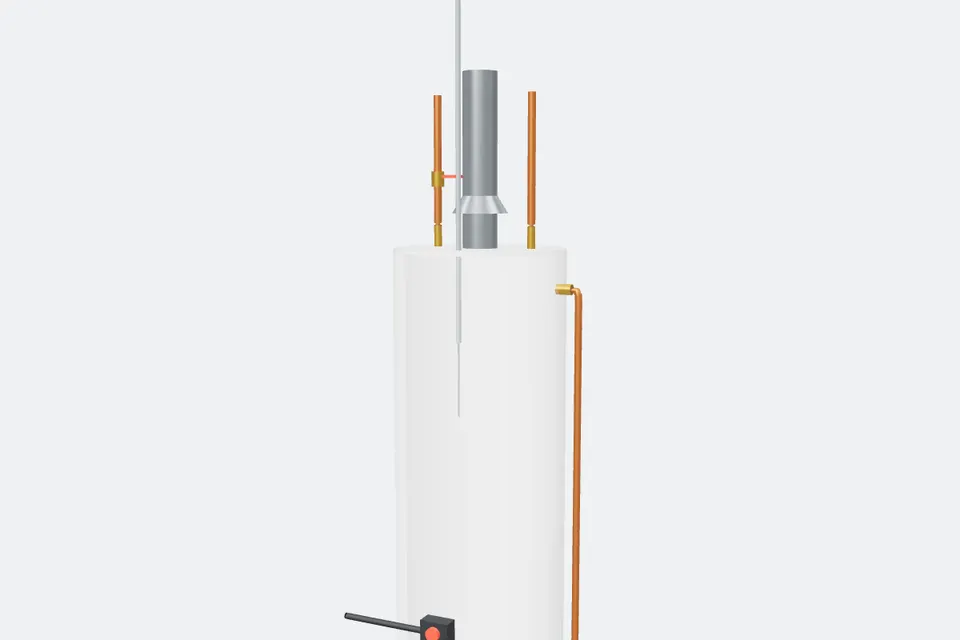
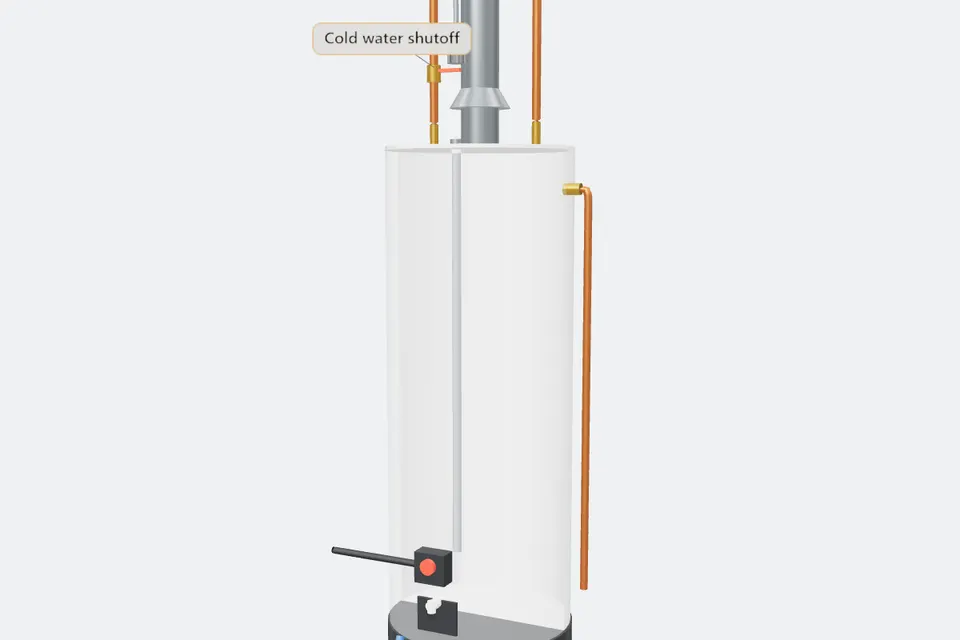
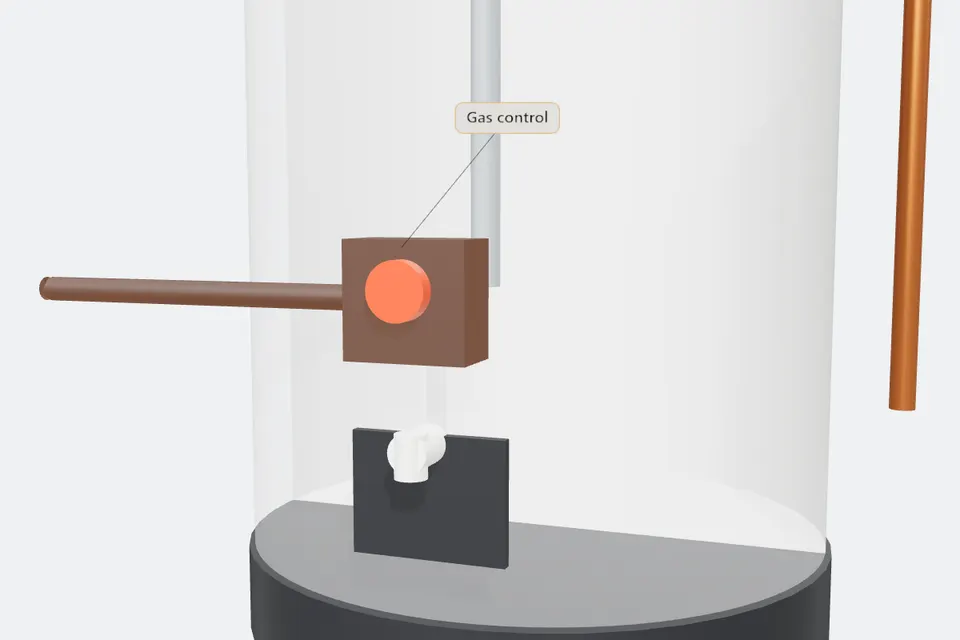
Turn the gas control to OFF (on an electric heater, switch off its breaker). A.O. Smith suggests leaving it off a few hours before draining so the water is not scalding.
The water can be hot enough to scald. Wear gloves and eye protection.
Drawn close to size, not measured; the front of the jacket is see-through so the anode inside shows. Sockets, drain amount and when to replace follow A.O. Smith and GE.


As an Amazon Associate, we earn from qualifying purchases.
Anode rod
Same length and thread as yours: magnesium, aluminum or zinc, as your heater's manual says. A segmented rod fits under a low ceiling.
1-1/16 in deep socket
A.O. Smith's size for the anode, with a breaker bar or an impact wrench.
Teflon tape or pipe sealant
For the new rod's threads.
Garden hose
To drain about 5 gallons from the drain valve.
Flathead screwdriver
Some drain valves open with one.
Call a plumber instead if the anode will not come loose, the tank itself leaks, or you are not comfortable turning a gas heater off and relighting it.
Turn the gas control to OFF (on an electric heater, switch off its breaker). A.O. Smith suggests leaving it off a few hours before draining so the water is not scalding.
The water can be hot enough to scald. Wear gloves and eye protection.
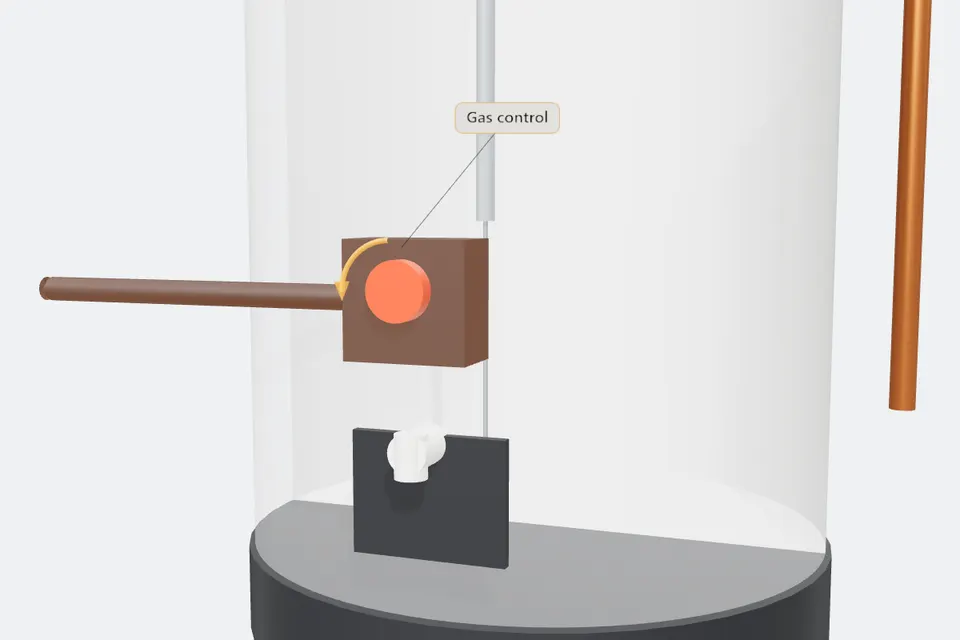
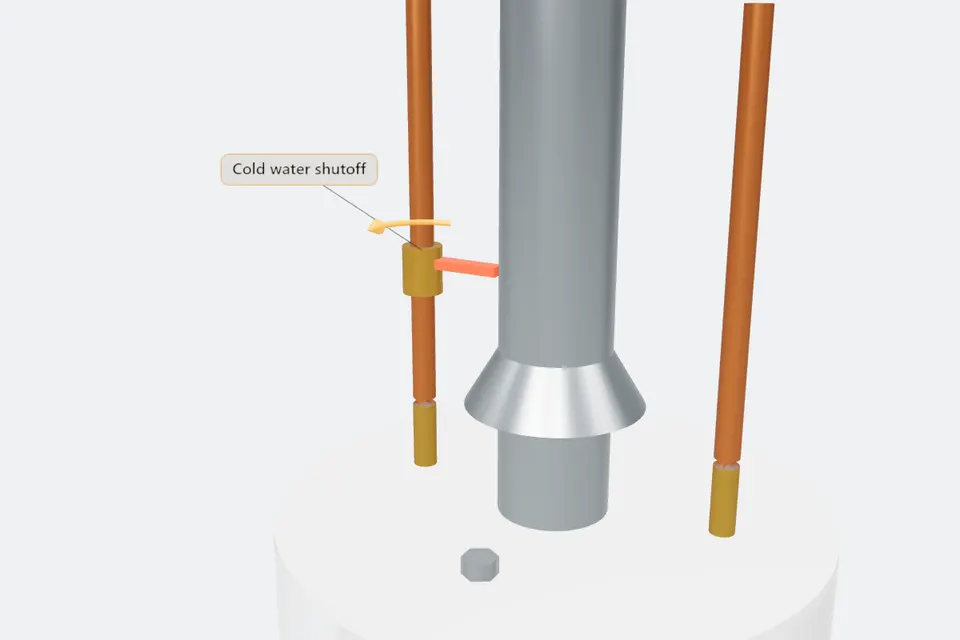
Close the cold water shutoff above the heater, then open a hot faucet somewhere in the house to let the pressure out of the tank.
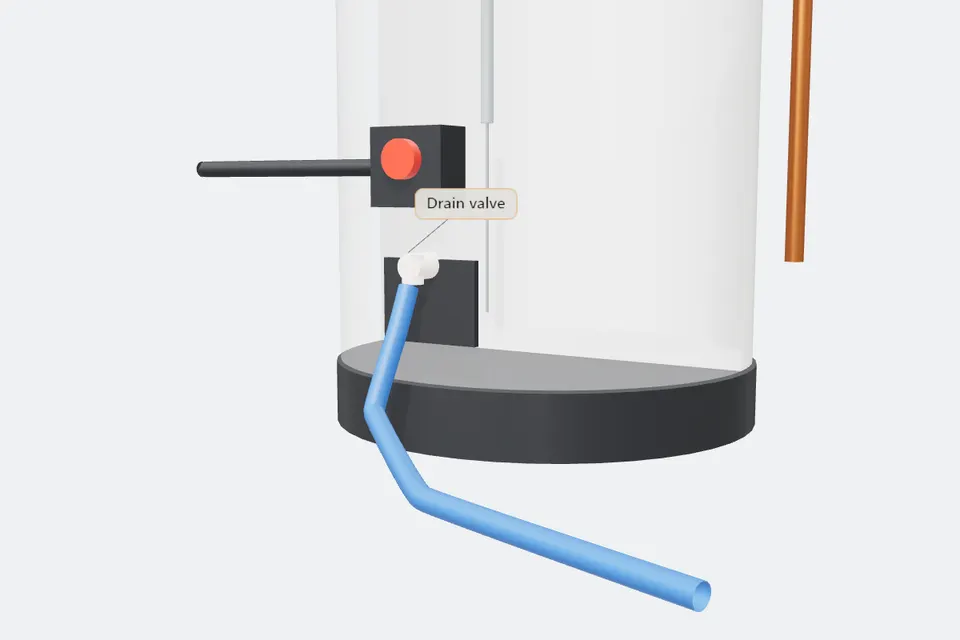
Screw a garden hose onto the drain valve, run it to a drain, open the valve and let out about 5 gallons, then close it. Some drain valves open with a flathead screwdriver.
Tools: Garden hose, Flathead screwdriver
The anode's hex head is on top of the tank. Put a 1-1/16 in deep socket on it and turn counterclockwise. It is tight: A.O. Smith uses an impact wrench, a breaker bar works too.
Tools: 1-1/16 in deep socket, Breaker bar or impact wrench
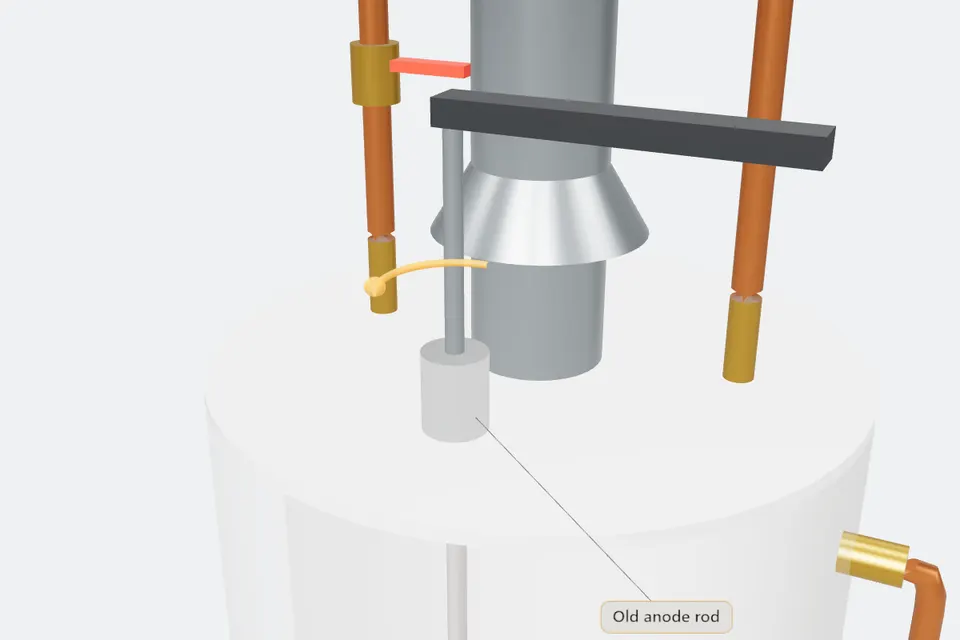
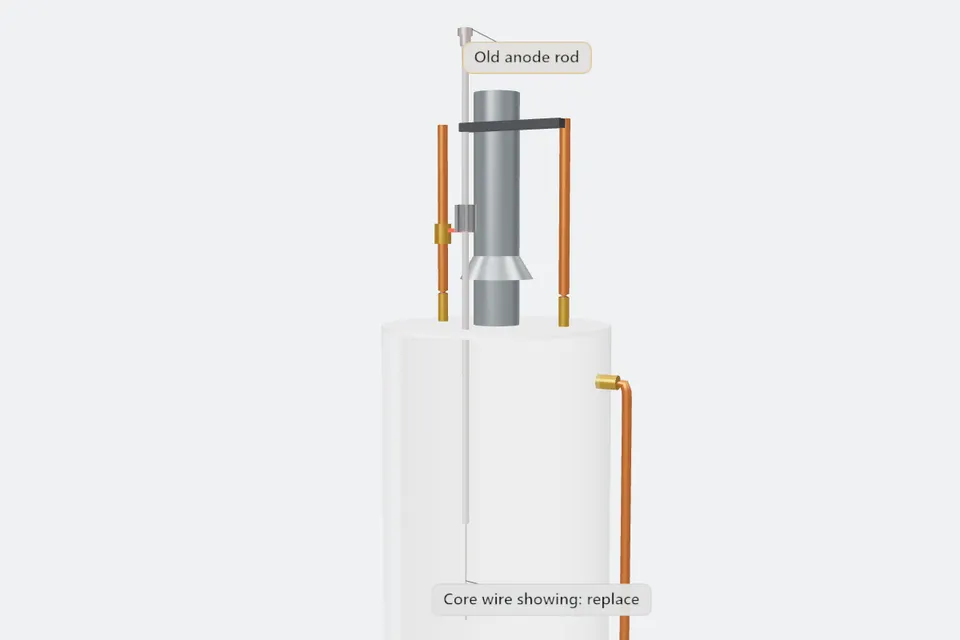
Lift the rod straight out. Replace it if more than 6 in of the steel core wire shows (GE) or most of it is thinner than 3/8 in (A.O. Smith). Short on headroom? Pull it up part way, cut it off and repeat.
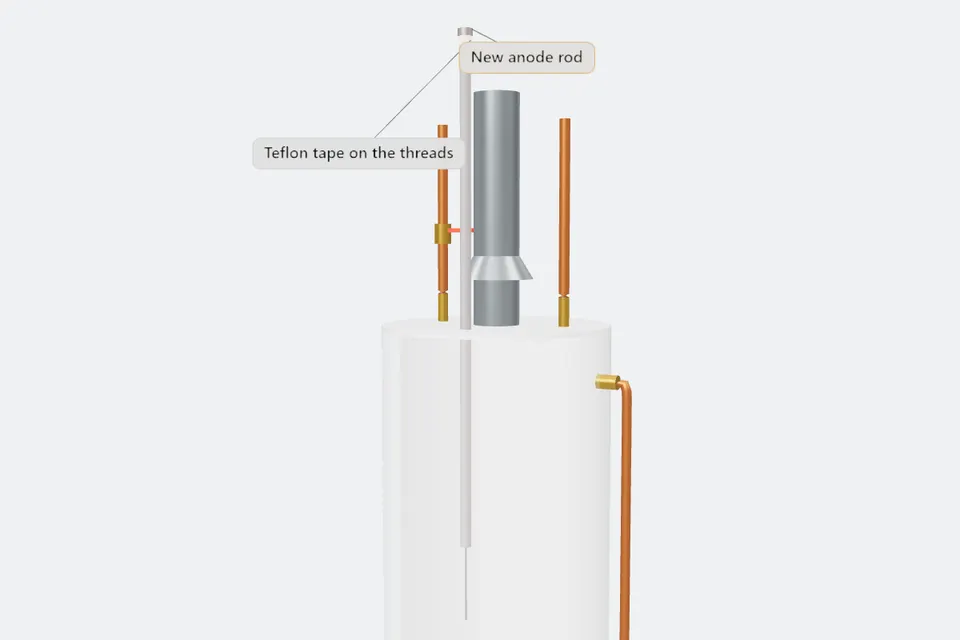
Wrap the threads of the new rod with Teflon tape or use pipe sealant, as A.O. Smith says.
Tools: Teflon tape or pipe sealant
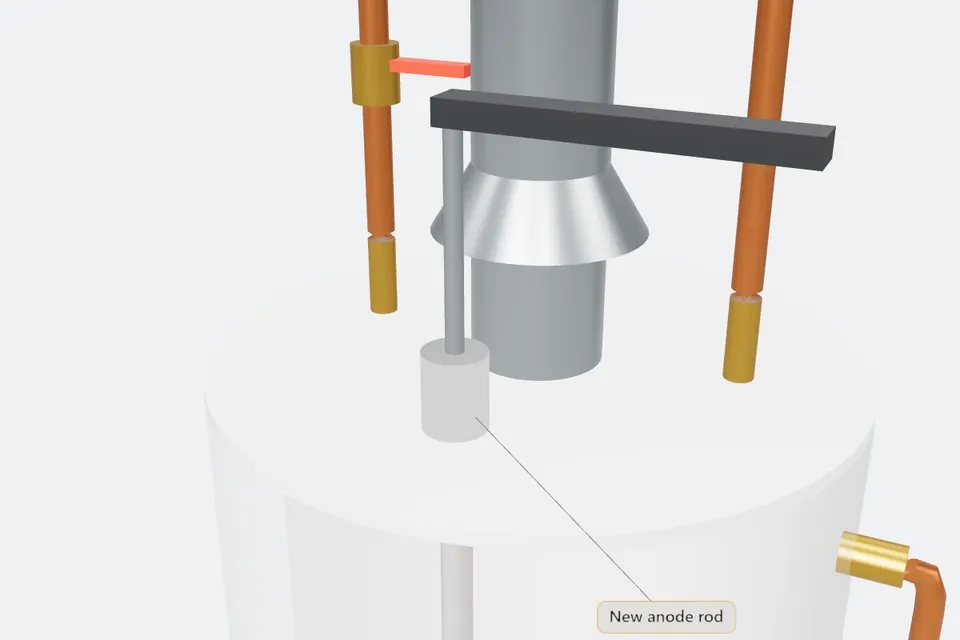
Lower the new rod into the tank, thread it in by hand, then tighten it with the socket.
Take the hose off, open the cold water shutoff and leave a hot faucet running for several minutes until the water runs steady with no air.
Check the anode and the drain valve for leaks. Relight the pilot by the label on the heater and set it to 120 F. On an electric heater, turn the power on only once the tank is full.
An electric heater switched on with an empty tank burns out its element in seconds.
Get free quotes from licensed plumbers near you
We may earn a commission when you request quotes, at no extra cost to you.
Showing results for your area
Inputs
Result
$150 - $50 = $100 at the least; $350 - $20 = $330 at the most.
Inputs
Result
$150 - $45 = $105; $350 - $45 = $305.
To replace a water heater anode rod, turn the gas control off (or the breaker), close the cold water shutoff, open a hot faucet, drain about 5 gallons, loosen the hex head on top of the tank with a 1-1/16 in deep socket and lift the rod out. Replace it when more than 6 in of core wire shows. Wrap the new rod's threads with Teflon tape, tighten it, refill and purge the air before turning the heater back on. A rod costs about $20 to $50; a plumber charges $150 to $350.
A.O. Smith's steps: turn off the gas (or the electricity) and let the water cool, close the cold water supply and open a hot faucet to relieve the pressure, hook a hose to the drain valve and let out about 5 gallons, then remove the anode from the top of the tank with a 1-1/16 in deep socket. Install the new rod with Teflon tape or pipe sealant on the threads, open the cold water, run a hot faucet for several minutes to push out the air, check for leaks and restart the heater.
GE says to replace it when more than 6 inches of the steel core wire is exposed at either end. A.O. Smith's manual says replace it when most of the rod is thinner than 3/8 in or about a third or more of its length shows the support wire; its website adds that a good rod is smooth and about half an inch thick. Both say to inspect it: GE every year, A.O. Smith first after three years and then yearly, and yearly with softened water.
| What you see | What to do |
|---|---|
| Smooth, about 1/2 in thick | Put it back |
| Pitted, thinner than 3/8 in for most of it | Replace |
| More than 6 in of wire showing | Replace |
A.O. Smith uses a 1-1/16 in deep well socket on the anode's hex head and an impact wrench to break it loose; a breaker bar works too. If there is not enough headroom to lift the rod straight out, A.O. Smith pulls it up part way, cuts it off and repeats, and offers segmented rods for low ceilings.
Often it helps. A.O. Smith says a rotten egg smell comes from hydrogen sulfide, and that a special anode rod may reduce but not eliminate it; GE says special alloy rods are available for the condition. A.O. Smith also suggests draining and flushing the heater, and chlorinating the water supply if bacteria are the cause.
The rod itself runs about $20 to $50, and a plumber charges $150 to $350 to replace it, so doing it yourself keeps about $100 to $330. GE notes the rod and the inspection are not covered by the heater's warranty, and that letting a spent rod go unreplaced voids the tank's warranty.
| Option | Cost |
|---|---|
| Yourself, the rod | $20 to $50 |
| Plumber | $150 to $350 |
Read our guide
Read our guide
Read our guide
What a plumber charges for other water heater repairs.
When the tank is past saving.
The other quick fix for the heating season.
Costs and guides for plumbing, heating, electrical and the rest of the house.
Last Updated: Nov 27, 2026
This calculator is provided for informational and educational purposes only. Results are estimates and should not be considered professional financial, medical, legal, or other advice. Always consult a qualified professional before making important decisions. UseCalcPro is not responsible for any actions taken based on calculator results.