15 lb Pork Belly (Bacon) — Dry Cure
Inputs
Result
A 5-pound pork belly at 2.5% salt with Prague Powder #1 and 1% sugar. The cure mix totals 85.0 g. At 0.25% Prague Powder, nitrite is exactly 156 ppm — the USDA maximum safe level.
Total Cure Mix
85.0 g
Salt
56.7 g
Cure Time
7 days
Typical for Bacon (Pork Belly): 5–12 lbs
2–3% typical for equilibrium dry cure
Fixed at 0.25% (USDA maximum)
Prague Powder #1 = 6.25% sodium nitrite. At 0.25% of meat weight = 156 ppm nitrite (USDA safe limit).
| Meat | Weight | Nitrite? |
|---|---|---|
| Bacon (Pork Belly) | 5–12 lbs | Yes |
| Ham | 8–15 lbs | Yes |
| Pastrami (Beef Brisket) | 8–14 lbs | Yes |
| Corned Beef | 3–5 lbs | Yes |
| Bresaola (Beef Eye Round) | 3–5 lbs | Yes |
| Duck Breast | 0.5–1 lbs | Yes |
| Salmon (Gravlax/Lox) | 1–3 lbs | No |


As an Amazon Associate, we earn from qualifying purchases.
Inputs
Result
A 5-pound pork belly at 2.5% salt with Prague Powder #1 and 1% sugar. The cure mix totals 85.0 g. At 0.25% Prague Powder, nitrite is exactly 156 ppm — the USDA maximum safe level.
Inputs
Result
A 4-pound brisket submerged in brine. Total weight (meat + water) is 2,540.1 g. Salt at 5% of total = 127.0 g. Prague Powder at 0.25% of meat weight = 4.5 g (156 ppm). The brine method is faster at 1 day per pound.
Inputs
Result
Gravlax uses a salt-and-sugar cure with no nitrite. At 3% salt and 1% sugar, a 2-pound fillet needs just 36.3 g of cure mix. Traditional gravlax also adds dill and sometimes aquavit.
For an equilibrium dry cure, use 2–3% salt by weight of the meat. For a 5-pound pork belly that means 57–68 grams (about 10–11 teaspoons) of kosher salt. Prague Powder #1 is fixed at 0.25% of meat weight, which equals the USDA maximum of 156 ppm sodium nitrite.
| Ingredient | Dry Cure % | Wet Brine % | Per 5 lbs (dry) |
|---|---|---|---|
| Salt | 2–3% | 5–8% | 57–68 g |
| Prague Powder #1 | 0.25% of meat | 0.25% of meat | 5.7 g |
| Sugar | 0.5–1% | 1–2% | 11–23 g |
| Water | None | 40% of meat | N/A |
Dry curing (equilibrium method) rubs salt directly onto the meat surface and lets it equalize over time. Wet brining submerges meat in a saltwater solution. Dry curing produces a more concentrated flavor and firmer texture, while brining is faster and more forgiving for beginners.
| Feature | Dry Cure | Wet Brine |
|---|---|---|
| Salt concentration | 2–3% of meat | 5–8% of total |
| Cure time (5 lbs) | 7 days | 5 days |
| Best for | Bacon, bresaola | Ham, corned beef |
| Difficulty | Moderate | Beginner-friendly |
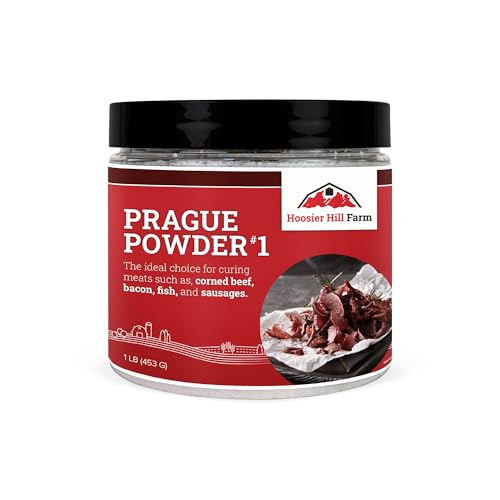
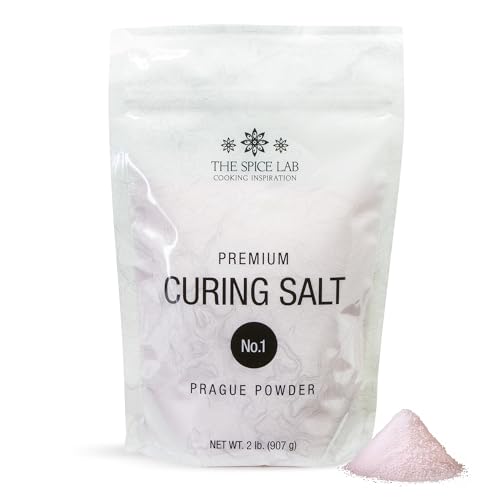
Prague Powder #1 (6.25% sodium nitrite + 93.75% salt) is safe when used at 0.25% of meat weight, producing 156 ppm sodium nitrite — the USDA maximum for cured meats. Never exceed 200 ppm. The pink dye prevents confusion with regular salt.
| Level | Prague Powder % | Nitrite ppm | Status |
|---|---|---|---|
| Light cure | 0.15% | 94 ppm | Safe |
| Standard cure | 0.25% | 156 ppm | USDA max |
| Over limit | 0.30% | 188 ppm | Caution |
| Dangerous | 0.35%+ | 219+ ppm | Unsafe |
For dry curing, plan 1 day per pound of meat plus 2 extra days, with a minimum of 7 days total. A 5-pound pork belly needs about 7 days. Wet brining is faster at roughly 1 day per pound. Thicker cuts and bone-in pieces need more time for the cure to penetrate fully.
| Meat | Weight | Dry Cure | Wet Brine |
|---|---|---|---|
| Duck breast | 0.5–1 lb | 7 days | 3 days |
| Pork belly (bacon) | 5–12 lbs | 7–14 days | 5–12 days |
| Beef brisket | 8–14 lbs | 10–16 days | 8–14 days |
| Ham | 8–15 lbs | 10–17 days | 8–15 days |
Yes, you can cure meat with salt only (no nitrites). Gravlax, lox, and some traditional bacon recipes use salt-only cures. However, nitrites provide botulism protection, the characteristic pink color, and the classic "cured" flavor. Salt-only cures should be consumed sooner and kept refrigerated.
Discover tools for meat curing, smoking, jerky making, recipe costing, and more.
Last Updated: Mar 16, 2026
This calculator is provided for informational and educational purposes only. Results are estimates and should not be considered professional financial, medical, legal, or other advice. Always consult a qualified professional before making important decisions. UseCalcPro is not responsible for any actions taken based on calculator results.