1. Calculate
Choose your project scope and see the estimated price range.
Price a 2026 shade canopy install by style (sail shade / patio cover / carport / motorized louvered), material, coverage area, and mounting type — then compare local installer quotes.
Instant project estimate
The estimate is free. Additional details are optional.
Complete the project details and calculate to see a price range and next steps.
Clear next step
Choose your project scope and see the estimated price range.
Understand the cost drivers and what impacts your final quote.
Carry your scope into a local quote request if you choose.


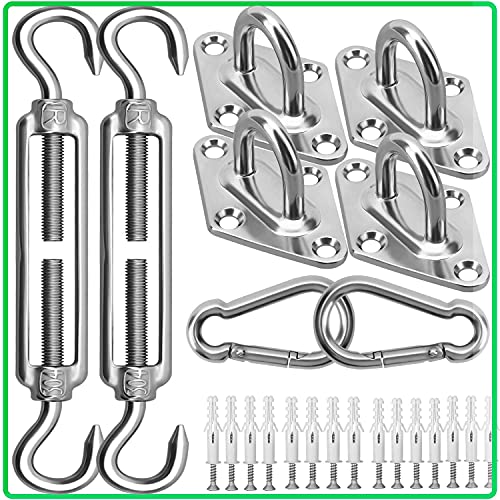


As an Amazon Associate, we earn from qualifying purchases.
Price as of Jul 24, 2026. Product prices and availability are accurate as of the date indicated and are subject to change. Any price and availability information displayed on Amazon at the time of purchase will apply.
Canopy installation cost ranges $800–$15,000 for most residential projects in 2026. Sail shade freestanding installs run $800–$3,500; patio fabric canopies $1,000–$4,500; aluminum carport canopies $1,500–$6,000; motorized louvered covers $4,000–$15,000. National averages sit near $2,200 for a mid-size sail shade or patio canopy with professional post installation per HomeGuide and Angi 2026 contractor survey data.
| Canopy Type | Typical Coverage | Installed Cost Range |
|---|---|---|
| Sail shade (triangle) | 100–400 sq ft | $800–$3,500 |
| Patio fabric canopy | 100–500 sq ft | $1,000–$4,500 |
| Aluminum carport canopy | 200–600 sq ft | $1,500–$6,000 |
| Steel carport canopy | 200–800 sq ft | $2,000–$8,000 |
| Motorized louvered cover | 100–400 sq ft | $4,000–$15,000 |
A canopy is a freestanding or lightly attached fabric or metal shade structure — sail shades, carport covers, and patio fabric canopies all qualify. An awning attaches directly to a building wall and retracts into a housing; it is not freestanding. A gazebo is a permanent rigid roofed structure with defined support posts and often solid walls or screens. Canopies are the middle-ground: semi-permanent, fabric or aluminum, and easier to relocate or replace than a gazebo.
| Feature | Canopy | Awning | Gazebo |
|---|---|---|---|
| Structure | Freestanding or lightly attached | Wall-mounted only | Permanent posts + roof |
| Material | Fabric or aluminum frame | Fabric + metal housing | Wood, vinyl, or metal |
| Typical cost | $800–$15,000 | $1,500–$4,500 | $3,000–$20,000 |
| Permit required | Often no (under 200 sq ft) | Rarely | Usually yes |
Carport canopy installation runs $1,500–$6,000 for aluminum framing with a fabric or polycarbonate roof, or $2,000–$8,000 for heavier-gauge steel framing. A standard 20 ft x 20 ft single-vehicle carport with fabric cover runs $2,000–$3,500 installed including concrete anchor bolts. Double-vehicle (20 ft x 24 ft) aluminum carports run $3,500–$6,000. RV-height steel carport canopies (12–14 ft clearance) run $4,000–$9,000 for a 12 ft x 30 ft span. Polycarbonate roofing panels add $1,000–$2,500 over fabric covers but last 15–20 years versus 5–10 for woven fabric.
| Carport Size | Frame Material | Installed Cost |
|---|---|---|
| 1-car (12 x 20 ft) | Aluminum | $1,500–$3,000 |
| 1-car (20 x 20 ft) | Aluminum | $2,000–$3,500 |
| 2-car (20 x 24 ft) | Aluminum | $3,500–$6,000 |
| RV (12 x 30 ft) | Steel | $4,000–$9,000 |
Five factors drive canopy installation cost: (1) canopy type and mechanism — motorized louvered covers cost $4,000–$8,000 more than static fabric; (2) coverage area in square feet — every 100 sq ft adds roughly $400–$1,200 in material and labor; (3) frame material — steel costs 20–40% more than aluminum for the same span; (4) mounting method — freestanding concrete post footings add $500–$2,000 over wall-attached installs; (5) regional labor — Northeast and West Coast metros run 20–30% above the national mid-range.
| Factor | Low Cost Option | High Cost Option | Price Gap |
|---|---|---|---|
| Canopy type | Static sail shade | Motorized louvered | +$4,000–$8,000 |
| Size | 100 sq ft | 400 sq ft | +$1,500–$4,000 |
| Material | Fabric | Polycarbonate | +$800–$2,500 |
| Mounting | Wall-attached | Freestanding posts | +$500–$2,000 |
Permit requirements depend on canopy type, size, and jurisdiction. Portable or fabric sail shades under 200 sq ft on an existing patio typically do NOT require a permit — they are treated as temporary structures. Permanent freestanding canopies with concrete footings usually require a building permit ($75–$300) if larger than 120–200 sq ft (thresholds vary by city). Carport canopies typically require permits in most jurisdictions because they are classified as accessory structures. HOA approval adds a separate layer. Always check local ordinances and HOA rules before installation.
| Install Type | Permit Typical? | Cost of Permit |
|---|---|---|
| Fabric sail shade, under 200 sq ft | Usually no | — |
| Freestanding canopy with footings | Often yes | $75–$300 |
| Carport canopy | Yes, most jurisdictions | $100–$400 |
| Motorized louvered cover | Yes (electrical if powered) | $150–$450 |
Inputs
Result
Inputs
Result
California labor premium of 20–30% above national midpoint pushes this 20x20 ft carport toward the upper end of the aluminum carport band.
Inputs
Result
Quote = Frame + Cover material + Post footings + Labor + Permits + Motor (if motorized)Total installed cost = frame material (aluminum $400–$2,000, steel $600–$4,000) + cover (fabric $200–$800, polycarbonate $800–$2,500) + post footings for freestanding ($400–$1,500) + labor ($400–$2,000 for standard install) + permits ($0–$400) + motor and controls ($1,500–$5,000 for motorized only). Regional labor adds 20–30% in coastal markets.
Where:
Frame= Aluminum frame $400–$2,000, steel $600–$4,000 depending on spanCover= Woven fabric $200–$800, polycarbonate panels $800–$2,500Footings= Concrete post footings $400–$1,500 for 2–4 posts (freestanding only)Labor= Installer crew $400–$2,000 for a standard 1-2 day installMotor= Motorized mechanism and remote controls $1,500–$5,000 (motorized only)Canopy installation cost in 2026 runs $800–$15,000 for most residential projects, with the final number driven almost entirely by canopy type, coverage area, and whether you choose freestanding posts or wall attachment. Sail shades — the triangle or rectangular fabric panels tensioned between posts or anchor points — are the entry tier at $800–$3,500 installed for a typical 100–300 sq ft coverage area. Aluminum carport canopies covering a single vehicle (about 200–400 sq ft) land at $1,500–$6,000 installed including post footings and fabric or polycarbonate roofing. Motorized louvered covers, which open and close via remote control to adjust sun exposure, push the top band to $4,000–$15,000 because of the mechanical system and precision aluminum louver blades, making them the fastest-growing premium segment in the market.
Four factors account for 80% of the quote spread: (1) canopy type and mechanism — a static sail shade at $800 and a motorized louvered system at $8,000 are night-and-day products despite similar footprints; (2) coverage area in square feet, with each additional 100 sq ft adding roughly $400–$1,200 in frame material and labor; (3) mounting method, since freestanding posts require concrete footings that add $400–$2,000 depending on soil conditions and post count, while wall-attached canopies use lag bolts into the framing at a fraction of that cost; and (4) regional labor rates, where Northeast and West Coast metro markets run 20–30% above the national midpoint and South and Midwest markets run 10–20% below.
A key distinction buyers miss: a canopy is not the same as an awning or a gazebo. The awning installation cost calculator covers wall-mounted retractable units that hug the building facade and retract into a housing cassette — awnings require different contractors, different mounting hardware, and different permits than freestanding or attached-but-detachable canopy structures. Canopies, by contrast, are self-supporting or lightly tethered structures that can shade a driveway, patio, carport, outdoor dining area, or pool deck without being mechanically integrated into the building envelope.
Regional pricing in this guide reflects aggregated data from HomeGuide 2026 surveys, Angi’s 2026 contractor cost database, LawnLove’s regional pricing index, Fixr, and Homewyse January 2026 contractor index. National averages reflect a roughly 50–60% spread between the lowest-cost markets (rural Midwest and South) and highest-cost markets (San Francisco Bay Area, New York City metro, Boston). All price ranges reflect full professional installation including labor, hardware, post footings where applicable, and basic permit costs — not material-only costs.
Sail shades at $800–$3,500 installed are the most popular entry-tier option for residential patios and pool decks. A sail shade uses a fabric panel — typically high-density polyethylene (HDPE) mesh with 90–95% UV block — tensioned diagonally or rectangularly between 3–4 steel or aluminum posts set in concrete footings or lag-bolted to existing structures. A 12x16 ft triangle sail shade covering about 96 sq ft typically runs $800–$1,500 including posts and installation; a 16x20 ft rectangle covering 320 sq ft runs $1,500–$3,500. The fabric lifespan is 5–10 years for standard commercial-grade HDPE; replacing the sail without touching the posts costs $200–$600 per panel.
Patio fabric canopies at $1,000–$4,500 use a more conventional overhead design — a rectangular aluminum or steel frame mounted over the patio with a fabric or polycarbonate panel roof. These are the classic backyard shade structure that most homeowners picture: four posts at the corners, a flat or gently sloped fabric top, sometimes with side curtain attachments. Aluminum-frame patio canopies in the 200–400 sq ft range run $1,500–$3,500 installed. Carport canopies, sized for one or two vehicles (200–600 sq ft), use the same basic frame design but with higher clearance (7–9 ft) and heavier-gauge steel or aluminum to handle vehicle-area wind loads; these run $1,500–$6,000 for aluminum and $2,000–$8,000 for steel.
Motorized louvered covers at $4,000–$15,000 are the luxury tier and the fastest-growing residential canopy segment in 2026. The louver blades — typically 4–8 inch extruded aluminum slats — rotate from fully open (full sky view) to fully closed (complete rain protection) via a waterproof motor with a wireless remote or home automation integration. The premium versus a static canopy comes almost entirely from the motorized mechanism and the precision-extruded louver profiles: motor and controls account for $2,000–$5,000 of the installed cost. For homeowners considering a pergola build cost calculator project, motorized louvered canopies are increasingly specified as the roof component — a pergola frame with a louvered canopy top combines structural permanence with weather adaptability.
| Canopy Type | Typical Span | Material | Installed Cost |
|---|---|---|---|
| Sail shade (triangle) | 100–200 sq ft | HDPE fabric + posts | $800–$2,200 |
| Sail shade (rectangle) | 200–400 sq ft | HDPE fabric + posts | $1,500–$3,500 |
| Patio fabric canopy | 200–500 sq ft | Aluminum frame + fabric | $1,500–$4,500 |
| Carport (1-car, aluminum) | 200–400 sq ft | Aluminum frame + fabric | $1,500–$4,000 |
| Carport (2-car, steel) | 400–600 sq ft | Steel frame + fabric | $3,500–$8,000 |
| Motorized louvered cover | 100–400 sq ft | Extruded aluminum + motor | $4,000–$15,000 |
The most common buyer surprise: polycarbonate panel roofing adds $800–$2,500 over woven fabric but lasts 15–20 years versus 5–10 for standard HDPE fabric. On a 10-year horizon, polycarbonate often wins on total cost when you factor in fabric replacement.
Coverage area is the foundational cost driver and scales linearly with material but not quite with labor. A 100 sq ft sail shade uses half the fabric of a 200 sq ft sail, but the labor — digging footings, setting posts, tensioning the sail — is 60–75% of the larger job rather than 50%, because most of the time is in setup and tensioning rather than material handling. Frame material is the second primary driver: aluminum extrusions cost $8–12 per linear foot in frame material, while steel costs $10–18 per linear foot but tolerates higher wind loads and wider spans without the same deflection risk. For a 20 ft span carport, steel is structurally preferred even though it costs 20–40% more in raw material.
Mounting method has a bigger impact on labor cost than buyers typically anticipate. Freestanding canopies require 2–6 concrete post footings — each footing needs a hole 18–24 inches deep and 6–8 inches in diameter, concrete mix, and a drying period of 24–48 hours before post installation can proceed. Post footing labor runs $150–$400 per footing, making freestanding canopy installation $400–$2,000 more expensive than wall-attached designs for the same frame. Wall-attached canopies bolt directly into wall studs or structural framing using lag bolts rated for the canopy’s wind-load requirements; this eliminates the footing excavation cost but requires an inspectable structural connection that some jurisdictions treat as a permit trigger.
Regional labor rates are the single most geographic factor. A 200 sq ft aluminum carport canopy that costs $2,200 installed in Dallas runs $2,800–$3,000 in Chicago and $3,200–$3,800 in the San Francisco Bay Area. Seasonal timing matters modestly: late spring and early fall are peak canopy installation season because homeowners are preparing for summer entertaining, pushing lead times to 3–6 weeks in hot markets. Off-season installation (November through February) can shave 10–15% off labor rates when contractor availability is high. For covered outdoor kitchen zones, bundling a outdoor kitchen build cost calculator project with a canopy install from the same contractor typically saves 10–15% on combined mobilization costs.
Bundling a canopy install with a patio or outdoor kitchen project from the same contractor saves 10–15% on mobilization — the contractor’s crew is already on site and can complete both scopes in the same visit.
Freestanding canopies with concrete post footings offer the most flexibility in placement but carry the highest installation cost and the most permit exposure. Each post requires a properly engineered footing — depth and diameter sized for the local frost line and wind-load code. In frost-prone northern states, footings must extend 36–48 inches below grade; in frost-free southern states, 18–24 inches is typical. Footing costs run $150–$400 per post including excavation, concrete, and tube form, adding $400–$2,000 to a typical freestanding canopy install. The upside: a freestanding structure can be placed anywhere on the property without proximity to the house, which is critical for pool decks, driveway carports, and side-yard shade zones.
Wall-attached canopies bolt directly to the building structure and eliminate post footing labor, but create their own complications. The attachment point must land in a structural framing member — a stud, rim joist, or ledger beam — and the lag bolt size, count, and spacing must meet local wind-load requirements. Most jurisdictions classify a wall-attached canopy as an addition to the structure, triggering permit review regardless of size, because the load is transferred to the building. HOA rules frequently impose additional restrictions: some HOAs ban canopies visible from the street, require color consistency with the home exterior, or require architectural committee approval ($50–$200) before installation. Check both layers before signing a contract.
The decision framework is straightforward for most buyers: if the canopy is covering a driveway or pool deck away from the house, freestanding is the only structural option; if it is covering a patio adjacent to the home, attached saves $500–$2,000 in labor but adds permit complexity. For patios with existing pavers or concrete, freestanding post installation requires cutting holes in the hardscape — typically $200–$600 per post location if the existing patio surface must be cored and patched. Budget both layers together using the paver patio cost calculator for the hardscape and this calculator for the canopy structure to get a complete project budget.
| Factor | Freestanding | Wall-Attached |
|---|---|---|
| Placement flexibility | Anywhere on property | Must be adjacent to structure |
| Post footing cost | $400–$2,000 added | None (uses lag bolts) |
| Typical permit trigger | Footings (often >120 sq ft) | Almost always (adds load to building) |
| Structural requirements | Wind-load rated footings + frame | Lag bolts into framing + wind-load calc |
| Cost premium vs alternative | +$400–$2,000 vs attached | Baseline; lower install cost |
Canopy installation sits at the intersection of hardscape work, aluminum fabrication, and light structural installation — general landscapers sometimes bid the work but lack the footing and structural attachment expertise for compliant installs. The contractor vetting list starts with three essentials: a valid state contractor license (verified with the state licensing board, not self-reported), general liability insurance of at least $1 million per occurrence, and workers compensation coverage for all crew on site. Require a Certificate of Insurance naming you as an additional insured for the job. Deposit structure should be 10–30% of total on signing with the remainder tied to installation milestones — any demand for full payment upfront or cash-only terms is a documented BBB scam pattern for outdoor structure work; walk away immediately.
The written quote and contract must specify the complete scope of work to avoid change-order disputes. Required line items: frame material (aluminum vs steel, gauge, brand), cover material (fabric weight in gsm for woven covers, panel thickness for polycarbonate), post footing depth and diameter or lag bolt specification for wall-attached installs, permit acquisition responsibility (contractor vs homeowner), cleanup of excavated soil, and warranty terms on the frame and cover material separately. Fabric warranties typically run 5–10 years; aluminum frame warranties 10–25 years. Motorized mechanism warranties vary widely: some manufacturers cover the motor for 2 years, others for 5. Get the warranty document, not just a verbal assurance.
Red flags in canopy quotes: a bid 25%+ below the other quotes almost always reflects skipped footing work (posts set in gravel rather than concrete), undersized frame gauge, or unlicensed subcontracting. Request a project photo portfolio with at least 2–3 installations that are 2+ years old — frame weld quality, post alignment, and fabric tensioning problems typically become visible within 18–24 months. Pay by credit card for chargeback protection and stagger the final 30–40% of payment until the installation is complete, the canopy is properly tensioned or the louvers are tested through their full range, and all post-installation cleanup is done. Three written quotes minimum is the standard rule for canopy projects above $2,000.
Read our guide
Read our guide
Read our guide
Price fire pits, outdoor kitchens, pool installs, irrigation systems, and other backyard service projects.
Last Updated: Sep 15, 2026
This calculator is provided for informational and educational purposes only. Results are estimates and should not be considered professional financial, medical, legal, or other advice. Always consult a qualified professional before making important decisions. UseCalcPro is not responsible for any actions taken based on calculator results.