110 seconds delay at 70°F
Inputs
Delay10 seconds
Temperature70°F
Result
Distance2.1 miles
Sound speed at 70°F = 344.5 m/s. 10 × 344.5 = 3,445 m = 2.14 miles. DANGER zone—seek shelter.
Distance
2.1 mi
Km
3.4 km
Safety
Danger
Lightning Distance
2.1 miles
3.4 km
Safety Zone
Danger
Storm ETA
5 min
Danger
Seek shelter immediately. Lightning can strike within a 6-mile radius of the last thunder.
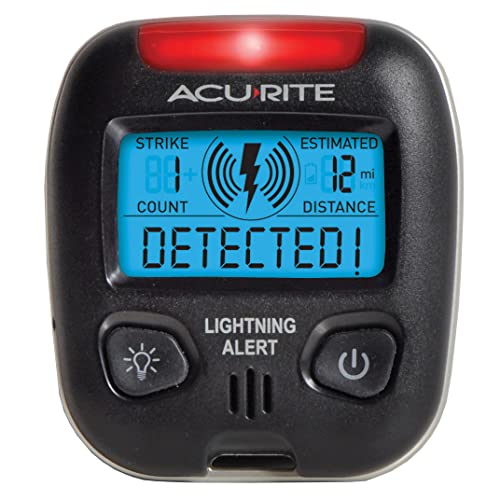
Affiliate link — we may earn a commission at no extra cost to you. Price shown as of the last refresh.


As an Amazon Associate, we earn from qualifying purchases.
Price as of Sep 17, 2026. Product prices and availability are accurate as of the date indicated and are subject to change. Any price and availability information displayed on Amazon at the time of purchase will apply.
Inputs
Result
Sound speed at 70°F = 344.5 m/s. 10 × 344.5 = 3,445 m = 2.14 miles. DANGER zone—seek shelter.
Inputs
Result
Sound speed at 85°F = 349 m/s. 25 × 349 = 8,725 m = 5.4 miles. Still in danger zone—head for shelter.
Count the seconds between the lightning flash and thunder, then divide by 5 for miles or by 3 for kilometers. Light travels instantly; sound travels about 1,125 ft/sec (343 m/s), so a 10-second delay means roughly 2 miles.
| Seconds | Miles | Kilometers | Safety |
|---|---|---|---|
| 5 sec | 1.0 mi | 1.6 km | DANGER |
| 15 sec | 3.0 mi | 4.8 km | DANGER |
| 30 sec | 6.0 mi | 9.7 km | Warning |
| 60 sec | 12.0 mi | 19.3 km | Alert |
Lightning can strike up to 10–15 miles from the storm center (sometimes called "bolts from the blue"). The NWS 30-30 rule says: if the flash-to-thunder time is under 30 seconds (6 miles), seek shelter immediately.
Yes. Sound speed depends on air temperature: 331.3 + 0.606 × T(°C) meters per second. At 32°F (0°C), sound travels 1,087 ft/sec. At 90°F (32°C), it is 1,152 ft/sec—a 6% difference.
Typical thunderstorms move at 25–35 mph. A storm 10 miles away could reach you in 15–25 minutes. Fast-moving squall lines can travel 50–60 mph, arriving in under 10 minutes from the same distance.
Weather and outdoor calculators
Last Updated: Sep 17, 2026
This calculator is provided for informational and educational purposes only. Results are estimates and should not be considered professional financial, medical, legal, or other advice. Always consult a qualified professional before making important decisions. UseCalcPro is not responsible for any actions taken based on calculator results.