Average Roofing Cost by State in 2026 (All 50 States Compared)
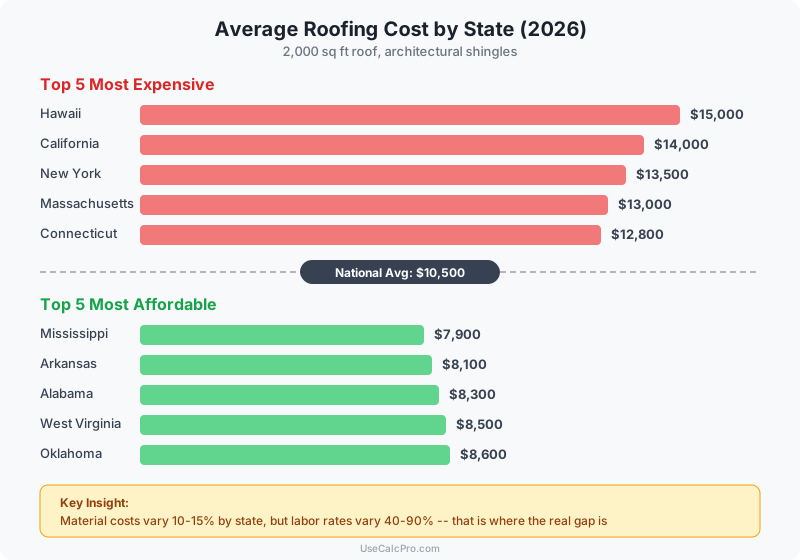
The national average cost to replace a roof on a 2,000-square-foot home with architectural shingles is $10,500 in 2026. However, actual costs range from roughly $7,900 in Mississippi to over $15,000 in Hawaii -- a spread of nearly $7,100 depending on where you live. Labor rates, building codes, material transport distances, and regional climate hazards all contribute to this wide variation.
Consider a representative comparison: a roof replacement for a 1,950-square-foot ranch in central Ohio, with bids coming in between $9,800 and $11,200 -- right in line with the national average. A nearly identical house in the Bay Area got quotes of $13,800 to $15,600 around the same time. Same square footage, same architectural shingle spec, but California labor rates and fire-code-compliant underlayment pushed the price up by 40%. That kind of contrast is exactly why this state-by-state comparison pulls together data from Angi, HomeGuide, RoofingCalculator.com, Modernize, and RoofReplacementCost.ai.
Use our Roofing Calculator to get a material and cost estimate tailored to your roof dimensions, pitch, and local pricing.
All 50 States: Roof Replacement Cost Comparison
The table below shows the estimated cost to replace a roof on a typical 2,000-square-foot home using architectural (dimensional) shingles. The "vs. National" column shows how each state compares to the $10,500 national average. Costs include materials, labor, tear-off of one existing layer, disposal, and standard permits.
| State | Average Cost | Low Range | High Range | vs. National |
|---|---|---|---|---|
| Alabama | $8,300 | $6,800 | $9,800 | -21% |
| Alaska | $11,800 | $9,900 | $13,700 | +12% |
| Arizona | $10,200 | $8,600 | $11,800 | -3% |
| Arkansas | $8,100 | $6,600 | $9,600 | -23% |
| California | $14,000 | $11,900 | $16,100 | +33% |
| Colorado | $11,200 | $9,400 | $13,000 | +7% |
| Connecticut | $12,800 | $10,800 | $14,800 | +22% |
| Delaware | $10,400 | $8,800 | $12,000 | -1% |
| Florida | $11,500 | $9,700 | $13,300 | +10% |
| Georgia | $10,100 | $8,500 | $11,700 | -4% |
| Hawaii | $15,000 | $12,800 | $17,200 | +43% |
| Idaho | $9,500 | $8,000 | $11,000 | -10% |
| Illinois | $11,000 | $9,300 | $12,700 | +5% |
| Indiana | $9,400 | $7,900 | $10,900 | -10% |
| Iowa | $9,200 | $7,700 | $10,700 | -12% |
| Kansas | $9,300 | $7,800 | $10,800 | -11% |
| Kentucky | $8,700 | $7,300 | $10,100 | -17% |
| Louisiana | $9,200 | $7,500 | $10,900 | -12% |
| Maine | $10,800 | $9,100 | $12,500 | +3% |
| Maryland | $11,400 | $9,600 | $13,200 | +9% |
| Massachusetts | $13,000 | $11,000 | $15,000 | +24% |
| Michigan | $10,300 | $8,700 | $11,900 | -2% |
| Minnesota | $11,100 | $9,400 | $12,800 | +6% |
| Mississippi | $7,900 | $6,400 | $9,400 | -25% |
| Missouri | $9,300 | $7,800 | $10,800 | -11% |
| Montana | $9,100 | $7,600 | $10,600 | -13% |
| Nebraska | $9,400 | $7,900 | $10,900 | -10% |
| Nevada | $10,400 | $8,800 | $12,000 | -1% |
| New Hampshire | $10,600 | $8,900 | $12,300 | +1% |
| New Jersey | $13,200 | $11,200 | $15,200 | +26% |
| New Mexico | $8,800 | $7,400 | $10,200 | -16% |
| New York | $13,500 | $11,500 | $15,500 | +29% |
| North Carolina | $10,100 | $8,500 | $11,700 | -4% |
| North Dakota | $8,900 | $7,500 | $10,300 | -15% |
| Ohio | $10,000 | $8,400 | $11,600 | -5% |
| Oklahoma | $8,600 | $7,000 | $10,200 | -18% |
| Oregon | $11,300 | $9,500 | $13,100 | +8% |
| Pennsylvania | $10,500 | $8,900 | $12,100 | 0% |
| Rhode Island | $12,400 | $10,500 | $14,300 | +18% |
| South Carolina | $9,600 | $8,100 | $11,100 | -9% |
| South Dakota | $8,900 | $7,500 | $10,300 | -15% |
| Tennessee | $9,500 | $8,000 | $11,000 | -10% |
| Texas | $9,400 | $7,600 | $11,200 | -10% |
| Utah | $10,300 | $8,700 | $11,900 | -2% |
| Vermont | $10,900 | $9,200 | $12,600 | +4% |
| Virginia | $11,200 | $9,500 | $12,900 | +7% |
| Washington | $12,600 | $10,700 | $14,500 | +20% |
| West Virginia | $8,500 | $7,100 | $9,900 | -19% |
| Wisconsin | $10,200 | $8,600 | $11,800 | -3% |
| Wyoming | $9,000 | $7,500 | $10,500 | -14% |
Tip
These are mid-range estimates for architectural shingles. Premium materials like standing-seam metal or synthetic slate can push costs 50-100% higher. Use our Roofing Calculator to compare material options for your specific roof size and pitch.
Top 5 Most Expensive States for Roof Replacement
1. Hawaii -- $15,000+
Hawaii sits at the top of every roofing cost ranking for one straightforward reason: nearly every building material arrives by container ship. Shingles, underlayment, flashing, and even nails must cross 2,400 miles of ocean from the West Coast. Freight surcharges add $1,500-$2,500 to material costs alone. Labor rates are also among the highest in the country, driven by a small pool of licensed roofers and a high cost of living. The combination pushes a standard 2,000-square-foot reroof to $15,000 or more -- sometimes exceeding $17,000 for homes in remote areas on the Big Island or Maui.
2. California -- $14,000
California's roofing costs reflect both expensive labor markets and aggressive building codes. In Wildland-Urban Interface (WUI) zones -- which cover large portions of Southern California, the Sierra foothills, and the East Bay hills -- roofs must meet Class A fire ratings. This means fire-resistant underlayment, non-combustible ridge vents, and often upgraded shingle formulations. Labor rates in the Los Angeles and San Francisco metro areas run $55-$75 per hour for experienced roofers, compared to $35-$45 in the national midrange. Permit fees in cities like San Jose or Pasadena can reach $800-$1,200 for a reroof.
3. New York -- $13,500
New York's costs are driven primarily by the New York City metro area, where union labor rates, strict local codes, and limited staging space on row houses and brownstones all add complexity. Upstate New York is significantly cheaper -- Syracuse and Buffalo bids often land in the $10,000-$11,500 range. But statewide averages get pulled up by the sheer volume of roofing work in the five boroughs, Long Island, and the lower Hudson Valley, where a 2,000-square-foot home can easily cost $13,000-$15,500.
4. Massachusetts -- $13,000
Boston-area labor rates are among the highest in the Northeast, and Massachusetts ice dam codes require ice-and-water shield membrane on the first three feet of roof from every eave. This adds $800-$1,200 in material costs that warmer states simply do not have. Snow load requirements also push toward heavier-gauge decking fasteners and more robust underlayment systems, contributing to an average around $13,000.
5. Connecticut -- $12,800
Connecticut combines Northeast labor premiums with proximity to the New York metro market, where subcontractors can earn more by working across state lines. The state also enforces strict wind uplift requirements in coastal Fairfield County -- a direct response to hurricane and nor'easter damage patterns. Enhanced fastening schedules and wind-rated shingles add $500-$900 to a standard job.
Top 5 Cheapest States for Roof Replacement
1. Mississippi -- $7,900
Mississippi consistently ranks as the lowest-cost state for roof replacement. Labor rates for roofers average $28-$35 per hour, roughly half of what crews earn in California or New York. The cost of living is the lowest in the nation, keeping overhead costs -- insurance, workers' comp, truck payments -- proportionally lower. Material distribution is efficient thanks to proximity to Gulf Coast shipping ports. A straightforward gable roof on a ranch home frequently comes in under $8,000.
2. Arkansas -- $8,100
Arkansas benefits from low labor costs and a competitive roofing market. The state has fewer code-mandated upgrades than coastal or high-wind states. No hurricane strap requirements, no seismic bracing, and relatively mild snow load standards mean contractors can focus on a clean tear-off-and-install without additional structural work. Material costs track closely with national averages since major distributors have warehouses in Little Rock and regional hubs.
3. Alabama -- $8,300
Alabama sits in a sweet spot of low labor costs and good material access via the Port of Mobile. Coastal counties near the Gulf do face wind uplift codes that can add $500-$1,000 for hurricane clips and enhanced nailing patterns, but the vast majority of the state's homes are inland where standard code applies. The competitive market of independent roofers keeps margins tight.
4. West Virginia -- $8,500
West Virginia's low cost of living translates directly into affordable roofing labor. The mountainous terrain does add complexity for some homes -- steep-pitch roofs and difficult access can bump individual projects higher -- but the statewide average remains well below $9,000. Limited code overhead and straightforward permitting keep administrative costs low.
5. Oklahoma -- $8,600
Oklahoma is an interesting case because the state gets hammered by hail storms, which creates high demand for roofers. You might expect that demand to push prices up, but the opposite happens: the steady stream of insurance-funded work attracts a large number of roofing contractors, including storm-chasing crews from neighboring states. The competitive surplus actually keeps prices low. Material costs are moderate, and labor rates average $30-$38 per hour.
Regional Analysis
Northeast (CT, MA, ME, NH, NJ, NY, PA, RI, VT)
The Northeast is the most expensive region for roofing, with an average of $11,900 across nine states. Three factors compound the cost: high union and prevailing-wage labor rates, ice-and-snow-load code requirements, and a shorter roofing season. In northern New England, roofers effectively have a six-month window from April through October before temperatures drop too low for proper shingle adhesion. This compressed season means crews command premium rates during peak months. Ice dam prevention codes -- requiring ice-and-water shield membrane, often extending six feet from eaves in Maine and Vermont -- add $800-$1,500 in materials that southern states do not need. Pennsylvania, at $10,500, is the one Northeast state that tracks exactly at the national average, thanks to lower labor rates in the central and western parts of the state balancing out Philadelphia-area premiums.
West Coast and Mountain West (CA, CO, HI, OR, WA, AK)
The western tier averages $12,650, heavily skewed by California and Hawaii. Fire codes are the dominant cost driver on the West Coast. California's WUI zones require Class A rated roofing assemblies, and parts of Oregon and Washington are adopting similar standards as wildfire risk increases. Colorado stands out for hail-related upgrades -- impact-resistant shingles rated Class 3 or Class 4 qualify for insurance discounts of 15-28% in the Front Range corridor. Alaska's costs ($11,800) reflect extreme shipping distances and a very short building season.
South and Southeast (AL, AR, FL, GA, KY, LA, MS, NC, SC, TN, TX, VA, WV)
The South averages $9,500 -- the most affordable region overall. Low labor costs, long roofing seasons (nearly year-round in the Deep South), and competitive markets all contribute. The notable exception is Florida, where hurricane building codes push costs to $11,500. Since the 2002 Florida Building Code update, roofs in the High-Velocity Hurricane Zone (Miami-Dade and Broward counties) require Miami-Dade-approved products, ring-shank nails at six-per-shingle patterns, and secondary water resistance barriers. These requirements add $1,500-$2,500 compared to a standard install. Coastal Louisiana and the Texas Gulf Coast face similar wind-zone surcharges, though the code enforcement varies more county by county.
Midwest and Plains (IA, ID, IL, IN, KS, MI, MN, MO, MT, ND, NE, OH, SD, WI, WY)
The Midwest averages $9,700, closely clustered around the national average. This region represents the baseline for roofing costs in the United States. Labor rates are moderate ($32-$42 per hour), material distribution infrastructure is strong, and code requirements are generally straightforward. The primary cost variable is hail resistance: Kansas, Nebraska, and the Dakotas all sit in the Central Plains hail corridor, where impact-resistant shingles are increasingly required or incentivized by insurers. Minnesota and Wisconsin add ice dam prevention costs similar to the Northeast, though their lower labor rates keep overall costs closer to $10,200-$11,100.
What Drives State-to-State Cost Variation?
Understanding the factors behind price differences helps homeowners evaluate whether a quote is reasonable for their area.
Labor Rates
Labor accounts for 40-60% of a total roofing project cost, making it the single largest cost variable between states. Roofer hourly rates range from $25-$32 in Mississippi and Arkansas to $55-$75 in the San Francisco Bay Area and New York City. These rates reflect local cost of living, demand for construction labor, union prevalence, and workers' compensation insurance premiums -- which themselves vary by state. A state with $12/hour higher labor rates translates to roughly $2,400-$3,600 more on a 2,000-square-foot roof job.
Building Codes and Climate Mandates
State and local building codes create material and installation requirements that directly affect cost:
- Hurricane codes (FL, TX coast, LA, NC coast): Enhanced nailing patterns (6 nails per shingle vs. 4), ring-shank nails, secondary water barriers, and Miami-Dade-approved products in HVHZ zones. Adds $1,500-$2,500.
- Hail ratings (CO, TX, OK, KS, NE): Class 3 or Class 4 impact-resistant shingles cost 15-30% more than standard architectural shingles. Many insurance companies offer 15-28% premium discounts to offset this.
- Ice and snow loads (MN, WI, ME, VT, NH, MA): Ice-and-water shield membrane extending 3-6 feet from eaves, plus heavier snow load rated trusses and fasteners. Adds $800-$1,500.
- Fire codes (CA, parts of OR, WA, CO): Class A fire-rated roofing assemblies, non-combustible ridge vents, fire-resistant underlayment in WUI zones. Adds $1,000-$2,000.
- Seismic requirements (CA, WA, OR, AK): Additional structural connections and heavier fastening schedules in seismic zones. Adds $300-$800.
Material Transport and Availability
Proximity to manufacturing plants and distribution centers matters more than most homeowners realize. GAF, CertainTeed, Owens Corning, and IKO all operate shingle plants concentrated in the eastern half of the country. States within 500 miles of a major plant get the lowest material costs. Hawaii, Alaska, Montana, Wyoming, and parts of rural New England pay freight premiums of $500-$2,500 depending on distance and accessibility.
Permit and Inspection Costs
Permit fees for a residential reroof range from $0 (some rural Texas and Oklahoma counties do not require permits for like-for-like replacement) to $1,200+ in major California and New York cities. Inspection requirements also vary: some jurisdictions require only a final inspection, while others mandate a mid-point deck inspection before shingles go on, which can delay the project by a day and add to labor cost.
Insurance and Liability Overhead
Workers' compensation insurance rates for roofers vary dramatically by state. In New York, the workers' comp rate for roofing classification is among the highest in the country at roughly $25-$30 per $100 of payroll. In Indiana or Tennessee, the same classification runs $10-$15 per $100. These costs get passed directly to homeowners through contractor pricing.
Frequently Asked Questions
How much does a new roof cost in 2026?
The national average cost for a full roof replacement on a 2,000-square-foot home with architectural shingles is approximately $10,500 in 2026. This figure includes tear-off of one existing layer, disposal, standard underlayment, starter strips, ridge caps, flashing, and labor. The actual cost varies significantly by location -- from roughly $7,900 in the lowest-cost states like Mississippi and Arkansas to over $15,000 in Hawaii and $14,000 in California. Material choice is the other major variable: upgrading from architectural shingles to standing-seam metal can double the total cost, while downgrading to three-tab asphalt can save 15-20%. Always get at least three local bids and verify that each includes the same scope of work.
Why is roofing so much more expensive in California and New York?
California and New York share two cost drivers: high labor rates and dense urban environments that complicate logistics. California adds fire-code requirements -- Class A rated assemblies, fire-resistant underlayment, and non-combustible vents in Wildland-Urban Interface zones -- that can add $1,000-$2,000 to a standard job. New York City imposes union labor requirements, limited staging space on brownstones and row houses, and strict permit and inspection protocols that slow projects down. In both states, workers' compensation and general liability insurance premiums for roofing contractors are among the highest nationally, adding overhead that gets passed through to homeowners. A nearly identical roof job that costs $10,000 in Ohio can cost $13,500-$14,000 in these markets purely due to regulatory and labor cost differences.
What is the cheapest state to get a roof replaced?
Mississippi consistently ranks as the cheapest state for roof replacement, with average costs around $7,900 for a 2,000-square-foot home. Arkansas ($8,100), Alabama ($8,300), West Virginia ($8,500), and Oklahoma ($8,600) round out the five cheapest states. These states share common traits: low cost of living that keeps labor rates between $25-$35 per hour, fewer code-mandated upgrades compared to coastal or fire-prone states, competitive contractor markets with many independent roofers, and efficient material distribution from regional supply hubs. Homeowners in these states should still expect variation within the state -- metro areas like Birmingham or Oklahoma City will run 10-15% higher than rural areas.
Does roof pitch affect cost, and does it vary by state?
Roof pitch affects cost everywhere, but the magnitude is consistent regardless of state. A low-slope roof (4/12 pitch or under) is the easiest and cheapest to install because workers can walk it safely without harnesses. A moderate pitch (6/12 to 8/12) adds 10-20% to labor costs due to slower work and safety equipment. A steep pitch (10/12 or above) can add 25-40% because crews need harnesses, roof jacks, and scaffolding, and production rates drop significantly. The pitch multiplier applies on top of state-level pricing, so a steep roof in California might add $3,500-$5,600, while the same pitch adder in Mississippi would be $2,000-$3,200. Use our Roofing Calculator to see how pitch affects your specific project estimate.
Should I choose a more expensive impact-resistant shingle to save on insurance?
In hail-prone states -- Colorado, Texas, Oklahoma, Kansas, Nebraska, and parts of Minnesota -- upgrading to Class 4 impact-resistant shingles is often a net financial positive. These shingles cost 20-30% more than standard architectural shingles, adding roughly $1,200-$2,000 to a $10,500 job. However, many insurance companies offer 15-28% premium discounts for Class 4 roofs, which translates to $200-$500 in annual savings. Over a 25-30 year shingle lifespan, the insurance savings typically exceed the upfront premium within 4-8 years. Colorado is particularly favorable because the state mandates that insurers offer these discounts. Outside the hail corridor, the math is less compelling -- if your area gets hail once a decade, the payback period stretches beyond the roof's useful life.
When is the cheapest time of year to replace a roof?
The cheapest window for roof replacement is typically late fall (October through early December) and late winter (February through March) in most states. During peak season -- May through September -- roofers are booked out 3-6 weeks and have little incentive to discount. In the shoulder seasons, many contractors will offer 5-15% discounts to keep crews working. The exception is northern states with heavy snow: Minnesota, Wisconsin, Maine, Vermont, and upstate New York have a compressed season where pricing stays firm from April through October and work effectively stops from November through March. In southern states like Texas, Florida, and Georgia, the year-round mild weather means less seasonal price variation, though the period right after major storm events (hurricane season, spring hail) sees a temporary price spike due to demand surges.
Cost data compiled from Angi, HomeGuide, RoofingCalculator.com, Modernize, and RoofReplacementCost.ai. Averages are based on a 2,000-square-foot home with architectural shingles, single-layer tear-off, and standard permits. Actual costs vary by roof complexity, pitch, material choice, and local market conditions. Data reflects Q1 2026 pricing.
This article is provided for informational and educational purposes only. Content should not be considered professional financial, medical, legal, or other advice. Always consult a qualified professional before making important decisions. UseCalcPro is not responsible for any actions taken based on the information in this article.
Try These Calculators
Estimate shingles, bundles, and roofing squares based on your roof dimensions and pitch. Includes waste factor and coverage tables for common materials.
Estimate 2026 roof replacement cost by home size, material, roof pitch, and region. Asphalt, metal, and tile quotes typically range from $5,800 to $47,000.
Find the correct wiper blade sizes for your car by make and model. Compare beam, hybrid, and conventional blades with cost estimates and replacement tips.
Estimate 2026 tire replacement service cost by vehicle type, tire tier, and ZIP. New tires installed run $400–$1,800 for a set of four with alignment.
Estimate 2026 asphalt shingle roof replacement cost by size, region, pitch, and shingle tier. A typical 2,000 sqft roof runs $5,700 to $18,000 installed.