Tile vs. Vinyl Flooring Cost in 2026 (Full Comparison)
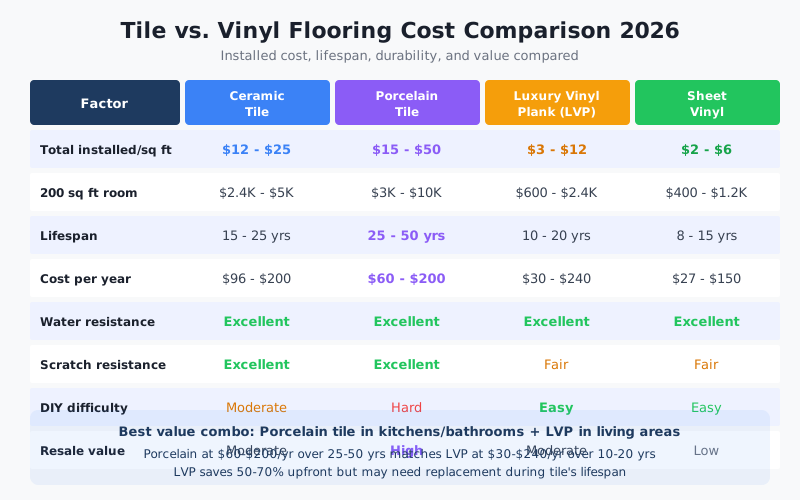
Tile flooring costs $12 to $50 per square foot installed in 2026, while luxury vinyl plank (LVP) costs $3 to $12 per square foot installed -- making tile 2-4x more expensive. However, tile lasts 25-50 years versus vinyl's 10-20 years, which changes the cost-per-year calculation significantly. For a 200 sq ft room, tile runs $2,400-$10,000 while LVP costs $600-$2,400.
I compared flooring quotes for 9 projects last year across kitchens and bathrooms in the mid-Atlantic. The most telling data point: a 120 sq ft kitchen where the homeowner got quotes for both wood-look porcelain tile and wood-look LVP. The porcelain came to $4,200 installed. The LVP: $1,400. Same visual appearance from across the room. But the porcelain will outlast two generations of LVP -- and it won't dent from dropped cans or fade from sunlight near the slider door.
Use our Flooring Calculator to estimate costs for your specific room dimensions and material choice.
Head-to-Head Cost Comparison
| Factor | Ceramic Tile | Porcelain Tile | Luxury Vinyl Plank | Sheet Vinyl |
|---|---|---|---|---|
| Material cost/sq ft | $1 - $8 | $3 - $12 | $2 - $7 | $0.50 - $3 |
| Installation/sq ft | $5 - $15 | $5 - $15 | $1 - $4 | $1 - $3 |
| Total installed/sq ft | $12 - $25 | $15 - $50 | $3 - $12 | $2 - $6 |
| 200 sq ft room | $2,400 - $5,000 | $3,000 - $10,000 | $600 - $2,400 | $400 - $1,200 |
| Lifespan | 15-25 years | 25-50 years | 10-20 years | 8-15 years |
| Cost per year | $96 - $200 | $60 - $200 | $30 - $240 | $27 - $150 |
| DIY difficulty | Moderate-Hard | Hard | Easy | Easy-Moderate |
Tip
Cost per year tells the real story. Porcelain tile at $60-$200/year over 25-50 years is comparable to LVP at $30-$240/year over 10-20 years, because you will likely replace LVP once during the tile's lifespan.
Installation Cost Breakdown
Why Tile Installation Costs More
Tile installation involves multiple specialized steps that LVP does not:
| Step | Tile Cost | LVP Cost | Why Tile Costs More |
|---|---|---|---|
| Subfloor prep | $1 - $4/sq ft | $0.50 - $1/sq ft | Tile needs cement backer board; LVP goes over plywood |
| Setting material | $0.50 - $1.50/sq ft | $0 | Thinset mortar; LVP is floating or peel-and-stick |
| Tile/plank setting | $4 - $10/sq ft | $1 - $3/sq ft | Tile requires spacers, leveling clips, and wet-saw cuts |
| Grouting | $1 - $2/sq ft | $0 | No grout with LVP |
| Sealing | $0.50 - $1/sq ft | $0 | Natural stone tiles require sealing |
| Trim and transitions | $3 - $8/linear ft | $2 - $4/linear ft | Tile needs Schluter strips or bullnose |
Performance Comparison
| Property | Tile | Luxury Vinyl |
|---|---|---|
| Water resistance | Excellent (porcelain is waterproof) | Excellent (waterproof core) |
| Scratch resistance | Excellent | Fair (dents from heavy furniture, pet claws) |
| Heat resistance | Excellent (hot pots, curling irons) | Poor (discolors above 160 degrees F) |
| Fade resistance | Excellent | Fair (UV fading near windows over 5-10 years) |
| Comfort underfoot | Hard, cold without radiant heat | Softer, warmer, quieter |
| Sound | Hard and echoey | Quiet (attached underlayment) |
| Repair | Individual tiles replaceable | Individual planks replaceable |
| Resale value impact | High (premium perception) | Moderate (acceptable but not premium) |
Where Each Flooring Wins
Choose Tile For:
- Bathrooms -- Tile handles standing water, steam, and heat from hair tools. LVP handles water too, but tile edges are more durable around toilets and vanities over decades.
- Kitchen cooking zones -- Dropped pots, hot spills, and heavy foot traffic favor tile's hardness.
- Entryways and mudrooms -- Grit, salt, and tracked-in water accelerate LVP wear. Tile shrugs it off.
- Resale priority -- Tile in wet areas is expected by buyers. LVP in a bathroom is acceptable but not premium.
- Radiant floor heating -- Tile conducts heat far better than vinyl, making heated floors more effective.
Choose LVP For:
- Living rooms and bedrooms -- Comfort, warmth, and sound absorption matter more than durability here.
- Basements -- LVP's floating installation handles minor moisture and uneven concrete without thinset.
- Budget-first projects -- LVP delivers a modern look at 50-75% less cost than tile.
- Rental properties -- Fast installation, low cost, and easy replacement make LVP ideal for rentals.
- DIY installation -- Click-lock LVP installs in hours without specialized tools or skills.
Real-World Project Comparisons
Kitchen (150 sq ft)
| Option | Material | Labor | Total |
|---|---|---|---|
| Porcelain wood-look tile | $600 - $1,500 | $1,200 - $2,250 | $1,800 - $3,750 |
| LVP wood-look | $300 - $1,050 | $225 - $600 | $525 - $1,650 |
| Savings with LVP | -- | -- | $1,275 - $2,100 (55-70%) |
Bathroom (60 sq ft)
| Option | Material | Labor | Total |
|---|---|---|---|
| Porcelain tile | $180 - $600 | $480 - $900 | $660 - $1,500 |
| LVP waterproof | $120 - $420 | $90 - $240 | $210 - $660 |
| Savings with LVP | -- | -- | $450 - $840 (55-68%) |
Whole House (1,200 sq ft)
| Option | Material | Labor | Total |
|---|---|---|---|
| Porcelain throughout | $3,600 - $14,400 | $7,200 - $18,000 | $10,800 - $32,400 |
| LVP throughout | $2,400 - $8,400 | $1,800 - $4,800 | $4,200 - $13,200 |
| Hybrid (tile in wet areas, LVP elsewhere) | -- | -- | $6,000 - $18,000 |
Frequently Asked Questions
Is tile or vinyl better for kitchens?
Tile is better for kitchens that prioritize durability and resale value. LVP is better for kitchens on a budget. Tile handles dropped cookware, hot spills, and decades of foot traffic without showing wear. LVP dents from dropped cans and can discolor from hot spills. However, LVP costs 50-70% less and installs in a single day.
Does LVP look as good as tile?
Modern wood-look LVP is nearly indistinguishable from hardwood. However, stone-look LVP is less convincing than real tile -- the texture and depth are noticeably different up close. Tile offers more authentic visual depth, especially in marble and natural stone patterns.
Is LVP waterproof?
Yes -- quality LVP with a rigid core (SPC or WPC) is fully waterproof. Water sits on the surface indefinitely without damage. However, water that gets under LVP (through seams or edges) can cause subfloor damage since the planks are floating, not sealed to the subfloor like tile with grout.
Can you put LVP over tile?
Yes, as long as the existing tile is flat, well-bonded, and grout lines are shallow. LVP's floating installation works over most hard surfaces, including tile. Deep grout lines (more than 1/4 inch) should be leveled with self-leveling compound first. This saves $2-$5/sq ft in tile demolition costs.
Which flooring is better for resale value?
Tile adds more resale value in kitchens and bathrooms. LVP is acceptable throughout the rest of the home. Real estate agents consistently report that tile in wet areas is expected by buyers, while LVP in living areas is seen as an acceptable mid-range finish. The combination of tile in wet areas plus LVP elsewhere offers the best cost-to-value ratio.
How long does LVP last compared to tile?
Quality LVP lasts 10-20 years; porcelain tile lasts 25-50 years. LVP's wear layer thickness determines its lifespan: 6-mil (entry-level) lasts 5-10 years, 12-mil (mid-range) lasts 10-15 years, and 20-mil (commercial grade) lasts 15-20 years. Porcelain tile has no wear layer to deplete -- it is the same material all the way through.
Cost data sourced from HomeGuide, Angi, SmartFloorsUSA, and Steller Floors. Prices reflect 2026 national averages and may vary by region.
This article is provided for informational and educational purposes only. Content should not be considered professional financial, medical, legal, or other advice. Always consult a qualified professional before making important decisions. UseCalcPro is not responsible for any actions taken based on the information in this article.
Try These Calculators
Estimate materials for hardwood, laminate, vinyl, or carpet floors. Get box counts, waste allowance, and full cost breakdowns for your flooring project.
Compare tile vs vinyl plank flooring lifetime cost: upfront install price, lifespan, replacement, and break-even. See which floor is cheaper to own long term.
Estimate 2026 vinyl flooring installation cost by format — sheet, tile, LVP, or LVT. Installed quotes run $2 to $22 per sqft depending on format and region.
Estimate 2026 vinyl plank floor installation cost by room size, core type, and prep work. Click-lock LVP and waterproof SPC quotes run $2,000 to $8,500.
Compare vinyl plank vs laminate flooring lifetime cost: upfront price per sqft, lifespan, replacement, break-even year. See which floor is cheaper long term.