UseCalcPro
Home
MathFinanceHealthConstructionAutoPetsGardenCraftsFood & BrewingTools
Blog
  1. Home
  2. Crafts

Box Joint Calculator

Calculate finger width, count, and dado setup for box joints

Total Fingers

15

Width Each

0.4"

Cuts/Board

7

Total Fingers
15
Per Board
8
Dado Width
0.375"
Dado Height
0.75"

Cuts per board: 7 dado cuts

Glue surface: 8.44 sq in
Example Calculations

1Standard Box (3/8" fingers)

Inputs

Board Width6"
Thickness3/4"
Finger Width3/8"

Result

Total Fingers15

2Thin Stock (1/4" fingers)

Inputs

Board Width4"
Thickness1/2"
Finger Width1/4"

Result

Total Fingers15

Frequently Asked Questions

Q

How wide should box joint fingers be?

Box joint fingers should match the board thickness for a square finger, or be 1/4" to 1/2" for most projects. Common sizes are 1/4", 3/8", and 1/2". Use 3/8" as a good all-around size.

  • 1/4" fingers: fine detail work, thin stock
  • 3/8" fingers: most common all-around size
  • 1/2" fingers: thicker stock, quick assembly
  • Match finger width to dado blade stack width
Q

How do I set up a dado blade for box joints?

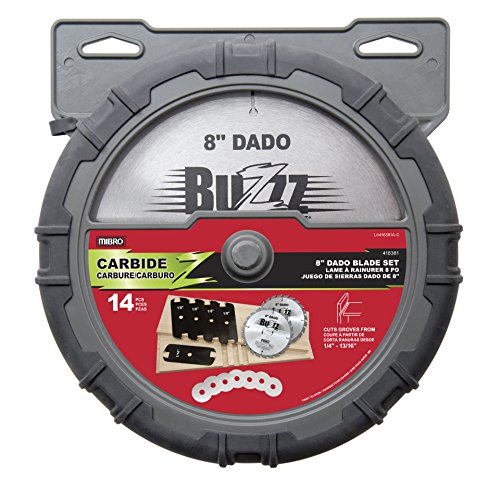
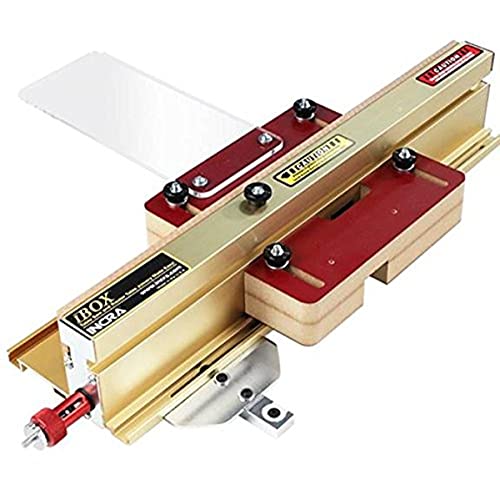
Stack your dado blade to match the exact finger width. Test on scrap wood first. The blade height should equal the board thickness. Use a box joint jig on the miter gauge with a key pin spaced exactly one finger width from the blade.

  • Dado stack width = finger width exactly
  • Blade height = board thickness
  • Jig key pin spacing = one finger width from blade
  • Always test fit on scrap wood first
Q

Are box joints as strong as dovetails?

Box joints actually have more glue surface area than dovetails, making them stronger in tension when glued. However, dovetails have mechanical locking advantage. Box joints are easier to cut with power tools and excellent for boxes, drawers, and casework.

  • More glue surface = stronger tension bond
  • No mechanical lock like dovetails
  • Easier to cut with table saw and jig
  • Excellent for plywood and solid wood
Q

Should box joints have an odd or even number of fingers?

Use an odd number of total fingers across the joint for symmetry. This ensures both boards start and end with a finger on the same edge. Our calculator automatically adjusts to odd numbers.

  • Odd total fingers ensures visual symmetry
  • Board A and Board B alternate fingers
  • Each board gets (n+1)/2 or (n-1)/2 fingers
  • Calculator auto-adjusts to nearest odd number

Related Calculators

Dovetail Calculator

Calculate dovetail joint layout

Dowel Joint Calculator

Dowel sizing and spacing

Board Foot Calculator

Calculate lumber board feet

Bookbinding Calculator \u2014 Spine Width, Sheets & Cover Size

Calculate spine width, cover board dimensions, and cloth size for bookbinding. Enter page count, paper weight, and binding type for precise measurements.

Ceremony Seating Calculator \u2014 Row Count, Chair Spacing & Aisle Width

Plan ceremony seating layout by guest count and chair style. Calculate exact row count, chair spacing, aisle width, and total floor area for any event.

Concrete Expansion Joint Calculator \u2014 Spacing, Sealant & Layout

Calculate concrete control and expansion joint spacing, sealant tubes, backer rod, and filler board. Adjust for slab thickness, climate, and joint layout.

More Woodworking Calculators

More Woodworking Calculators

All Crafts Calculators

Last Updated: Mar 20, 2026

This calculator is provided for informational and educational purposes only. Results are estimates and should not be considered professional financial, medical, legal, or other advice. Always consult a qualified professional before making important decisions. UseCalcPro is not responsible for any actions taken based on calculator results.

UseCalcPro
FinanceHealthMath

© 2026 UseCalcPro