UseCalcPro
Home
MathFinanceHealthConstructionAutoPetsGardenCraftsFood & BrewingTools
Blog
  1. Home
  2. Food & Brewing

Canning Jar Quantity Calculator — Jars Per Bushel & Pound

Calculate exact jar quantities for canning fruits, vegetables, and jams from bushels or pounds of produce.

Jars Needed

7 quarts

Lids & Rings

7

Cases (12/case)

1

Jars Needed

7

quart jars

Lids & Rings

7

each needed

Cases

1

of 12 jars

Total Produce

20.0 lbs

Headspace

1/2 inch

Method

Water Bath

Jar Size Comparison

Half-Pint (27)27 jars
Pint (14)14 jars
Quart (7)7 jars

Produce Yield Reference

ProduceLbs/BushelQts/BushelLbs/Qt
Tomatoes (whole)53183.0
Peaches48182.7
Green Beans30152.0
Sweet Corn3575.0
Cucumbers48163.0
Carrots50172.9

Canning Tips

Processing Method

Fruits and pickles use water bath canning. Vegetables require a pressure canner at 10 PSI.

Headspace Guide

Jams: 1/4 inch. Fruits: 1/2 inch. Vegetables: 1 inch. Proper headspace ensures a good vacuum seal.

Buy Extra

Purchase 10–15% more produce than calculated to account for bruised or unusable pieces.

What You'll Need

Ball Wide Mouth Mason Jars 32oz 12-Count

Ball Wide Mouth Mason Jars 32oz 12-Count

$20-$304.7
View on Amazon
Presto 23-Quart Pressure Canner

Presto 23-Quart Pressure Canner

$80-$1104.7
View on Amazon
Stainless Steel Canning Supplies Starter Kit

Stainless Steel Canning Supplies Starter Kit

$25-$354.5
View on Amazon
Ball Wide Mouth Mason Jars 32oz 12-Count

Ball Wide Mouth Mason Jars 32oz 12-Count

$20-$304.7
View on Amazon
Presto 23-Quart Pressure Canner

Presto 23-Quart Pressure Canner

$80-$1104.7
View on Amazon
Stainless Steel Canning Supplies Starter Kit

Stainless Steel Canning Supplies Starter Kit

$25-$354.5
View on Amazon

As an Amazon Associate, we earn from qualifying purchases.

Example Calculations

1Bushel of Tomatoes (Whole Pack)

Inputs

ProduceTomatoes (whole/halved)
Input modeBy bushel
Amount1 bushel (53 lbs)
Jar sizeQuart

Result

Jars Needed18 quart jars

1 bushel = 18 quarts per bushel. Quarts needed = 18. Lids and rings = 18 each. Cases = ceil(18/12) = 2 cases. Processing: water bath, 1/2 inch headspace.

220 lbs of Green Beans in Pints

Inputs

ProduceGreen Beans
Input modeBy weight
Amount20 lbs
Jar sizePint

Result

Jars Needed20 pint jars

Quarts = 20 lbs / 2.0 lbs per quart = 10 quarts. Pints = 10 x 2 = 20 pint jars. Lids and rings = 20 each. Processing: pressure canner at 10 PSI, 1 inch headspace.

310 lbs Strawberry Jam in Half-Pints

Inputs

ProduceStrawberry Jam
Input modeBy weight
Amount10 lbs
Jar sizeHalf-Pint

Result

Jars Needed10 half-pint jars

Strawberry jam yields 1.0 half-pints per lb. 10 lbs x 1.0 = 10 half-pints. Since half-pints = quartsNeeded x 4, and quartsNeeded = 10/4 = 2.5, jars = ceil(2.5 x 4) = 10. Lids = 10. Water bath, 1/4 inch headspace.

Frequently Asked Questions

Q

How many quart jars of tomatoes can you get from a bushel?

One bushel of tomatoes weighs approximately 53 lbs and yields about 18 quarts of whole or halved tomatoes. If you're making crushed tomatoes, expect 17 quarts per bushel. Tomato sauce yields fewer jars—about 11 quarts per bushel—because the sauce cooks down significantly.

  • A bushel of tomatoes (53 lbs) fills 18 quart jars when packed whole or halved
  • Tomato sauce requires 4.8 lbs per quart due to cooking reduction—44% more tomatoes than whole pack
  • Expect 10–15% waste from cores, skins, and bruised spots
  • Roma/paste tomatoes yield more sauce per pound than slicing varieties
Tomato ProductLbs/BushelQuarts/BushelLbs/Quart
Whole/Halved53183.0
Crushed53173.1
Sauce53114.8
Juice53163.3
Q

How many pounds of produce do I need per quart jar?

The amount varies significantly by produce type. Green beans require about 2 lbs per quart (the lightest), while sweet corn needs 5 lbs per quart because kernels pack densely. Most fruits fall between 2.5–3.0 lbs per quart, and most vegetables between 2.0–3.1 lbs per quart.

  • Green beans are the most efficient at 2.0 lbs per quart—one bushel (30 lbs) fills 15 quart jars
  • Sweet corn is the least efficient at 5.0 lbs per quart—one bushel (35 lbs) fills only 7 quarts
  • Peaches yield 18 quarts per bushel (48 lbs), making them very economical to can
  • Always buy 10–15% extra produce to account for trimming, bruising, and spoilage
ProduceLbs Per QuartMethodHeadspace
Green Beans2.0Pressure1 inch
Peaches2.7Water Bath1/2 inch
Tomatoes3.0Water Bath1/2 inch
Sweet Corn5.0Pressure1 inch
Q

What is the correct headspace for different canned foods?

Headspace is the gap between the food and the jar lid. Jams and jellies need 1/4 inch headspace. Fruits, tomatoes, and pickles need 1/2 inch. Low-acid vegetables processed in a pressure canner need 1 inch. Incorrect headspace causes seal failures or jar breakage.

  • Jams, jellies, and preserves: 1/4 inch headspace for proper gel set and seal
  • Fruits in syrup, tomatoes, and pickles: 1/2 inch headspace
  • Low-acid vegetables (beans, corn, carrots): 1 inch headspace required
  • Too little headspace causes food to boil out and prevent sealing—too much traps excess air
  • Use a headspace measuring tool or ruler for accuracy—eyeballing leads to 15–20% more seal failures
Q

Should I use water bath or pressure canning?

The canning method depends on the food's acidity. High-acid foods (fruits, tomatoes, pickles, jams) are safely processed in a boiling water bath at 212°F. Low-acid vegetables (beans, corn, carrots, beets, peppers) must be pressure canned at 240°F (10 PSI) to destroy botulism spores.

  • Water bath canning works for foods with pH below 4.6 (fruits, tomatoes with added acid, pickles)
  • Pressure canning at 10 PSI reaches 240°F—the only safe method for low-acid vegetables
  • Tomatoes are borderline—always add 2 tbsp lemon juice or 1/2 tsp citric acid per quart
  • Never use a pressure cooker in place of a pressure canner—they cannot maintain consistent pressure
  • At altitudes above 1,000 ft, increase pressure by 1 PSI per 2,000 ft elevation
MethodFoodsTemperatureTypical Time
Water BathFruits, tomatoes, pickles, jams212°F10–40 min
Pressure CannerBeans, corn, carrots, beets240°F (10 PSI)20–25 min
Q

How many lids and rings do I need for canning?

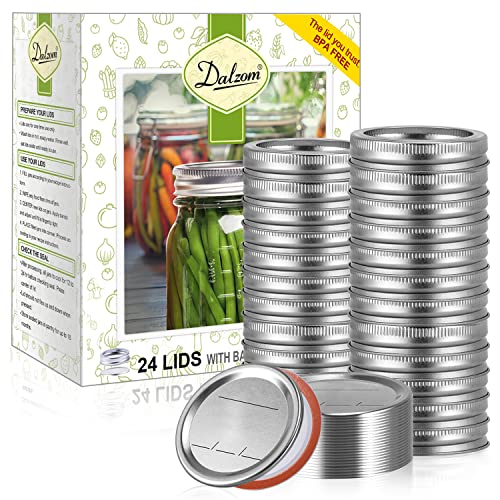
You need exactly one lid and one ring (screw band) per jar. Lids are single-use—the sealing compound deforms during processing and cannot reseal safely. Rings can be reused if they are not rusted or bent. Buy lids in boxes of 12 to match standard jar cases.

  • One flat lid + one screw band per jar—lids are single-use, rings are reusable
  • Standard cases contain 12 jars, so lids come in boxes of 12 as well
  • Remove rings after 24 hours—they can mask a failed seal and cause rust
  • Tattler reusable lids are an alternative but require different tightening technique
  • Keep 10–20% extra lids on hand for seal failures that require reprocessing

Related Calculators

Jam & Canning Calculator

Calculate jam yields, sugar amounts, and pectin needs

Pressure Canning Calculator

Determine safe pressure canning times and PSI

Pickle Brine Calculator

Calculate vinegar brine ratios for pickling

Water Bath Canning Calculator

Get water bath processing times by altitude

Dry Aging Calculator \u2014 Weight Loss, Yield & Cost per Pound

Calculate dry aging moisture loss, trim waste, final yield, and true cost per pound for ribeye, strip loin, sirloin, and tenderloin. 14 to 60 day planning.

Sausage Making Calculator \u2014 Casing, Seasoning & Yield

Calculate sausage casing length, seasoning amounts, and link yield. Get exact spice ratios for bratwurst, Italian, breakfast, kielbasa, and chorizo recipes.

Related Resources

Cooking Time Calculator: How Long to Cook Meat by Weight

Read our guide

How Many Tiles Do I Need? Tile Calculator Guide for Floors & Walls

Read our guide

Drywall Calculator Guide: Sheets, Mud, Tape & Cost for Any Room

Read our guide

Jam & Canning Calculator

Calculate jam yields, sugar, and pectin needs

Pressure Canning Calculator

Determine pressure canning times and PSI settings

Pickle Brine Calculator

Calculate vinegar brine ratios for pickling

Water Bath Canning Calculator

Get water bath processing times by jar size

More Food Calculators

Explore more food preservation and kitchen calculators

View All

Last Updated: Mar 16, 2026

This calculator is provided for informational and educational purposes only. Results are estimates and should not be considered professional financial, medical, legal, or other advice. Always consult a qualified professional before making important decisions. UseCalcPro is not responsible for any actions taken based on calculator results.

UseCalcPro
FinanceHealthMath

© 2026 UseCalcPro