Disclaimer: This calculator provides general estimates for educational purposes only and is not veterinary advice, diagnosis, or treatment. It is not a substitute for care from a licensed veterinarian. Feeding amounts, water needs, and dosing figures rely on general formulas that may not reflect your animal's breed, age, weight, activity level, medications, or medical conditions. Never use this tool to start, stop, or adjust any medication, supplement, or diet for an animal, and never dose a medication without a veterinarian's direction. Aquarium and livestock chemistry results should be confirmed with independent testing before treating a tank or a herd. Always consult a licensed veterinarian for guidance specific to your animal.
Example Calculations
1Small Backyard Flock (6 Layers)
Inputs
Chickens6
BreedStandard Layer
AgeLaying Hen
SeasonSummer
Feed Cost$18/bag
Result
Monthly Feed50 lbs
Bags per Month1
Monthly Cost$18
Annual Cost$216
Six laying hens eat 0.28 lbs each per day = 1.68 lbs/day total. Monthly: 1.68 × 30 = 50.4 lbs, requiring 1 bag of 50-lb feed at $18.
Eight bantam layers eat 0.17 lbs each per day = 1.36 lbs total. Monthly: 1.36 × 30 = 40.8 lbs ≈ 41 lbs, fitting in one 50-lb bag.
Frequently Asked Questions
Q
How much feed does a chicken eat per day?
A standard laying hen eats about 0.25-0.33 pounds (4-5 ounces) of feed per day. Bantams eat less at 0.15-0.20 lbs/day, while broilers eat more at 0.33-0.50 lbs/day. This translates to roughly 1.5-2 lbs per bird per week for layers.
Standard layer: 0.25–0.33 lbs/day (~4–5 oz)
Bantam: 0.15–0.20 lbs/day (~2.5–3 oz)
Broiler/meat bird: 0.33–0.50 lbs/day (~5–8 oz)
Chick (0–8 weeks): 0.05 lbs/day (~0.8 oz)
Winter increases consumption by 10–15% for body heat
Breed Type
Daily Feed
Weekly Feed
Monthly Feed
Standard Layer
0.28 lbs
2.0 lbs
8.4 lbs
Bantam
0.17 lbs
1.2 lbs
5.1 lbs
Broiler
0.33 lbs
2.3 lbs
9.9 lbs
Dual-Purpose
0.30 lbs
2.1 lbs
9.0 lbs
Q
How much does it cost to feed chickens per month?
For a flock of 6 standard layers, expect to spend $18-25 per month on feed at typical feed store prices of $16-20 per 50-lb bag. Annual costs run $200-300 for a small backyard flock, with winter months slightly higher due to increased consumption.
6 layers: ~1 bag (50 lbs) per month = $16–20
12 layers: ~2 bags per month = $32–40
Add $3–5/month for oyster shell and grit
Free-ranging reduces feed costs by 20–30%
Organic/non-GMO feed costs 2–3x more ($30–40/bag)
Q
Do chickens need oyster shell and grit?
Laying hens need supplemental oyster shell (4-5 grams per day) for calcium to form strong eggshells. All chickens need grit (small stones) to grind food in their gizzard. Offer both free-choice in separate containers so birds can self-regulate intake.
Oyster shell: 4–5g per layer per day for eggshell calcium
Grit: ~1 lb per 10 birds per month (insoluble granite grit)
Chicks under 8 weeks: use chick-sized grit, no oyster shell needed
Free-range birds may find natural grit but supplement to be safe
Layer feed has some calcium (3–4%) but oyster shell adds the extra 1–2% needed
Q
What type of feed do chickens need at each age?
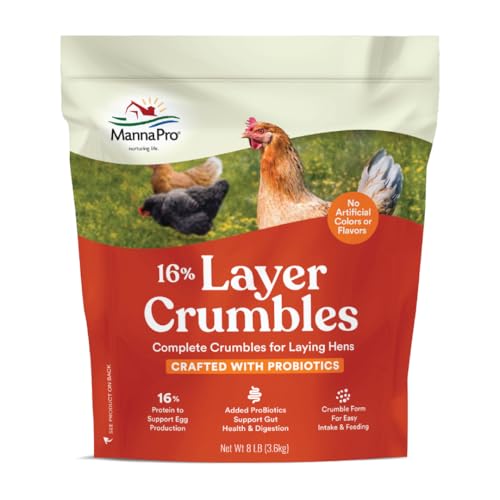
Chickens need different feed formulations at each life stage. Chicks (0-8 weeks) need starter with 20-22% protein, pullets (8-18 weeks) need grower with 16-18% protein, and layers need layer feed with 16% protein plus added calcium for egg production.
Starter (0–8 weeks): 20–22% protein, medicated or non-medicated
Layer (18+ weeks): 16% protein + 3.5–4% calcium for eggshells
Broiler starter/grower: 22–24% protein for rapid growth
Never give layer feed to chicks — excess calcium damages developing kidneys
Q
Do chickens eat more in winter?
Yes, chickens eat 10-15% more feed in winter because they burn extra calories to maintain body temperature. In cold climates, provide scratch grains as a late-afternoon snack — the digestion process generates heat that helps chickens stay warm overnight.
This calculator is provided for informational and educational purposes only. Results are estimates and should not be considered professional financial, medical, legal, or other advice. Always consult a qualified professional before making important decisions. UseCalcPro is not responsible for any actions taken based on calculator results.