Average Concrete Cost by State in 2026 (All 50 States Compared)
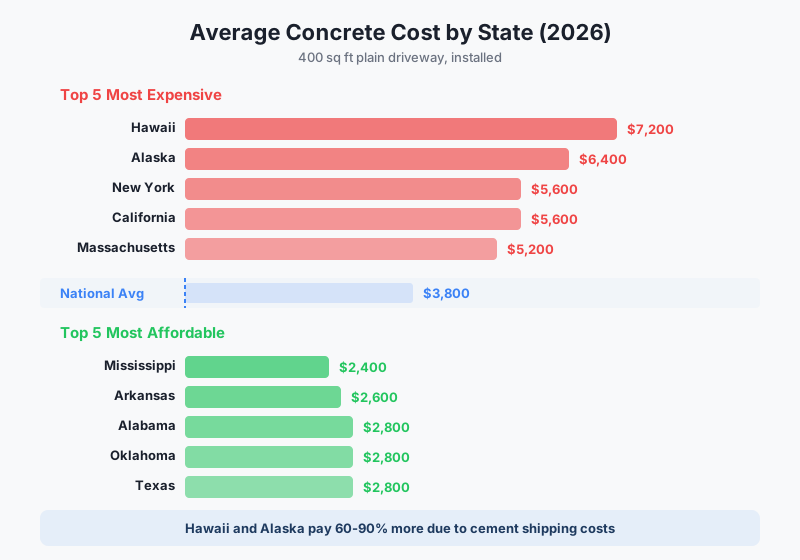
Ready-mix concrete costs $125 to $250 per cubic yard delivered in 2026, with the national average around $150/yard. A typical 400-square-foot driveway (4 inches thick) costs $3,200-$6,000 installed, but that same driveway ranges from $2,400 in Mississippi to $7,200 in Hawaii. State-to-state pricing is driven by aggregate availability, transportation costs, labor rates, and frost-line requirements.
A 500-square-foot patio poured in Allentown, Pennsylvania illustrates the gap: ready-mix cost $155/yard for 3,000 PSI, and the total came to $4,600 installed with a broom finish. An identical job priced in San Jose came to $7,100 -- $175/yard for the concrete, with labor rates nearly double the Pennsylvania rate. Same spec, same thickness, 54% more expensive. Geography is the single biggest variable in concrete pricing.
Use our Concrete Calculator to estimate your exact material needs and cost based on project dimensions and local pricing.
All 50 States: Concrete Cost Comparison
The table below shows estimated costs for ready-mix concrete per cubic yard (delivered) and a standard 400-square-foot driveway (4 inches thick, broom finish, installed).
| State | Avg. Cost/cu yd | Avg. Driveway (400 sq ft) | vs. National |
|---|---|---|---|
| Alabama | $120 | $2,800 | -20% |
| Alaska | $210 | $6,400 | +50% |
| Arizona | $140 | $3,600 | -5% |
| Arkansas | $115 | $2,600 | -24% |
| California | $175 | $5,600 | +25% |
| Colorado | $155 | $4,200 | +8% |
| Connecticut | $170 | $5,000 | +18% |
| Delaware | $155 | $4,000 | +5% |
| Florida | $140 | $3,400 | -5% |
| Georgia | $130 | $3,200 | -10% |
| Hawaii | $230 | $7,200 | +60% |
| Idaho | $135 | $3,400 | -7% |
| Illinois | $155 | $4,200 | +8% |
| Indiana | $140 | $3,600 | -2% |
| Iowa | $140 | $3,400 | -5% |
| Kansas | $135 | $3,200 | -8% |
| Kentucky | $130 | $3,000 | -12% |
| Louisiana | $125 | $2,800 | -16% |
| Maine | $165 | $4,800 | +15% |
| Maryland | $160 | $4,400 | +10% |
| Massachusetts | $175 | $5,200 | +22% |
| Michigan | $150 | $4,000 | +2% |
| Minnesota | $155 | $4,200 | +8% |
| Mississippi | $115 | $2,400 | -26% |
| Missouri | $135 | $3,200 | -8% |
| Montana | $145 | $3,600 | -2% |
| Nebraska | $135 | $3,200 | -8% |
| Nevada | $145 | $3,600 | -2% |
| New Hampshire | $165 | $4,600 | +12% |
| New Jersey | $175 | $5,200 | +22% |
| New Mexico | $130 | $3,000 | -12% |
| New York | $185 | $5,600 | +28% |
| North Carolina | $135 | $3,200 | -8% |
| North Dakota | $145 | $3,600 | -2% |
| Ohio | $145 | $3,800 | +0% |
| Oklahoma | $120 | $2,800 | -20% |
| Oregon | $160 | $4,400 | +10% |
| Pennsylvania | $155 | $4,200 | +5% |
| Rhode Island | $170 | $5,000 | +18% |
| South Carolina | $125 | $3,000 | -14% |
| South Dakota | $135 | $3,200 | -8% |
| Tennessee | $130 | $3,200 | -10% |
| Texas | $125 | $2,800 | -16% |
| Utah | $145 | $3,600 | -2% |
| Vermont | $170 | $5,000 | +18% |
| Virginia | $150 | $3,800 | +0% |
| Washington | $170 | $5,000 | +18% |
| West Virginia | $125 | $2,800 | -18% |
| Wisconsin | $150 | $4,000 | +2% |
| Wyoming | $140 | $3,400 | -5% |
Info
Short-load fees apply for orders under 10 cubic yards. Most concrete suppliers charge $40-$60 extra per yard for deliveries under their minimum (typically 8-10 yards). A 400 sq ft driveway at 4 inches thick needs about 5 cubic yards.
Top 5 Most Expensive States
1. Hawaii ($230/yard)
Every bag of cement and aggregate arrives by ship. Shipping adds $50-$80 per cubic yard to mainland pricing. Limited batch plant capacity and high labor costs compound the problem. A standard driveway in Honolulu costs nearly three times what it would in the Deep South.
2. Alaska ($210/yard)
Short construction season (May through September), extreme shipping costs to remote areas, and the need for cold-weather concrete additives during shoulder months push prices to the highest on the mainland. Interior Alaska (Fairbanks) can exceed $250/yard due to transport distances.
3. New York ($185/yard)
NYC metro pricing drives the state average up dramatically. Concrete in Manhattan can reach $250/yard due to congestion surcharges, limited pump access, and union labor requirements. Upstate New York is closer to $150/yard, but the population weighting skews the average.
4. California ($175/yard) and Massachusetts ($175/yard)
Both states combine high labor costs with high demand. California's environmental regulations on batch plants add compliance costs. Massachusetts faces aggregate supply constraints and a compressed building season. In both states, urban areas (SF, LA, Boston) run 15-25% above the state average.
Top 5 Cheapest States
1. Mississippi ($115/yard) and Arkansas ($115/yard)
Abundant limestone aggregate, low labor costs, and short transport distances from batch plants to job sites keep prices at the national floor. Year-round pouring weather and low demand competition help too.
3. Alabama ($120/yard) and Oklahoma ($120/yard)
Similar advantages: local aggregate, low labor, minimal seasonal restrictions. Oklahoma's proximity to cement plants in the Midcontinent Cement District keeps material costs low.
5. Texas ($125/yard)
Texas has one of the most competitive concrete markets in the country. The state's massive construction industry supports dozens of batch plants per metro area, driving prices down through competition. Dallas, Houston, and San Antonio average $120-$140/yard.
Regional Analysis
Northeast
The Northeast averages $155-$185/yard with installed driveway costs of $4,200-$5,600. Key cost drivers: deep frost lines (36-48 inches) requiring thicker slabs and deeper footings for foundations, shorter pouring season (March through November), and high labor rates. Cold-weather concrete additives add $10-$20/yard for late-season pours.
South
The South averages $115-$140/yard with driveway costs of $2,400-$3,400. Year-round pouring weather, shallow or no frost-line requirements, abundant aggregate, and low labor make this the cheapest region. Florida's coastal areas are an exception -- corrosion-resistant concrete mixes for saltwater exposure add $15-$25/yard.
Midwest
The Midwest averages $135-$155/yard with driveway costs of $3,200-$4,200. Deep frost lines in northern states (Minnesota, Wisconsin, Michigan) increase footing and slab costs. Air-entrained concrete is standard for freeze-thaw durability, adding $5-$10/yard. However, the competitive contractor market keeps labor reasonable.
West
The West shows the widest range. California ($175) and Washington ($170) have high labor and environmental compliance costs. Mountain states ($135-$145) are moderate. Desert states benefit from year-round pouring but face high water costs and heat-management additives in summer ($5-$15/yard for retarders).
What Drives State-to-State Cost Variation?
Aggregate and Cement Availability
Concrete is 60-75% aggregate (gravel and sand) by volume. States near quarries and cement plants pay less. In 2025, concrete prices rose 9% year-over-year nationally, driven partly by aggregate shortages in high-growth markets. Northern states that rely on Canadian cement imports (36% of consumption in some regions) faced additional tariff-related costs.
Transportation Costs
Concrete loses workability within 60-90 minutes of mixing, so batch plants must be within 30-60 miles of the job site. Rural areas far from plants pay short-load fees and fuel surcharges. In Alaska and Hawaii, even getting the raw materials to the batch plant involves premium shipping costs.
Labor Rates
Concrete finishing is skilled labor. Finisher rates range from $30/hour in the South to $60-$75/hour in the Northeast and West Coast. A 3-person crew costs $90-$225/hour depending on location -- and a 400 sq ft driveway pour takes 4-6 hours of crew time.
Frost Line Depth
Northern states require footings below the frost line: 36 inches in Pennsylvania, 42 inches in Minnesota, 48+ inches in northern Maine. Deeper footings mean more concrete, more excavation, and more labor. A garage foundation in Minneapolis uses 30-40% more concrete than the same foundation in Atlanta.
Seasonal Demand
Concrete is most expensive during peak season (April through October in northern states, year-round in the South). Off-season pours in the North require heated enclosures, hot-water mixing, and accelerator additives, which can add 15-25% to project costs.
Frequently Asked Questions
How many cubic yards do I need for a driveway?
A standard 400 sq ft driveway at 4 inches thick requires approximately 5 cubic yards of concrete. Here is the formula and common project sizes:
- Formula: Length (ft) x Width (ft) x Thickness (ft) / 27 = cubic yards
- 1-car driveway (200 sq ft, 4"): 2.5 yards
- 2-car driveway (400 sq ft, 4"): 5 yards
- 2-car driveway (400 sq ft, 6"): 7.5 yards
- 3-car driveway (600 sq ft, 4"): 7.4 yards
Always order 5-10% extra to account for waste, uneven subgrade, and slight overages. Running short mid-pour creates a cold joint, which is a structural weakness. The cost of an extra half-yard ($60-$125) is nothing compared to the cost of a failed pour.
Is it cheaper to pour concrete in winter?
Yes, off-season pours can save 5-15% on labor in competitive markets, but cold-weather requirements add material costs. The trade-offs:
- Labor savings: 5-15% due to lower demand (November through February)
- Added costs: Hot water mixing (+$5-$10/yard), accelerator additives (+$5-$15/yard), heated blankets ($100-$300/day), and extended cure time monitoring
- Risk: Concrete must not freeze within the first 24-48 hours. If temperatures drop below 25 degrees F, the pour should be postponed.
In the South, winter pours have zero added costs and offer the best pricing. In the North, the material adders often offset the labor discount, making early spring or late fall the true sweet spot.
How much does stamped concrete cost compared to regular by state?
Stamped concrete adds $4-$12 per square foot on top of basic concrete costs, regardless of state. The premium is driven by labor skill, not materials. State-by-state examples for a 400 sq ft patio:
- Mississippi: Plain $2,400 vs. stamped $4,000 (+67%)
- Ohio: Plain $3,800 vs. stamped $5,800 (+53%)
- California: Plain $5,600 vs. stamped $8,000 (+43%)
- New York: Plain $5,600 vs. stamped $8,400 (+50%)
The percentage premium actually decreases in high-cost states because the stamping labor cost is more consistent nationally ($5-$10/sq ft) while the base cost varies more.
Does concrete cost more in rural areas?
Often yes, despite lower labor rates. Rural areas face two added costs that can outweigh the labor savings:
- Short-load fees: $40-$60/yard extra for deliveries under 8-10 yards (most residential projects)
- Distance surcharges: $1-$3/mile for deliveries beyond 20-30 miles from the batch plant
- Limited competition: Fewer contractors means less competitive bidding
A 5-yard driveway pour 40 miles from a batch plant might incur $200-$300 in extra delivery fees. In suburban areas with multiple plants within 15 miles, those fees disappear. Rural homeowners should get quotes from multiple batch plants and consider coordinating pours with neighbors to share delivery costs.
When will concrete prices stabilize?
Industry experts project 2-4% annual increases through 2027, with regional spikes possible. Key factors:
- Cement supply: Canadian imports (36% of U.S. consumption in border states) face potential tariff pressure
- Aggregate demand: Infrastructure spending from the IIJA keeps demand high
- Energy costs: Cement production is energy-intensive; fuel prices directly affect pricing
- Labor shortages: The construction labor shortage continues to push wages up 3-5% annually
The best strategy is to lock in pricing with your contractor early. Many batch plants honor quotes for 30-60 days, so get your concrete price confirmed before finalizing your project budget.
How do I find the cheapest concrete in my area?
Call 3-5 local batch plants directly and ask for their per-yard price including delivery. Most homeowners only get contractor quotes, which include a 10-20% markup on materials. Direct comparison shopping:
- Call batch plants within 30 miles and ask for current pricing per yard (specify PSI and mix)
- Ask about minimum delivery requirements and short-load fees
- Compare contractor quotes that include materials with materials-separate quotes
- Check timing: Some plants offer 5-10% discounts for deliveries scheduled during off-peak hours (early morning, midweek)
- Volume discounts: Orders over 10 yards often get $5-$15/yard discount
Some contractors will install concrete you supply (labor-only contract), which lets you capture the contractor markup savings while still getting professional installation.
Cost data sourced from Angi, HomeGuide, Concrete Network, LawnStarter, and CostFlowAI. Prices reflect 2026 estimates based on regional cost adjustment factors. Actual costs vary by specific location, supplier, and project details.
This article is provided for informational and educational purposes only. Content should not be considered professional financial, medical, legal, or other advice. Always consult a qualified professional before making important decisions. UseCalcPro is not responsible for any actions taken based on the information in this article.
Try These Calculators
Enter your slab dimensions to get concrete volume in cubic yards, bags needed, and estimated cost. Works for patios, footings, driveways, and columns.
Estimate 2026 concrete driveway install cost by size, finish, and region. Plain runs $6-$10/sqft; decorative stamped $10-$21/sqft installed nationwide.
Estimate 2026 dumpster rental cost by size, duration, and debris type. Roll-off rental rates run $250 to $900 per week with $40-$80 per-ton overage fees.
Estimate 2026 pressure washing service costs by surface, square footage, and method. Driveways run $100 to $350, siding $250 to $600, roof soft-wash $500+.
Estimate 2026 handyman service costs by hours, complexity, and provider type. Most jobs run $150 to $600, with hourly rates of $50 to $125 plus a minimum fee.