Average Deck Cost by State in 2026 (All 50 States Compared)
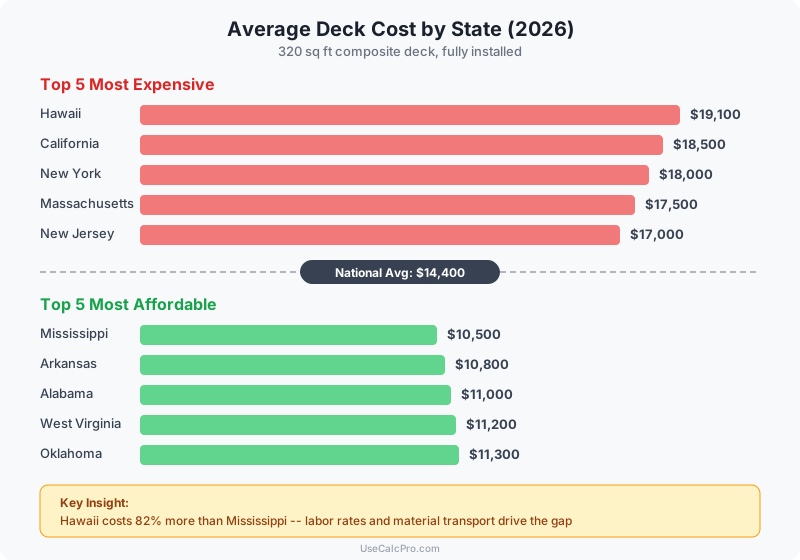
The national average cost to build a 320 sq ft composite deck in 2026 is approximately $14,000, but actual costs range from $10,500 in Mississippi to over $19,000 in Hawaii depending on local labor rates, building codes, frost line depth, and material availability. High-cost coastal states like California, New York, and Massachusetts run 20-35% above the national average, while southern and rural states typically come in 15-25% below it.
Deck-building and estimating experience across the Mid-Atlantic shows one thing with certainty: the same 320 sq ft composite deck that costs $13,500 in suburban Maryland can run $17,500 or more in Fairfield County, Connecticut. The materials are identical. The labor is where the gap lives. When budgeting for a deck project, the first question to ask is not what material to use -- it is where the build is happening. Geography is the biggest variable most people overlook.
Use our Deck Calculator to estimate your deck project based on your specific dimensions, material choice, and location before requesting contractor quotes.
All 50 States: Deck Cost Comparison
The table below shows estimated costs for a 320 sq ft composite deck, professionally installed, including materials, labor, standard railing, and a basic single-flight staircase. Costs assume mid-grade composite decking (Trex Select or equivalent) with pressure-treated framing.
The "vs. National" column shows how each state compares to the $14,000 national average. These estimates are derived from regional labor rate data, permit cost variations, and cost-of-living adjustments reported by HomeGuide, Angi, and LawnLove.
| State | Avg. Cost (320 sq ft composite) | Low Range | High Range | vs. National |
|---|---|---|---|---|
| Alabama | $11,000 | $9,200 | $13,200 | -21% |
| Alaska | $15,400 | $13,000 | $18,500 | +10% |
| Arizona | $13,700 | $11,500 | $16,400 | -2% |
| Arkansas | $10,800 | $9,000 | $12,900 | -23% |
| California | $18,500 | $15,500 | $22,200 | +32% |
| Colorado | $15,100 | $12,700 | $18,100 | +8% |
| Connecticut | $17,200 | $14,400 | $20,600 | +23% |
| Delaware | $14,000 | $11,800 | $16,800 | 0% |
| Florida | $13,600 | $11,400 | $16,300 | -3% |
| Georgia | $12,500 | $10,500 | $15,000 | -11% |
| Hawaii | $19,100 | $16,000 | $22,900 | +36% |
| Idaho | $11,500 | $9,600 | $13,800 | -18% |
| Illinois | $15,100 | $12,700 | $18,100 | +8% |
| Indiana | $12,600 | $10,600 | $15,100 | -10% |
| Iowa | $12,300 | $10,300 | $14,800 | -12% |
| Kansas | $12,200 | $10,200 | $14,600 | -13% |
| Kentucky | $11,300 | $9,500 | $13,600 | -19% |
| Louisiana | $11,100 | $9,300 | $13,300 | -21% |
| Maine | $14,300 | $12,000 | $17,200 | +2% |
| Maryland | $15,500 | $13,000 | $18,600 | +11% |
| Massachusetts | $17,500 | $14,700 | $21,000 | +25% |
| Michigan | $13,600 | $11,400 | $16,300 | -3% |
| Minnesota | $14,700 | $12,300 | $17,600 | +5% |
| Mississippi | $10,500 | $8,800 | $12,600 | -25% |
| Missouri | $12,500 | $10,500 | $15,000 | -11% |
| Montana | $11,600 | $9,700 | $13,900 | -17% |
| Nebraska | $12,100 | $10,100 | $14,500 | -14% |
| Nevada | $13,900 | $11,700 | $16,700 | -1% |
| New Hampshire | $14,200 | $11,900 | $17,000 | +1% |
| New Jersey | $17,000 | $14,300 | $20,400 | +21% |
| New Mexico | $11,400 | $9,600 | $13,700 | -19% |
| New York | $18,000 | $15,100 | $21,600 | +29% |
| North Carolina | $12,700 | $10,700 | $15,200 | -9% |
| North Dakota | $11,200 | $9,400 | $13,400 | -20% |
| Ohio | $13,400 | $11,200 | $16,100 | -4% |
| Oklahoma | $11,300 | $9,500 | $13,600 | -19% |
| Oregon | $15,400 | $12,900 | $18,500 | +10% |
| Pennsylvania | $14,000 | $11,800 | $16,800 | 0% |
| Rhode Island | $16,000 | $13,400 | $19,200 | +14% |
| South Carolina | $12,400 | $10,400 | $14,900 | -11% |
| South Dakota | $11,100 | $9,300 | $13,300 | -21% |
| Tennessee | $12,600 | $10,600 | $15,100 | -10% |
| Texas | $11,500 | $9,600 | $13,800 | -18% |
| Utah | $13,800 | $11,600 | $16,600 | -1% |
| Vermont | $14,500 | $12,200 | $17,400 | +4% |
| Virginia | $15,200 | $12,800 | $18,200 | +9% |
| Washington | $16,800 | $14,100 | $20,200 | +20% |
| West Virginia | $11,200 | $9,400 | $13,400 | -20% |
| Wisconsin | $13,500 | $11,300 | $16,200 | -4% |
| Wyoming | $11,500 | $9,600 | $13,800 | -18% |
Note: Ranges reflect variations within each state. Urban areas (metro NYC, Chicago, LA, Seattle) typically fall at the high end, while rural areas within the same state may come in 15-25% lower. Always get 3+ local quotes.
Top 5 Most Expensive States for Deck Building
1. Hawaii -- $19,100
Hawaii tops the list for a straightforward reason: nearly every construction material must be shipped across 2,400 miles of open ocean. Lumber, composite decking, concrete, fasteners -- all of it arrives by barge or container ship. According to HomeAdvisor, shipping surcharges add 30-50% to material costs alone. Add in the highest general contractor labor rates in the country (skilled carpenters in Honolulu routinely bill $55-$75/hour) and a lengthy permitting process, and you get projects that consistently exceed $19,000 for a standard composite deck.
2. California -- $18,500
California's deck costs are driven by three overlapping factors. First, labor rates in the Bay Area and Los Angeles metro run $40-$60 per hour for experienced deck builders, according to contractor rate data from Angi. Second, wildfire-prone zones (WUI areas) require fire-resistant decking, metal flashing, and ember-resistant undersides that add $2,000-$4,000 to a standard build. Third, California's Title 24 energy and building standards layer additional inspection requirements. Permit fees in coastal counties average $500-$800, roughly double the national average.
3. New York -- $18,000
Downstate New York (the five boroughs, Long Island, Westchester) drives this average up dramatically. Manhattan and Brooklyn contractors charge $50-$70/hour, and even suburban Long Island deck builders bill $40-$55/hour. The frost line in upstate New York runs 48 inches deep, which means deeper, more expensive footings. The building season is compressed to roughly April through November, creating a bottleneck of demand that keeps contractor prices elevated. Upstate projects are notably cheaper -- a deck in Buffalo or Syracuse might come in at $14,500 -- but the metro area weight pulls the statewide average to $18,000.
4. Massachusetts -- $17,500
The Boston metro area is one of the most expensive construction markets in the country. Skilled labor commands $45-$60/hour, and the state's 48-inch frost line requirement means every footing involves significant excavation. Massachusetts also has some of the strictest deck inspection protocols in New England, often requiring three separate inspections (footing, framing, final). The compressed building season -- realistically May through October for most deck contractors -- creates a demand crunch that keeps pricing well above the national average.
5. New Jersey -- $17,000
New Jersey combines high labor costs, expensive permits, and dense suburban markets where contractor demand outpaces supply. The northern half of the state (Bergen, Essex, Morris counties) runs especially high, with installed composite decking averaging $55-$70 per square foot. The state's 36-inch frost line adds footing costs compared to southern states, and NJ's particularly rigorous inspection process means more contractor time on-site. Property density also plays a role -- limited yard access in suburban neighborhoods can require hand-carrying materials, adding labor hours.
Top 5 Cheapest States for Deck Building
1. Mississippi -- $10,500
Mississippi consistently ranks as the most affordable state for residential construction. General contractor labor rates average $22-$30/hour, according to HomeGuide, well below the national average of $35-$45/hour. The frost line is just 6-12 inches deep, meaning footings require minimal excavation. Year-round building weather means no seasonal demand spikes, and permit fees in most Mississippi counties run $100-$250. The combination of low labor, shallow footings, and minimal seasonal pressure creates the lowest deck-building costs in the country.
2. Arkansas -- $10,800
Arkansas shares many of Mississippi's advantages: low labor costs ($23-$32/hour for deck builders), a shallow frost line (12-18 inches), and a 10-11 month building season. Material costs are slightly higher than Mississippi due to fewer lumber distribution centers, but the overall project cost remains among the nation's lowest. Permit requirements are generally straightforward, with most jurisdictions requiring a single inspection.
3. Alabama -- $11,000
Alabama's deck costs benefit from the same southern construction economics: affordable labor, minimal frost depth, and year-round building conditions. The state has a robust contractor market, particularly in the Birmingham and Huntsville metros, which keeps competition healthy and pricing moderate. The 12-inch frost line means standard 18-inch footings satisfy code in most jurisdictions, saving $500-$1,000 compared to states requiring 36-48 inch excavations.
4. West Virginia -- $11,200
West Virginia has some of the lowest construction labor rates east of the Mississippi River. Carpenter wages average $20-$28/hour in much of the state. The trade-off is that mountainous terrain can complicate deck builds on sloped lots -- elevated decks with tall posts and extra bracing are common and can push costs higher than the average suggests. For standard ground-level or low-rise decks on relatively flat lots, West Virginia is exceptionally affordable. The frost line varies from 24-30 inches depending on elevation, which is moderate compared to New England.
5. Oklahoma -- $11,300
Oklahoma combines low labor rates with a competitive contractor market, particularly in the Oklahoma City and Tulsa metro areas. The frost line is 18-24 inches -- deeper than the Deep South but far shallower than the Midwest and Northeast. Building permits are affordable ($100-$300 in most jurisdictions), and the 10-month building season means contractors stay busy without the extreme seasonal pricing pressure seen in northern states. Material delivery costs are reasonable due to Oklahoma's central location and proximity to major lumber distribution hubs in Texas and Arkansas.
Regional Analysis
Northeast (CT, MA, ME, NH, NJ, NY, PA, RI, VT)
Average: $15,600 | Range: $14,000 - $18,000
The Northeast is the most expensive region for deck construction. Frost lines run 36-48 inches deep, requiring expensive footing excavation that adds $1,500-$3,000 per project. The building season compresses to 5-7 months, creating intense seasonal demand. Labor costs in the Boston-to-Washington corridor run $40-$60/hour for skilled deck builders.
Pennsylvania and New Hampshire sit near the national average, while Connecticut, Massachusetts, New Jersey, and New York run 20-30% above it.
South (AL, AR, FL, GA, KY, LA, MS, NC, SC, TN, TX, VA, WV)
Average: $12,100 | Range: $10,500 - $15,200
The South offers the most affordable deck construction in the country, with most states falling 10-25% below the national average. Shallow frost lines (6-18 inches), year-round building seasons, and lower labor rates drive the savings. According to NerdWallet, southern states average 15-20% lower labor costs than the national median.
Virginia is the exception, running 9% above average due to Northern Virginia/DC metro pricing. Florida sits near the national average because hurricane-rated fasteners and stricter coastal codes add to costs. The Deep South states (Mississippi, Alabama, Arkansas, Louisiana) are the cheapest in the nation, commonly coming in under $11,500.
Midwest (IA, IL, IN, KS, MI, MN, MO, ND, NE, OH, SD, WI)
Average: $12,800 | Range: $11,100 - $15,100
The Midwest offers a mixed picture. Illinois and Minnesota run 5-8% above average due to Chicago and Minneapolis metro markets, while South Dakota, North Dakota, and Nebraska come in 14-21% below. Deep frost lines (36-42 inches) increase footing costs by $1,000-$2,500 compared to southern states, but Midwest contractors generally charge $28-$40/hour -- well below Northeast rates -- partially offsetting the excavation expense.
Ohio, Michigan, and Wisconsin cluster near the national average, benefiting from competitive contractor markets despite northern climate challenges.
West (AK, AZ, CA, CO, HI, ID, MT, NM, NV, OR, UT, WA, WY)
Average: $14,400 | Range: $11,400 - $19,100
The West has the widest cost spread of any region, from $11,400 in New Mexico to $19,100 in Hawaii. Coastal states (California, Washington, Oregon) and Hawaii drive the average up, while interior Mountain West states (Idaho, Montana, Wyoming, New Mexico) are among the cheapest.
California and Washington are expensive due to high labor rates ($40-$60/hour), seismic building codes, and in California's case, wildfire-zone requirements for fire-resistant materials. The Mountain West benefits from lower labor costs but can face higher material delivery charges in remote areas. Alaska's extreme shipping costs push it well above average. Colorado sits above the national average due to the Denver/Front Range construction boom driving contractor demand upward.
What Drives State-to-State Cost Variation?
The difference between a $10,500 deck in Mississippi and a $19,100 deck in Hawaii comes down to five measurable factors.
Labor Rates
Labor is the single largest variable, typically accounting for 50-60% of total deck cost according to Angi. A skilled deck carpenter in rural Alabama earns $22-$28/hour, while the same skill set commands $50-$65/hour in the Bay Area or Manhattan. This gap alone can account for $3,000-$5,000 on a 320 sq ft deck. States with strong union presence (New York, Illinois, New Jersey) tend to have higher labor floors, while right-to-work states in the South generally have lower rates.
Frost Line and Footing Depth
Every deck needs footings that extend below the local frost line to prevent heaving. In southern Mississippi, that means digging 6-12 inches. In northern Minnesota, it means 42 inches. The deeper the footing, the more excavation, concrete, and labor time required. A 48-inch sonotube footing in Connecticut costs roughly $150-$250 per footing, while a 12-inch footing in Georgia runs $50-$80. A typical 320 sq ft deck needs 6-9 footings, so the difference adds up to $600-$1,500 for footings alone.
Building Codes and Permits
Building code stringency varies dramatically by state and municipality. California's WUI fire codes, Florida's hurricane fastener requirements, and the Northeast's stringent inspection protocols all add to project costs. Permit fees range from $100-$250 in most southern and rural states to $500-$800 in California coastal counties and the New York metro area. Some jurisdictions require engineered drawings for any deck over 200 sq ft, adding $300-$800 in engineering fees.
Climate and Build Season
States with year-round building weather (the South and Southwest) avoid the seasonal pricing pressure that affects the North. In Minnesota, deck contractors are idle from December through March -- and booked solid from May through September. That compressed demand window allows contractors to charge premium rates during peak season. In Florida or Texas, the work spreads across 11-12 months, keeping competition active and prices lower.
Material Shipping and Availability
Material costs are relatively consistent across the continental United States, with 5-10% variation based on proximity to distribution centers. The exceptions are Hawaii (30-50% premium due to ocean shipping), Alaska (20-40% premium for remote areas), and some Mountain West locations where delivery surcharges apply. States near major lumber distribution hubs (Texas, Georgia, Oregon) tend to have slightly lower material costs, though the difference is modest compared to labor variation.
Frequently Asked Questions
How much does it cost to build a deck per square foot by state?
Composite deck installation costs range from approximately $33 per square foot in Mississippi to $60 per square foot in Hawaii. The national average is roughly $44 per square foot installed. Pressure-treated wood decks cost less -- typically $15-$25 per square foot in low-cost states and $25-$40 in high-cost states. These figures include framing lumber, decking, railing, fasteners, and labor but exclude features like built-in benches, pergolas, or multi-level designs, which add $10-$25 per square foot. Getting a per-square-foot quote from local contractors is the best way to compare pricing.
Which state is the cheapest to build a deck in 2026?
Mississippi is the cheapest state for deck construction in 2026, with an average installed cost of approximately $10,500 for a 320 sq ft composite deck. Arkansas ($10,800), Alabama ($11,000), West Virginia ($11,200), and Oklahoma ($11,300) round out the five most affordable states. These states share common characteristics: low general contractor labor rates ($20-$30/hour), shallow frost lines requiring minimal footing excavation, year-round or near-year-round building seasons, and moderate permit fees ($100-$250). If you are in one of these states, you can typically build a quality composite deck for 25% less than the national average, or opt for pressure-treated lumber to bring costs down to $6,000-$8,500 for the same deck size.
Why is deck construction so expensive in California and New York?
California and New York are the two most expensive states for deck construction (excluding Hawaii) due to compounding cost factors. In California, the primary drivers are labor rates ($40-$60/hour in metro areas), wildfire-zone building requirements that mandate fire-resistant materials and ember-protection details, seismic code reinforcement, and permit fees averaging $500-$800 in coastal counties. In New York, the drivers are high metro-area labor rates ($50-$70/hour in the city and suburbs), deep frost lines (48 inches), a compressed 7-month building season, and expensive permits and inspections. Both states also have high costs of living that ripple through contractor overhead -- insurance, vehicle costs, shop rent, and worker compensation premiums are all elevated compared to the national average.
Does the frost line really affect deck cost that much?
Yes, frost line depth is one of the most significant cost variables between states. Every footing must extend below the frost line to prevent heave. In southern states with 6-12 inch frost lines, footings cost $50-$80 each. In northern states with 36-48 inch frost lines, each footing requires deeper excavation, a longer sonotube form, and more concrete, costing $150-$250. A standard 320 sq ft deck needs 6-9 footings, so the total difference reaches $600-$1,500. In extreme cases -- rocky soil in New England or high water tables in the Upper Midwest -- specialized excavation equipment pushes costs even higher. Two identical decks with identical materials can differ by over $1,000 based on footing requirements alone.
Is it cheaper to build a deck yourself to save on state labor costs?
DIY deck building can reduce total project cost by 40-60%, since labor accounts for half to two-thirds of the installed price according to HomeGuide. In high-labor states like California or New York, you could save $7,000-$10,000 on a 320 sq ft composite deck. However, DIY is only viable with construction experience, proper tools, and the ability to meet code requirements. Most jurisdictions still require permits and inspections for DIY decks. Footing excavation, ledger board attachment, and stair construction are the areas where DIY errors are most common and costly to fix. In low-cost states like Mississippi where labor runs $22-$30/hour, the financial case for DIY is weaker.
How do I get an accurate deck cost estimate for my specific state and project?
Start with a deck cost calculator to establish a baseline for your deck size, material, and features. Enter your dimensions, choose your decking material, and include stairs and railing. Then adjust for your state -- high-cost states (California, New York, Hawaii, Massachusetts) need 20-35% added to the national estimate, while low-cost states (Mississippi, Arkansas, Alabama) should subtract 15-25%. Finally, get at least three quotes from local contractors. Ask each to itemize materials, labor, permits, and site-prep costs for apples-to-apples comparison. The gap between highest and lowest quotes is often 30-40%, so multiple bids are essential regardless of your state.
Cost estimates in this article are based on 2025-2026 data from HomeGuide, Angi, HomeAdvisor, LawnLove, NerdWallet, and InchCalculator. State-level estimates use regional labor rate multipliers applied to the national average for a 320 sq ft composite deck with standard railing and single-flight stairs. Actual costs vary by municipality, lot conditions, and contractor. Always obtain local quotes before budgeting.
This article is provided for informational and educational purposes only. Content should not be considered professional financial, medical, legal, or other advice. Always consult a qualified professional before making important decisions. UseCalcPro is not responsible for any actions taken based on the information in this article.
Try These Calculators
Plan your deck build with exact board, joist, post, and hardware counts. Enter deck dimensions to get a detailed material list and total budget estimate.
Estimate new home construction costs by square footage, quality level, and region. Get detailed material and labor cost breakdowns for building your house.
Price 2026 bathroom tile installation cost by labor, underlayment, waterproofing, niches, and demo scope. Pure install runs $1,500 to $6,500 for 40-80 sqft.
Estimate 2026 hardscape installation cost by size, scope, and material tier. Full backyard hardscape (patio + walls + walkway) runs $15-$60/sqft installed.
Estimate 2026 vinyl siding cost by home size, grade, and region. Builder, standard, premium, and insulated vinyl ranges $4 to $12 per sq ft installed.