Average Epoxy Flooring Cost by State in 2026 (All 50 States Compared)
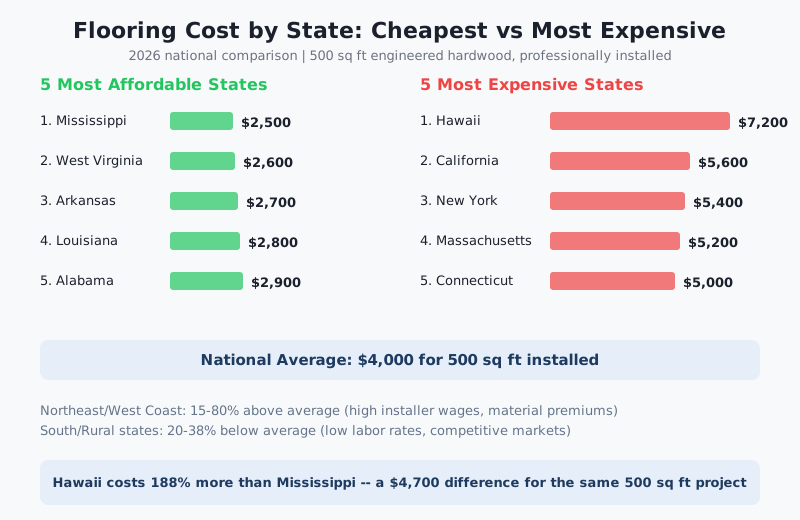
Professional epoxy flooring costs $4 to $12 per square foot installed in 2026, with the national average around $7/sq ft for a solid color epoxy on a standard 2-car garage (~500 sq ft). That puts a typical garage epoxy project at $3,500 nationally, but the same job ranges from about $2,625 in Mississippi to $5,075 in Hawaii. State-to-state pricing is driven by labor rates, concrete condition, climate factors affecting curing, epoxy type, and local market competition.
A 520-square-foot garage floor coated in Allentown, Pennsylvania illustrates the swing. The job ran $3,640 total -- $7/sq ft for a two-coat solid color system with a polyaspartic topcoat, with the 100% solids epoxy priced at $85/gallon and a three-person crew finishing in two days. A nearly identical job quoted in San Diego came to $4,940, or $9.50/sq ft -- 36% more expensive for the same system and square footage. The coating costs were comparable; it was the labor that drove the gap, with California finishing crews billing $55/hour versus $35/hour in eastern PA.
Use our Garage Epoxy Calculator to estimate your exact material needs and cost based on garage dimensions, epoxy type, and local pricing.
All 50 States: Epoxy Flooring Cost Comparison
The table below shows estimated costs per square foot for professional epoxy floor coating (solid color, two-coat system with topcoat) installed on a standard 2-car garage floor (~500 sq ft). Low range reflects basic prep on clean concrete; high range includes shot blasting, crack repair, and moisture mitigation.
| State | Avg. Cost (per sq ft) | Low Range | High Range | vs. National |
|---|---|---|---|---|
| Alabama | $5.60 | $3.36 | $8.40 | -20% |
| Alaska | $9.66 | $5.80 | $14.49 | +38% |
| Arizona | $6.65 | $3.99 | $9.98 | -5% |
| Arkansas | $5.39 | $3.23 | $8.09 | -23% |
| California | $9.10 | $5.46 | $13.65 | +30% |
| Colorado | $7.84 | $4.70 | $11.76 | +12% |
| Connecticut | $8.40 | $5.04 | $12.60 | +20% |
| Delaware | $7.14 | $4.28 | $10.71 | +2% |
| Florida | $6.58 | $3.95 | $9.87 | -6% |
| Georgia | $6.30 | $3.78 | $9.45 | -10% |
| Hawaii | $10.15 | $6.09 | $15.23 | +45% |
| Idaho | $6.02 | $3.61 | $9.03 | -14% |
| Illinois | $7.56 | $4.54 | $11.34 | +8% |
| Indiana | $6.30 | $3.78 | $9.45 | -10% |
| Iowa | $6.09 | $3.65 | $9.14 | -13% |
| Kansas | $6.02 | $3.61 | $9.03 | -14% |
| Kentucky | $5.95 | $3.57 | $8.93 | -15% |
| Louisiana | $5.74 | $3.44 | $8.61 | -18% |
| Maine | $7.21 | $4.33 | $10.82 | +3% |
| Maryland | $7.70 | $4.62 | $11.55 | +10% |
| Massachusetts | $8.54 | $5.12 | $12.81 | +22% |
| Michigan | $6.79 | $4.07 | $10.19 | -3% |
| Minnesota | $7.49 | $4.49 | $11.24 | +7% |
| Mississippi | $5.25 | $3.15 | $7.88 | -25% |
| Missouri | $6.16 | $3.70 | $9.24 | -12% |
| Montana | $6.16 | $3.70 | $9.24 | -12% |
| Nebraska | $6.16 | $3.70 | $9.24 | -12% |
| Nevada | $6.79 | $4.07 | $10.19 | -3% |
| New Hampshire | $7.35 | $4.41 | $11.03 | +5% |
| New Jersey | $8.26 | $4.96 | $12.39 | +18% |
| New Mexico | $6.02 | $3.61 | $9.03 | -14% |
| New York | $8.75 | $5.25 | $13.13 | +25% |
| North Carolina | $6.44 | $3.86 | $9.66 | -8% |
| North Dakota | $5.95 | $3.57 | $8.93 | -15% |
| Ohio | $6.65 | $3.99 | $9.98 | -5% |
| Oklahoma | $5.74 | $3.44 | $8.61 | -18% |
| Oregon | $8.05 | $4.83 | $12.08 | +15% |
| Pennsylvania | $7.00 | $4.20 | $10.50 | 0% |
| Rhode Island | $7.84 | $4.70 | $11.76 | +12% |
| South Carolina | $6.30 | $3.78 | $9.45 | -10% |
| South Dakota | $5.88 | $3.53 | $8.82 | -16% |
| Tennessee | $6.30 | $3.78 | $9.45 | -10% |
| Texas | $6.44 | $3.86 | $9.66 | -8% |
| Utah | $6.79 | $4.07 | $10.19 | -3% |
| Vermont | $7.28 | $4.37 | $10.92 | +4% |
| Virginia | $7.56 | $4.54 | $11.34 | +8% |
| Washington | $8.26 | $4.96 | $12.39 | +18% |
| West Virginia | $5.60 | $3.36 | $8.40 | -20% |
| Wisconsin | $6.72 | $4.03 | $10.08 | -4% |
| Wyoming | $6.02 | $3.61 | $9.03 | -14% |
Info
Concrete prep is the hidden cost driver. A garage floor in good condition (no cracks, no moisture, no prior coatings) falls near the low range. Floors needing diamond grinding, shot blasting, crack filling, or moisture mitigation can push costs toward the high range -- adding $1.50-$3.00/sq ft regardless of state.
Top 5 Most Expensive States
1. Hawaii ($10.15/sq ft)
Every gallon of epoxy, every bag of shot-blast media, and every piece of equipment arrives by container ship. Shipping adds $1.50-$3.00 per square foot to mainland pricing before labor even enters the equation. The limited pool of qualified epoxy installers further reduces competition. A 500 sq ft garage in Honolulu runs roughly $5,075 -- nearly double the cost in the Deep South. High humidity also complicates curing schedules, often requiring dehumidification equipment that adds to project overhead.
2. Alaska ($9.66/sq ft)
Alaska shares Hawaii's logistics problem with the added complication of extreme cold. Epoxy requires ambient temperatures above 50 degrees F for proper curing, which limits the installation window to roughly May through September. During that compressed season, demand spikes and installer availability drops. Remote locations outside Anchorage and Fairbanks can see costs exceed $12/sq ft due to travel surcharges. Freeze-thaw cycling also means more concrete prep -- heaved and cracked slabs need extensive repair before coating.
3. California ($9.10/sq ft)
High labor rates drive California's premium. Epoxy floor installers in the Bay Area and Los Angeles bill $50-$65/hour, compared to $30-$40 nationally. Environmental regulations on VOC content restrict product options -- California Air Resources Board (CARB) compliant coatings often cost 15-20% more than standard formulations. The state's large housing stock of slab-on-grade construction creates steady demand, keeping installers booked and prices firm.
4. New York ($8.75/sq ft)
The New York metro area inflates the state average significantly. Garage epoxy in Manhattan or Brooklyn (where garages are rare and valuable) can exceed $12/sq ft. Long Island and Westchester average $9-$10/sq ft. Upstate markets like Buffalo and Syracuse are closer to $7/sq ft, but the population concentration in the metro area skews the statewide number. Union labor requirements on some commercial and multi-family projects also push rates up.
5. Massachusetts ($8.54/sq ft)
Boston metro labor rates rival New York, and the compressed construction season (April through November) means installers pack their schedules tight. Older homes in New England often have moisture issues in garage slabs -- the water table is high in many coastal communities, requiring vapor barrier coatings before the epoxy system goes down. That added prep step can run $1.50-$2.50/sq ft on top of the base coating cost.
Tip
Timing matters in expensive states. In California, New York, and Massachusetts, scheduling your garage epoxy project in January or February (off-peak) can save 10-20% on labor. Installers are less busy, and many offer winter discounts to keep crews working.
Top 5 Cheapest States
1. Mississippi ($5.25/sq ft)
Mississippi combines the lowest labor rates in the country with favorable installation conditions. Year-round mild temperatures mean no seasonal restrictions on epoxy curing. Low cost of living keeps installer overhead down, and the competitive market among small contractors drives pricing to the national floor. A 500 sq ft garage costs roughly $2,625 -- less than half of what the same job costs in Hawaii.
2. Arkansas ($5.39/sq ft)
Similar dynamics to Mississippi: low labor costs, minimal seasonal constraints, and a competitive local market. Arkansas also benefits from proximity to chemical manufacturing hubs in Texas and Louisiana, which keeps epoxy material costs slightly below the national average. Many installers in the state are owner-operators with low overhead, passing savings directly to homeowners.
3. Alabama ($5.60/sq ft) and West Virginia ($5.60/sq ft)
Alabama enjoys warm-weather installation advantages and low labor costs. West Virginia is a different story -- low costs are driven primarily by lower demand and cost of living rather than climate. West Virginia installers often serve a wider geographic area, but their travel costs are offset by lower base rates. Both states average roughly $2,800 for a standard 2-car garage.
5. Oklahoma ($5.74/sq ft)
Oklahoma's central location keeps shipping costs for materials reasonable. The state's large oil-and-gas workforce creates a pool of workers familiar with industrial coatings, and some transition into residential epoxy work. Low cost of living and moderate demand keep labor rates at $25-$35/hour for finishing crews. A 500 sq ft garage averages $2,870.
Regional Analysis
Northeast
The Northeast averages $7.28-$8.75/sq ft with a standard 2-car garage costing $3,640-$4,375 installed. Key cost drivers include high labor rates ($45-$65/hour for experienced crews), short installation windows due to temperature requirements, and older concrete that frequently needs extensive prep. Moisture is a persistent issue -- many Northeast garages sit on slabs poured without modern vapor barriers, requiring moisture testing and mitigation before epoxy application. Cold-weather scheduling is possible with heated enclosures, but adds $500-$1,000 to project costs.
South
The South averages $5.25-$6.58/sq ft with garage costs of $2,625-$3,290. Year-round installation weather, low labor rates, and competitive markets make this the cheapest region for epoxy. Florida is a notable exception -- while labor is moderate, high humidity levels (especially in summer) require careful timing and often dehumidification during application. Coastal properties in Florida and the Carolinas may also need moisture-tolerant epoxy systems due to high water tables, adding $0.75-$1.50/sq ft.
Midwest
The Midwest averages $6.02-$7.56/sq ft with garage costs of $3,010-$3,780. Temperature sensitivity is the primary concern -- garages in Minnesota, Wisconsin, and Michigan can drop below the 50-degree F minimum for months at a time. Salt damage from winter road treatments accelerates concrete deterioration, meaning Midwest garage floors typically need more prep work (grinding, crack repair, spall filling) than southern counterparts. The competitive contractor market keeps labor rates reasonable at $35-$45/hour.
West
The West shows the widest cost spread in the country. California ($9.10) and Washington ($8.26) anchor the high end with expensive labor and strict VOC regulations. Mountain states like Idaho ($6.02), Wyoming ($6.02), and Montana ($6.16) are moderate to low. Desert states (Arizona at $6.65, Nevada at $6.79) benefit from ideal curing weather but face extreme heat challenges in summer -- epoxy applied on concrete above 90 degrees F can cure too fast, causing bubbling and adhesion failure. Professional installers in Arizona and Nevada schedule garage work for early morning or winter months.
[!NOTE] Climate directly affects epoxy longevity, not just installation cost. In states with harsh freeze-thaw cycles (Minnesota, Wisconsin, Maine), a professionally installed epoxy floor with polyaspartic topcoat lasts 10-15 years. In mild-climate states (Florida, Texas, Arizona), the same system can last 15-20+ years with minimal maintenance.
What Drives State-to-State Cost Variation?
Labor Rates
Labor accounts for 33-60% of a professional epoxy floor installation. Rates range from $25/hour in the Deep South to $65/hour in coastal metros. A 500 sq ft garage takes a 2-3 person crew 1-2 full days, so the labor difference between Mississippi and California can be $800-$1,500 on the same project. States with strong union presence (New York, New Jersey, Illinois) tend to have higher labor floors even in the residential market.
Concrete Condition
The single biggest variable homeowners can control. A clean, crack-free slab in good condition needs only a diamond grind for profile ($1-$2/sq ft). A slab with cracks, spalling, old paint, or prior coatings may need shot blasting ($2-$3/sq ft), crack injection ($3-$8 per linear foot), or grinding and skim coating ($3-$5/sq ft). In northern states where freeze-thaw damage is common, concrete prep accounts for a larger share of the total project cost.
Climate and Humidity
Epoxy curing is a chemical reaction sensitive to temperature and moisture. Installers in humid states (Florida, Louisiana, the Gulf Coast) must monitor dew point and often run dehumidifiers during application. In cold-climate states, garage installations are limited to months when ambient temperatures consistently stay above 50 degrees F. Both constraints affect scheduling, crew efficiency, and sometimes require additional materials (moisture barriers, heated enclosures), all of which add cost.
Epoxy Type and System
The national average of $7/sq ft reflects a solid color two-coat system. Different systems shift the price:
- Water-based epoxy: $3-$5/sq ft (budget option, 1-3 year lifespan)
- Solid color 100% solids: $5-$8/sq ft (standard, 10-15 year lifespan)
- Decorative flake/chip: $6-$10/sq ft (most popular residential choice)
- Metallic epoxy: $8-$15/sq ft (premium, designer look)
- Polyaspartic/polyurea: $7-$12/sq ft (1-day cure, UV stable)
Material costs are relatively consistent nationwide -- a gallon of 100% solids epoxy runs $70-$150 regardless of state. The state-by-state variation is almost entirely labor and overhead.
Market Competition
States with more epoxy flooring contractors per capita have lower prices. Texas, Florida, and Georgia have dozens of installers in every major metro, creating price competition. In less populated states (Wyoming, Montana, North Dakota), fewer contractors means less competitive bidding and higher per-project costs. The franchise model (Garage Force, Stronghold Floors, etc.) has helped moderate pricing in mid-tier markets by providing consistent pricing benchmarks.
Cost Breakdown: Where Your Money Goes
Understanding what you are actually paying for helps explain why state-to-state prices vary so much. A professional epoxy floor installation breaks down into three main cost categories, and only one of them -- materials -- is relatively consistent across the country.
Materials ($1.50-$3.50/sq ft)
Epoxy coating materials are manufactured by national and international suppliers, so pricing does not fluctuate much by geography. A 500 sq ft garage typically requires:
- Primer/base coat: 2-3 gallons of 100% solids epoxy at $70-$150/gallon = $140-$450
- Color coat: 2-3 gallons at $70-$150/gallon = $140-$450
- Topcoat (polyaspartic or polyurethane): 1-2 gallons at $100-$200/gallon = $100-$400
- Decorative flakes (if chosen): $30-$60 per container, 2-4 containers = $60-$240
- Total materials: $380-$1,300 (roughly $0.76-$2.60/sq ft)
Materials represent only 20-35% of the total installed cost. This is why material cost alone does not explain the wide state-by-state variation -- it is labor and overhead that create the gap.
Surface Preparation ($1.00-$3.00/sq ft)
Concrete preparation is the most labor-intensive part of the process and the area where quality most directly determines coating longevity. The three main prep methods:
- Acid etching: $0.50-$1.00/sq ft -- cheapest but least effective. Opens concrete pores but does not create a consistent mechanical profile. Most professional installers have moved away from acid etching for garage floors.
- Diamond grinding: $1.00-$2.00/sq ft -- the industry standard. A walk-behind grinder with diamond-segment tooling creates a uniform 2-3 CSP (Concrete Surface Profile) that epoxy bonds to mechanically. Takes 3-5 hours for a 500 sq ft garage.
- Shot blasting: $2.00-$3.00/sq ft -- the most aggressive method. Steel shot propelled at the surface removes old coatings, levels uneven spots, and creates a 3-5 CSP. Required when existing coatings or severe contamination are present.
Additional prep work that may be needed:
- Crack repair: $3-$8 per linear foot for routing and filling with flexible polyurea
- Spall repair: $5-$15 per spall for grinding out and patching damaged areas
- Oil stain remediation: $1-$2/sq ft for degreasing and grinding contaminated concrete
- Moisture mitigation: $1.50-$3.00/sq ft for vapor barrier coatings on slabs without moisture protection
Labor ($1.50-$5.00/sq ft)
This is where state-to-state costs diverge most dramatically. A typical 500 sq ft garage epoxy project requires:
- Day 1: Grinding/prep (4-6 hours), crack and spall repair (1-2 hours), cleaning and vacuuming (1 hour)
- Day 2: Primer coat (1-2 hours), epoxy coat with optional flakes (2-3 hours), topcoat (1-2 hours)
- Crew size: 2-3 workers
At $30/hour per worker in Mississippi, crew labor totals $720-$1,080. At $60/hour per worker in California, the same crew time costs $1,440-$2,160. That single variable accounts for most of the $4.85/sq ft gap between the cheapest and most expensive states.
DIY vs. Professional: The Real Cost Comparison
Many homeowners consider DIY epoxy kits to save money. Here is what the numbers actually show:
DIY kits run $1.50-$2.50 per square foot for materials ($750-$1,250 for a 500 sq ft garage). However, DIY installations have significant hidden costs:
- Surface prep equipment rental: Diamond grinder ($200-$400/day), concrete vacuum ($75-$150/day)
- Crack repair materials: $50-$150
- Etching supplies: $30-$60
- Total DIY cost with equipment: $1,100-$1,850
Professional installations cost $3,500 on average (500 sq ft at $7/sq ft) and include all prep, materials, labor, and typically a 3-5 year warranty. Professionally applied 100% solids epoxy lasts 10-20 years. DIY water-based kits from home centers typically last 1-3 years before peeling, yellowing, or hot-tire pickup becomes an issue.
Over a 15-year period, a single professional application at $3,500 costs less than five DIY applications at $1,400 each ($7,000 total), without accounting for the labor hours spent on each DIY attempt.
Info
Hot-tire pickup is the top DIY failure mode. Most hardware store epoxy kits use water-based formulas that soften at 250-300 degrees F. Car tires after highway driving reach 200-280 degrees F. Professional 100% solids epoxy and polyaspartic topcoats resist temperatures up to 500 degrees F, eliminating this problem entirely.
How to Save on Epoxy Flooring in Any State
Regardless of where you live, these strategies can reduce your epoxy flooring costs:
Prep your own concrete. Some installers offer a "coating only" rate if you handle the cleaning, oil stain removal, and minor crack filling yourself. This can save $1-$2/sq ft. However, do not attempt diamond grinding or shot blasting without experience -- improper surface profile is the leading cause of epoxy adhesion failure.
Choose solid color over flake or metallic. Decorative flake systems add $1-$3/sq ft for materials and an additional application step. Metallic epoxy adds $3-$8/sq ft. If durability is your primary goal, a solid color with a polyaspartic topcoat provides the same protection at a lower price point.
Schedule off-peak. In northern states, booking your project for late fall or early spring (when temperatures are still workable but demand has dropped) can save 10-15% on labor. In southern states, mid-summer scheduling during the slowest period can yield similar discounts.
Get at least three quotes. Pricing transparency in the epoxy flooring industry is limited. Contractor quotes for identical work can vary 40-60% within the same metro area. Always compare at least three detailed written estimates specifying the exact system, number of coats, prep method, and warranty terms.
Bundle multiple areas. If you need epoxy on a garage floor plus a workshop, basement, or laundry room, bundling the work into a single project reduces the per-square-foot cost. Installers save on mobilization, equipment setup, and material ordering. Discounts of 10-20% per square foot are common on projects over 800 sq ft.
Ask about the epoxy system, not just the price. The cheapest quote often uses water-based epoxy or a single-coat system that will fail within 2-3 years. Ask every contractor: What brand and type of epoxy? How many coats? What is the solids content? What topcoat is included? A $5/sq ft quote for water-based epoxy is more expensive long-term than a $7/sq ft quote for 100% solids with a polyaspartic topcoat.
Understanding Epoxy Types and Their State-Level Pricing
Not all epoxy is the same product, and the type of system you choose affects cost just as much as geography. Here is how the major systems compare at the state level:
Water-Based Epoxy ($3-$5/sq ft nationally)
The budget option sold in home improvement stores. Water-based formulas have 40-60% solids content, meaning 40-60% of the coating evaporates during curing, leaving a thinner film. These products dominate the DIY market and are occasionally used by budget contractors. State pricing variation is minimal ($3/sq ft in Mississippi to $5/sq ft in California) because the product cost is low and application is faster.
Pros: Low cost, low odor, easy cleanup. Cons: Thin film build, 1-3 year lifespan, susceptible to hot-tire pickup, yellows with UV exposure, poor chemical resistance.
100% Solids Epoxy ($5-$8/sq ft nationally)
The professional standard. Nothing evaporates during curing -- the entire volume of applied coating becomes the finished floor. This creates a thick, durable film (8-12 mils per coat) that resists chemicals, abrasion, and impact. State pricing ranges from $5.25/sq ft in Mississippi to $8.75/sq ft in New York for a two-coat system.
Pros: 10-20 year lifespan, excellent chemical and abrasion resistance, seamless finish. Cons: Requires professional application, 2-day cure time, sensitive to temperature and humidity during application.
Decorative Flake/Chip Systems ($6-$10/sq ft nationally)
The most popular residential choice. Colored vinyl flakes are broadcast into wet epoxy, creating a multicolor, textured surface that hides imperfections and provides slip resistance. The flakes add $1-$3/sq ft in materials and one additional application step. State variation tracks with standard epoxy pricing plus the flake premium.
Pros: Hides concrete imperfections, slip resistant, wide color options, easy to spot-repair. Cons: Higher cost, longer application time, texture can trap dirt if not sealed with a smooth topcoat.
Metallic Epoxy ($8-$15/sq ft nationally)
The premium decorative option. Metallic pigments suspended in clear epoxy create swirling, three-dimensional visual effects that mimic marble, lava flow, or abstract art. Each floor is unique. Application requires significant skill -- the metallic pigments must be manipulated with heat guns and solvents before the epoxy cures. State pricing ranges from about $7/sq ft in low-cost states to $15+ in California and New York, driven primarily by the specialized labor required.
Pros: Stunning visual impact, completely unique patterns, high perceived value. Cons: Highest cost, requires highly skilled installer, no two floors look alike (can be a pro or con), difficult to repair seamlessly.
Frequently Asked Questions
How much does it cost to epoxy a 2-car garage floor?
A professional epoxy coating on a standard 2-car garage (400-600 sq ft) costs $2,800-$4,200 at the national average of $7/sq ft. State-by-state examples for a 500 sq ft garage:
- Mississippi: $2,625 (cheapest)
- Texas: $3,220
- Pennsylvania: $3,500 (national average)
- Massachusetts: $4,270
- California: $4,550
- Hawaii: $5,075 (most expensive)
These prices include concrete prep (diamond grind), two coats of solid color epoxy, and a clear topcoat. Decorative flake systems add $500-$1,500, and metallic finishes add $1,500-$4,000.
Is epoxy flooring worth the cost?
For garage floors, professional epoxy is one of the highest-ROI home improvements. A $3,500 epoxy floor on a 500 sq ft garage provides:
- Protection: Resists oil, chemicals, road salt, and hot tire marks
- Durability: Professional systems last 10-20 years with minimal maintenance
- Cleaning: A sealed surface takes 15 minutes to sweep and mop vs. 45+ minutes for bare concrete
- Home value: Real estate agents report that a finished garage floor adds perceived value and can help sell a home faster, though direct ROI is difficult to quantify
The cost-per-year over the coating's lifespan works out to $175-$350/year -- less than most homeowners spend on lawn care.
How long does professional epoxy flooring last?
Professionally installed 100% solids epoxy with a polyaspartic or polyurethane topcoat lasts 10-20 years in a residential garage. Lifespan depends on several factors:
- Traffic level: Light residential use (2 cars, foot traffic) = 15-20 years. Heavy use (workshop, equipment) = 10-15 years
- Topcoat type: Polyaspartic topcoats resist UV yellowing and abrasion better than standard epoxy clear coats
- Climate: Freeze-thaw states see slightly shorter lifespans (10-15 years) vs. mild climates (15-20 years)
- Maintenance: Annual cleaning and recoating the topcoat every 5-7 years extends total system life
By comparison, DIY water-based epoxy kits typically last 1-3 years before showing signs of peeling, hot-tire pickup, or yellowing.
What is the best time of year to install epoxy flooring?
Spring and fall offer the best combination of temperature, humidity, and pricing in most states. Ideal conditions for epoxy application:
- Temperature: 50-85 degrees F (ambient and concrete surface)
- Humidity: Below 85% relative humidity
- Concrete temperature: Must be at least 5 degrees above dew point
In the South, winter is actually prime installation season -- temperatures are comfortable and humidity is lower. In the North, late April through early June and September through mid-October are the sweet spots. Avoid scheduling in the days following heavy rain, as concrete moisture levels will be elevated.
Can I epoxy my garage floor over existing paint or stain?
In most cases, yes, but proper prep is critical and adds cost. Existing coatings must be removed or profiled to ensure the new epoxy bonds properly:
- Old latex paint: Diamond grind to remove ($2-$3/sq ft)
- Old epoxy (well-adhered): Scuff sand and apply bonding primer ($1-$2/sq ft)
- Old epoxy (peeling/failing): Full removal via shot blasting ($3-$4/sq ft)
- Concrete sealer: Must be completely removed -- sealers create a barrier that prevents epoxy adhesion
Installers test existing coatings with a water drop test (water should absorb within 30 seconds) and sometimes a pull-off adhesion test. If the old coating is well-bonded and properly profiled, applying over it is often more cost-effective than full removal.
How does epoxy compare to other garage floor coatings?
Epoxy is the most popular choice, but polyaspartic and polyurea coatings are gaining market share. Comparison for a 500 sq ft garage:
- Epoxy (100% solids): $3,500 avg, 2-day install, 10-20 year life, yellows with UV exposure
- Polyaspartic: $4,000-$5,000, 1-day install, 15-20 year life, UV stable, handles wider temp range
- Polyurea: $4,500-$6,000, 1-day install, 15-25 year life, most chemical resistant
- Concrete stain: $2,000-$3,000, 1-day install, 5-10 year life, no peeling but limited protection
- Interlocking tiles: $2,500-$4,500, DIY-friendly, 10-15 year life, no concrete prep needed
Many professional installers now recommend a hybrid system: epoxy base coat for adhesion and build, with a polyaspartic topcoat for UV resistance and abrasion protection. This combination typically costs 10-15% more than a pure epoxy system but delivers significantly better long-term performance.
Cost data sourced from HomeGuide, Angi, Today's Homeowner, Homewyse, and This Old House. Prices reflect 2026 estimates based on regional cost adjustment factors. Actual costs vary by specific location, installer, concrete condition, and project details.
This article is provided for informational and educational purposes only. Content should not be considered professional financial, medical, legal, or other advice. Always consult a qualified professional before making important decisions. UseCalcPro is not responsible for any actions taken based on the information in this article.
Try These Calculators
Calculate epoxy, primer, and etching solution gallons for your garage floor. Includes flake chips, roller covers, cure schedule, and total project cost.
Estimate 2026 laminate floor installation cost by room size and quality. Budget to waterproof laminate quotes typically range from $1,500 to $6,000 total.
Estimate 2026 vinyl flooring installation cost by format — sheet, tile, LVP, or LVT. Installed quotes run $2 to $22 per sqft depending on format and region.
Price 2026 bathroom tile installation cost by labor, underlayment, waterproofing, niches, and demo scope. Pure install runs $1,500 to $6,500 for 40-80 sqft.
Estimate 2026 tile floor installation cost by room size, tile type, and prep work. Ceramic, porcelain, and stone quotes typically run $2,000 to $10,000.