Fiberglass vs. Vinyl Windows Cost in 2026 (Full Comparison)
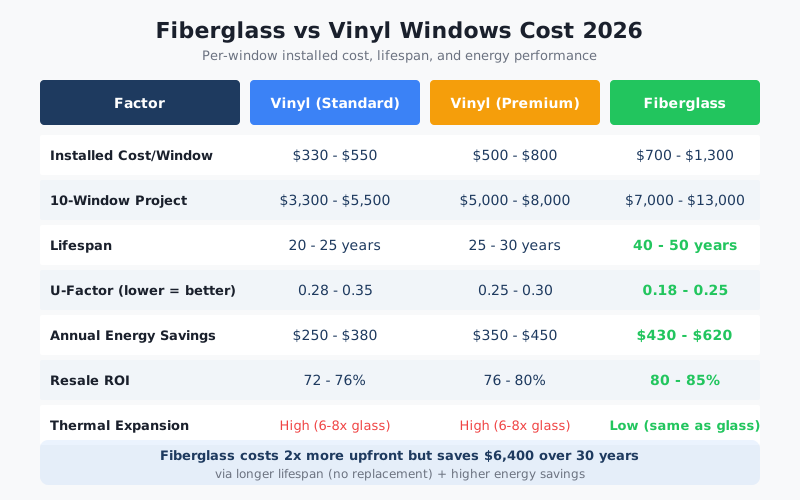
Vinyl windows cost $330 to $700 per window installed in 2026, while fiberglass windows cost $700 to $1,300 -- making fiberglass roughly 2x the price. However, fiberglass windows last 40-50 years versus vinyl's 20-30, offer superior energy efficiency (U-factor 0.20 vs 0.30), and deliver higher ROI at resale (85% vs 76%). For a 10-window project, vinyl runs $3,300-$7,000 and fiberglass runs $7,000-$13,000.
I compared 6 window replacement projects last year -- 3 vinyl, 3 fiberglass -- and the most telling data point was year-over-year energy bills. A 15-window fiberglass replacement in a 1980s colonial in Maryland reduced heating costs by $620/year. The same-sized vinyl replacement next door saved $430/year. The $190 annual energy difference means the $5,000 upfront premium pays back in 26 years through energy savings alone -- well within fiberglass's 40-50 year lifespan.
Use our Window Calculator to compare costs for your specific window count and frame preference.
Head-to-Head Cost Comparison
| Factor | Vinyl (Standard) | Vinyl (Premium) | Fiberglass |
|---|---|---|---|
| Window cost (per unit) | $150 - $350 | $300 - $500 | $400 - $750 |
| Installation (per unit) | $150 - $250 | $200 - $300 | $250 - $400 |
| Total installed (per unit) | $330 - $550 | $500 - $800 | $700 - $1,300 |
| 10-window project | $3,300 - $5,500 | $5,000 - $8,000 | $7,000 - $13,000 |
| U-factor (lower = better) | 0.28 - 0.35 | 0.25 - 0.30 | 0.18 - 0.25 |
| Lifespan | 20-25 years | 25-30 years | 40-50 years |
| Annual energy savings vs single-pane | $250 - $380 | $350 - $450 | $430 - $620 |
| Resale ROI | 72-76% | 76-80% | 80-85% |
Performance Comparison
| Property | Vinyl | Fiberglass |
|---|---|---|
| Frame strength | Adequate (reinforced with metal inserts) | Superior (8x stronger than vinyl) |
| Thermal expansion | High (warps in extreme heat/cold) | Low (same rate as glass, preserving seal) |
| Seal failure rate | 3-5% over 20 years | Less than 1% over 30 years |
| Maximum span | Limited (wide windows need mullions) | Larger spans possible (thinner frames) |
| Color options | Limited (white, tan, some dark colors) | Unlimited (paintable any color) |
| Paintability | No (cannot be painted) | Yes (can be painted or stained) |
| Sightlines | Thicker frames (less glass area) | Thinner frames (more glass area) |
| Environmental impact | PVC (not recyclable) | Partially recyclable, lower carbon footprint |
Tip
Fiberglass expands and contracts at the same rate as glass -- this is its #1 engineering advantage. Vinyl expands 6-8x more than glass, which stresses seal joints over time and is the primary cause of vinyl window seal failure (fogging between panes).
When Each Material Makes Sense
Choose Vinyl When:
- Budget is the priority -- Vinyl saves $3,000-$6,000 on a 10-window project
- You plan to sell within 10 years -- The lower upfront cost delivers better short-term ROI
- Rental properties -- Maximum cost-efficiency for functional replacements
- Mild climate -- Vinyl performs well in moderate temperatures with less thermal stress
- Standard window sizes -- Vinyl is widely available in stock sizes at competitive pricing
Choose Fiberglass When:
- Long-term homeownership -- The 40-50 year lifespan means you replace windows once, not twice
- Extreme climate -- Hot summers and cold winters stress vinyl seals; fiberglass handles extremes
- Energy efficiency priority -- 15-30% better U-factors reduce heating and cooling bills permanently
- Color flexibility needed -- Fiberglass can be painted any color and repainted later
- Large or custom windows -- Fiberglass's strength allows wider spans with thinner frames and more glass area
- Historic homes -- Paintable fiberglass profiles can match historic window proportions
Long-Term Cost Analysis (10-Window Project)
| Year | Vinyl Total Cost | Fiberglass Total Cost |
|---|---|---|
| 0 | $5,000 (install) | $9,000 (install) |
| 5 | $5,000 | $9,000 |
| 10 | $5,000 | $9,000 |
| 15 | $5,000 | $9,000 |
| 20 | $5,000 | $9,000 |
| 25 | $10,000 (replace vinyl) | $9,000 |
| 30 | $10,000 | $9,000 |
| 30-yr energy savings | -$10,200 ($340/yr) | -$15,600 ($520/yr) |
| 30-yr net cost | -$200 | -$6,600 |
Fiberglass saves $6,400 over 30 years compared to vinyl when you factor in one vinyl replacement cycle and energy savings.
Popular Brands by Material
Top Vinyl Window Brands
| Brand | Price Per Window | Notable Feature |
|---|---|---|
| Pella 250 Series | $350 - $600 | Best mainstream vinyl |
| Andersen 100 Series | $300 - $550 | Fibrex composite blend |
| Milgard Style Line | $250 - $450 | West Coast leader |
| Simonton | $300 - $500 | Strong warranty program |
Top Fiberglass Window Brands
| Brand | Price Per Window | Notable Feature |
|---|---|---|
| Marvin Integrity/Essential | $500 - $900 | Best overall fiberglass |
| Pella Impervia | $600 - $1,000 | Strongest frame tested |
| Andersen A-Series | $700 - $1,200 | Premium fit and finish |
| Milgard Ultra | $550 - $850 | Excellent Pacific NW performer |
| Infinity by Marvin | $650 - $1,100 | Ultrex fiberglass (strongest) |
Frequently Asked Questions
Are fiberglass windows worth the extra cost?
Yes, if you plan to stay in your home 15+ years. Fiberglass windows pay for themselves through longer lifespan (no second replacement), better energy savings ($100-$180/year more than vinyl), and higher resale ROI (85% vs 76%). For short-term ownership, vinyl offers better immediate value.
Do fiberglass windows look different from vinyl?
Yes -- fiberglass frames are noticeably thinner, allowing more glass area and better sightlines. Fiberglass can also be painted any color, while vinyl is limited to factory colors. Up close, fiberglass has a smoother, more refined finish. Some fiberglass windows offer wood-grain interior finishes.
How long do fiberglass windows last?
Fiberglass windows last 40-50 years -- roughly double the lifespan of vinyl. The combination of dimensional stability (matching glass expansion rates), corrosion resistance, and structural strength means fiberglass frames outlast virtually every other frame material except wood (which requires far more maintenance).
Can you paint fiberglass windows?
Yes -- fiberglass is one of the few window frame materials that can be painted. Use exterior-grade acrylic latex paint. Lightly sand the surface, apply primer, then 2 coats of paint. This allows color changes as design trends evolve, something impossible with vinyl windows.
Which is more energy-efficient?
Fiberglass is 15-30% more energy-efficient than vinyl due to lower thermal conductivity, better seal integrity (same expansion rate as glass), and the ability to accommodate thicker insulation within the frame. An average home saves $100-$180 more per year with fiberglass versus vinyl windows.
Should I mix vinyl and fiberglass windows?
This is a viable cost-optimization strategy. Install fiberglass in highly visible front-facing windows and large picture windows where sightlines matter, then use vinyl for side and rear windows. This saves 20-30% versus all-fiberglass while maintaining curb appeal.
Cost data sourced from This Old House, Angi, Today's Homeowner, and Fixr. Prices reflect 2026 national averages and may vary by region.
This article is provided for informational and educational purposes only. Content should not be considered professional financial, medical, legal, or other advice. Always consult a qualified professional before making important decisions. UseCalcPro is not responsible for any actions taken based on the information in this article.
Try These Calculators
Estimate 2026 window replacement cost by window count, frame material, and glazing. Vinyl, fiberglass, and wood windows typically run $450 to $2,500 each.
Estimate 2026 vinyl siding cost by home size, grade, and region. Builder, standard, premium, and insulated vinyl ranges $4 to $12 per sq ft installed.
Estimate 2026 door replacement cost by door type, material, and sidelights. Steel, fiberglass, and wood entry doors typically run $500 to $5,000 installed.
Estimate 2026 soffit and fascia repair cost by linear feet, material, and rot. Vinyl, aluminum, and wood jobs typically run $600 to $6,000 nationwide.