Metal Roof vs. Shingles Cost in 2026: Is Metal Worth 2-3x the Price?

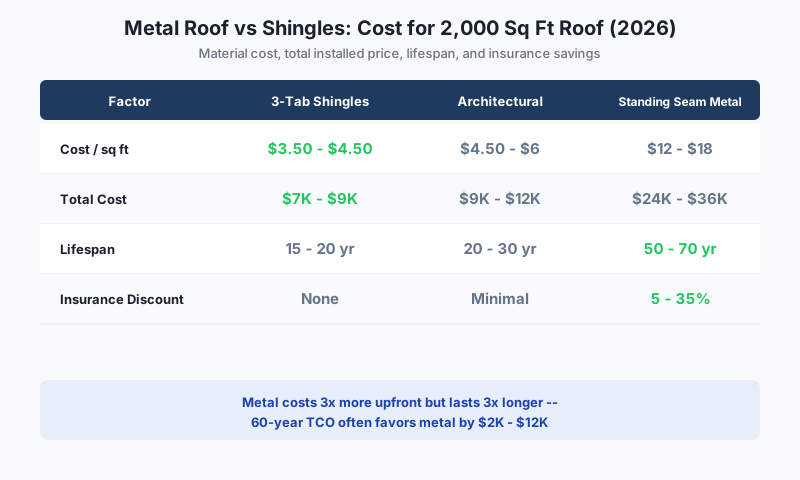
A metal roof costs $12-$18 per square foot installed in 2026, compared to $3.50-$6 per square foot for asphalt shingles. For a standard 2,000 square foot roof, that translates to $24,000-$36,000 for standing seam metal versus $7,000-$12,000 for architectural shingles. However, metal roofing lasts 40-70 years versus 15-30 years for asphalt, which means the 60-year total cost of ownership can actually favor metal by $2,000-$12,000 depending on the material you choose.
A telling comparison from the Midwest roofing market: in 2019, a 22-year-old three-tab shingle roof was torn off and replaced with standing seam metal for $31,400. Years later, during a hailstorm inspection tour of that same neighborhood, the metal roof had zero damage, while three houses on the same block with asphalt shingles had $8,000-$14,000 in claims. That single comparison says more about lifetime roofing value than any spreadsheet ever could.
If you want to estimate your own roof replacement cost before reading further, plug your numbers into the Roofing Calculator to get a material-specific breakdown for your square footage.
Side-by-Side Cost Comparison
The roofing market in 2026 offers four main options for homeowners. Here is what each one costs, installed, for a standard 2,000 square foot roof area:
| Roofing Material | Cost Per Sq Ft (Installed) | Total Cost (2,000 Sq Ft) | Lifespan | Warranty |
|---|---|---|---|---|
| Asphalt Shingles (3-Tab) | $3.50-$4.50 | $7,000-$9,000 | 15-20 years | 20-25 years |
| Asphalt Shingles (Architectural) | $4.50-$6.00 | $9,000-$12,000 | 20-30 years | 30-50 years |
| Corrugated Metal | $6.00-$8.15 | $12,000-$16,300 | 40-60 years | 20-40 years |
| Metal Shingles | $7.70-$10.40 | $15,400-$20,800 | 40-50 years | 30-50 years |
| Standing Seam Metal | $12.00-$18.00 | $24,000-$36,000 | 50-70 years | 30-50 years |
A few notes on these numbers. Material cost is only part of the picture. Labor makes up roughly 40-60% of a roofing project total. Metal roofing requires specialized installers, which drives the labor cost higher than shingle work. The figures above include both materials and professional installation, sourced from This Old House, Angi, and HomeGuide pricing data for 2026.
The price range within each category depends on roof complexity (valleys, dormers, pitch), geographic location, and the specific product line. A simple gable roof in rural Ohio will come in at the low end. A complex hip roof in coastal Florida will land at the high end or above.
Asphalt Shingles: Pros and Cons
Asphalt shingles dominate the American roofing market for a reason. They are affordable, widely available, and almost every roofing contractor in the country knows how to install them. That accessibility brings real advantages.
Advantages of asphalt shingles:
- Low upfront cost. At $3.50-$6.00 per square foot installed, shingles are the most budget-friendly roofing option. A full replacement on a 2,000 square foot roof can come in under $10,000.
- Wide contractor availability. You can get three competitive bids in most markets within a week. Metal roofing specialists are harder to find.
- Variety of styles and colors. Architectural shingles mimic the look of slate, wood shake, and tile at a fraction of the cost.
- Easy repairs. A damaged section can be patched for $200-$500 by any general roofer. You do not need a specialist.
Disadvantages of asphalt shingles:
- Shorter lifespan. Even premium architectural shingles rarely exceed 30 years. Three-tab shingles can start curling in 15 years.
- Vulnerability to weather. High winds, hail, and extreme temperature swings degrade asphalt faster than metal. In hail-prone states, you may need a full replacement after a single severe storm.
- Higher maintenance. Annual inspections are recommended. After every major storm, you should check for missing or cracked shingles, lifted edges, and granule loss in gutters.
- Poor energy efficiency. Asphalt absorbs heat, which raises attic temperatures and increases cooling costs in summer months.
- Multiple replacements needed. Over a 60-year period, you will likely need two or three complete roof replacements.
Metal Roofing: Pros and Cons
Metal roofing has moved well beyond the corrugated barn panels most people picture. Modern residential metal roofing comes in standing seam panels, metal shingles that look like traditional roofing, and yes, updated corrugated profiles that work on contemporary homes.
Advantages of metal roofing:
- Exceptional lifespan. Standing seam metal roofs routinely last 50-70 years. Many outlast the mortgage and the homeowner.
- Extreme weather resistance. Metal panels resist wind up to 140 mph, shed snow and ice, and handle hail far better than asphalt. According to Bill Ragan Roofing, metal roofing withstands impacts that would destroy shingle roofs.
- Energy savings. Metal reflects solar radiant heat, reducing cooling costs by 10-25%. Over decades, that compounds into thousands of dollars (more on this below).
- Minimal maintenance. Check fasteners and sealants every 5-10 years. That is essentially all that is required.
- Insurance discounts. In hail-prone regions, metal roofs can earn 5-35% discounts on homeowner insurance premiums.
- Resale value. Metal roofing adds 1-6% to home value according to multiple industry sources.
- Environmentally friendly. Metal roofing is 25-95% recycled content and 100% recyclable at end of life. Asphalt shingles fill landfills.
Disadvantages of metal roofing:
- High upfront cost. Standing seam metal is 2-3x the price of asphalt shingles. That is a significant cash outlay even if the long-term math works out.
- Fewer qualified installers. Poor installation is the number one cause of metal roof failures. You need a contractor who specializes in metal, not a general roofer who "can do metal too."
- Noise. Metal roofs are louder during heavy rain and hail, though modern underlayment and insulation reduce this substantially.
- Denting. While metal handles hail better than asphalt overall, large hailstones can dent softer metals like aluminum and copper. Steel panels resist denting better.
- Expansion and contraction. Metal panels expand and contract with temperature changes. Improperly installed fasteners can loosen over time.
When to Choose Shingles
Asphalt shingles remain the right call in several common situations:
You plan to sell within 5-10 years. If you are not staying long enough to recoup the metal premium through energy savings and avoided replacements, shingles give you a clean, attractive roof at the lowest cost. A buyer will see a newer roof regardless of material.
Your budget is firm at under $15,000. When the cash simply is not there for metal, architectural shingles at $9,000-$12,000 deliver solid performance for 25-30 years. Stretching your budget for corrugated metal at $12,000-$16,300 may be worth considering, but standing seam is out of reach.
Your area has mild weather. In regions without severe hail, hurricanes, or heavy snow loads, the weather-resistance advantage of metal is less pronounced. Shingles perform adequately in moderate climates.
Your HOA restricts roofing materials. Some homeowner associations still restrict metal roofing, especially in subdivisions with uniform architectural guidelines. Check your covenants before planning a metal roof.
When to Choose Metal
Metal roofing pays for itself in specific scenarios:
You plan to stay for 20+ years. The break-even point for metal versus shingles typically falls between 15-25 years, depending on the metal type and your energy costs. If this is your long-term home, metal is almost always the better financial decision.
You live in a hail-prone or hurricane region. Texas, Oklahoma, Kansas, Colorado, and the Gulf Coast see regular severe weather. A single hailstorm that destroys an asphalt roof costs $7,000-$12,000 out of pocket (or through insurance claims that raise your premiums). Metal shrugs off most hail. The insurance discounts alone can save $500-$1,500 per year in high-risk zones.
You want to minimize maintenance. If you travel frequently, own rental properties, or simply do not want to think about your roof for decades, metal is the lowest-maintenance option available. Check fasteners every 5-10 years and you are done.
You are building new construction. When you are already spending $300,000+ on a new home, the incremental cost of metal over shingles is a smaller percentage of the total project. Financing it into your construction loan spreads the cost over 30 years at mortgage rates.
Total Cost of Ownership
This is where the math gets interesting. Most homeowners compare the sticker price, but the real question is: what will your roof cost over its entire service life?
Here is the total cost of ownership for a 2,000 square foot roof, using midrange pricing for each material:
| Time Horizon | Asphalt Shingles | Corrugated Metal | Metal Shingles | Standing Seam Metal |
|---|---|---|---|---|
| Initial Install | $9,500 | $14,150 | $18,100 | $30,000 |
| 15-Year Cost | $9,500 + $2,000 maintenance = $11,500 | $14,150 | $18,100 | $30,000 |
| 30-Year Cost | $9,500 + $9,500 replacement + $3,500 maintenance = $22,500 | $14,150 + $500 maintenance = $14,650 | $18,100 + $500 = $18,600 | $30,000 + $500 = $30,500 |
| 60-Year Cost | $9,500 x 3 replacements + $7,000 maintenance = $35,500 | $14,150 + $14,150 replacement + $1,500 maintenance = $29,800 | $18,100 + $18,100 replacement + $1,500 = $37,700 | $30,000 + $1,500 maintenance = $31,500 |
The maintenance costs for asphalt include storm damage repairs ($200-$500 per incident), periodic inspections, and granule loss mitigation. For metal, maintenance includes fastener tightening and sealant reapplication on a 5-10 year cycle, sourced from Thompson Creek and FoxHaven Roofing.
At the 30-year mark, asphalt costs roughly $22,500 because you need a full replacement. Corrugated metal has cost you $14,650. That is a $7,850 advantage for the cheapest metal option.
At 60 years, the picture is even starker. Asphalt requires three full replacements at roughly $9,500 each, totaling $35,500. Standing seam metal, despite its $30,000 initial price, totals just $31,500 because it needs zero replacements. The most expensive metal option saves you $4,000 over the cheapest roofing option across six decades.
Corrugated metal at $29,800 over 60 years is the clear value winner if you are optimizing purely for cost. It needs one replacement at the 45-55 year mark, but even with that replacement, it comes in under both asphalt and standing seam.
Use the Roofing Calculator to run these numbers with your actual roof dimensions and local pricing.
Energy Savings and Insurance Discounts
Two factors that rarely appear in initial quotes can shift the metal-versus-shingles math by thousands of dollars.
Cooling Cost Reduction
Metal roofs reflect solar radiant heat rather than absorbing it. According to the Metal Roofing Alliance, this reflectivity reduces cooling costs by 10-25% compared to asphalt shingles. The exact savings depend on your climate zone, insulation levels, and electricity rates.
For a homeowner spending $2,400 per year on cooling (a reasonable figure for a 2,000 square foot home in the Sun Belt), a 15% reduction saves $360 annually. Over 50 years, that is $18,000 in cooling savings alone, not accounting for rising energy costs.
Even in northern climates where cooling costs are lower, a 10% reduction on $1,200 annual cooling saves $120 per year, or $6,000 over 50 years. It is not the primary reason to choose metal in Minnesota, but it is not nothing either.
Insurance Premium Discounts
This is the factor most homeowners overlook entirely. In states where hail and wind damage are common, insurance companies offer significant premium discounts for metal roofs. The discount ranges from 5% to 35%, depending on the insurer and your location.
FoxHaven Roofing reports that homeowners in states like Texas, Colorado, and Oklahoma routinely see 15-25% insurance discounts after installing metal roofing. On a $2,500 annual premium, a 20% discount saves $500 per year, or $25,000 over a 50-year roof lifespan.
Combined, energy savings and insurance discounts can total $800-$1,500 per year in favorable conditions. Over 30 years, that is $24,000-$45,000 in savings that never appear on a roofing quote.
Here is a summary of the annual savings potential:
| Savings Category | Low Estimate (Northern/Mild) | High Estimate (Southern/Hail-Prone) |
|---|---|---|
| Cooling cost reduction | $120/year | $600/year |
| Insurance discount | $125/year | $875/year |
| Total annual savings | $245/year | $1,475/year |
| 30-year savings | $7,350 | $44,250 |
| 50-year savings | $12,250 | $73,750 |
When you factor these savings into the total cost of ownership, standing seam metal roofing often costs less than asphalt shingles over 30 years in hail-prone, warm-climate regions. The upfront premium pays for itself and then some.
Frequently Asked Questions
Is a metal roof worth the extra cost in 2026?
A metal roof is worth the extra cost for homeowners who plan to stay in their home for 20 years or longer. The break-even point depends on the metal type you choose and your local conditions. Corrugated metal at $12,000-$16,300 breaks even against asphalt shingles within 15-20 years when you factor in the avoided second roof replacement. Standing seam metal at $24,000-$36,000 takes longer to break even on raw installation cost, but the 50-70 year lifespan means you will likely never replace it again. In hail-prone states where insurance discounts of 15-25% apply, the break-even window shrinks to 10-15 years. The answer also depends on your financing. If you are paying cash, the upfront hit is significant. If you finance through a home equity loan or roll it into a construction loan, the monthly cost difference between metal and shingles can be surprisingly small.
How long does a metal roof last compared to shingles?
Asphalt shingles last 15-30 years depending on the product grade. Three-tab shingles, the cheapest option, typically show significant wear at 15-20 years with curling edges, granule loss, and cracking. Architectural shingles perform better, lasting 25-30 years in moderate climates, but exposure to severe hail, high winds, or extreme UV can shorten that considerably. Metal roofing lasts 40-70 years. Corrugated metal panels typically last 40-60 years. Metal shingles average 40-50 years. Standing seam metal panels, which have fewer exposed fasteners and tighter seams, routinely reach 50-70 years with minimal maintenance. The lifespan difference is not merely theoretical. Walk through any neighborhood with homes built in the 1960s and 1970s. The asphalt roofs have been replaced two or three times. The few metal roofs from that era are still performing.
Does a metal roof increase home value?
Metal roofing adds 1-6% to home resale value according to data from Angi and HomeGuide. The exact premium depends on your market. In regions where metal roofing is common and valued, such as the Southeast and Mountain West, the premium trends toward the higher end. In markets where shingles dominate and buyers are unfamiliar with metal, the premium is more modest. The resale value benefit is separate from the insurance and energy savings, which a buyer can calculate for themselves. A home listing that mentions a 50-year metal roof with transferable warranty, plus documented energy savings and lower insurance premiums, gives the seller a concrete story to justify a higher asking price. Asphalt shingles, by contrast, are expected and neutral. Nobody pays more for a home because it has shingles.
Are metal roofs noisy when it rains?
This is the most common objection homeowners raise when considering metal, and it is largely outdated. In the 1970s and 1980s, metal roofs were installed directly over purlins with no underlayment or insulation between the panel and the living space. Those roofs were genuinely loud during rainstorms. Modern metal roof installations include a solid roof deck, synthetic underlayment, and attic insulation between the metal panels and your ceiling. This assembly dampens rain noise to levels comparable to asphalt shingles. According to This Old House, a properly installed metal roof over a solid deck is no louder than any other roofing material. If noise is a concern, specify a high-density underlayment like synthetic felt or a peel-and-stick membrane. The incremental cost is minimal, and it eliminates the noise issue entirely.
Can you install a metal roof over existing shingles?
In many cases, yes. Installing metal roofing over existing shingles avoids the tear-off cost, which typically runs $1,000-$3,000 for a 2,000 square foot roof. However, there are important caveats. First, your local building code may limit the total number of roofing layers, typically two. If you already have two layers of shingles, you must tear off before adding metal. Second, installing over damaged or uneven shingles can create problems with the metal panels sitting flat and draining properly. Third, adding metal over shingles eliminates your ability to inspect the roof deck for rot or damage. A responsible contractor will want to examine the deck condition before committing to an overlay. If your existing shingle layer is in decent shape, has no signs of moisture damage, and your code allows it, overlaying metal can save you $1,000-$3,000 and reduce waste going to the landfill. But cutting corners on deck inspection to save money is not a trade-off worth making.
Which metal roofing type offers the best value?
For most homeowners, corrugated metal panels offer the best balance of cost and longevity. At $6.00-$8.15 per square foot installed, corrugated metal costs roughly 50-65% less than standing seam while still delivering a 40-60 year lifespan. Over 60 years, corrugated metal has the lowest total cost of ownership of any roofing material at roughly $29,800 for a 2,000 square foot roof, including one replacement. Metal shingles at $7.70-$10.40 per square foot are a strong middle ground if you want the look of traditional shingles with the durability of metal. They work well on homes where standing seam panels would look out of place architecturally. Standing seam is the premium choice, justified when you want maximum lifespan (50-70 years), minimal maintenance, and the highest weather resistance. The concealed fastener system eliminates the most common failure point on other metal roof types. If budget allows, standing seam is the buy-it-once option.
Pricing data sourced from This Old House, Angi, HomeGuide, Bill Ragan Roofing, FoxHaven Roofing, and Thompson Creek. All figures reflect 2026 national averages for professional installation. Actual costs vary by location, roof complexity, and contractor.
This article is provided for informational and educational purposes only. Content should not be considered professional financial, medical, legal, or other advice. Always consult a qualified professional before making important decisions. UseCalcPro is not responsible for any actions taken based on the information in this article.
Try These Calculators
Estimate shingles, bundles, and roofing squares based on your roof dimensions and pitch. Includes waste factor and coverage tables for common materials.
Estimate 2026 metal roof installation cost by panel type, roof size, and region. Standing seam and corrugated quotes typically run $10,000 to $45,000 installed.
Compare asphalt shingle vs metal roof lifetime cost: upfront price, lifespan, re-roofing, and break-even year. See if a metal roof is worth it for your home.
Estimate 2026 roof replacement cost by home size, material, roof pitch, and region. Asphalt, metal, and tile quotes typically range from $5,800 to $47,000.