
How to Split Travel Expenses Fairly: 2026 Guide
How to Split Travel Expenses Fairly in 2026 To split travel expenses fairly, divide each cost only among the people who used it instead of splitting the grand total by headcount: a $2,400 trip for 4 looks like $600 each, but once you remove the $360 kayak day one friend skipped, the fair shares become $630, $630, $630, and $510. That single adjustment is the difference between an even split and a fair one. Use the Group Trip Split Calculator(/travel/group-trip-split-calculator) to log each expense, mark who joined, and get the exact settle-up. On a rented-cabin ski week, a group of four put $2,400 on one card and "just split it evenly" at $600 a head. The problem: one friend skipped the $360 guided kayak day, so the even split quietly overcharged her $90. Re-running it per expense dropped her share to $510, and nobody felt cheated. The method below is...

Compare Multipacks for the Best Per-Unit Price (2026 Guide)
Compare Multipacks for the Best Per-Unit Price To compare multipacks, divide each pack's price by its count and pick the lowest number: a 12-pack of sparkling water at $5.49 is $0.46 per can ($5.49 ÷ 12), while a 24-pack at $9.99 is $0.42 per can ($9.99 ÷ 24), so the 24-pack wins by $0.04 a can. The bigger sticker price is not the deal; the lower per-unit price is. Run any two to six options side by side with the Price Per Unit Calculator(/tools/price-per-unit-calculator) and it normalizes the math for you. Consider a 14-week tracking period of grocery receipts, logging 312 line items by hand. Switching to the best per-unit price on nine staples bought every month dropped the monthly grocery bill from $742 to $663. That is $79 a month, or $948 a year, from one habit: reading the small number, not the big one. This guide shows the...

Cost Per Wear (2026): What It Is and How to Calculate It
Cost Per Wear (2026): What It Is and How to Calculate It Cost per wear (CPW) is the price of an item divided by the number of times you wear it. The formula is CPW = Price ÷ Total Wears, so a $120 coat worn 60 times costs $120 ÷ 60 = $2.00 per wear. That one number reframes every purchase: the price tag tells you what you paid once, while cost per wear tells you what each outfit actually costs you. Run any item through our Cost Per Wear Calculator(/tools/cost-per-wear-calculator) to see the figure in seconds. Tracking a closet for a full year puts this to the test. A $128 wool overcoat logged 74 wears across one winter, which works out to $128 ÷ 74 = $1.73 per wear. A $45 going-out top bought the same week logged just 5 wears — that is $45 ÷ 5 = $9.00...

Subscription Cost Per Month: Average Household Spending in 2026
Subscription Cost Per Month in 2026 The average US household spends about $200-$300 per month on subscriptions in 2026, split across video streaming, music, cloud storage, news, fitness, gaming, software, and box subscriptions; an individual averages about $219 per month. A typical eight-category household stack adds up to roughly $200 a month, or $2,400 a year, while heavy users with multiple streaming services and AI tools push past $340. Run your own numbers with the Subscription Calculator(/finance/subscription-calculator) to see where you land against these benchmarks. A typical bank-statement audit makes the pattern obvious: a household counts 11 active subscriptions totaling $214 per month — and finds that three of them ($47 combined) had not been opened in over 90 days. Cancelling those three drops the annual subscription bill from $2,568 to $2,004, a $564 savings that can go straight into an index fund. The lesson: the per-month number is small...

How to Calculate Total Monthly Subscription Spending: A 2026 Audit Method
How to Calculate Total Monthly Subscription Spending: A 2026 Audit Method To calculate your total monthly subscription spending, list every recurring charge, convert each one to a monthly figure (annual ÷ 12, weekly × 4.33), and add them up. The catch is that most people skip the conversion step and forget half their subscriptions — which is why the average American underestimates this number by $133 per month, paying $219 while guessing $86. Run the math in seconds with our free Subscription Calculator(/finance/subscription-calculator) instead of doing it on a napkin. The most common reaction to running this audit is the "wait, that can't be right" moment. Picture a typical household that assumes its subscriptions cost "maybe $90 a month." Normalize every charge and the real figure can easily land far higher. The gap usually comes from two categories: annual plans paid once and forgotten — say three of them at...
Average Rehearsal Dinner Cost in 2026 (Per Person, By Venue & Guest Count)
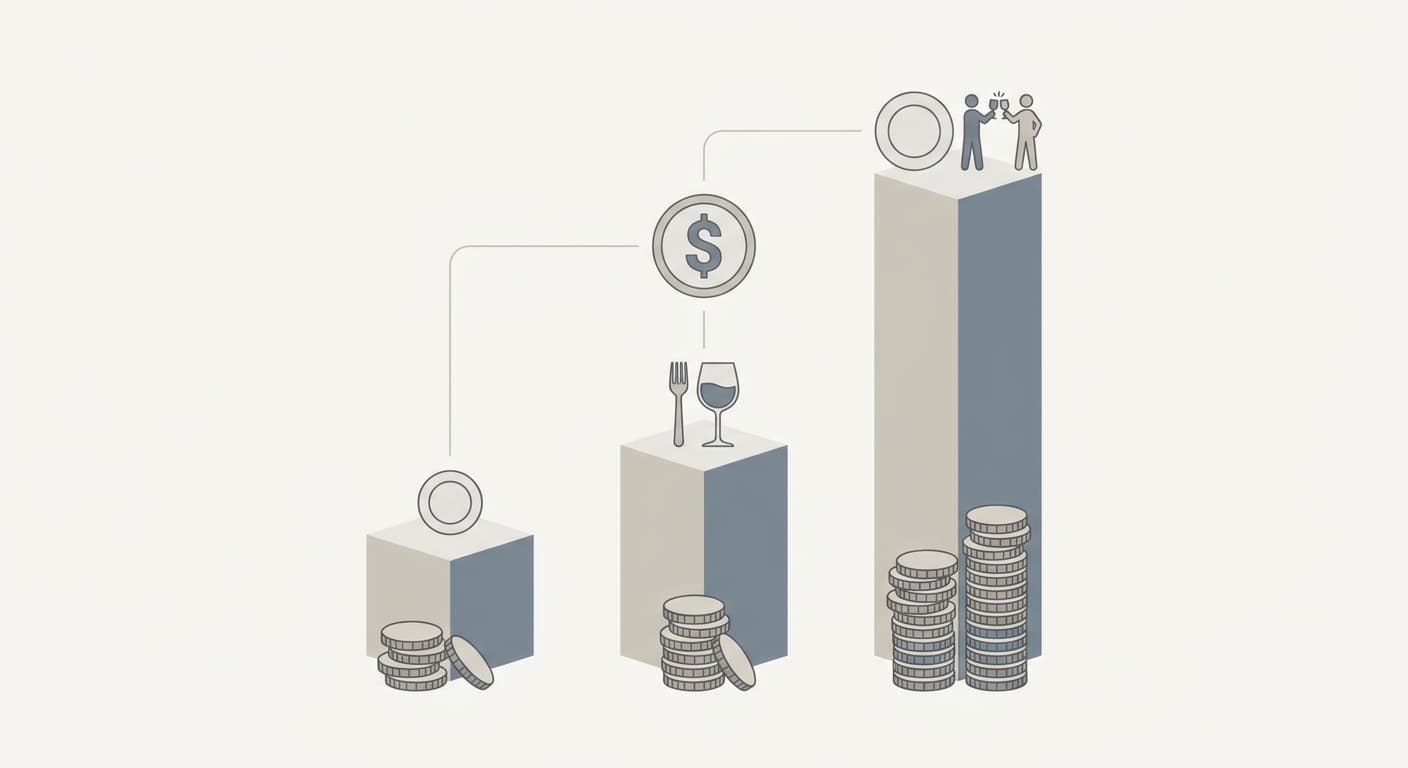
Average Rehearsal Dinner Cost in 2026 The average rehearsal dinner costs $2,700 in 2026, or roughly $55 to $150 per person for 30 to 50 guests. A small hometown dinner of 50 or fewer wedding guests averages about $1,630, while a destination rehearsal dinner averages $3,838. The single biggest cost driver is venue and service style, not the headline guest count. Use our free Rehearsal Dinner Calculator(/tools/rehearsal-dinner-calculator) to price your exact scenario by guest count, venue, and bar. The $2,700 average comes from The Knot's Real Weddings Study(https://www.theknot.com/content/average-cost-rehearsal-dinner), which surveyed 16,956 US couples married in 2024 — the freshest large-sample data available for 2026 planning. That single number hides a 3x spread, because a backyard taco bar for 25 and a plated four-course dinner at a country club for 50 are two completely different products. The most common budgeting mistake in rehearsal dinner planning is anchoring on the $2,700 average,...
How to Calculate Cost Per Wear for Fashion Purchases: 2026 Data & Averages
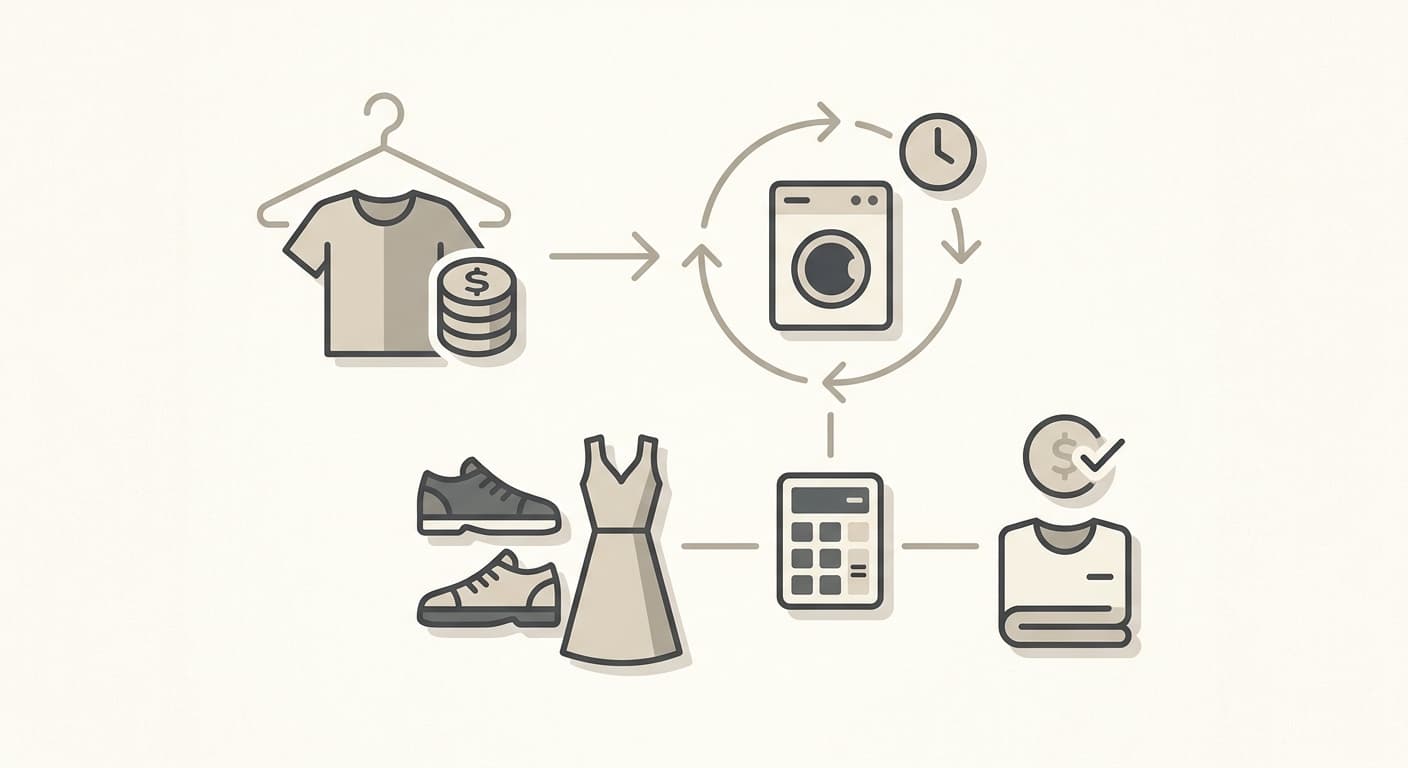
How to Calculate Cost Per Wear for Fashion Purchases: 2026 Data & Averages Cost per wear (CPW) is the purchase price divided by the total number of times you wear an item: an $80 pair of jeans worn 360 times costs just $0.47 per wear, while a $120 trendy dress worn 18 times costs $11.67 per wear. That single number turns "expensive" and "cheap" upside down, because the price tag tells you what you paid once and CPW tells you what each outfit actually costs. Run your own items through our Cost Per Wear Calculator(/tools/cost-per-wear-calculator) before your next purchase. A well-documented pattern in fashion economics is that shoppers reliably overpay for the things they wear least and underpay for the things they wear daily. The most common mistake is judging a $300 coat as "too much" while happily replacing $25 trend tops four times a season. The coat, worn 720...
Impulse Spending: How to Stop Wasting $5,400 a Year on Things You Don't Need
Impulse Spending: How to Stop Wasting $5,400 a Year on Things You Don't Need The average American spends $314 per month — or $5,400 per year — on impulse purchases they later regret. The top impulse categories are food and dining ($73/month), clothing ($57/month), and household items ($52/month). Research shows that more than half of U.S. shoppers have spent $100 or more on a single impulse buy, and 20% have crossed the $1,000 threshold at least once. Tracking every unplanned purchase for 30 days is a reliable way to see the real number. A typical result is a gut punch: $487 in impulse spending that's hard to justify. Three Amazon orders totaling $134 forgotten about by the time they arrive. Eleven coffee shop visits at an average of $6.18 each — $68 on lattes bought purely out of habit. Four fast food lunches at $12-$16 a pop when there were...
No-Buy Challenge Calculator: Complete Guide to Saving Thousands in 2026
No-Buy Challenge Calculator: Complete Guide to Saving Thousands in 2026 A no-buy challenge is a commitment to stop purchasing non-essential items for a set period, typically 30 days to a full year. The average American household spends over $18,000 annually on discretionary purchases including dining out, clothing, entertainment, and impulse buys. By eliminating or reducing these categories, participants routinely save $5,000 to $15,000 per year. A typical 3-month no-buy challenge shows how quickly the savings add up, even for someone skeptical it would stick. Cutting coffee shop visits ($135/month), dining out ($400/month), and impulse online shopping ($265/month) adds up fast. By the end of those 90 days, the total saved reaches $2,400 -- money that can go straight into an emergency fund. The hardest part is usually the first two weeks; after that, the urge to browse shopping apps out of boredom fades, replaced by more appreciation for what's already...
Car Payment Calculator: How to Calculate Monthly Auto Loan Payments
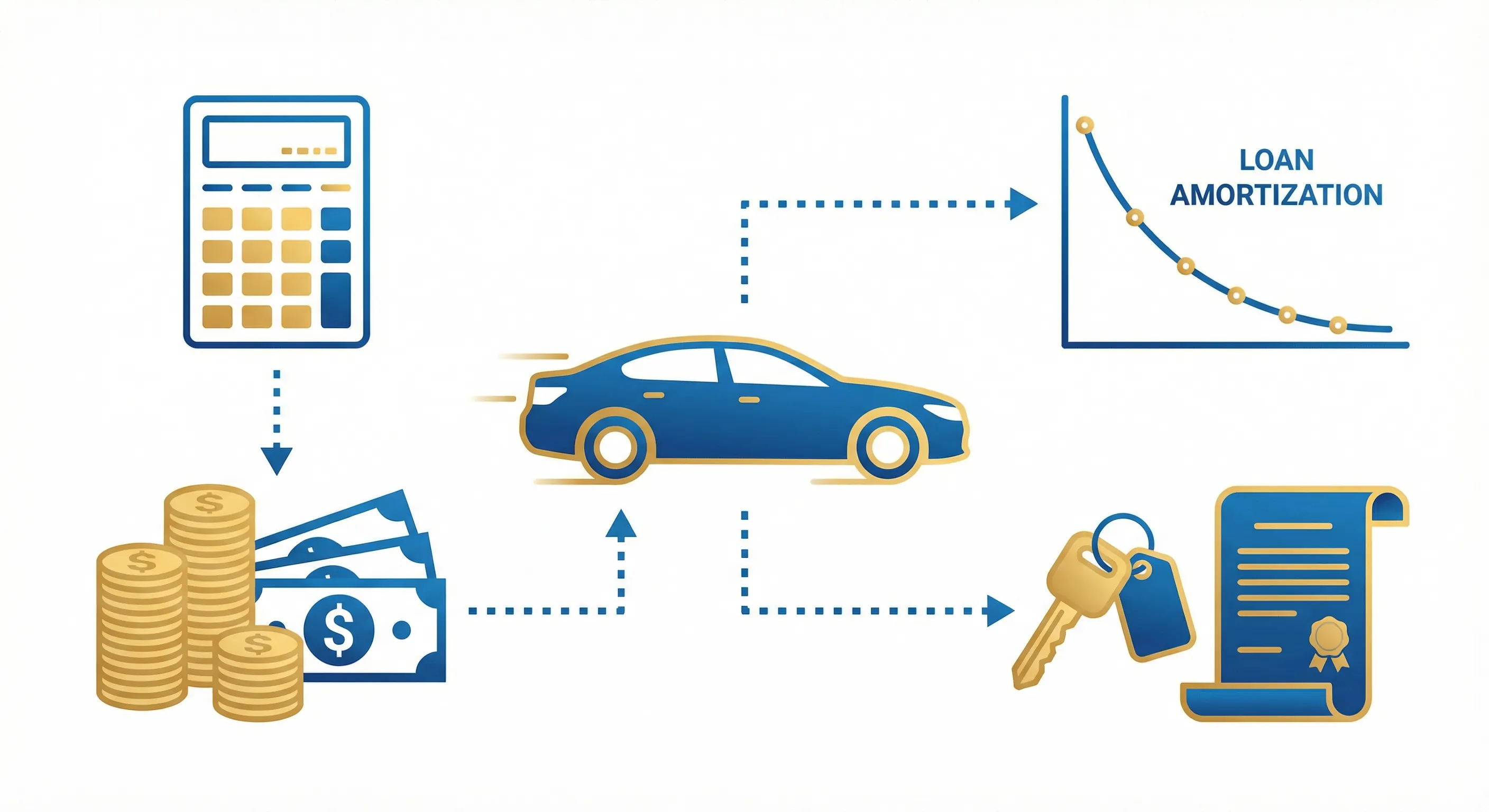
Car Payment Calculator: How to Calculate Monthly Auto Loan Payments Your monthly car payment depends on the loan amount, interest rate, and term length. A $30,000 car with $5,000 down, 6% APR, and a 60-month term has a payment of about $483/month. Changing any variable significantly affects your payment. Financing a $28,500 Mazda CX-5 with $6,000 down shows how much rate shopping matters: accepting the dealer's 7.2% APR offer puts the payment at $446/month, while getting pre-approved at a credit union for 5.4% and renegotiating drops it to $428/month, saving $1,080 over the 60-month term. A few hours of rate shopping can be some of the easiest money a buyer ever saves. Use our Car Payment Calculator(/auto/auto-loan-calculator) to see exactly what you'll pay for any vehicle. !Car payment formula breakdown showing $30K loan at 6.5% APR for 60 months with principal vs interest split over 5 years(/images/blog/car-payment-breakdown.svg) How to Calculate...
50/30/20 Budget Rule Calculator: How to Budget Your Paycheck
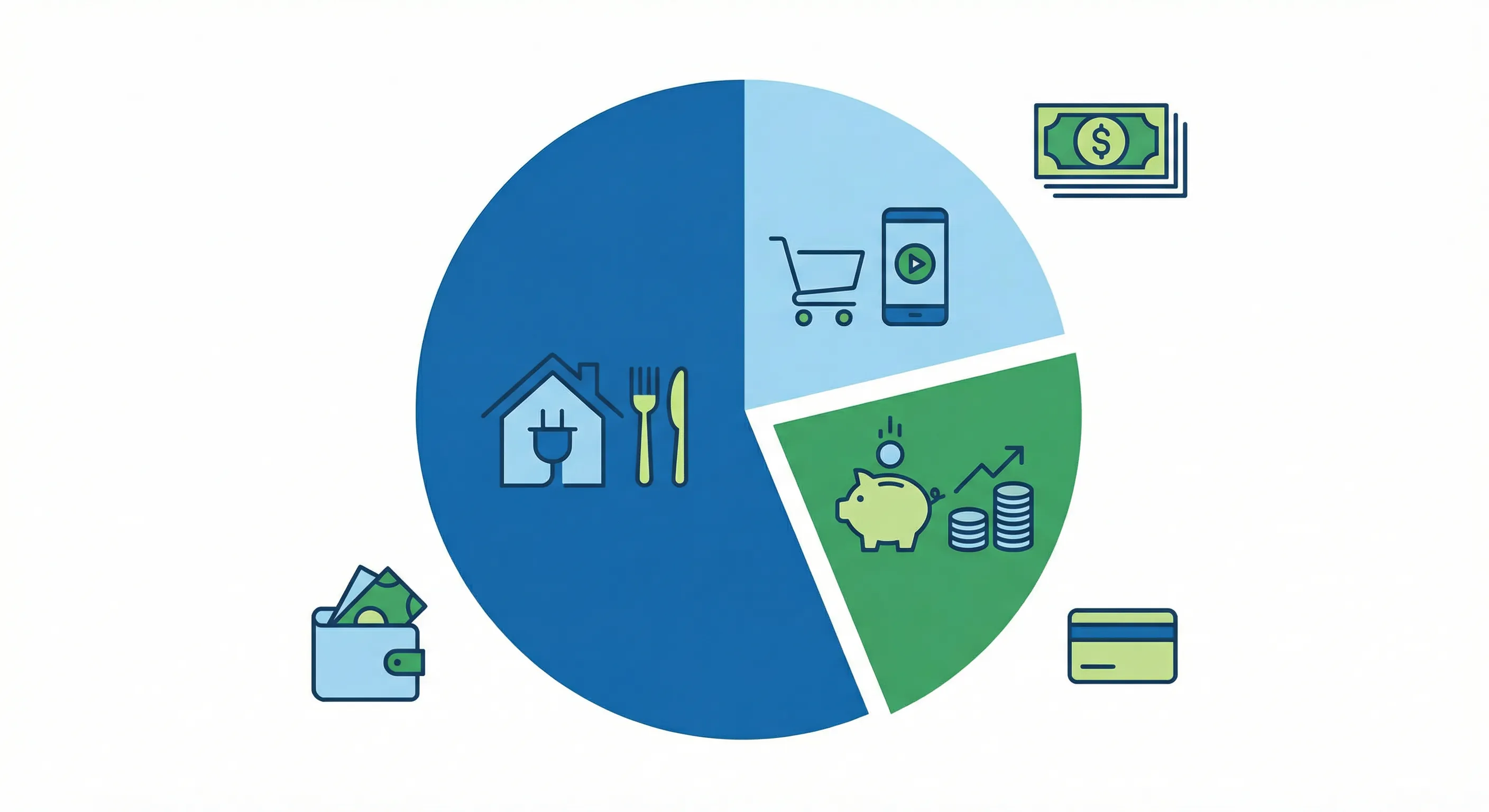
50/30/20 Budget Rule Calculator: How to Budget Your Paycheck The 50/30/20 budget rule divides your after-tax income into three categories: 50% for needs, 30% for wants, and 20% for savings and debt repayment. If your take-home pay is $4,000 per month, that means $2,000 for necessities, $1,200 for discretionary spending, and $800 for financial goals. Consider a typical case: tracking every dollar of a $4,200 monthly take-home paycheck for six months using this rule. Before adopting 50/30/20, monthly savings ran barely $150 with no real plan. Within the first year, sticking to the 20% savings target built a $5,400 emergency fund and paid off $3,800 in credit card debt. Use our Budget Calculator(/finance/budget-calculator) to instantly see your personalized 50/30/20 breakdown based on your income. !50/30/20 budget rule breakdown showing needs, wants, and savings allocation on $5,000 monthly income with category examples(/images/blog/50-30-20-budget-breakdown.svg) What Is the 50/30/20 Budget Rule? The 50/30/20 rule...
How to Set and Achieve Savings Goals: Complete Guide
How to Set and Achieve Savings Goals: Complete Guide A transmission failure is a common wake-up call. Repair cost: $3,800. A typical emergency fund for someone who hasn't prioritized one: $400 or less. Without savings, that gap often ends up on a credit card, paying 19% interest for two years while financial stress climbs. That is exactly the scenario a fully funded emergency fund prevents. Separate accounts for emergencies, vacations, home repairs, and kids' activities — each funding automatically every month — remove the stress of surprise expenses entirely. To achieve any savings goal, calculate your target amount, divide it by your timeline to determine the monthly savings needed, then automate contributions to a dedicated account. This simple formula works whether you're saving $1,000 for an emergency fund or $1 million for retirement. Use our Savings Goal Calculator(/finance/savings-goal-calculator) to create your personalized savings plan. Why Savings Goals Matter Goals without...