Real Estate Appreciation Calculator Pros and Cons: An Honest 2026 Review
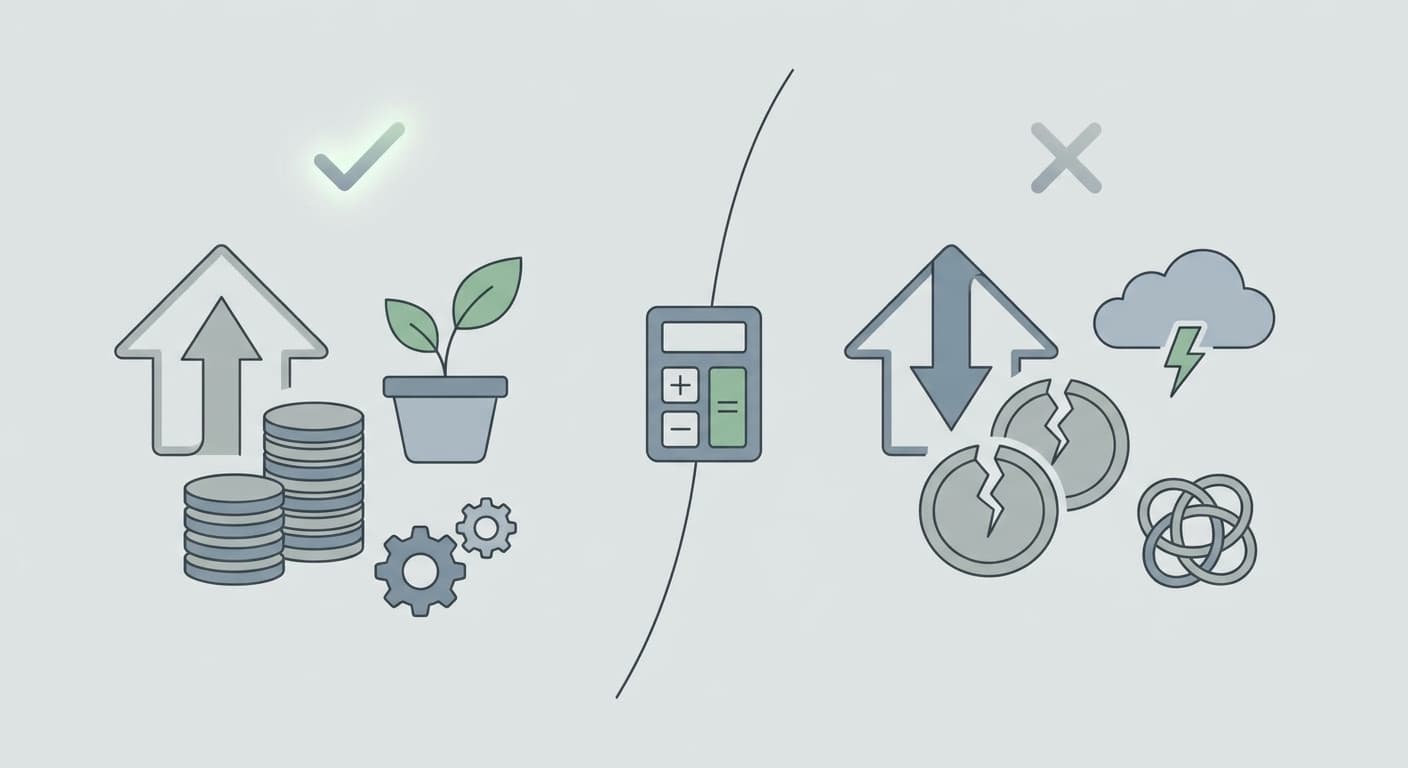
Real Estate Appreciation Calculator Pros and Cons: An Honest 2026 Review A real estate appreciation calculator is useful because it turns a vague "homes go up over time" into a hard number: $350,000 growing at the long-run national rate of about 3.8% per year reaches roughly $510,000 in 10 years. Its biggest weakness is that it projects a single smooth rate and ignores taxes, insurance, maintenance, and selling costs that can erase most of that paper gain. That trade-off, accuracy of the core formula versus blind spots around it, is the whole pros-and-cons story. You can run the projection yourself with our free Real Estate Appreciation Calculator(/finance/real-estate-appreciation-calculator) before reading another word. Here is the trap most owners fall into. An appreciation projection might tell you to expect roughly $90,000 in gains over six years, and the nominal number often lands close, say $94,000. What the projection never shows is the...
401(k) Contribution Guide: How Much Should You Contribute in 2025?
401(k) Contribution Guide: How Much Should You Contribute in 2025? The biggest financial mistake of my 20s? Contributing only 3% to my 401(k) — just enough to "get the match." I left years of additional tax savings and compound growth on the table because I wanted more money for, honestly, stuff I can't even remember buying. When I finally ran the numbers at 30, I realized that 3% versus 15% contribution meant the difference between retiring at 65 or working until 72. I've been maxing out ever since. You should contribute at least enough to your 401(k) to get your full employer match—typically 3-6% of your salary. Ideally, aim for 10-15% of your income, including the match. If you can max out at $23,500 (or $31,000 if 50+), you'll supercharge your retirement savings. Use our 401(k) Calculator(/finance/401k-calculator) to see how different contribution levels affect your retirement balance. Understanding 401(k) Basics...
Compound Interest Explained: How Your Money Grows Over Time
Compound Interest Explained: How Your Money Grows Over Time A classic early-start scenario shows why age 22 beats age 35. Someone who opens a Roth IRA at 22 and puts in $200/month might feel like they can barely afford it on top of rent, but it is worth doing anyway. Those $200 monthly contributions from ages 22-35 (just $31,200 total) can be worth over $180,000 at age 42. Money contributed after 35 barely catches up by comparison. That's compound interest: the earlier dollars do almost all the heavy lifting. Compound interest is interest earned on both your initial investment and the accumulated interest from previous periods—it's essentially "interest on interest." This creates exponential growth that can transform modest regular investments into substantial wealth over time. Use our Compound Interest Calculator(/finance/compound-interest-calculator) to see exactly how your money can grow. What Is Compound Interest? Compound interest differs from simple interest, which is...
Investment Basics for Beginners: How to Start Investing in 2025
Investment Basics for Beginners: How to Start Investing in 2025 It's common to spend years "learning about investing" before actually investing a dollar -- reading books, listening to podcasts, analyzing stocks — while the market goes up 47% and idle savings earn just 0.5%. The lesson: you don't need to understand everything to start. You need to start to understand anything. To start investing, open a brokerage account, deposit money, and buy diversified low-cost index funds—that's genuinely all most beginners need. You don't need to pick individual stocks or understand complex financial instruments. Use our Investment Calculator(/finance/investment-calculator) to see how even small investments grow over time. Why You Need to Invest Saving money in a bank account isn't enough. Here's why: Inflation Erodes Cash Inflation averages about 3% annually. A dollar today will be worth only $0.55 in 20 years. | Year | $10,000 Cash (2% savings) | $10,000 Invested...
Retirement Planning: Complete Guide to Building Your Financial Future
Retirement Planning: Complete Guide to Building Your Financial Future Retiring at 62 with enough money to travel, help with grandkids' college, and never stress about bills is possible. Still working at 70 because "retirement" was always "something to figure out later" is also common. The difference isn't income — people with similar salaries can land in either scenario. It's planning. Opening an IRA at 26 and maxing it out for 36 years puts someone in a fundamentally different position than starting "seriously saving" at 52. This guide is about building toward the first outcome, not the second. To plan for retirement, you need to determine how much money you'll need (typically 70-80% of pre-retirement income), calculate your current savings trajectory, and adjust contributions to close any gaps. Most financial experts recommend saving 10-15% of your income starting in your 20s, or more if you're starting later. Use our Retirement Calculator(/finance/retirement-calculator)...