How Dog Years Actually Work: The Science Behind Your Dog's Real Age
The "multiply by 7" rule for dog years is wrong, and veterinary science has known this for decades. A 1-year-old dog is not 7 in human terms — it's closer to 15, a sexually mature adolescent. After age 2, the aging rate diverges by size: a 10-year-old Chihuahua is roughly 56 in human years, while a 10-year-old Great Dane is 80. The gap exists because large dogs carry up to 28 times more IGF-1 growth hormone, which accelerates cellular aging and cancer risk.
At UseCalcPro, we built our dog age conversion around the size-adjusted formula that veterinary researchers now consider standard. But the deeper you go into the science, the more fascinating — and practically useful — it becomes. This guide covers what your dog's age number actually means at the cellular level, why your Great Dane is biologically "older" than your neighbor's Chihuahua at the same chronological age, and what the latest research says about slowing the aging process.
Check Your Dog's Age
Where the 7:1 Myth Came From
The 7:1 rule likely originated in the 1950s as a marketing simplification. The average human lifespan was about 70 years; the average dog lifespan was about 10. Divide one by the other, and you get 7. It was never based on biology.
The problem is obvious once you think about it: a 1-year-old dog can reproduce. A 7-year-old human cannot. A 2-year-old dog is a fully mature adult. A 14-year-old human is in middle school. The developmental timelines don't map linearly at any stage.
Veterinarians abandoned the 7:1 rule decades ago, but it persists in popular culture because it's simple. The actual science is more interesting.
The Epigenetic Clock: Reading Age From DNA
In 2020, researchers at UC San Diego published a landmark study in Cell Systems that measured aging at the molecular level. They analyzed DNA methylation patterns — chemical tags that accumulate on DNA over time — in 104 Labrador Retrievers (from puppies to 16-year-olds) and compared them to 320 humans (ages 1 to 103).
The result was a logarithmic formula that maps dog age to human age based on actual molecular aging:
Human age = 16 x ln(dog_age) + 31
This formula reveals something striking: dogs age extremely fast in their first year, then decelerate. An 8-week-old puppy is biologically equivalent to a 9-month-old human baby. A 1-year-old dog is about 31 human years. A 4-year-old dog is about 53. A 12-year-old senior Lab is about 70.
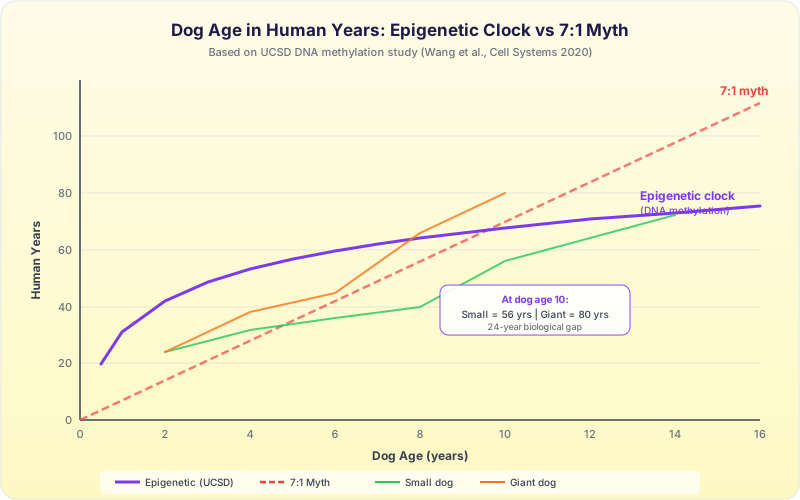
The logarithmic curve explains why puppies mature so explosively. In the first year of life, a dog compresses the equivalent of three human decades of developmental milestones: baby teeth, adult teeth, sexual maturity, full skeletal growth. Then the pace of change slows dramatically, following the same deceleration pattern seen in human DNA methylation.
Why this matters for your dog
The epigenetic clock reframes how we think about age-appropriate care. Under the old 7:1 rule, a 5-year-old dog was "35" — firmly middle-aged but nowhere near senior. The methylation data shows a 5-year-old Lab is closer to 57 in molecular terms. That's the age when humans start getting colonoscopies and cardiac screenings. Your 5-year-old dog may deserve a senior wellness panel sooner than the 7:1 rule suggests.
Limitation: The UCSD formula was calibrated on Labradors only. It doesn't account for breed size differences, which matter enormously.
Why Size Changes Everything
The epigenetic formula gives a universal curve, but in practice, breed size creates a second dimension of aging. This is where the science gets genuinely weird, because dogs violate a rule that holds across almost every other animal species.
The paradox: bigger should mean longer-lived
In nature, large animals generally live longer than small ones. Elephants outlive mice. Whales outlive dogs. Blue whales can live 90+ years. This pattern, called the rate-of-living theory, suggests that larger organisms have slower metabolisms and therefore age more slowly.
Dogs break this rule completely. Within the same species, large dogs die dramatically younger than small dogs:
| Size Category | Weight | Average Lifespan | Example Breeds |
|---|---|---|---|
| Toy | Under 10 lbs | 14-16 years | Chihuahua, Yorkie, Pomeranian |
| Small | 10-25 lbs | 12-15 years | Beagle, Dachshund, Shih Tzu |
| Medium | 25-50 lbs | 11-14 years | Cocker Spaniel, Bulldog, Border Collie |
| Large | 50-100 lbs | 9-12 years | Labrador, Golden Retriever, German Shepherd |
| Giant | Over 100 lbs | 6-10 years | Great Dane, Mastiff, Saint Bernard |
A 2024 study published in Scientific Reports involving 584,734 British dogs across 150+ breeds confirmed this pattern and added a new variable: brachycephalic (flat-faced) breeds like Bulldogs and Pugs have shorter lifespans than long-snouted breeds of similar size.
The lifespan difference between the smallest and largest dogs is staggering. A Chihuahua that lives to 16 has existed for more biological time (roughly 80 human years) than a Great Dane that dies at 8 (roughly 80 human years). They reach the same "human age" — but the Chihuahua gets twice as many calendar years to do it.
The IGF-1 explanation
The leading scientific explanation centers on Insulin-like Growth Factor 1, or IGF-1. Research published in Age journal found that large dogs have up to 28 times the circulating IGF-1 levels of small dogs.
IGF-1 drives cell growth. That's useful during puppyhood — it's how a Great Dane puppy can gain 100+ pounds in 18 months. But elevated IGF-1 throughout life has costs:
-
Accelerated cellular senescence. Every cell division shortens telomeres (protective DNA caps). Faster growth means faster telomere erosion. Large breeds have measurably shorter telomeres than small breeds at the same chronological age.
-
Higher oxidative damage. Rapid cell proliferation generates more reactive oxygen species, damaging DNA, proteins, and lipid membranes. Research shows oxidative DNA damage is higher in large-breed puppies from birth.
-
Increased cancer risk. IGF-1 promotes cell proliferation and inhibits apoptosis (programmed cell death). Large dogs develop cancer at roughly 50% higher rates than small dogs. Cancer is the leading cause of death in Golden Retrievers and Bernese Mountain Dogs.
-
Genetic trade-off. Small dogs carry a specific polymorphism in the IGF-1 gene that large dogs lack. This mutation appears to be the same genetic mechanism that confers longevity in small-bodied mice, worms, and flies — it's a conserved aging pathway across species.
One researcher summarized it memorably: large dogs burn through their biological lifespan on fast-forward, like playing a video at 2x speed. They compress the same physiological arc into fewer years.
The size-adjusted formula
Veterinary consensus now uses a three-phase model that accounts for size:
Phase 1 (Year 1): All dogs age to roughly 15 human years. Size doesn't matter yet — all puppies follow the same explosive developmental arc.
Phase 2 (Year 2): Add 9 years. All dogs are now about 24 human years — young adults.
Phase 3 (Year 3+): Divergence by size.
- Small dogs (under 20 lbs): +4 human years per dog year
- Medium dogs (20-50 lbs): +5 human years per dog year
- Large dogs (50-90 lbs): +6 human years per dog year
- Giant dogs (over 90 lbs): +7 human years per dog year
This means a 10-year-old medium dog: 24 + (8 x 5) = 64 human years. A 10-year-old giant dog: 24 + (8 x 7) = 80 human years. That's a 16-year biological gap between two dogs with the same birthday.
What Happens as Dogs Age: The Milestones
Understanding the milestones helps you provide age-appropriate care.
Puppy to adult (0-2 years)
In the first 24 months, dogs compress 24 human years of development. This includes:
- Deciduous (baby) teeth erupt and fall out (3-7 months)
- Sexual maturity (6-12 months, varies by size — large breeds later)
- Full skeletal growth (12-24 months — giant breeds may not finish until 24 months)
- Behavioral maturity lags behind physical maturity by 6-12 months
Adult prime (2-7 years for large; 2-10 for small)
The longest and healthiest phase. Energy is high, chronic disease is rare, cognitive function is peak. This is the "30s and 40s" of a dog's life.
Senior transition
When a dog enters "senior" status depends entirely on size:
| Size | Senior Threshold | Human Equivalent | Key Changes |
|---|---|---|---|
| Small | 10-12 years | ~56-64 years | Slowing metabolism, dental issues |
| Medium | 8-10 years | ~54-64 years | Joint stiffness, weight gain tendency |
| Large | 7-8 years | ~54-60 years | Arthritis onset, lumps/masses appear |
| Giant | 5-6 years | ~52-59 years | Mobility decline, cardiac concerns |
Cognitive decline
Canine Cognitive Dysfunction Syndrome (CCD) — the dog equivalent of Alzheimer's disease — is far more common than most owners realize. According to Cornell University's Riney Canine Health Center:
- 28% of dogs aged 11-12 show signs of cognitive dysfunction
- 68% of dogs aged 15-16 are affected
- Up to 35% of all dogs over 8 show some cognitive changes
Signs include disorientation in familiar spaces, staring at walls, forgetting house-training, reversed sleep-wake cycles, and decreased interaction with family members. Early intervention with diet enrichment, mental stimulation, and medication can slow progression — but only if owners recognize the signs.
The Frontier: Extending Dog Lifespans
Two breakthrough research programs are actively working to extend healthy dog lifespans. Both have produced real results.
LOY-001: The first FDA-recognized lifespan drug
San Francisco biotech company Loyal has developed LOY-001, an injectable drug that reduces IGF-1 levels in large and giant dogs. In November 2023, the FDA agreed that Loyal's data demonstrated a "reasonable expectation of effectiveness" for lifespan extension — the first time the FDA has ever made such a determination for a lifespan drug in any species.
LOY-001 targets dogs 7+ years old weighing at least 40 lbs. By reducing the IGF-1 that drives accelerated aging in large breeds, it aims to narrow the lifespan gap between large and small dogs. The company expects the drug to reach the veterinary market in 2026, at pricing in the "double digits per month."
In February 2026, Loyal received a second FDA milestone — RXE acceptance for a second drug targeting senior dogs of all sizes.
The Dog Aging Project: Rapamycin trials
The Dog Aging Project, a longitudinal study tracking 50,000+ companion dogs, is conducting clinical trials of rapamycin — an immunosuppressant that extends lifespan in mice by 9-14%. In January 2025, the project received a $7 million NIH grant to expand the trial from 170 dogs to 580 across 20+ veterinary sites.
Early results are promising. The project has also discovered that dogs and humans share biomarkers of mortality, meaning insights from canine aging research translate directly to human medicine. Your dog's participation in aging science could benefit both species.
The Oldest Dogs: What the Records Tell Us
The verified record for the longest-lived dog belongs to Bluey, an Australian Cattle Dog who lived 29 years and 5 months (1910-1939). In 2023, a Portuguese dog named Bobi was announced at 30+ years, but Guinness revoked the record in February 2024 after investigation found insufficient evidence of his birth date.
What's notable about the verified long-lived dogs:
-
Breed diversity matters. Australian Cattle Dogs, Beagles, and mixed breeds dominate the longevity lists. Working breeds with diverse gene pools tend to outlive purebreds with narrow genetic bottlenecks.
-
Rural, active lifestyles appear consistently. Bluey worked cattle until age 20. Many long-lived dogs had active outdoor lifestyles rather than sedentary indoor ones.
-
Healthy weight is the #1 modifiable factor. A landmark Purina study found that dogs kept at ideal body weight lived an average of 1.8 years longer than their overfed siblings. For a breed with a 10-year lifespan, that's an 18% extension — from calorie restriction alone.
-
Mixed breeds outlive purebreds. The 2024 UK study of 584,734 dogs confirmed this across the dataset. Genetic diversity provides resilience against breed-specific diseases.
Practical Implications: What to Do With Your Dog's Number
Your dog's "human age" isn't just a fun fact. It should change how you care for them.
Vet visit frequency
| Life Stage | Recommended Frequency | What to Screen |
|---|---|---|
| Puppy (0-1) | Monthly during vaccinations | Growth milestones, socialization |
| Adult (1 to senior threshold) | Annual wellness | Dental, weight, baseline bloodwork |
| Senior | Every 6 months | Bloodwork, urinalysis, cardiac, joint assessment |
| Geriatric | Every 4-6 months | Cognitive screening, pain assessment, cancer screening |
Diet adjustments by age
Senior dogs need fewer calories (metabolism slows 20-30%), more protein (to preserve muscle mass), joint-supporting nutrients (glucosamine, omega-3 fatty acids), and easier-to-digest food. The transition should happen at the senior threshold for your dog's size, not at an arbitrary age like 7.
Exercise modifications
A 10-year-old small dog (56 human years) and a 10-year-old large dog (66 human years) need different exercise approaches. The large dog may need low-impact activities (swimming, gentle walks) while the small dog might still enjoy moderate hiking. Adjust for biological age, not calendar age.
Mental stimulation
Given that 28% of dogs 11-12 develop cognitive dysfunction, proactive mental enrichment becomes critical in the senior years. Puzzle feeders, scent games, new walking routes, and continued training all build cognitive reserve that delays CCD onset.
Frequently Asked Questions
Why doesn't the epigenetic formula account for breed size?
The UCSD epigenetic clock was built from Labrador Retriever DNA only — a single medium-large breed. Labs were chosen because the large study population (104 dogs across all ages) was available from a single breeding program, which minimized genetic variation. The researchers explicitly noted that extending the formula to other breeds requires additional methylation studies. As of 2026, breed-specific epigenetic clocks are being developed through the Dog Aging Project, which has collected biological samples from 50,000+ dogs across hundreds of breeds. Until those results are published, the size-adjusted veterinary formula (15 + 9 + aging rate per year) remains the most practical multi-breed conversion.
Can a dog's biological age be younger than its chronological age?
Yes. Just as with humans, lifestyle factors create a gap between biological and chronological age. A well-exercised, lean, mentally stimulated 10-year-old dog can have methylation patterns closer to an 8-year-old's. Conversely, an obese, sedentary dog may be biologically 2-3 years older than its birthday suggests. The Purina lifespan study demonstrated this concretely: calorie-restricted dogs lived 1.8 years longer than ad-libitum-fed siblings, suggesting their biological aging was measurably slower. In humans, the equivalent gap between the biologically youngest and oldest individuals of the same chronological age can exceed 10 years.
What does LOY-001 mean for my large dog right now?
LOY-001 is expected to reach the veterinary market in 2026, pending final FDA manufacturing and safety approvals. If your large or giant-breed dog is 7+ years old and weighs at least 40 lbs, they may be a candidate when the drug becomes available. The drug works by lowering IGF-1 levels, the growth hormone present at 28x higher concentrations in large dogs. While you wait, the most evidence-backed interventions are maintaining healthy weight (adds ~1.8 years), regular exercise appropriate to size and age, dental care (periodontal disease correlates with systemic inflammation), and twice-yearly senior wellness exams to catch age-related conditions early.
How accurate is estimating a rescue dog's age from teeth?
Tooth-based age estimation is reliable within 1-2 years for dogs under 5, but accuracy drops significantly for older dogs. Puppies under 6 months can be aged precisely by which teeth have erupted. Dogs 1-3 show clean white adult teeth with minimal tartar. After age 3, individual variation in dental care, diet, and chewing habits creates wide error margins. A dog with excellent dental genetics and regular chews might have "3-year-old teeth" at age 7. A dog fed soft food exclusively might show heavy tartar at 4. Vets combine dental exam with lens cloudiness (lenticular sclerosis develops around 6-8), coat graying pattern, muscle tone, and joint flexibility for more accurate estimates. DNA methylation testing (commercially available through some veterinary labs) can now provide biological age estimates with much tighter confidence intervals.
Is canine cognitive dysfunction preventable?
Prevention isn't guaranteed, but risk reduction is significant and evidence-based. A 2024 study found that dogs with consistent lifelong mental enrichment (puzzle toys, training, social interaction, novel environments) developed CCD symptoms an average of 2.5 years later than understimulated dogs. Physical exercise increases brain-derived neurotrophic factor (BDNF), which supports new neural connections. Diets rich in omega-3 fatty acids (DHA and EPA), antioxidants (vitamin E, vitamin C), and medium-chain triglycerides (MCT oil, found in coconut oil) have shown measurable cognitive benefits in aging dogs in controlled trials. The prescription diet Hill's b/d and the supplement Senilife both have published evidence of cognitive improvement. Early intervention matters: starting enrichment and dietary support at the senior threshold for your dog's size provides the longest window of benefit.
Do spayed and neutered dogs live longer?
On average, yes. Spayed females live 26% longer than intact females, and neutered males live 14% longer than intact males, according to a University of Georgia analysis of 70,000+ dogs. Spaying eliminates uterine infection (pyometra, fatal in 15-20% of intact females) and dramatically reduces mammary cancer risk (spaying before the first heat reduces risk by 99.5%). Neutering reduces testicular cancer and decreases roaming behavior (which reduces trauma from cars and fights). However, timing matters: very early spaying/neutering (before 6-12 months) in large breeds has been linked to higher rates of joint disorders and certain cancers (hemangiosarcoma, lymphoma). Current veterinary guidance recommends waiting until growth plate closure for large breeds — typically 12-18 months — while small breeds can be safely altered earlier.
Related Resources
- Pet Calorie Calculator - Calculate proper feeding portions for your dog's age and size
- Cat Age Conversion - How cat aging compares to dogs
- Dog Pregnancy Timeline - Week-by-week gestation milestones
- What BMI Actually Measures - Another health metric that's more complex than people think
- Age Calculator - Calculate exact age in years, months, and days
This article is provided for informational and educational purposes only. Content should not be considered professional financial, medical, legal, or other advice. Always consult a qualified professional before making important decisions. UseCalcPro is not responsible for any actions taken based on the information in this article.