How Much Does Epoxy Flooring Cost in 2026? (Garage, Basement & Commercial)
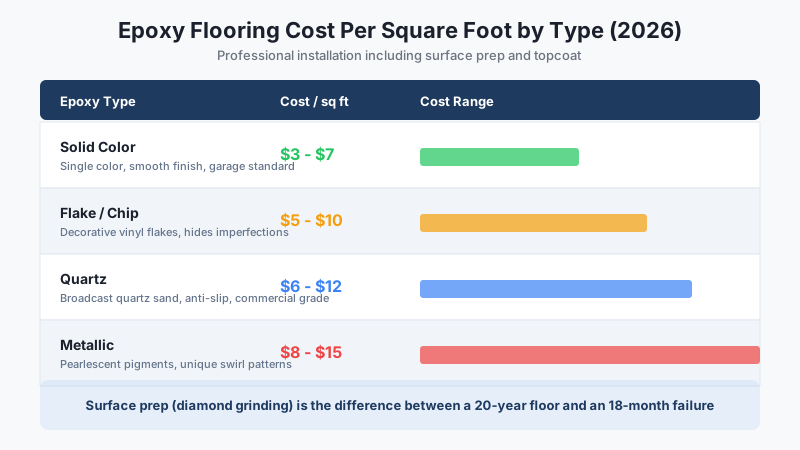
Epoxy flooring costs $4 to $12 per square foot installed in 2026, with the national average landing at $7-$10/sq ft for a standard two-coat system with flake broadcast. A 2-car garage (400-500 sq ft) runs $1,600-$5,800 depending on the coating type, surface condition, and your region. Materials alone cost $1-$5/sq ft, while labor adds $3-$5/sq ft. The total project cost depends heavily on the epoxy style you choose: solid color systems start at $3/sq ft, while metallic epoxy can reach $15/sq ft installed.
Consider a representative comparison: on a 480 sq ft 2-car garage in Doylestown, Pennsylvania, a franchise operation quoted $4,200, while an independent contractor completed the same job for $3,100 using a high-solids epoxy with vinyl flake broadcast -- same 20-year product warranty, but with two extra hours spent on diamond grinding that the franchise crew skipped. That prep work is the difference between a floor that peels in 18 months and one that outlasts the house. Surface preparation is where most epoxy jobs succeed or fail, and it is consistently the line item that separates good contractors from cheap ones.
Use our Epoxy Flooring Calculator to estimate the exact cost for your garage, basement, or commercial space based on square footage, coating type, and prep requirements.
Epoxy Flooring Cost at a Glance
The table below shows installed cost per square foot and typical total project cost for the most common epoxy flooring systems in 2026. These prices include surface preparation, primer coat, epoxy coat, and topcoat.
| Epoxy Type | Installed Cost/sq ft | Materials Only/sq ft | Best For |
|---|---|---|---|
| Solid color | $3 - $7 | $1 - $2.50 | Utility garages, storage areas |
| Flake / chip | $5 - $10 | $2 - $4 | Residential garages, showrooms |
| Metallic | $8 - $15 | $4 - $5 | High-end garages, retail, restaurants |
| Quartz | $6 - $12 | $2.50 - $4.50 | Commercial kitchens, labs, hospitals |
Tip
These prices include standard surface prep (diamond grinding), primer, epoxy coat, and polyurethane or polyaspartic topcoat. Moisture mitigation, crack repair, and extensive patching are additional costs. Always request an itemized quote that separates prep from coating.
Cost by Space
The total cost of an epoxy floor depends on the square footage, but larger spaces often get better per-square-foot pricing because setup and mobilization costs are spread across more area. Here is what to expect for the most common residential and commercial spaces in 2026.
1-Car Garage (200-250 sq ft): $800-$2,500
A single-car garage is the smallest common epoxy job. Many contractors have minimum project charges of $1,000-$1,500, which means you may not save proportionally by having a smaller space. A solid color system lands at the low end, while a full flake broadcast with polyaspartic topcoat pushes toward $2,500.
2-Car Garage (400-500 sq ft): $1,600-$5,800
This is the bread-and-butter residential epoxy job. Most homeowners choose flake or chip systems in this range, which typically cost $2,400-$4,000 installed. A basic solid color coating on a clean slab with no cracks can come in under $2,000. Metallic finishes on the same garage push past $5,000.
3-Car Garage (600-800 sq ft): $2,400-$8,000
Larger garages benefit from better per-square-foot pricing. A 700 sq ft 3-car garage with flake epoxy typically runs $3,500-$5,600. At this scale, the cost difference between a professional job and a DIY attempt becomes more significant -- a failed DIY coating on 700 sq ft means $1,500+ in grinding and recoating to fix.
Basement (600-1,000 sq ft): $2,400-$10,000
Basements introduce a variable that garages rarely deal with: moisture. Concrete slabs below grade often have moisture vapor transmission rates that exceed the tolerance of standard epoxy systems. If your slab fails a calcium chloride moisture test (above 3 lbs per 1,000 sq ft per 24 hours), you will need a moisture mitigation system at $0.50-$1.50/sq ft before any epoxy goes down. That adds $300-$1,500 to the project. Basements also tend to have more cracks and patches from old partition walls, which increase prep time and cost.
Commercial / Industrial (1,000-5,000+ sq ft): $4,000-$50,000+
Commercial epoxy floors use thicker coatings (often 20+ mils versus 10-12 mils residential) and higher-performance resins. Quartz broadcast systems for commercial kitchens run $8-$12/sq ft. Industrial warehouse floors with chemical resistance requirements can reach $15-$20/sq ft. The upside is scale pricing -- a 5,000 sq ft warehouse floor might cost $6/sq ft installed versus $8/sq ft for a 500 sq ft garage.
Cost by Epoxy Type
Not all epoxy coatings are created equal. The type you choose affects appearance, durability, and cost. Here is a detailed breakdown of the four most common systems.
Solid Color Epoxy ($3-$7/sq ft installed)
Solid color epoxy is a single-pigment coating applied in one or two coats over a primed surface. It creates a uniform, glossy finish that is easy to clean and resistant to oil, chemicals, and tire marks. This is the most affordable professional option and a good choice for utility garages, workshops, and storage areas where appearance is secondary to function.
A typical solid color system includes diamond grinding, a primer coat, one or two coats of pigmented epoxy, and a clear topcoat. Total dry film thickness is 8-12 mils. The coating cures to foot traffic in 24 hours and full vehicle traffic in 72 hours.
Flake / Chip Epoxy ($5-$10/sq ft installed)
Flake epoxy is the most popular residential garage coating. A base coat of pigmented epoxy is applied, then vinyl color flakes are broadcast into the wet coating. The flakes are available in dozens of color blends and create a textured surface that hides imperfections and provides excellent slip resistance. After curing, the surface is scraped to remove loose flakes and sealed with a polyurethane or polyaspartic topcoat.
The flake broadcast step adds $1-$2/sq ft in material cost and requires skill to achieve even coverage. Full broadcast (100% coverage, no base color showing through) costs more than partial broadcast (70-80% coverage). Most homeowners choose full broadcast for its showroom appearance.
Metallic Epoxy ($8-$15/sq ft installed)
Metallic epoxy uses metallic pigments suspended in a clear epoxy base to create three-dimensional, swirling patterns that resemble marble or flowing lava. Each floor is unique because the metallic pigments shift and settle differently based on application technique, temperature, and humidity.
This is the premium residential option. The material cost is higher ($4-$5/sq ft), and installation requires significant skill. The installer manipulates the wet coating with rollers, brushes, and solvents to create the desired pattern. A botched metallic floor is obvious and expensive to fix -- the entire coating must be ground off and reapplied. This is not a DIY project under any circumstances.
Quartz Epoxy ($6-$12/sq ft installed)
Quartz epoxy uses colored quartz granules broadcast into the wet coating, similar to the flake system but with a harder, more durable aggregate. The result is a textured, slip-resistant surface with excellent chemical and abrasion resistance. Quartz systems are the standard for commercial kitchens, veterinary clinics, laboratories, and manufacturing facilities where sanitation and durability matter more than aesthetics.
Quartz coatings are typically thicker than flake systems (15-20+ mils) and can handle heavier traffic, forklift wheels, and frequent chemical cleaning. The higher material and labor cost reflects the performance difference.
Surface Preparation -- the Hidden Cost Most People Miss
Surface preparation is the most important step in any epoxy floor installation, and it is the step most DIYers and budget contractors cut corners on. Proper prep accounts for 30-50% of the total project cost and determines whether your floor lasts 3 years or 20 years.
Diamond Grinding ($1-$3/sq ft)
The industry standard for residential epoxy prep is diamond grinding with a planetary grinder. This machine uses rotating diamond-embedded discs to remove the top layer of concrete, open the pores, and create a surface profile (CSP 2-3) that allows the epoxy to mechanically bond. A 500 sq ft garage takes 2-4 hours to grind properly.
Diamond grinding costs $1-$3/sq ft depending on the concrete condition. Soft, clean concrete on the low end. Hard, previously sealed concrete with old paint or coatings on the high end.
Shot Blasting ($2-$4/sq ft)
Shot blasting propels steel shot at high velocity against the concrete surface. It is faster than grinding on large areas and produces an aggressive profile (CSP 4-5) suitable for thicker commercial coatings. Shot blasting is the standard for commercial and industrial epoxy floors over 1,000 sq ft.
Crack and Joint Repair ($0.50-$2/sq ft)
Most garage floors have cracks. Hairline cracks under 1/8 inch can be filled during the epoxy application. Cracks wider than 1/4 inch need to be routed and filled with flexible polyurea or epoxy filler before coating. Control joints are typically left as-is or filled with a flexible joint filler. Extensive crack repair on a badly deteriorated slab can add $250-$1,000 to a residential project.
Moisture Barrier ($0.50-$1.50/sq ft)
If your concrete slab has moisture vapor transmission issues -- common in basements, slabs without vapor barriers, and older construction -- a moisture mitigation primer is required before the epoxy coat. Products like Vapor-Tek 440 or Ardex MC Rapid cost $0.50-$1.50/sq ft installed. Skipping this step on a wet slab guarantees coating failure within 6-18 months.
Warning
A $0.99 hardware store moisture test is not sufficient. Professional installers use a calcium chloride test (ASTM F1869) or relative humidity probe test (ASTM F2170) to measure actual moisture vapor emission rates. If your slab tests above 3 lbs/1,000 sq ft/24 hours on the calcium chloride test, moisture mitigation is mandatory.
Labor Cost Breakdown
Understanding where your money goes helps you evaluate contractor quotes and avoid being overcharged. Here is how labor and materials typically break down on a standard flake epoxy garage floor.
| Cost Component | Per sq ft | % of Total | 500 sq ft Garage |
|---|---|---|---|
| Surface prep (grinding) | $1.50 - $2.50 | 20-25% | $750 - $1,250 |
| Crack / joint repair | $0.50 - $1.00 | 5-10% | $250 - $500 |
| Epoxy materials | $2.00 - $4.00 | 25-35% | $1,000 - $2,000 |
| Application labor | $1.50 - $2.50 | 20-25% | $750 - $1,250 |
| Topcoat | $0.75 - $1.50 | 10-15% | $375 - $750 |
| Mobilization / setup | $0.50 - $1.00 | 5-10% | $250 - $500 |
| Total | $6.75 - $12.50 | 100% | $3,375 - $6,250 |
Most residential epoxy jobs take 1-2 days. Day one is prep (grinding, crack repair, cleaning). Day two is coating (primer, epoxy, flake broadcast, topcoat). Some polyaspartic systems can be completed in a single day because they cure in 4-6 hours instead of 24.
Regional Cost Variation
Epoxy flooring costs vary by 20-40% depending on where you live. Here are the primary regional factors.
| Region | Cost Multiplier | Typical Range/sq ft | Key Factor |
|---|---|---|---|
| Northeast (NY, NJ, CT, MA) | 1.2x - 1.4x | $6 - $14 | High labor rates, licensing requirements |
| Southeast (FL, GA, NC, SC) | 0.9x - 1.0x | $4 - $10 | Lower labor costs, year-round installation |
| Midwest (OH, MI, IL, IN) | 0.9x - 1.1x | $4 - $11 | Moderate labor, seasonal demand |
| Southwest (TX, AZ, NV) | 1.0x - 1.2x | $5 - $12 | Hot climate affects cure times, strong demand |
| West Coast (CA, WA, OR) | 1.2x - 1.5x | $6 - $15 | Highest labor rates, environmental regulations |
Climate also affects installation. Epoxy requires temperatures between 50-90 degrees Fahrenheit and humidity below 85% during application and cure. In northern states, garage floors can only be coated from spring through fall. In the South and Southwest, installers work year-round but must manage high ambient temperatures that accelerate pot life and reduce working time.
DIY vs Professional
DIY epoxy kits are widely available at home improvement stores for $1.50-$2.50 per square foot ($120-$200 for a 1-car garage kit, $200-$400 for a 2-car garage kit). The cost savings are obvious. The results are not.
| Factor | DIY Kit | Professional |
|---|---|---|
| Cost (500 sq ft) | $750 - $1,250 | $2,500 - $5,800 |
| Surface prep | Acid etch (weak bond) | Diamond grinding (mechanical bond) |
| Coating thickness | 3-5 mils | 10-20 mils |
| Product quality | Water-based, low solids | 100% solids or high-solids epoxy |
| Topcoat | Often none or thin acrylic | Polyurethane or polyaspartic |
| Lifespan | 2-5 years typical | 10-20 years |
| Hot tire pickup resistance | Poor | Excellent |
| Failure rate | 40-60% (peeling, flaking) | Under 5% with proper prep |
| Warranty | Product only (no labor) | 5-15 year system warranty |
The failure rate statistic is the one that matters most. Industry estimates from contractors and coating manufacturers consistently cite 40-60% failure rates for DIY epoxy garage kits. The primary cause is inadequate surface preparation -- acid etching does not create a sufficient mechanical bond on most concrete surfaces. When a DIY coating fails, the homeowner pays $1,500-$3,000 to have the failed coating professionally removed and the floor recoated. That total exceeds the cost of doing it professionally in the first place.
Tip
If you are set on DIY, skip the big-box kits. Order commercial-grade 100% solids epoxy online and rent a concrete grinder ($200-$300/day). Your material cost will be $2-$4/sq ft instead of $1.50-$2.50, but the product performance is dramatically better. The grinding alone triples the bond strength versus acid etching.
Factors That Affect Cost
Beyond the epoxy type and square footage, several factors can push your project cost up or down.
Concrete condition. A clean, crack-free slab in good condition is the cheapest to coat. Old paint, sealers, oil stains, extensive cracking, spalling, or moisture issues all add prep time and cost. A heavily deteriorated slab can add $2-$4/sq ft in repair work before any epoxy is applied.
Number of coats. A single-coat system (primer + epoxy) is cheaper than a two-coat system (primer + epoxy + topcoat). However, single-coat systems have shorter lifespans and less chemical resistance. Most professionals recommend a minimum of primer, epoxy, and topcoat -- three total layers.
Topcoat type. Standard polyurethane topcoats cost less than polyaspartic topcoats. Polyaspartic coatings cure faster (4-6 hours versus 24-72 hours), have better UV resistance, and are harder and more abrasion-resistant. They add $0.50-$1.50/sq ft to the project cost but allow same-day return to service.
Access and logistics. A garage with clear access is straightforward. A basement with narrow stairs, tight doorways, and limited ventilation costs more because equipment setup takes longer and the installer may need to use lower-odor products. Moving stored items adds labor time.
Decorative elements. Custom logos, multiple metallic colors, scored borders, or stenciled designs are labor-intensive additions that can add $500-$2,000+ to a residential project.
Geographic location. As shown in the regional table above, labor rates vary significantly. A floor that costs $3,500 in suburban Atlanta might cost $5,500 in the New York metro area for identical materials and scope.
Frequently Asked Questions
How long does epoxy flooring last?
Professional epoxy flooring lasts 10-20 years with proper surface preparation and quality materials. The single biggest factor in longevity is the surface prep -- diamond-ground concrete with a proper profile (CSP 2-3) creates a mechanical bond that holds up to decades of traffic, chemicals, and thermal cycling. Floors that are only acid-etched typically fail within 2-5 years because the bond is chemical rather than mechanical, and it degrades over time. Coating thickness also matters significantly. A 3-5 mil DIY kit wears through much faster than a 12-20 mil professional system. High-traffic commercial floors may need recoating or topcoat refreshing every 5-7 years, but residential garage floors with moderate use routinely last 15 years or more before showing significant wear.
Is epoxy flooring worth the cost compared to other garage floor options?
Epoxy flooring offers the best balance of durability, appearance, and cost for garage and basement floors. Compared to alternatives like interlocking tiles ($3-$8/sq ft), polished concrete ($3-$12/sq ft), or vinyl roll-out mats ($1-$3/sq ft), epoxy provides a seamless, chemical-resistant surface that is easy to clean and available in a wide range of colors and finishes. Interlocking tiles trap moisture and dirt underneath and can shift under vehicle traffic. Roll-out mats are the cheapest option but offer no chemical resistance and need replacement every 3-5 years. Polished concrete is durable but does not resist oil and chemical stains the way epoxy does. When you factor in the 10-20 year lifespan of professional epoxy, the annualized cost is $0.30-$0.50 per square foot per year -- less expensive than almost any alternative over the long term.
Can I apply epoxy over old paint or a previously coated floor?
You can apply epoxy over an existing coating only if the old coating is well-bonded and compatible with the new system. The existing surface must be diamond-ground to create a profile and remove any loose material. Coatings that are peeling, flaking, or delaminating must be completely removed before new epoxy is applied. Previously sealed concrete is particularly problematic because sealers create a barrier that prevents epoxy adhesion. Your contractor should perform an adhesion test -- applying a small patch of epoxy and attempting to peel it after 24 hours. If the old coating comes up with the test patch, full removal is necessary. Removing an old coating adds $1-$3/sq ft to the project. Coating over an incompatible or poorly bonded surface is the second most common cause of epoxy failure after inadequate surface prep.
How long does epoxy flooring take to cure?
Epoxy flooring cures to light foot traffic in 24 hours and full vehicle traffic in 72 hours under standard conditions (65-80 degrees Fahrenheit, below 60% humidity). Fast-cure polyaspartic topcoats can reduce the foot traffic time to 4-6 hours and vehicle traffic to 24 hours. Temperature significantly affects cure time -- below 60 degrees, cure times can double or triple. Above 90 degrees, the epoxy may cure too quickly, causing roller marks and uneven coverage. Humidity above 85% can cause amine blush on the surface, a waxy film that weakens the coating and must be removed before additional coats. Most professional installers recommend a minimum of 48-72 hours before placing heavy objects or parking vehicles on a new floor, regardless of what the product data sheet says about early cure times.
What is the difference between epoxy and polyaspartic coatings?
Epoxy and polyaspartic are different chemistries with distinct performance characteristics. Epoxy is a two-part system (resin + hardener) that cures through a chemical reaction over 24-72 hours. It provides excellent adhesion, chemical resistance, and build thickness. Polyaspartic is a type of polyurea that cures in 2-6 hours and offers superior UV resistance, abrasion resistance, and flexibility. Most modern garage floor systems combine both: epoxy as the base coat for adhesion and build, topped with polyaspartic for durability and UV stability. Pure epoxy topcoats can yellow and chalk when exposed to direct sunlight, which is why garages with south-facing doors or significant sun exposure should always use a polyaspartic or aliphatic polyurethane topcoat. Polyaspartic-only systems exist but cost 20-30% more than epoxy-polyaspartic combinations and are primarily used in commercial applications where same-day return to service is critical.
Should I get multiple quotes, and what should I look for?
Always get at least three quotes from different contractors, and pay close attention to what each quote includes. A legitimate epoxy flooring quote should itemize surface preparation method (diamond grinding, not acid etch), number of coats, product names and manufacturers, dry film thickness in mils, topcoat type, cure time before vehicle traffic, and warranty terms. Be wary of quotes that simply say "epoxy coating" without specifying the product system. Ask each contractor whether they perform a moisture test before coating -- any contractor who skips moisture testing on a below-grade slab is cutting a critical corner. Price-per-square-foot alone is not a reliable comparison because a $4/sq ft quote with acid etching and a thin water-based coating is not comparable to a $7/sq ft quote with diamond grinding and 100% solids epoxy. The cheapest quote is almost never the best value in epoxy flooring.
Pricing data sourced from Angi, HomeGuide, HomeWyse, HomeAdvisor, CRO Coatings, and Epoxy Custom Flooring contractor surveys. All costs reflect 2026 national averages and may vary by region, project scope, and contractor. Last updated March 2026.
This article is provided for informational and educational purposes only. Content should not be considered professional financial, medical, legal, or other advice. Always consult a qualified professional before making important decisions. UseCalcPro is not responsible for any actions taken based on the information in this article.
Try These Calculators
Estimate epoxy resin, primer, color flakes, and topcoat for garage or basement floors. Get gallons needed and total cost by epoxy type and floor area.
Estimate new home construction costs by square footage, quality level, and region. Get detailed material and labor cost breakdowns for building your house.
Estimate 2026 deep house cleaning cost by home size, condition, and bathrooms. A first-time deep clean runs $200-$600, about $0.20-$0.40 per square foot.
Estimate 2026 pressure washing service costs by surface, square footage, and method. Driveways run $100 to $350, siding $250 to $600, roof soft-wash $500+.
Estimate 2026 lead paint removal cost by method, surface, and area. Encapsulation runs $3–$8/sqft; full abatement $9–$16/sqft. Get certified contractor quotes.