How Much Does Interior Painting Cost in 2026? (Per Room & Per Sq Ft)

Interior painting costs $3.75 per square foot for walls only and $6.75 per square foot for walls, trim, and ceilings in 2026. A whole-house repaint for a typical 2,000 sq ft home runs $4,200-$11,500 depending on scope, paint quality, and your regional labor market. Labor accounts for 70-80% of every professional painting quote, which means the painter you hire matters far more than the paint you pick.
Consider a representative case: a full interior repaint on a 1960s colonial in suburban Philadelphia -- 2,400 square feet of living space, 9-foot ceilings on the first floor, 8-foot on the second. The painter's quote came in at $7,800 for walls, trim, and ceilings throughout. Paint alone was $1,100 (22 gallons of Sherwin-Williams Duration at $52/gallon). The remaining $6,700 was pure labor, and $1,400 of that went to wall prep alone because plaster walls in old houses crack like they have opinions. That is exactly where the money goes on a project like this -- and it is not at the paint counter.
Use our Paint Calculator to estimate material quantities and cost for your specific rooms before you call a single painter.
Interior Painting Cost at a Glance
The table below shows what homeowners typically pay to have individual rooms professionally painted in 2026. These ranges include labor, paint, and basic prep (light sanding, patching small nail holes). Heavy prep, accent walls, or premium paint push costs toward the high end.
| Room Type | Size (sq ft floor) | Wall Area (approx.) | Cost Range |
|---|---|---|---|
| Bedroom (standard) | 120-150 | 350-450 sq ft | $300 - $800 |
| Living room | 200-350 | 500-800 sq ft | $400 - $1,000 |
| Bathroom | 40-70 | 150-250 sq ft | $250 - $600 |
| Kitchen | 100-200 | 300-500 sq ft | $350 - $900 |
| Hallway | varies | 200-400 sq ft | $250 - $650 |
| Whole house (2,000 sq ft) | 2,000 | 4,500-6,000 sq ft | $4,200 - $11,500 |
Tip
Wall area is not the same as floor area. A 12x14 bedroom with 8-foot ceilings has only 168 sq ft of floor space but roughly 416 sq ft of wall area. Painters price by wall area, not floor area -- so always clarify which measurement a quote is based on.
Cost Per Square Foot Breakdown
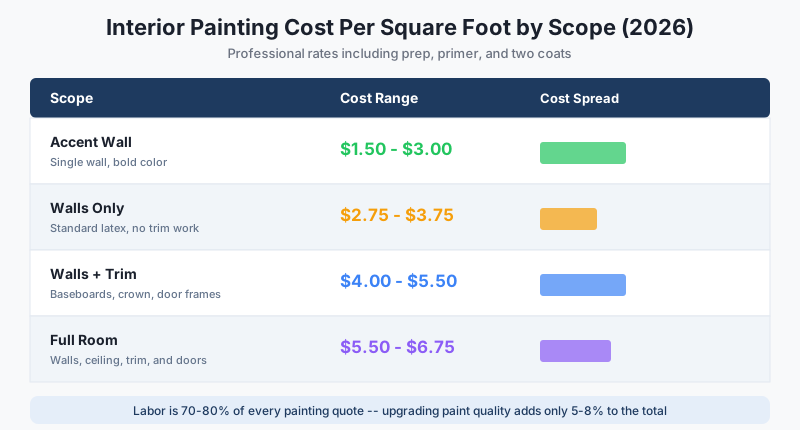
Not every painting project includes trim and ceilings. Some homeowners just want fresh walls. Others want the full treatment. The per-square-foot cost changes dramatically depending on scope.
| Scope | Cost Per Sq Ft (wall area) | What Is Included |
|---|---|---|
| Walls only | $2.75 - $3.75 | Two coats on walls, basic prep, edge cutting |
| Walls + trim | $4.00 - $5.50 | Walls plus baseboards, door frames, window casings |
| Walls + trim + ceilings | $5.50 - $6.75 | Full room treatment including ceiling coat |
| Accent wall only | $1.50 - $3.00 | Single wall, often darker color requiring extra coats |
Two coats are standard for any professional job. A single coat saves 30-40% on labor but leaves an uneven, see-through finish that looks cheap within months. If you are changing from a dark color to a light one, expect to need a separate primer coat, which adds $0.50-$1.00 per square foot.
Paint Quality and Its Impact on Cost
Paint is the cheapest part of any professional painting job, but the tier you choose still affects the total by $200-$600 for a typical house.
| Paint Tier | Price Per Gallon | Coverage (1 coat) | Durability | Best For |
|---|---|---|---|---|
| Budget (e.g., Valspar Reserve, Glidden Premium) | $25 - $35 | 350-400 sq ft | 3-5 years | Rental properties, quick refreshes |
| Mid-range (e.g., Benjamin Moore Regal, SW SuperPaint) | $35 - $55 | 350-400 sq ft | 7-10 years | Most homeowner projects |
| Premium (e.g., SW Duration, BM Aura) | $55 - $80+ | 350-400 sq ft | 10-15 years | High-traffic areas, long-term homes |
The coverage rate per gallon is roughly the same across tiers -- about 350-400 square feet per coat on smooth walls. The difference is in durability, washability, and color retention. Premium paints resist scuffing and wipe clean without burnishing, which matters in hallways, kids' rooms, and kitchens.
Info
Paint cost is 20-30% of a DIY project but only 10-15% of a professional job. When you hire a painter, labor dominates the bill so heavily that upgrading from budget to premium paint adds only 5-8% to your total. That is the best $200-$400 you can spend on a whole-house project.
Labor Cost Breakdown
Labor is 70-80% of every professional interior painting quote. Here is where that money goes:
| Task | Cost Range | Time (per room) | Notes |
|---|---|---|---|
| Wall prep (patch, sand, caulk) | $0.50 - $0.75/sq ft | 1-3 hours | More for older homes with plaster cracks, nail pops |
| Priming | $0.50 - $1.00/sq ft | 1-2 hours | Required for color changes, new drywall, stain blocking |
| Painting (2 coats) | $1.50 - $2.50/sq ft | 2-4 hours | Cut-in edges by hand, roll field areas |
| Trim painting | $1.00 - $3.00/linear ft | 30-60 min per room | Baseboards, door frames, window casings, crown molding |
| Ceiling painting | $1.00 - $2.00/sq ft | 1-2 hours | Flat white ceiling paint standard |
| Masking and protection | included | 30-60 min per room | Floor coverings, tape, plastic sheeting |
| Cleanup | included | 30-60 min per room | Remove tape, touch-ups, furniture return |
Professional painters earn $25-$50 per hour depending on experience and market. A two-person crew can complete a standard bedroom in 4-6 hours and a living room in 6-10 hours. Most painters quote by the job rather than by the hour, which protects you from slow workers but means you need to compare quotes carefully.
Warning
Watch out for quotes that skip prep. A painter who quotes 30-40% below competitors is almost certainly cutting corners on prep work. Poor prep means peeling paint within a year. Always ask what prep is included in the quote and whether wall repair costs extra.
Regional Cost Variation
Where you live has a major impact on painting costs. Labor rates vary by 30-40% between the cheapest and most expensive markets in the country.
| Region | Cost Per Sq Ft (walls + trim) | vs. National Average | Key Factors |
|---|---|---|---|
| Northeast | $5.00 - $8.50 | +15% to +25% | High labor costs, NYC and Boston especially expensive |
| South | $3.50 - $5.50 | -10% to -15% | Lower labor costs, competitive contractor market |
| Midwest | $4.00 - $6.50 | -5% to +5% | Moderate labor, varies by metro area |
| West Coast | $5.50 - $9.00 | +15% to +30% | SF, LA, and Seattle drive up averages significantly |
| Mountain West | $4.00 - $6.75 | +0% to +10% | Moderate labor, some markets trending higher |
A whole-house interior repaint that costs $6,500 in Atlanta might run $9,500 in Boston and $11,000 in San Francisco for the exact same scope of work. The paint costs the same everywhere -- it is labor that creates the regional gap.
These ranges reflect 2026 pricing aggregated from HomeGuide, Angi, and HomeAdvisor.
DIY vs. Professional Painter
Painting is one of the most accessible DIY home improvement projects. But "accessible" does not mean "fast" or "easy to do well." Here is a realistic comparison for painting a 2,000 sq ft home interior.
| Factor | DIY | Professional |
|---|---|---|
| Paint cost | $800 - $1,200 (15-20 gal) | $800 - $1,200 (same paint) |
| Supplies (rollers, tape, drop cloths) | $150 - $300 | Included |
| Labor | $0 (your time) | $3,400 - $10,300 |
| Sprayer rental (optional) | $75 - $150/day | N/A (crew brings equipment) |
| Time | 60-100 hours (3-6 weekends) | 3-5 days |
| Total cost | $950 - $1,650 | $4,200 - $11,500 |
| Savings | 70-85% | -- |
| Quality | Good (with patience) | Professional-grade |
| Cut-in lines | Requires practice | Clean and sharp |
| Warranty | None | 1-3 years typical |
What DIY handles well: Single rooms, flat walls, same-color refreshes, rooms where you can tolerate imperfect cut-in lines (basements, guest rooms, home offices).
What needs a pro: Whole-house repaints on a deadline, tall foyer walls (10+ feet), extensive wall repair, oil-to-latex conversions, multi-color trim work, and any room where crisp lines around cabinets or built-ins matter. Tall walls alone add $0.75-$1.25 per square foot because of scaffolding, extra time, and fall risk.
Factors That Affect Your Painting Cost
1. Wall Height
Standard 8-foot ceilings are the baseline for all pricing. Walls 9-10 feet cost 10-15% more due to longer roller extensions and more cutting-in at ceiling lines. Walls above 10 feet -- common in two-story foyers, great rooms, and stairwells -- add $0.75-$1.25 per square foot because painters need scaffolding or tall ladders, which slows the work and increases liability.
2. Wall Condition and Prep Work
A home built in the last 20 years with clean drywall needs minimal prep. Older homes with plaster walls, multiple layers of old paint, wallpaper removal scars, or water stains need significant prep that adds $0.50-$0.75 per square foot. Heavy patching (skim coating entire walls) can push prep costs to $1.00-$1.50 per square foot.
3. Color Changes
Going from white to white is cheap. Going from dark red to pale gray requires a tinted primer coat and possibly three finish coats instead of two. Dramatic color changes add 25-40% to labor cost for the affected rooms. If you are only changing one or two rooms, this is manageable. For a whole house switching from builder beige to a modern palette, budget accordingly.
4. Trim and Millwork
Trim painting is the most labor-intensive part of any interior job. Baseboards, door frames, window casings, and crown molding all require brush work (not rolling), masking, and a steady hand. Trim adds $1-$3 per linear foot depending on profile complexity. A room with simple ranch-style casing costs less to paint than one with multi-piece colonial crown molding.
5. Ceiling Painting
Ceilings add $1-$2 per square foot of floor area to your project. Textured ceilings (popcorn, knockdown, orange peel) cost more because they absorb more paint and take longer to roll evenly. Most painters use flat white ceiling paint regardless of wall color.
6. Number of Colors
Every additional paint color in a job adds setup time, brush changes, and masking labor. A whole house in two or three colors is standard. Five or six colors (accent walls, different rooms, contrasting trim) increases the total by 10-15% because the crew spends more time swapping materials and cutting clean lines between colors.
How to Get the Best Price
- Get 3-5 quotes. Painting quotes vary by 25-40% in most markets. Ask each painter for an itemized breakdown that separates prep, priming, painting, and trim work.
- Schedule in winter. January through March is the slow season for interior painters. Many offer 10-20% discounts to fill their schedule. Summer is peak season, and availability alone can push prices up.
- Prep what you can yourself. Moving furniture, removing outlet covers, patching small nail holes, and taking down curtain hardware saves the crew 2-4 hours of billable time at $25-$50 per hour.
- Limit your color palette. Fewer colors means less masking, fewer brush changes, and faster production. Two or three colors for a whole house is the sweet spot.
- Buy your own paint. Some painters mark up paint 15-25%. Buying directly from Sherwin-Williams, Benjamin Moore, or Home Depot at sale prices saves $100-$300 on a whole-house job. Confirm the painter is willing to use homeowner-supplied paint first.
- Bundle rooms. Painting one room at a time costs more per room than doing the entire house at once. Painters have fixed setup and cleanup costs that get spread across more square footage on larger jobs.
- Ask about warranties. Reputable painters offer 1-3 year warranties on their work. A warranty means they will come back to fix peeling, blistering, or missed spots at no charge.
Frequently Asked Questions
How much does it cost to paint a single room in 2026?
A single bedroom costs $300-$800 to paint professionally, while a living room runs $400-$1,000. The range depends on room size, wall height, prep needed, and whether trim and ceilings are included. A standard 12x12 bedroom with 8-foot ceilings and walls only takes a professional 4-6 hours and uses about 1.5 gallons of paint. Add $100-$200 for trim, $100-$150 for the ceiling, and $50-$150 for prep if the walls have damage. Bathrooms are cheaper on wall area ($250-$600) but often require moisture-resistant paint and more careful prep around fixtures, which can increase the per-square-foot rate. Single-room jobs cost more per square foot than whole-house projects because setup and cleanup time stays the same regardless of scope.
Is it cheaper to paint a house yourself or hire a professional?
DIY painting saves 70-85% on a whole-house project, reducing total cost from $4,200-$11,500 to roughly $950-$1,650 in materials and supplies. The catch is time. A 2,000 sq ft home interior takes a two-person professional crew 3-5 days. The same job takes a homeowner 60-100 hours spread over 3-6 weekends, assuming you already own basic supplies. DIY works well for simple projects -- refreshing a bedroom, painting a home office, rolling a basement. It works poorly when you need sharp cut-in lines around built-in cabinets, tall wall coverage above stairwells, or a tight deadline. Most homeowners find it useful to run a cost-benefit calculation: if you value your weekend time at $25-$50 per hour, the math favors hiring a painter for whole-house jobs and doing single rooms yourself.
How much paint do I need for a 2,000 sq ft house?
A 2,000 sq ft home typically needs 15-22 gallons of wall paint for two coats, plus 3-5 gallons for trim and ceilings. The exact amount depends on ceiling height, wall texture, and how many doors and windows reduce your paintable area. Here is a rough breakdown:
- Walls (2 coats): 15-22 gallons at 350-400 sq ft per gallon per coat
- Ceilings (1 coat): 4-6 gallons
- Trim (2 coats): 2-3 gallons
- Primer (if needed): 4-6 gallons for color changes or new drywall
At mid-range paint prices ($40-$55 per gallon), total paint cost runs $800-$1,200. Textured walls (knockdown, orange peel, popcorn) use 15-25% more paint than smooth drywall because the texture absorbs product into its crevices. Use our Paint Calculator for a room-by-room estimate specific to your dimensions.
How long does a professional interior paint job take?
A professional crew of two painters completes a single room in 4-8 hours and a full 2,000 sq ft house in 3-5 working days. Timelines vary depending on prep work, number of coats, and scope. A straightforward same-color refresh with clean walls takes the least time. A full repaint involving wall repair, priming, color changes, trim work, and ceilings takes the most. Heavy prep work (plaster repair, wallpaper removal, skim coating) can add 1-3 full days to a whole-house project. Most painters schedule a dedicated prep day before painting begins on larger jobs. Weather does not affect interior painting, so scheduling is purely about crew availability.
Does interior painting increase home value?
Fresh interior paint is consistently rated one of the highest-ROI home improvements, returning 100-150% of cost at resale according to multiple real estate surveys. A $5,000 whole-house repaint can add $7,000-$10,000 to perceived home value because buyers interpret fresh paint as a well-maintained property. Neutral, modern colors (warm whites, light grays, greige tones) perform best. Bold or dark colors can narrow your buyer pool, so stick to widely appealing palettes if you are painting specifically for resale. The key is professional-quality execution -- roller marks, visible brush strokes, and sloppy cut-in lines signal "cheap flip" rather than "well-maintained home."
What is the most expensive part of an interior painting job?
Labor is the most expensive component, representing 70-80% of every professional interior painting quote. On a $7,500 whole-house job, roughly $5,250-$6,000 goes to labor and only $1,100-$1,500 goes to paint and materials. Within the labor category, wall prep and trim painting are the most time-intensive tasks. Prepping damaged walls (patching, sanding, caulking, priming) can consume 25-35% of total labor hours. Trim painting is slow because it requires brush work, masking, and precision -- a painter can roll 400 sq ft of wall in an hour but only brush 30-40 linear feet of trim in the same time. Tall walls above 10 feet also inflate labor costs by $0.75-$1.25 per square foot because of scaffolding setup and the slower pace of working at height. The cheapest way to reduce your labor bill is to handle prep yourself: move furniture, remove hardware, and patch small nail holes before the crew arrives.
Cost data sourced from HomeGuide, Angi, HomeAdvisor, Improovy, and HomeWyse. Prices reflect 2026 national averages and may vary by region.
This article is provided for informational and educational purposes only. Content should not be considered professional financial, medical, legal, or other advice. Always consult a qualified professional before making important decisions. UseCalcPro is not responsible for any actions taken based on the information in this article.
Try These Calculators
Estimate 2026 interior painting cost by square footage, rooms, and scope. Whole-house painting runs $3,000 to $8,000; walls-only averages $2 to $6 per sqft.
Estimate 2026 interior paint cost by square footage, rooms, scope, paint tier, and US region. Walls-only runs $2-$3.50/sqft; full scope $4.70-$6.75/sqft.
Find out exactly how much paint you need for any room — accounts for doors, windows, multiple coats, and ceiling. Get gallons needed and cost estimates.
Estimate 2026 exterior house paint cost by size, stories, siding material, and region. Vinyl $1.50-$4.50/sqft; stucco $2.45-$5.50; brick $1.40-$4.20/sqft.
Estimate new home construction costs by square footage, quality level, and region. Get detailed material and labor cost breakdowns for building your house.