How Much Does Siding Cost in 2026? (Vinyl, Fiber Cement & Wood Pricing)
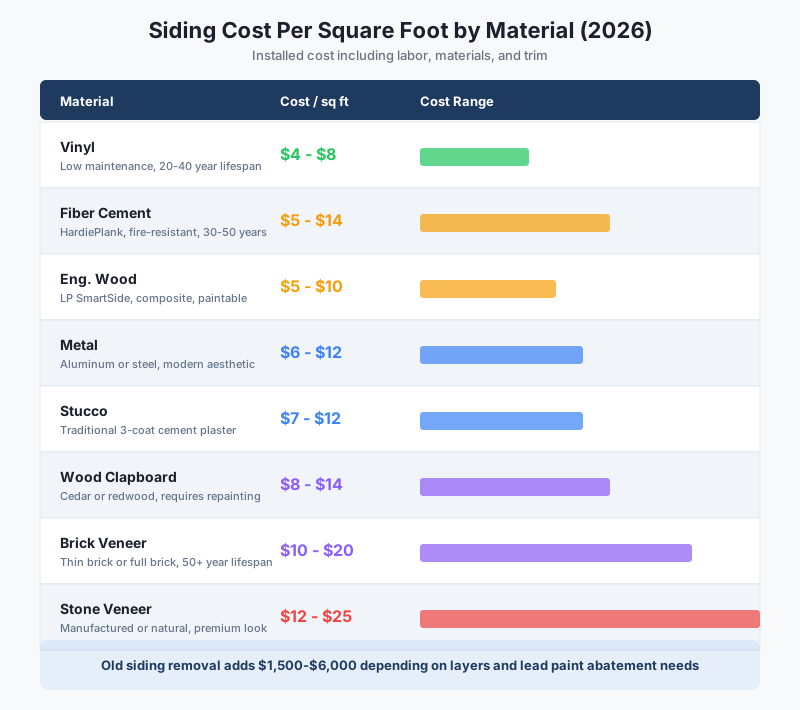
New siding costs $4 to $25 per square foot installed in 2026, with most homeowners spending $8,000 to $28,000 for a full reside on a 2,000 square foot exterior. Vinyl runs $4-$8/sq ft, fiber cement (HardiePlank) costs $5-$14/sq ft, wood clapboard sits at $8-$14/sq ft, and stone veneer reaches $12-$25/sq ft. Labor typically accounts for 40-60% of total project cost.
Across siding replacement jobs in the mid-Atlantic and upper Midwest, the number that surprises homeowners most is not the material cost -- it is the old siding removal. One 1960s split-level in suburban Pittsburgh with two layers of siding underneath (original aluminum plus a vinyl overlay from the 1990s) cost $4,200 just for tearoff and disposal before a single new panel went up. A house with one clean layer of vinyl might see removal run $1,500-$2,500. Two layers of old material plus lead paint abatement can push the budget to $4,000-$6,000 for removal alone.
Use our Siding Calculator to get a personalized estimate based on your home's dimensions and preferred material.
Siding Cost at a Glance
The table below shows what you can expect to pay per square foot for materials and installation, plus the total project cost for a typical 2,000 sq ft exterior surface area.
| Material | Installed Cost/sq ft | 2,000 sq ft Total | Lifespan | Maintenance |
|---|---|---|---|---|
| Vinyl | $4 - $8 | $8,000 - $16,000 | 20-40 years | Low (wash annually) |
| Fiber Cement (HardiePlank) | $5 - $14 | $10,000 - $28,000 | 30-50 years | Low (repaint every 10-15 yr) |
| Engineered Wood (LP SmartSide) | $5 - $10 | $10,000 - $20,000 | 25-40 years | Medium (repaint every 8-12 yr) |
| Wood (Clapboard) | $8 - $14 | $16,000 - $28,000 | 20-40 years | High (stain/paint every 3-7 yr) |
| Metal (Steel/Aluminum) | $6 - $12 | $12,000 - $24,000 | 40-60 years | Low (touch-up dents/scratches) |
| Stucco | $7 - $12 | $14,000 - $24,000 | 50-80 years | Low (patch cracks, repaint) |
| Brick Veneer | $10 - $20 | $20,000 - $40,000 | 50-100 years | Very low (repoint mortar) |
| Stone Veneer | $12 - $25 | $24,000 - $50,000 | 50-100+ years | Very low |
Tip
Exterior surface area is not the same as your home's square footage. A 2,000 sq ft home typically has 1,800-2,200 sq ft of exterior wall area. Two-story homes have more wall area per floor plan square foot than ranch-style homes. Gables, dormers, and bump-outs add 10-20% more surface.
Cost by Material
Vinyl Siding ($4-$8/sq ft Installed)
Vinyl remains the most popular siding material in the United States, covering roughly 27% of existing homes according to the U.S. Census Bureau's American Housing Survey. The installed cost of $4-$8 per square foot makes it the most affordable option for a full reside.
Standard vinyl panels (0.040"-0.046" thick) fall at the low end, around $4-$6/sq ft. Insulated vinyl with foam backing (0.046"-0.055" thick) costs $6-$8/sq ft but improves R-value by 2-4 points and reduces exterior noise. Premium brands like CertainTeed Monogram or Alside Charter Oak sit at the higher end.
The main drawback is durability. Vinyl can crack in extreme cold, warp in sustained heat above 160 degrees F, and fade noticeably after 15-20 years. It also has limited color options compared to paintable materials -- once you pick a color, you are stuck with it unless you paint over the vinyl, which requires specialized paint and voids most warranties.
Fiber Cement Siding ($5-$14/sq ft Installed)
Fiber cement -- sold primarily under the James Hardie (HardiePlank) brand -- is the fastest-growing siding category in the U.S. market. It is made from Portland cement, sand, and cellulose fibers, creating a material that resists fire, rot, termites, and woodpeckers.
Material cost alone runs $2-$6 per square foot for unprimed planks and $3-$8 for factory-primed or ColorPlus pre-finished boards. Installation adds $3-$8/sq ft because fiber cement is heavy (about 2.5 lbs per square foot) and requires specialized cutting tools with dust collection. A crew installing fiber cement works roughly 30-40% slower than vinyl, which is where the labor premium comes from.
The 30-50 year lifespan and 15-year paint intervals make fiber cement the best long-term value for most climates. HardiePlank's ColorPlus finish carries a 15-year fade warranty, meaning you will repaint about three times across a 50-year lifespan versus eight to ten times for natural wood.
Wood Siding ($8-$14/sq ft Installed)
Wood clapboard, shingle, and board-and-batten siding costs $8-$14 per square foot installed. Cedar is the most common species at $8-$12/sq ft, while redwood and cypress run $10-$14/sq ft. Pine and spruce sit at the budget end ($6-$9/sq ft) but require more aggressive treatment schedules.
The appeal of wood is undeniable -- no manufactured product perfectly replicates the depth and grain of real cedar. However, wood demands more maintenance than any other siding material. Expect to stain or paint every 3-7 years at $1-$3/sq ft per application. Over a 30-year period on a 2,000 sq ft exterior, that is $10,000-$30,000 in maintenance costs alone.
Wood is also vulnerable to moisture, insects, and woodpeckers. In humid climates (Southeast, Pacific Northwest), wood siding requires vigilant inspection for rot and mold. 8-year-old cedar siding can show extensive rot damage on north-facing walls where morning dew never fully dries.
Engineered Wood Siding ($5-$10/sq ft Installed)
LP SmartSide is the dominant brand in the engineered wood category. It uses treated wood strands bonded with resin and coated with a zinc borate overlay for termite and fungal resistance. The result looks like real wood but handles moisture far better.
Installed costs of $5-$10 per square foot place engineered wood between vinyl and natural wood in price. LP SmartSide's ExpertFinish pre-painted option adds $1-$2/sq ft but eliminates the need for on-site priming and painting, saving 2-3 days of labor. The 5/50-year limited warranty (5 years on finish, 50 on substrate) gives it a durability profile closer to fiber cement.
The main concern with engineered wood is moisture intrusion at cut edges and fastener holes. Every cut must be sealed with the manufacturer's touch-up product. Sloppy installation -- skipping edge sealing or leaving insufficient gap at trim joints -- leads to swelling and delamination within 5-10 years.
Metal Siding ($6-$12/sq ft Installed)
Steel and aluminum siding cost $6-$12 per square foot installed. Steel is more durable but heavier and susceptible to rust if the coating is scratched. Aluminum is lighter, corrosion-resistant, and easier to install but dents more readily.
Modern metal siding has moved well beyond the flat aluminum panels of the 1960s. Standing-seam profiles, corrugated panels, and wood-grain textured options are now available from manufacturers like EDCO, Rollex, and Bridger Steel. The contemporary aesthetic works particularly well on modern farmhouse and industrial-style homes.
Metal siding excels in fire-prone areas (Class A fire rating), coastal environments (aluminum resists salt air), and regions with extreme weather. Its 40-60 year lifespan and near-zero maintenance make it competitive with fiber cement on a cost-per-year basis despite the higher upfront price.
Stucco ($7-$12/sq ft Installed)
Traditional three-coat stucco (scratch coat, brown coat, finish coat) costs $7-$12 per square foot installed. Synthetic stucco (EIFS -- Exterior Insulation and Finish System) runs $8-$14/sq ft but provides better insulation.
Stucco is the default choice in the Southwest, where its thermal mass helps regulate interior temperatures in hot, dry climates. It performs poorly in freeze-thaw environments without proper expansion joints and waterproofing. Cracking is the most common issue -- hairline cracks are cosmetic, but cracks wider than 1/16" can allow moisture behind the material, leading to structural damage.
Application is labor-intensive. Each coat must cure before the next is applied, and the process takes 3-5 days per elevation in good weather. Retrofit stucco over existing siding requires a metal lath substrate, adding $1-$2/sq ft to the project.
Stone Veneer and Brick Veneer ($10-$25/sq ft Installed)
Natural stone veneer costs $12-$25 per square foot installed, while manufactured stone veneer (Cultured Stone, Eldorado Stone) runs $10-$18/sq ft. Brick veneer falls between $10-$20/sq ft. These are the premium options, typically used as accent features rather than whole-house cladding.
A full stone veneer exterior on a 2,000 sq ft home can exceed $50,000 -- pricing that puts it in a different category from panel siding. More commonly, homeowners use stone or brick on the front facade or lower third of the house ($3,000-$8,000 for 200-400 sq ft of accent area) and pair it with fiber cement or engineered wood on the remaining elevations.
Both stone and brick veneer require a structural ledge or metal support system, proper flashing, and weep holes for moisture drainage. Installation is slow and skilled-labor-intensive, which is why labor represents 50-65% of total cost for masonry veneer.
Labor Cost Breakdown
Labor accounts for 40-60% of any siding project. Here is what the labor budget covers and why it varies so widely:
| Labor Component | Cost Range | Notes |
|---|---|---|
| Old siding removal | $1 - $3/sq ft | Single layer vinyl is cheapest; multiple layers or asbestos costs more |
| Sheathing repair | $2 - $5/sq ft (if needed) | Rotted OSB or plywood replacement |
| Housewrap/WRB | $0.50 - $1.50/sq ft | Tyvek, Henry Blueskin, or similar weather-resistant barrier |
| Siding installation | $2 - $8/sq ft | Vinyl on the low end, fiber cement and masonry on the high end |
| Trim and flashing | $3 - $8/linear ft | Window and door trim, J-channel, starter strip, drip cap |
| Soffit and fascia | $5 - $12/linear ft | Often done during a reside; adds 10-20% to project cost |
| Disposal and cleanup | $500 - $1,500 flat | Dumpster rental, dump fees, hazmat if asbestos present |
Warning
Do not skip the sheathing inspection. Once old siding comes off, have the crew check every square foot of sheathing for moisture damage, rot, and mold. Covering damaged sheathing with new siding guarantees problems within 5-10 years. Budget an extra $2,000-$5,000 for sheathing repair on homes built before 1990.
Regional Cost Variation
Where you live affects siding cost by 15-30%. Labor rates, material shipping distances, and climate-driven material preferences all play a role.
| Region | Installed Cost vs. National Avg | Preferred Materials | Key Factors |
|---|---|---|---|
| Northeast | +15% to +25% | Vinyl, fiber cement, cedar | High labor rates, insulated siding popular, shorter install season |
| Midwest | -10% to -5% | Vinyl, engineered wood | Lowest material costs, competitive contractor market |
| South | -10% to +5% | Vinyl, fiber cement | Year-round installation, lower labor, termite-resistant materials preferred |
| Southwest | +5% to +15% | Stucco, stone veneer | Stucco dominates, specialized labor required |
| West Coast | +20% to +30% | Fiber cement, metal, stucco | Highest labor, fire-resistant materials required in WUI zones |
| Mountain West | +0% to +10% | Fiber cement, engineered wood, metal | Moderate labor, extreme UV degradation at altitude |
Coastal areas within any region pay a 10-20% premium due to salt-air corrosion requirements. Materials like vinyl and fiber cement hold up well near the coast, while untreated steel and natural wood degrade rapidly.
Factors That Affect Your Siding Cost
1. House Size and Exterior Surface Area
Every additional square foot of exterior wall adds $4-$25 to your project depending on material choice. A single-story ranch with 1,400 sq ft of wall area might cost $11,200-$19,600 in vinyl, while a two-story colonial with 2,400 sq ft of wall area could run $19,200-$33,600 for the same material.
2. Number of Stories
Two-story and three-story homes cost more per square foot than single-story homes. The upper floors require scaffolding ($500-$2,000 rental) or lift equipment ($1,000-$3,000), and crew productivity drops 15-25% when working at height. Expect a 10-20% cost premium for each story above the first.
3. Window and Door Trim Complexity
The more windows, doors, and architectural details your home has, the higher the labor cost. Each window requires J-channel or trim wrapping, flashing, and caulking. A home with 20 windows and 3 doors might spend $2,000-$4,000 on trim work alone. Homes with arched windows, bay windows, or decorative trim details cost even more.
4. Old Siding Removal
Removing existing siding adds $1-$3 per square foot to the project. A single layer of vinyl over clean sheathing is a quick strip at $1-$1.50/sq ft. Multiple layers, asbestos-containing materials, or lead-painted wood siding can push removal costs to $3-$8/sq ft. On a 2,000 sq ft exterior, removal adds $2,000-$6,000 to the total.
5. Structural Repairs
Once old siding comes off, contractors frequently find rotted sheathing, damaged framing, or inadequate insulation. About 30-40% of reside projects include some sheathing repair. Budget a 10-15% contingency above your siding estimate for unexpected structural work.
6. Season and Market Conditions
Spring and summer are peak siding season. Scheduling your project for late fall or early winter (in moderate climates) can save 10-15% on labor. Contractor backlogs during peak season also mean longer wait times -- 4-8 weeks is typical from contract signing to start date during summer.
DIY vs. Professional Installation
Siding is less DIY-friendly than many exterior projects. Here is a realistic comparison:
| Factor | DIY | Professional |
|---|---|---|
| Material cost (2,000 sq ft, vinyl) | $4,000 - $8,000 | $4,000 - $8,000 |
| Labor | $0 (your time) | $4,000 - $10,000 |
| Tool rental (brake, scaffolding) | $400 - $1,200 | Included |
| Disposal | $300 - $600 | $500 - $1,500 |
| Time | 6-12 weekends | 5-10 days |
| Total | $4,700 - $9,800 | $8,500 - $19,500 |
| Savings | 40-50% | -- |
What DIY can handle: Vinyl siding on a single-story home with straightforward geometry. Vinyl is lightweight, snaps together, and cuts with tin snips or a circular saw. The learning curve is moderate -- a handy homeowner can produce decent results after watching a few detailed tutorials and completing one wall.
What needs a professional: Fiber cement (heavy, requires special cutting tools, silica dust hazard), any multi-story work requiring scaffolding, masonry veneer (skilled trade), stucco (specialized technique), and any project involving structural sheathing repair. Also, manufacturer warranties on fiber cement and engineered wood are often voided without proof of professional installation.
Frequently Asked Questions
How much does it cost to reside a 1,500 sq ft house?
A 1,500 square foot house typically has 1,400-1,800 sq ft of exterior wall surface, costing $5,600-$14,400 for vinyl siding or $7,000-$25,200 for fiber cement, fully installed. These numbers include old siding removal, housewrap, and standard trim work. The wide range reflects the difference between basic vinyl on a simple ranch ($5,600) and premium HardiePlank on a two-story home with complex trim ($25,200).
- Vinyl installed: $5,600 - $14,400
- Fiber cement installed: $7,000 - $25,200
- Engineered wood installed: $7,000 - $18,000
- Old siding removal: $1,400 - $5,400
- Trim and accessories: $1,500 - $4,000
A single-story ranch at 1,500 sq ft is one of the most cost-effective homes to reside because there is no scaffolding needed and the rectangular footprint minimizes waste.
Is fiber cement siding worth the extra cost over vinyl?
Yes, for most homeowners who plan to stay in their home 10+ years. Fiber cement costs 50-75% more than vinyl upfront, but its 30-50 year lifespan, superior impact resistance, and Class A fire rating make it the better long-term investment. A 10-year cost comparison on a 2,000 sq ft exterior shows the gap is smaller than the sticker price suggests:
- Vinyl (10 years): $12,000 installed + $0 maintenance = $12,000
- Fiber cement (10 years): $20,000 installed + $0 maintenance (factory finish lasts 15 yr) = $20,000
- Vinyl (30 years): $12,000 + $12,000 replacement at year 25 = $24,000
- Fiber cement (30 years): $20,000 + $4,000 repaint at year 15 = $24,000
At the 30-year mark, total cost is nearly identical. Fiber cement also adds 3-5% more resale value than vinyl siding according to Remodeling Magazine's Cost vs. Value Report, which means you recover more of the initial investment when you sell.
How long does a siding replacement take?
A professional crew typically completes a full reside on a standard 2,000 sq ft home in 5-10 working days for vinyl or 7-14 days for fiber cement. Larger homes, complex architecture, and masonry veneer extend the timeline to 3-4 weeks. Weather delays can add another week during the spring rainy season.
- Old siding removal: 1-3 days
- Sheathing inspection and repair: 1-2 days (if needed)
- Housewrap installation: 0.5-1 day
- New siding installation: 3-7 days (vinyl) or 5-10 days (fiber cement)
- Trim, flashing, caulking: 1-2 days
- Cleanup and inspection: 0.5-1 day
The critical path is usually material delivery and weather. Order materials 2-4 weeks before the planned start date, especially for factory-finished fiber cement with specific color selections.
Can you install new siding over existing siding?
Technically yes, but it is not recommended in most cases. Layering new vinyl over old vinyl (called "re-siding" or "overlay") saves the $1-$3/sq ft removal cost but creates several problems. First, you cannot inspect the sheathing underneath for moisture damage or rot. Second, the additional weight may stress older framing. Third, the new siding surface will telegraph imperfections from the layer below, creating a wavy appearance.
Building codes in some jurisdictions limit exterior cladding to two layers. If your home already has two layers, removal is mandatory regardless. Even where overlay is permitted, most reputable contractors recommend full tearoff because the cost savings ($2,000-$6,000 on a typical home) are not worth the risk of trapping moisture against compromised sheathing.
The one scenario where overlay makes sense is re-siding over a single layer of flat vinyl that is in good condition, with confirmed dry and sound sheathing accessible through a few test cuts.
What is the best siding material for cold climates?
Insulated vinyl siding and fiber cement are the top choices for cold climates, followed closely by engineered wood. Cold-climate siding must handle freeze-thaw cycles, ice dam moisture, high winds, and salt exposure (in northern states that salt roads).
- Insulated vinyl ($6-$8/sq ft): The foam backing adds R-2 to R-4 insulation value, reduces air infiltration, and resists impact from hail and wind-blown debris better than standard vinyl. It performs well in freeze-thaw because vinyl expands and contracts without cracking when properly installed with expansion gaps.
- Fiber cement ($5-$14/sq ft): Handles freeze-thaw well, does not expand or contract significantly, and is impervious to ice dam moisture. HardiePlank's HZ5 product line is engineered specifically for freeze-thaw climates.
- Engineered wood ($5-$10/sq ft): LP SmartSide's treated wood strands resist moisture absorption, making it a solid performer in cold, wet conditions.
- Avoid: Natural wood in areas with heavy snow and ice -- constant moisture exposure accelerates rot. Stucco also performs poorly in freeze-thaw environments without expensive expansion joint systems.
Does new siding increase home value?
New siding typically recoups 60-80% of its cost at resale, making it one of the highest-ROI exterior improvements. According to the 2025 Cost vs. Value Report by Remodeling Magazine, vinyl siding replacement returns approximately 68% of cost, while fiber cement returns about 72%. The return is higher in markets where exterior curb appeal is a major buyer concern -- Midwest and Northeast markets tend to see the strongest returns because harsh weather makes siding condition a visible indicator of home maintenance.
- Vinyl siding ROI: 65-70% cost recovery
- Fiber cement siding ROI: 70-78% cost recovery
- Stone veneer accent (entry facade): 80-90% cost recovery
- Curb appeal impact: New siding is consistently ranked in the top three exterior improvements by real estate agents
Beyond the direct ROI, new siding eliminates a major objection for buyers. Homes with visibly worn, faded, or damaged siding sit on the market 15-30 days longer than comparable homes with recently updated exteriors, according to data from the National Association of Realtors.
Cost data sourced from Modernize, This Old House, Angi, RoofScope, and RJS Roofing & Siding. Prices reflect 2026 national averages and may vary by region.
This article is provided for informational and educational purposes only. Content should not be considered professional financial, medical, legal, or other advice. Always consult a qualified professional before making important decisions. UseCalcPro is not responsible for any actions taken based on the information in this article.
Try These Calculators
Estimate square footage, panel count, and material costs for vinyl, wood, or fiber cement siding. Subtracts windows and doors and adds waste allowance.
Estimate 2026 fiber cement siding cost by home size, region, and product line. James Hardie and generic Hardie-style runs $6 to $15 per sq ft installed.
Estimate new home construction costs by square footage, quality level, and region. Get detailed material and labor cost breakdowns for building your house.
Estimate 2026 deep house cleaning cost by home size, condition, and bathrooms. A first-time deep clean runs $200-$600, about $0.20-$0.40 per square foot.
Estimate 2026 pressure washing service costs by surface, square footage, and method. Driveways run $100 to $350, siding $250 to $600, roof soft-wash $500+.