Ideal Weight Guide: How to Find Your Healthy Target Weight
Picking a goal weight based on a number from years ago is a common mistake — like targeting 125 pounds simply because that was a high school weight. That number is often completely arbitrary, and it can be completely wrong for, say, a 24-year-old body that has since built muscle from the gym.
"Ideal weight" is personal, flexible, and often not the number you have in your head. This guide will help you find a target that's actually right for you.
Calculate Your Ideal Weight
Use our free ideal weight calculator below to find your recommended weight range based on your height, age, and frame size.
Your ideal weight isn't a single number - it's a range that accounts for your height, body composition, and frame size. For example, a 5'8" male has a healthy weight range of approximately 139-169 lbs, while a 5'4" female falls between 117-146 lbs. The best target weight is one you can maintain without extreme restriction while feeling energetic and healthy.
Tip
Focus on body composition, not just the scale. A muscular 180 lbs looks and feels very different from a sedentary 180 lbs. The number on the scale tells only part of the story.
Methods to Determine Ideal Weight
There's no single "perfect" weight. Multiple methods help you find a realistic target range.
Method 1: BMI (Body Mass Index)
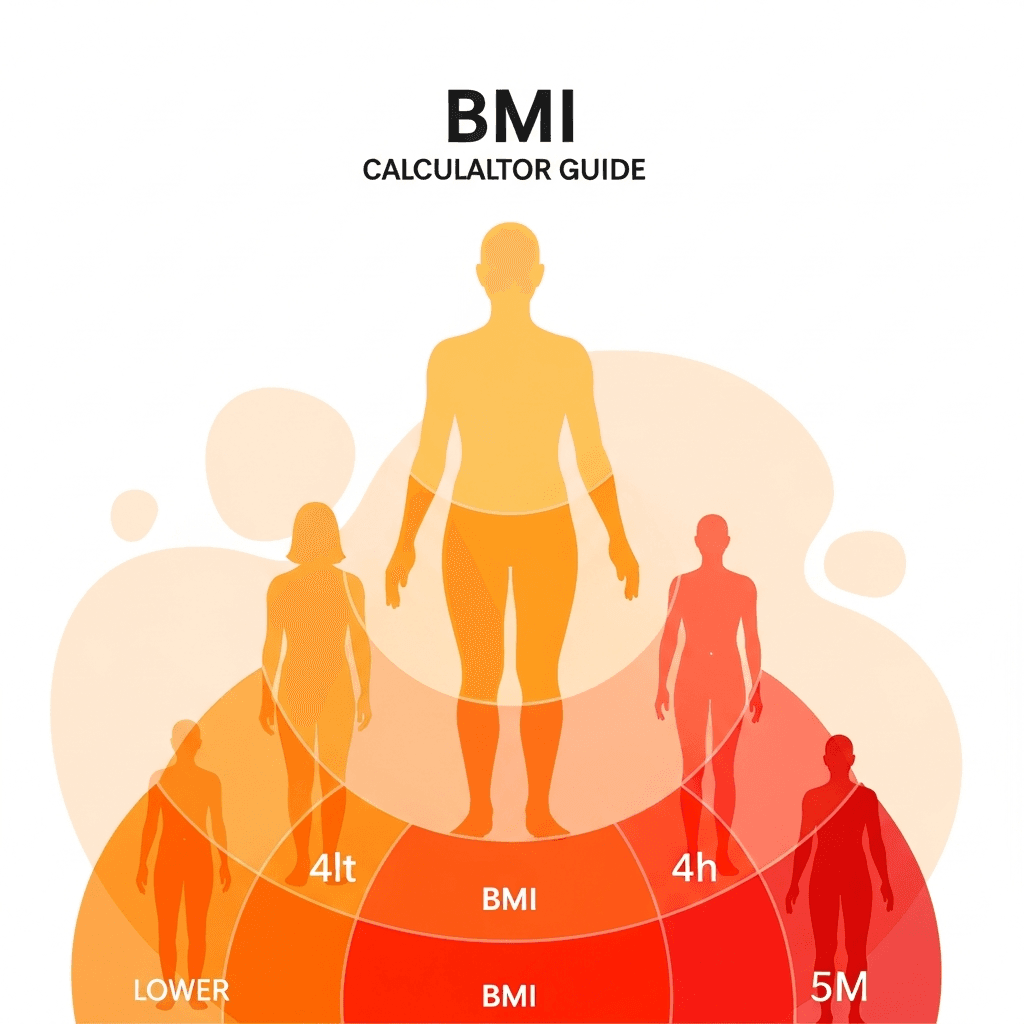
BMI is the most widely used measure, calculated as weight (kg) ÷ height² (m).
BMI Categories:
| BMI | Category |
|---|---|
| Below 18.5 | Underweight |
| 18.5 - 24.9 | Normal weight |
| 25.0 - 29.9 | Overweight |
| 30.0+ | Obese |
Example Healthy Ranges by Height:
| Height | Healthy Weight Range (BMI 18.5-24.9) |
|---|---|
| 5'0" | 97-127 lbs |
| 5'4" | 110-145 lbs |
| 5'8" | 125-163 lbs |
| 6'0" | 140-183 lbs |
| 6'4" | 156-204 lbs |
Limitations of BMI:
- Doesn't distinguish muscle from fat
- Athletes may have "overweight" BMI but low body fat
- Doesn't account for bone density or frame size
- Less accurate for elderly or very muscular individuals
Info
BMI is a screening tool, not a diagnosis. Use it as a starting reference, not the final word on your ideal weight.
Method 2: Body Fat Percentage
Body fat percentage provides a more accurate picture of health than BMI alone.
Healthy Body Fat Ranges:
| Category | Men | Women |
|---|---|---|
| Essential Fat | 2-5% | 10-13% |
| Athletes | 6-13% | 14-20% |
| Fitness | 14-17% | 21-24% |
| Average | 18-24% | 25-31% |
| Obese | 25%+ | 32%+ |
Calculating Ideal Weight from Body Fat:
If you know your current body fat percentage and goal body fat:
Target Weight = Lean Mass ÷ (1 - Goal Body Fat %)
Example:
- Current weight: 180 lbs
- Current body fat: 30%
- Lean mass: 180 × 0.70 = 126 lbs
- Goal body fat: 18%
- Target weight: 126 ÷ 0.82 = 154 lbs
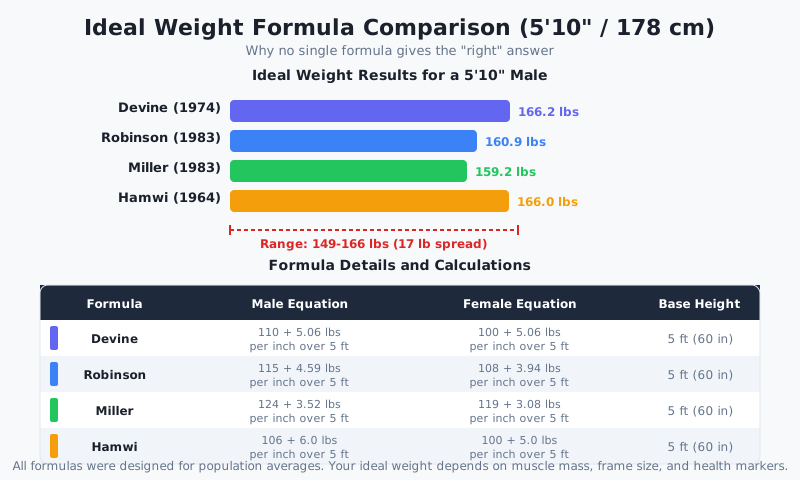
Method 3: Ideal Weight Formulas
Several formulas estimate ideal weight based on height:
Devine Formula (most commonly used):
- Men: 50 kg + 2.3 kg × (height in inches - 60)
- Women: 45.5 kg + 2.3 kg × (height in inches - 60)
Robinson Formula:
- Men: 52 kg + 1.9 kg × (height in inches - 60)
- Women: 49 kg + 1.7 kg × (height in inches - 60)
Miller Formula:
- Men: 56.2 kg + 1.41 kg × (height in inches - 60)
- Women: 53.1 kg + 1.36 kg × (height in inches - 60)
Example for a 5'8" (68 inch) man:
- Devine: 50 + 2.3 × 8 = 68.4 kg (151 lbs)
- Robinson: 52 + 1.9 × 8 = 67.2 kg (148 lbs)
- Miller: 56.2 + 1.41 × 8 = 67.5 kg (149 lbs)
- Range: 148-151 lbs
These formulas give you a reference point. Add or subtract based on frame size:
- Small frame: -10%
- Medium frame: Use calculated value
- Large frame: +10%
Method 4: Frame Size Adjustment
Your bone structure affects your healthy weight. Measure frame size using wrist circumference:
Men:
| Height | Small Frame | Medium Frame | Large Frame |
|---|---|---|---|
| 5'5" or less | Wrist < 6.5" | 6.5-7.5" | > 7.5" |
| 5'5" - 5'7" | Wrist < 6.75" | 6.75-7.75" | > 7.75" |
| 5'7"+ | Wrist < 7" | 7-8" | > 8" |
Women:
| Height | Small Frame | Medium Frame | Large Frame |
|---|---|---|---|
| Under 5'2" | Wrist < 5.5" | 5.5-5.75" | > 5.75" |
| 5'2" - 5'5" | Wrist < 6" | 6-6.25" | > 6.25" |
| Over 5'5" | Wrist < 6.25" | 6.25-6.5" | > 6.5" |
Setting a Realistic Goal Weight
Step 1: Find Your Reference Range
Use BMI, formulas, and frame size to identify a healthy range. For example:
- A 5'6" woman with medium frame
- BMI range: 114-150 lbs
- Devine formula: 130 lbs (±10% = 117-143 lbs)
- Working range: 120-145 lbs
Step 2: Consider Your History
Your body has "memory" based on:
- Lowest adult weight maintained for 6+ months (without extreme restriction)
- Weight at which you felt healthy and energetic
- Weight at which exercise felt manageable
If you've maintained 155 lbs comfortably before, targeting 125 lbs may be unrealistic despite BMI charts.
Step 3: Set Progressive Goals
Don't aim for your final goal immediately. Use milestones:
Example: Current weight 200 lbs, goal range 155-165 lbs:
- First goal: 190 lbs (-10 lbs)
- Second goal: 180 lbs (-10 lbs)
- Third goal: 170 lbs (-10 lbs)
- Final goal: 160 lbs (-10 lbs)
Each milestone is achievable, and you reassess as you progress.
Warning
Avoid arbitrary "dream" weights. Targeting your high school weight or a weight you've never been as an adult often leads to frustration. Choose weights you've actually maintained healthily.
Factors That Affect Your Ideal Weight
Age
Healthy weight ranges change with age:
- 20s-30s: Peak metabolism, easier to maintain lower weights
- 40s-50s: Metabolism slows, muscle loss accelerates without resistance training
- 60s+: Some additional weight may be protective; extreme leanness can be risky
Research shows that for older adults, being slightly "overweight" by BMI (25-27) may have lower mortality risk than being at the lower end of "normal."
Muscle Mass
Two people at the same height and weight can look completely different:
Same stats: 5'10", 180 lbs
- Person A: 12% body fat, muscular → looks fit, healthy
- Person B: 28% body fat, minimal muscle → looks overweight
If you're muscular or plan to build muscle, your ideal weight will be higher than formulas suggest.
Genetics
Genetics influence:
- Where you store fat (apple vs. pear shape)
- Your natural body frame
- How easily you gain/lose weight
- Your metabolic rate
You can't change your genetics, but you can optimize within your natural body type.
Lifestyle Factors
Consider what weight allows you to:
- Maintain consistent energy throughout the day
- Exercise comfortably
- Sleep well
- Enjoy social situations without extreme restriction
- Sustain your eating habits long-term
The "best" weight is one you can live with, not one that requires constant suffering.
Beyond the Scale: Other Measures of Health
Waist Circumference
Waist size predicts health risks better than weight alone:
| Risk Level | Men | Women |
|---|---|---|
| Low risk | < 37" | < 31.5" |
| Increased risk | 37-40" | 31.5-35" |
| High risk | > 40" | > 35" |
Measure at the narrowest point, usually at the navel or just above.
Waist-to-Hip Ratio
Divide waist circumference by hip circumference:
| Health Risk | Men | Women |
|---|---|---|
| Low | < 0.90 | < 0.80 |
| Moderate | 0.90-1.0 | 0.80-0.85 |
| High | > 1.0 | > 0.85 |
Performance Metrics
Consider non-scale measures:
- Can you climb stairs without getting winded?
- Can you play with your kids/pets?
- How are your blood pressure, blood sugar, cholesterol?
- How's your energy and mood?
- How's your sleep quality?
These matter more than hitting a specific number.
Common Weight Goal Mistakes
Mistake 1: Choosing an Unrealistic Target
Problem: Targeting a weight you've never maintained, or one from a very different life phase.
Solution: Choose a weight you've maintained comfortably for 6+ months as an adult. If you've never been 130 lbs, that might not be your ideal weight.
Mistake 2: Ignoring Body Composition
Problem: Obsessing over scale weight while neglecting muscle mass.
Solution: Include resistance training in your plan. Measure body fat percentage or take progress photos. A slightly higher weight with more muscle often looks better than a lower weight with less muscle.
Mistake 3: Setting a Single Number
Problem: Fixating on exactly 145 lbs when 143-148 lbs would be equally healthy.
Solution: Set a 5-10 lb range as your target. Weight naturally fluctuates day to day.
Mistake 4: Rushing to Goal Weight
Problem: Aggressive dieting to reach goal weight as fast as possible.
Solution: Aim for 0.5-1% of body weight per week (1-2 lbs for most people). Slower loss preserves muscle and is more sustainable.
For weight loss guidance, see: Calorie Deficit Complete Guide
Mistake 5: Ignoring How You Feel
Problem: Reaching "goal weight" but feeling terrible - low energy, always hungry, poor performance.
Solution: Your true ideal weight is where you feel healthy, energetic, and can maintain without extreme measures. Adjust your target if needed.
Weight Maintenance After Reaching Goal
Reaching your goal weight is only half the battle. Keeping it off requires a plan.
Transition to Maintenance
Don't immediately return to old eating habits. Gradually increase calories:
- Week 1-2: Add 100 calories
- Week 3-4: Add another 100 calories
- Continue until weight stabilizes
See: TDEE Calculator Guide to find your maintenance calories.
Maintenance Strategies That Work
- Weigh regularly (weekly or daily) to catch small gains early
- Keep protein high to maintain muscle mass
- Stay active with both strength training and cardio
- Have a plan for when weight creeps up (return to deficit temporarily)
- Accept natural fluctuations of 2-4 lbs
Warning Signs to Watch
Return to a small deficit if you notice:
- Weight increasing 5+ lbs above goal
- Clothes fitting noticeably tighter
- Fitness declining
- Old eating patterns returning
Success
Maintenance is a skill you develop over time. Most people who maintain long-term weight loss treat it as an ongoing process, not something they "finish."
Ideal Weight for Different Goals
For General Health
- Target: BMI 20-25 range
- Body fat: 18-24% (men), 25-31% (women)
- Focus on sustainable habits over specific numbers
For Athletic Performance
- Target: Varies by sport
- Body fat: 10-18% (men), 18-25% (women) for most sports
- Performance often matters more than scale weight
For Aesthetic Goals
- Target: Lower end of healthy BMI with adequate muscle
- Body fat: 10-15% (men), 18-23% (women) for visible definition
- Requires strength training alongside fat loss
For Longevity
- Target: BMI 22-25 range shows lowest mortality risk
- Moderate body fat may be protective with age
- Prioritize muscle mass retention as you age
Frequently Asked Questions
Is there really an "ideal" weight?
There's no single perfect weight. Healthy weight exists as a range, and the "ideal" is personal - where you feel good, function well, and can maintain sustainably.
How accurate are ideal weight calculators?
Calculators provide estimates based on population averages. They're useful starting points but don't account for individual factors like muscle mass, frame size, or personal history. Use them as references, not definitive answers.
Should I aim for the low end of my healthy range?
Not necessarily. The low end of healthy BMI requires more restriction to maintain. The middle of your healthy range is often more sustainable and still provides health benefits.
How often should I reassess my goal weight?
Reassess every 10-20 lbs lost, or if your circumstances change significantly (new exercise routine, age, health conditions). Your ideal weight isn't fixed forever.
What if I can't reach my ideal weight?
Any weight loss improves health. Losing just 5-10% of body weight significantly reduces disease risk, even if you never reach "ideal" weight. Progress matters more than perfection.
Does my ideal weight change as I age?
Yes. Healthy weight ranges tend to shift slightly higher with age. What was ideal at 25 may not be ideal or realistic at 55. Focus on maintaining muscle and functional fitness.
Conclusion
Your ideal weight is a personal target based on your height, frame, body composition, and life circumstances. Use BMI, formulas, and body fat percentage as guides, but ultimately choose a weight that:
- Falls within a healthy range for your height
- You've maintained successfully before (or realistically could)
- Allows you to feel energetic and healthy
- Doesn't require extreme restriction to maintain
Use our Ideal Weight Calculator to find your starting target, and our BMI Calculator to understand where you currently fall.
Remember: the scale is just one measure of health. Focus on building sustainable habits, preserving muscle, and improving how you feel - the number will follow.
This article is provided for informational and educational purposes only. Content should not be considered professional financial, medical, legal, or other advice. Always consult a qualified professional before making important decisions. UseCalcPro is not responsible for any actions taken based on the information in this article.
Try These Calculators
Look up your ideal body weight using Devine, Robinson, Miller, and Hamwi formulas. Compare results across all four clinical equations in a single report.
Calculate your optimal creatine loading and maintenance dose based on body weight and activity level. Get personalized daily creatine dosage in grams.
Calculate your Body Roundness Index from height and waist circumference. BRI assesses body shape and visceral fat risk more accurately than BMI alone.
Work out your daily fat intake in grams. Enter total calories, protein, and carbs to auto-calculate fat, or set a target percentage with saturated fat limits.
Estimate your horse's weight using the veterinary heart girth formula. Get body condition score assessment, daily feed requirements, and breed comparisons.