
What 800+ DIY Framing Calculations Reveal About Home Builds in 2026
What 800+ DIY Framing Calculations Reveal About Home Builds in 2026 The beam-size calculator at UseCalcPro hit an 86% action rate in the 90-day window ending 2026-05-12 — by far the highest on the platform, and nearly 6× the site-wide median of 14.8%. Of 22 unique visitors, 19 clicked "AI Explain" on their beam result. That is not curiosity. That is a homeowner or builder verifying a load calculation before cutting wood, and they want the calculator to explain its reasoning before they trust the number. This analysis covers seven construction calculators tied to home framing and finishing: beam size, shelf sag, pergola, attic ventilation, ceiling fan size, bathroom fan CFM, and lighting layout. Together they logged more than 800 compute events from real visitors. We pulled session-level inputs and outputs to answer a narrow question: when DIYers reach for a structural or sizing calculator, what are they actually doing?...
The Craft Calculator Report: What 280+ Real Sessions Tell Us About 2026 Makers
The Craft Calculator Report: What 280+ Real Sessions Tell Us About 2026 Makers Across nine craft calculators, visitors logged 280+ compute events in a single 30-day window ending 2026-04-22 — the largest non-food category on our platform. Loom knitting (55 computes), screen printing (52), macramé cord (32), and needle felting (16 including an AI Explain) led the pack. Real session detail: a 3×3×6 inch needle-felted sculpture with an armature needs 2.1 oz (59g) of wool total, split 1.25 oz core and 0.83 oz surface. Makers are not browsing — they are building, and they run calculators to size their stash before buying more fiber. This analysis covers nine crafts calculators from the 30-day window: loom-knitting-calculator, screen-printing-calculator, macrame-cord-calculator, needle-felting-calculator, weaving-calculator, concrete-planter-calculator, glass-fusing-calculator, fabric-dyeing-calculator, and tie-dye-calculator. Use our Needle Felting Calculator(/crafts/needle-felting-calculator) or Loom Knitting Calculator(/crafts/loom-knitting-calculator) to plan your next project. The craft cluster at a glance | Calculator | Views | Computes...
DIY Home Project Costs by the Numbers: Real Paint, Siding, and Pizza Oven Data in 2026
DIY Home Project Costs by the Numbers: Real Paint, Siding, and Pizza Oven Data in 2026 On 2026-04-22 we logged three back-to-back DIY project computes from different visitors that tell a clean cost story: 302 sq ft of paintable wall needs 1.8 gallons of paint, 1,500 sq ft of siding with standard 10% waste and 200 sq ft of window cutouts costs $7,150 installed, and a brick-dome pizza oven with chimney and insulation rings up at $526 for 60 bricks and 2 bags of mortar. These are not industry averages. They are real calculator sessions from visitors planning real projects. This analysis pulls from the 30-day window ending 2026-04-22 across five construction calculators: paint-calculator, siding-calculator, pizza-oven-calculator, square-footage-calculator, and the popular drop-ceiling-calculator. Together they account for ~70 compute events and reveal how DIY-leaning homeowners price out projects at the kitchen table. Use our Paint Calculator(/construction/paint-calculator), Siding Calculator(/construction/siding-calculator), or Pizza Oven Calculator(/construction/pizza-oven-calculator)...
DIY vs Contractor: Home Renovation Costs in 2026 (Real Comparison)
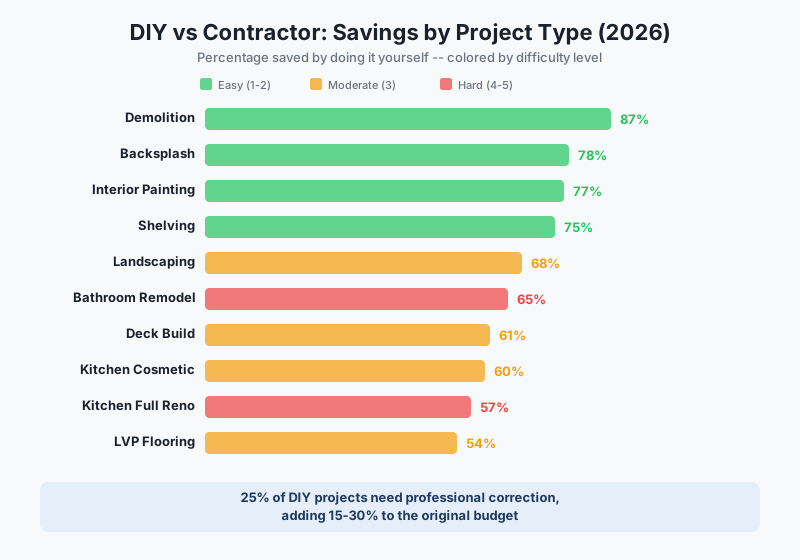
DIY vs Contractor: Home Renovation Costs in 2026 DIY renovation saves 40-60% on projects where labor is the dominant cost, but one in four DIY projects requires professional correction that adds 15-30% to the original budget. Labor accounts for 50-60% of total renovation cost nationally, which means a $48,000 kitchen remodel includes $24,000-$29,000 in labor alone. Cut that labor out and you keep a serious chunk of money. But cut it out on the wrong project and you pay twice -- once for your attempt, once for the contractor who fixes it. A familiar scenario in residential construction: a homeowner rips out bathroom tile, hits a supply line, and ends up calling in a professional in a panic with water running through the subfloor. That call often runs $4,200 -- the plumber, the water damage remediation, the new subfloor, and the labor to finish what was started. The original contractor...
DIY vs. Professional Painting Cost in 2026 (Full Comparison)
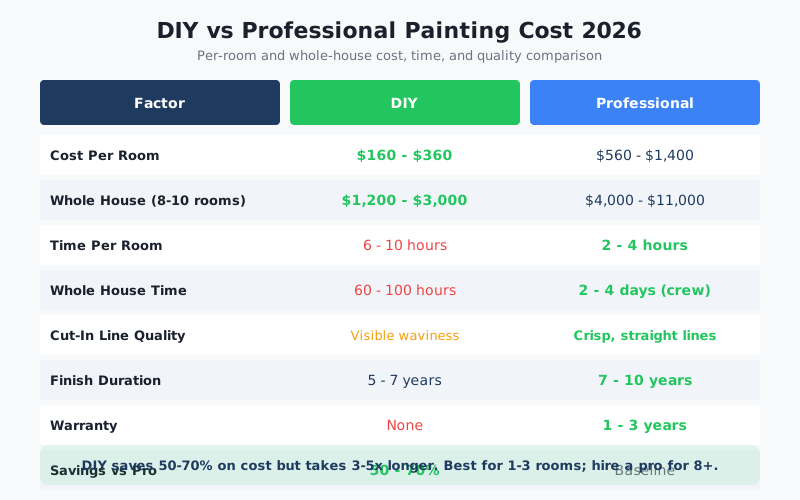
DIY vs. Professional Painting Cost in 2026 DIY interior painting costs $200 to $600 per room in 2026, while professional painting costs $700 to $1,800 per room -- saving 50-70% by doing it yourself. For a whole-house interior (2,000 sq ft, 8-10 rooms), DIY runs $1,500-$3,500 versus $4,200-$11,500 for professional. The trade-off is time: what takes a pro crew 2-4 days takes a homeowner 3-6 weekends. Across eight tracked interior painting projects last year -- four DIY, four professional -- the real cost of DIY turned out to be not paint and supplies, but time. A couple spent 3 weekends painting their 4-bedroom colonial themselves. They saved $4,200 versus the contractor quote. But those weekends were 28 combined hours of work. At their combined household income, those hours were "worth" $2,800 in opportunity cost. The real savings? About $1,400. Still worthwhile -- but not the $4,200 they celebrated on social...
How to Build a Raised Bed Garden: Complete Soil & Materials Calculator Guide
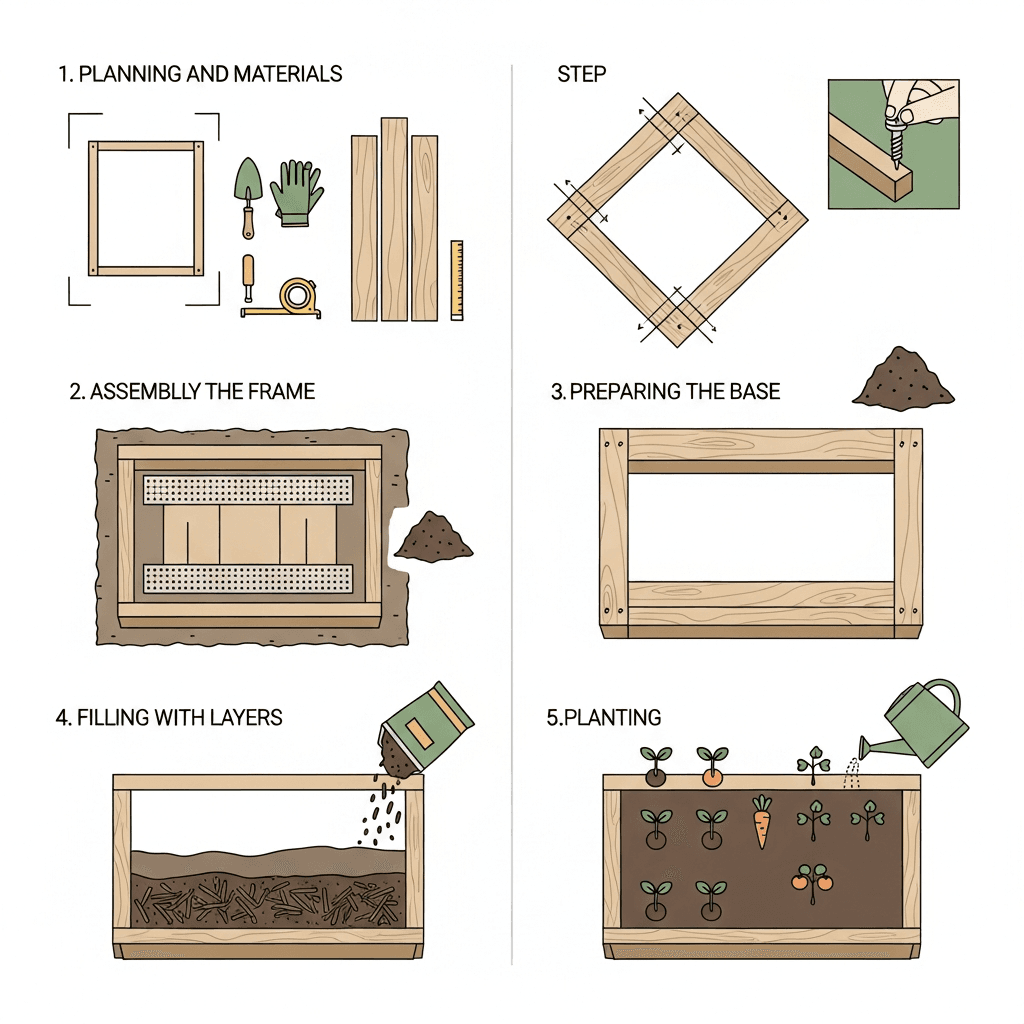
How to Build a Raised Bed Garden: Complete Soil & Materials Calculator Guide A standard 4x8-foot raised bed 12 inches deep requires 32 cubic feet (1.19 cubic yards) of soil mix, but you should order 1.4 cubic yards to account for 15-20% settling in the first growing season. The formula is simple: Length (ft) x Width (ft) x Depth (ft) = Volume in cubic feet, then divide by 27 for cubic yards. Material costs range from $20-40 for pine to $80-150 for cedar to $100-400 for steel, before you spend a single dollar on soil. A common first-year mistake shows why the overage matters: a gardener builds a 4x8x12-inch raised bed and orders exactly 1.0 cubic yard of a 50/30/20 topsoil-compost-perlite mix. The calculated volume is 32 cu ft, which equals 1.19 cubic yards, but the order gets rounded down after a supplier says "one yard is plenty." After filling,...
How to Build a Deck: Complete Materials & Cost Calculator Guide
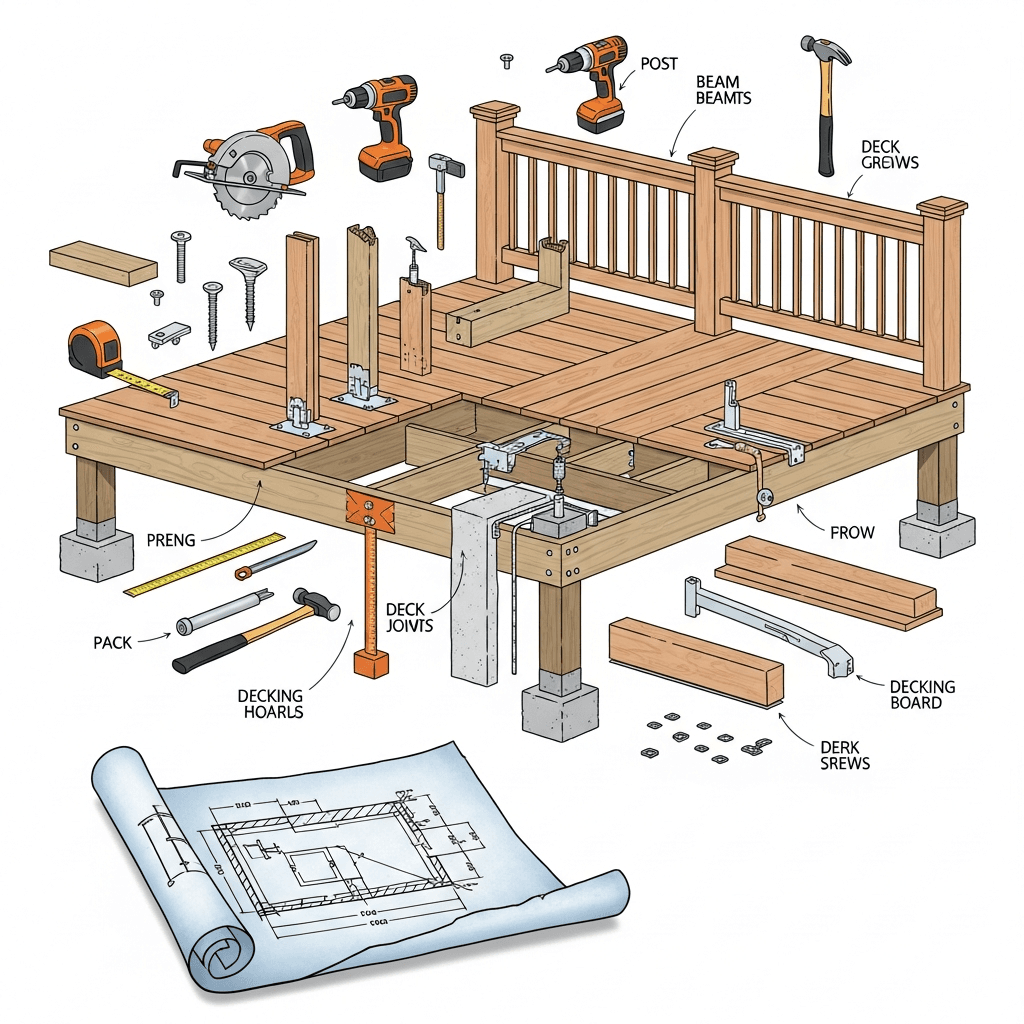
How to Build a Deck: Complete Materials & Cost Calculator Guide Building a deck costs between $15 and $75 per square foot for materials, depending on whether you choose pressure-treated lumber, composite, or cedar. A typical 16x20 deck requires 50-60 deck boards, 20-25 joists, 8-12 posts, and roughly 15 pounds of structural screws and hardware. Getting the material quantities right before you order saves hundreds of dollars in waste and emergency trips to the lumber yard. Consider a 16x24 composite deck built for a client in suburban Maryland. The material bill came to $8,200 -- and that was after negotiating a bulk discount on the composite boards. Ordering 15% extra decking meant using every single piece, because cuts around the stair landing and the angled corner ate through boards faster than the calculator predicted. That project reinforces the rule every homeowner should follow: always round up, never down. Use our...
How Much Concrete Do I Need? Concrete Calculator for Slabs & Footings
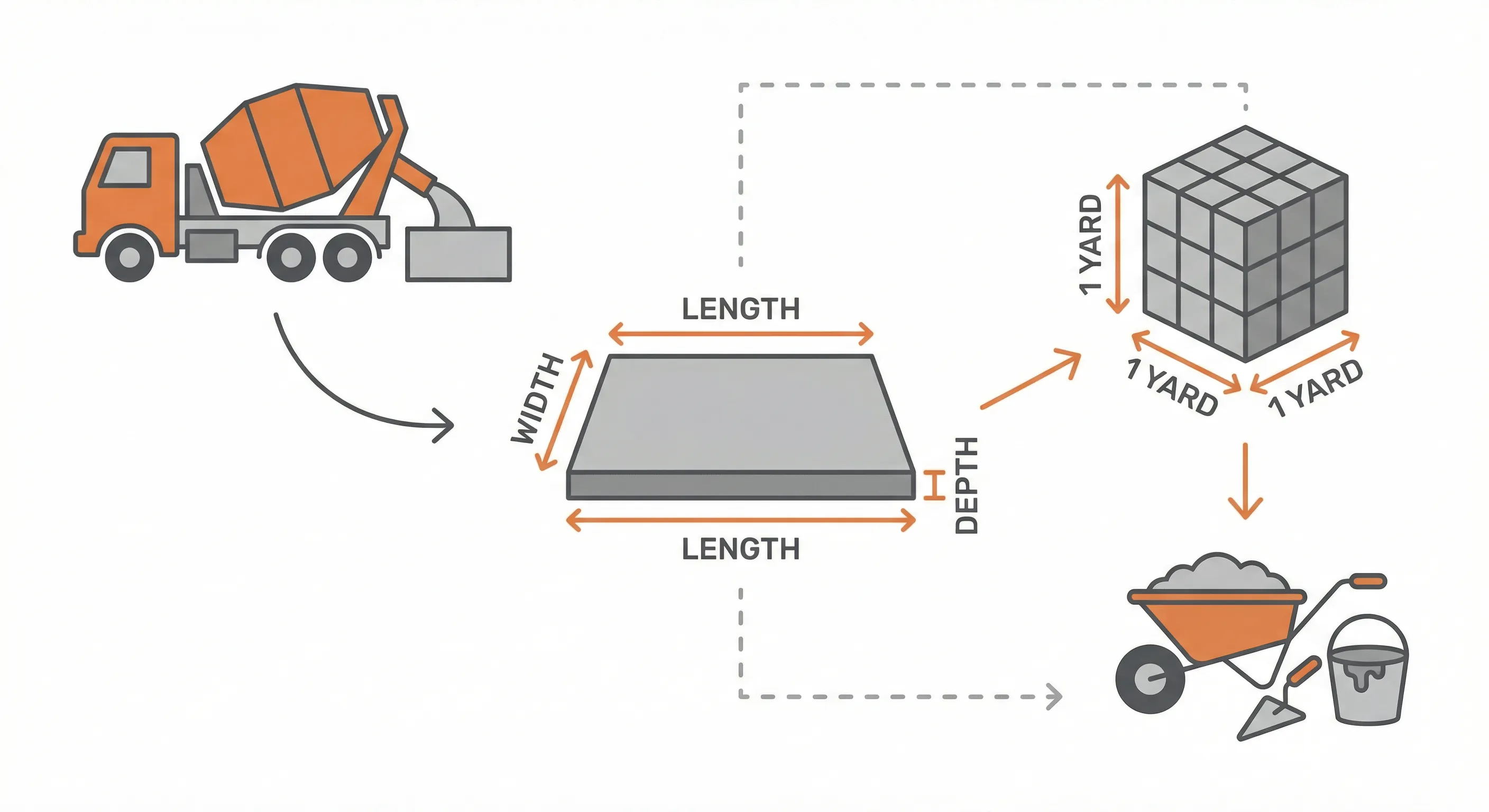
How Much Concrete Do I Need? Concrete Calculator for Slabs & Footings Concrete is calculated in cubic yards. For a 4-inch thick slab, you need approximately 1.23 cubic yards per 100 square feet. A typical 10×10 patio slab requires about 1.3 cubic yards of concrete, or approximately thirty 80-pound bags if mixing by hand. On a typical 12x20-foot driveway extension, the formula calculates 3.3 cubic yards, but ordering 3.75 to account for uneven ground is the safer call. The total comes to $565 in ready-mix concrete, and that extra often gets used in full -- subgrade low spots can swallow nearly half a yard more than the formula predicts. That gap is why rounding up matters more than any waste percentage chart. Use our Concrete Calculator(/construction/concrete-calculator) to get precise quantities for slabs, footings, columns, and more. !Concrete volume calculator showing cubic yards needed for common slab sizes including patio, sidewalk,...
How Much Paint Do I Need for a Room? Complete Calculator Guide
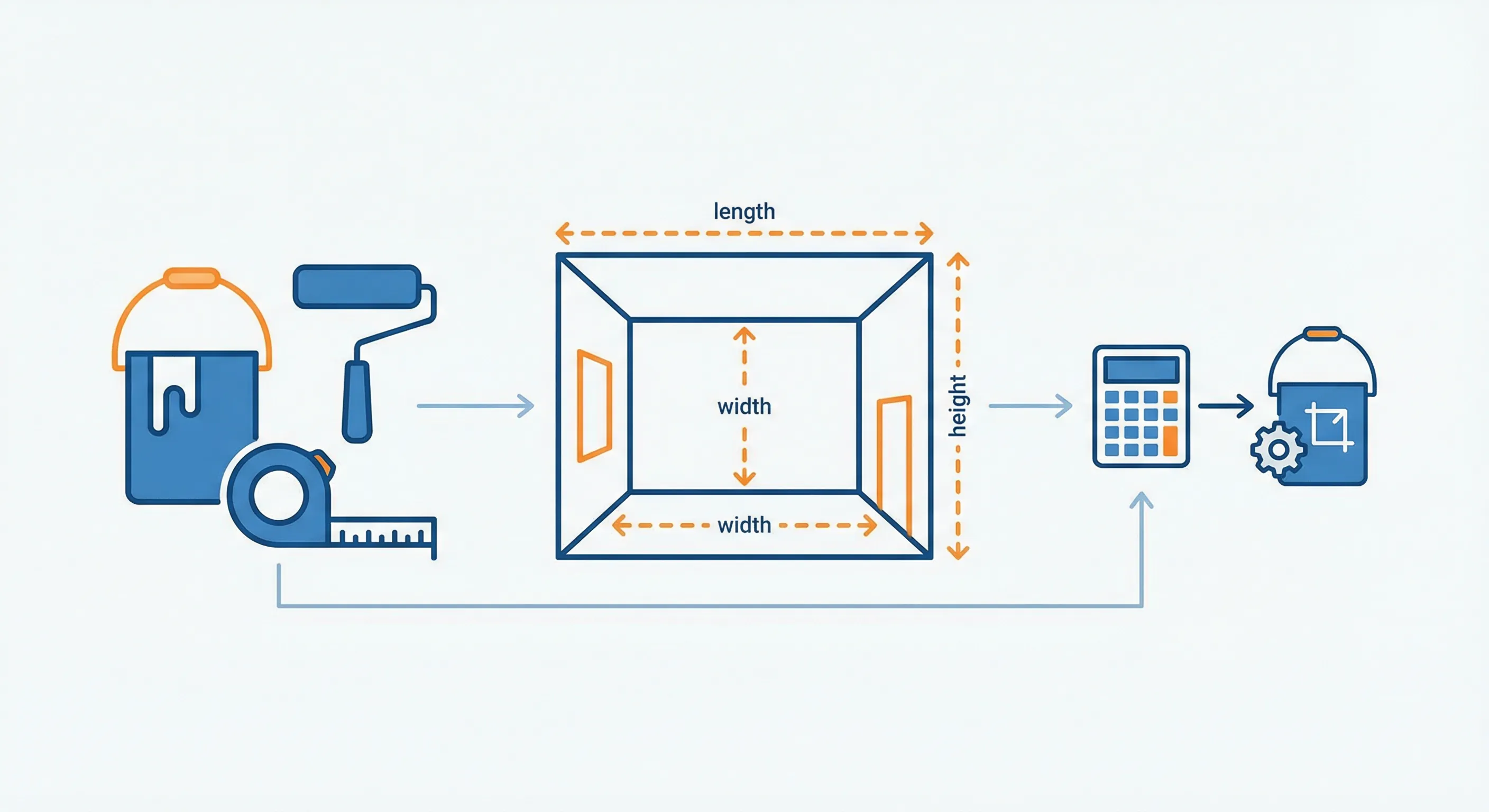
How Much Paint Do I Need for a Room? Complete Calculator Guide One gallon of paint covers approximately 350-400 square feet of wall space with one coat. For a standard 12x12 room with 8-foot ceilings, you'll need about 1.5 gallons for two coats after subtracting doors and windows. But the actual amount depends on your wall texture, paint type, and color change. A realistic multi-room project shows why the buffer matters: painting four bedrooms and a hallway totaling 1,860 square feet of wall space calculates to about 10 gallons with two coats, but knockdown texture in one room can eat through paint so fast it needs an extra gallon just for that room. A project this size runs about $480 in premium eggshell paint -- proof that textured walls can increase paint needs by 20-25% over the manufacturer's label estimate. Use our Paint Calculator(/construction/paint-calculator) to get an instant, accurate estimate...