
André Thibault
CCP & Culinary Educator
Certified Culinary Professional (IACP) and former line cook turned food science obsessive. After culinary school in Montréal and 8 years running professional kitchens, I now teach the science behind why recipes work — and why they fail. Baker's percentages, Maillard temperatures, scaling ratios. Your oven is lying to you, and I can prove it.
Articles by André Thibault (6)
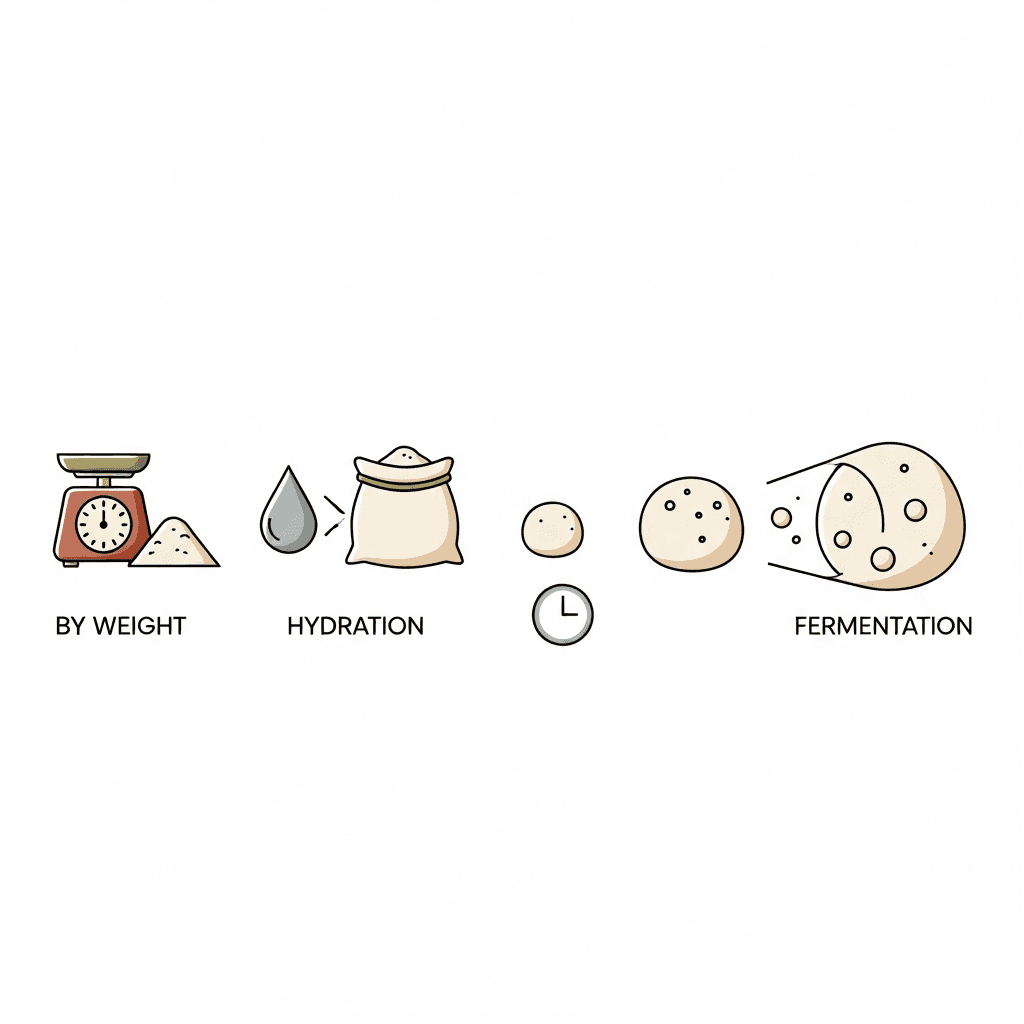
Pizza Dough by Weight: Hydration, Fermentation & Style Guide for Home Ovens
Pizza Dough by Weight: Hydration, Fermentation & Style Guide for Home Ovens Pizza dough is a four-ingredient formula where small percentage changes produce dramatically different results. A 12-inch Neapolitan pizza needs 250g of dough at 62% hydration, while the same size New York slice requires 280g at 63% hydration with added oil and sugar. The difference between a puffy, charred Neapolitan rim and a foldable New York slice isn't talent or a secret recipe — it's baker's percentage math. Cold-fermenting that dough for 24-72 hours in your fridge then develops flavor compounds that same-day dough simply cannot produce, including reduced glycemic response according to a 2025 PMC study on Neapolitan pizza digestibility(https://pmc.ncbi.nlm.nih.gov/articles/PMC12027146/). At UseCalcPro, we built our pizza dough calculator after watching thousands of home bakers guess at ingredient amounts with cup measurements — and consistently end up with dough that's either too wet to shape or too dry to...
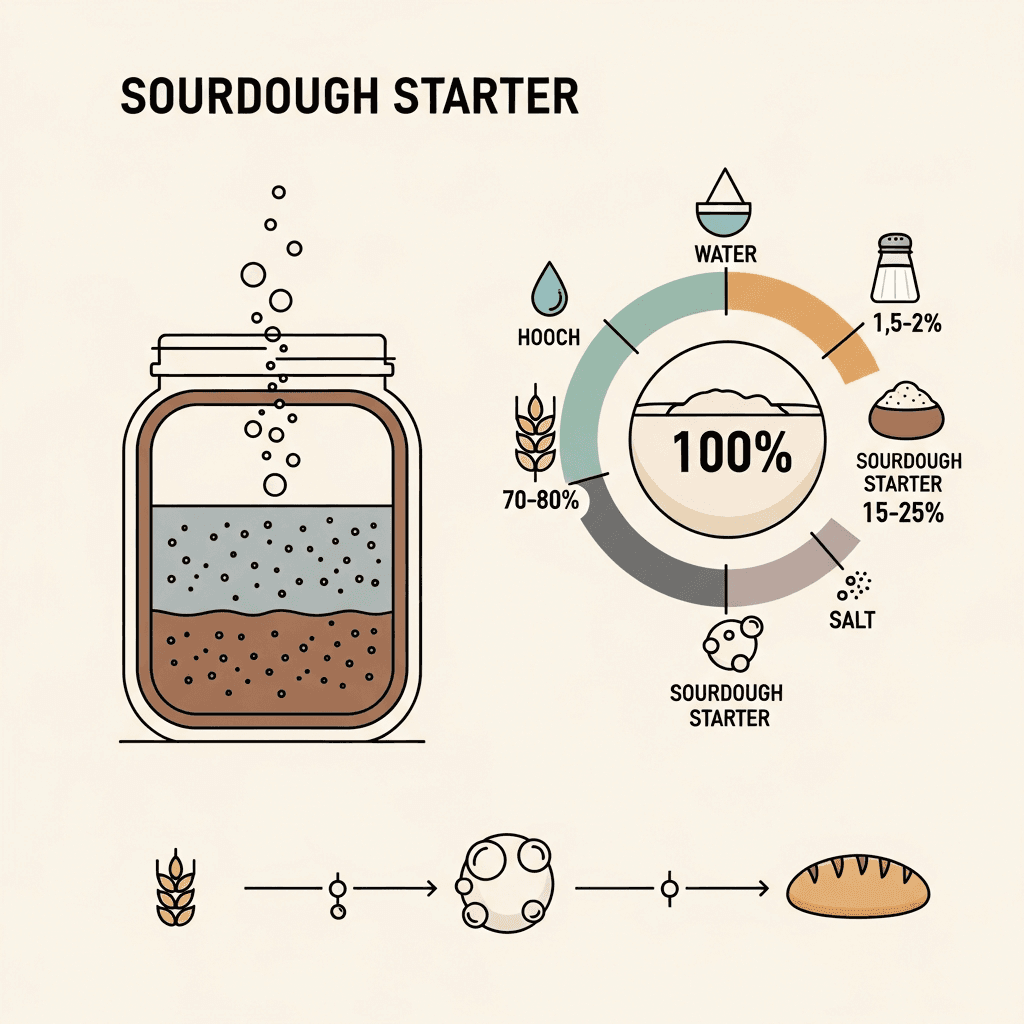
How Baker's Percentage Works: The Math and Science Behind Sourdough Fermentation
How Baker's Percentage Works: The Math and Science Behind Sourdough Fermentation Baker's percentage is a ratio system where every ingredient is expressed relative to total flour weight, which is always 100%. A "70% hydration" dough contains 700 grams of water per 1,000 grams of flour. This single number — hydration — determines whether your crumb is tight and uniform (60-65%) or wild and open (80-85%). But the percentage only sets the stage. What actually builds your bread is fermentation: a biochemical process where wild yeast produces CO2 for rise while lactic acid bacteria produce the acids that define sourdough's flavor, extend its shelf life, and reduce its glycemic index by up to 25 points compared to commercial bread. At UseCalcPro, we've watched thousands of bakers plug numbers into our sourdough tool and then ask the same question: "I got the right amounts, but my bread still came out wrong —...
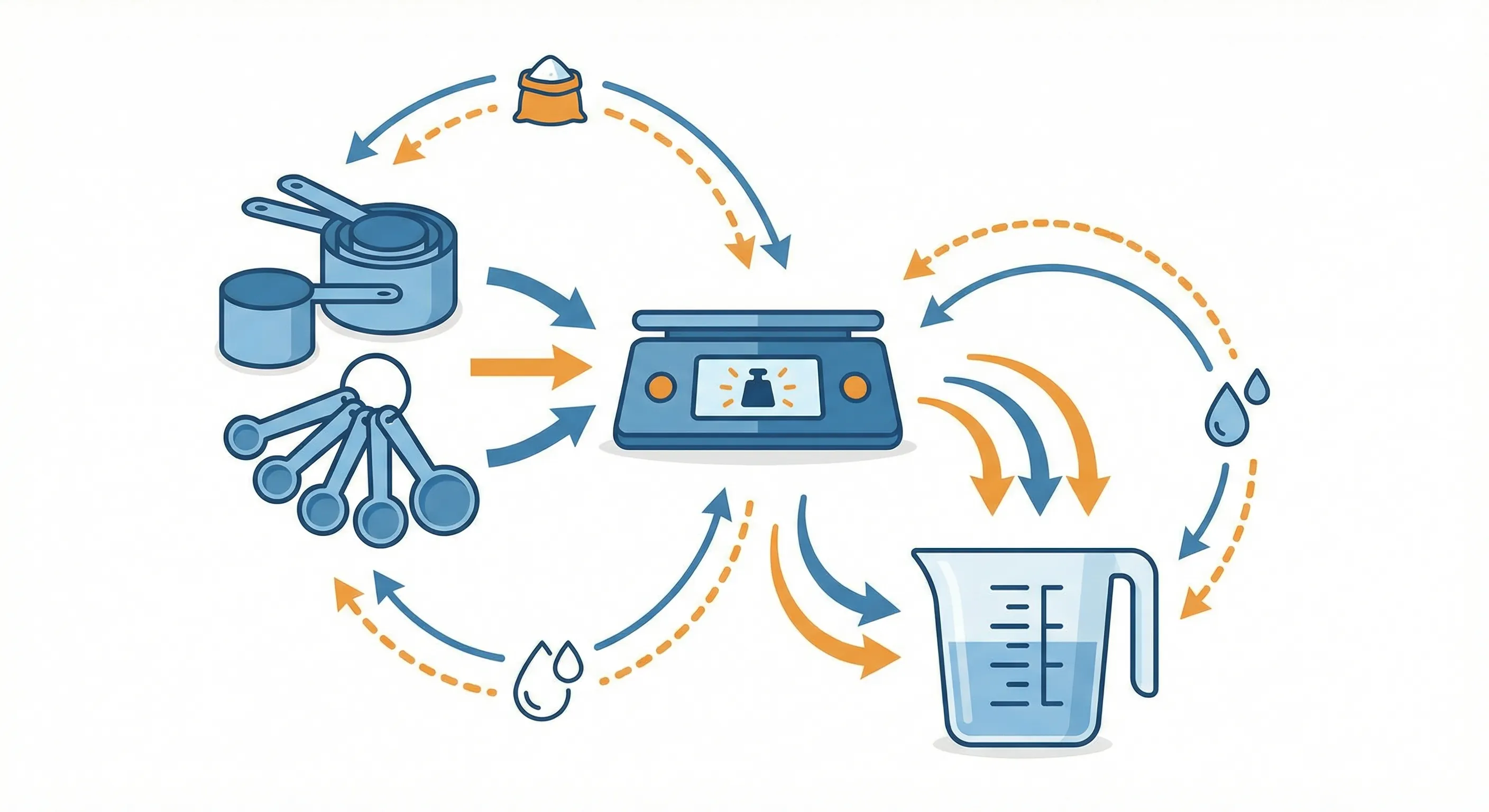
Cooking Measurement Converter: Cups, Grams, Tablespoons & More
Cooking Measurement Converter: Cups, Grams, Tablespoons & More Quick reference: 1 cup = 16 tablespoons = 48 teaspoons = 8 fluid ounces = 237 milliliters. For dry ingredients, weight conversions depend on density — 1 cup of flour weighs 120g, while 1 cup of sugar weighs 200g. After testing 300+ recipes for my food blog, I learned that a "cup of flour" can weigh anywhere from 120g to 155g depending on how you scoop it. That 30% variance ruined my first three attempts at French macarons before I switched to weighing everything on a digital scale. Years of side-by-side baking tests convinced me that understanding measurement conversions is the single biggest factor separating inconsistent results from reliable ones. Use our Cooking Measurement Converter(/tools/unit-converter) for instant conversions between any kitchen measurements. !Kitchen measurement conversion hierarchy chart showing teaspoons to tablespoons to cups to pints to quarts to gallons with metric equivalents(/images/blog/cooking-measurement-conversions.svg)...
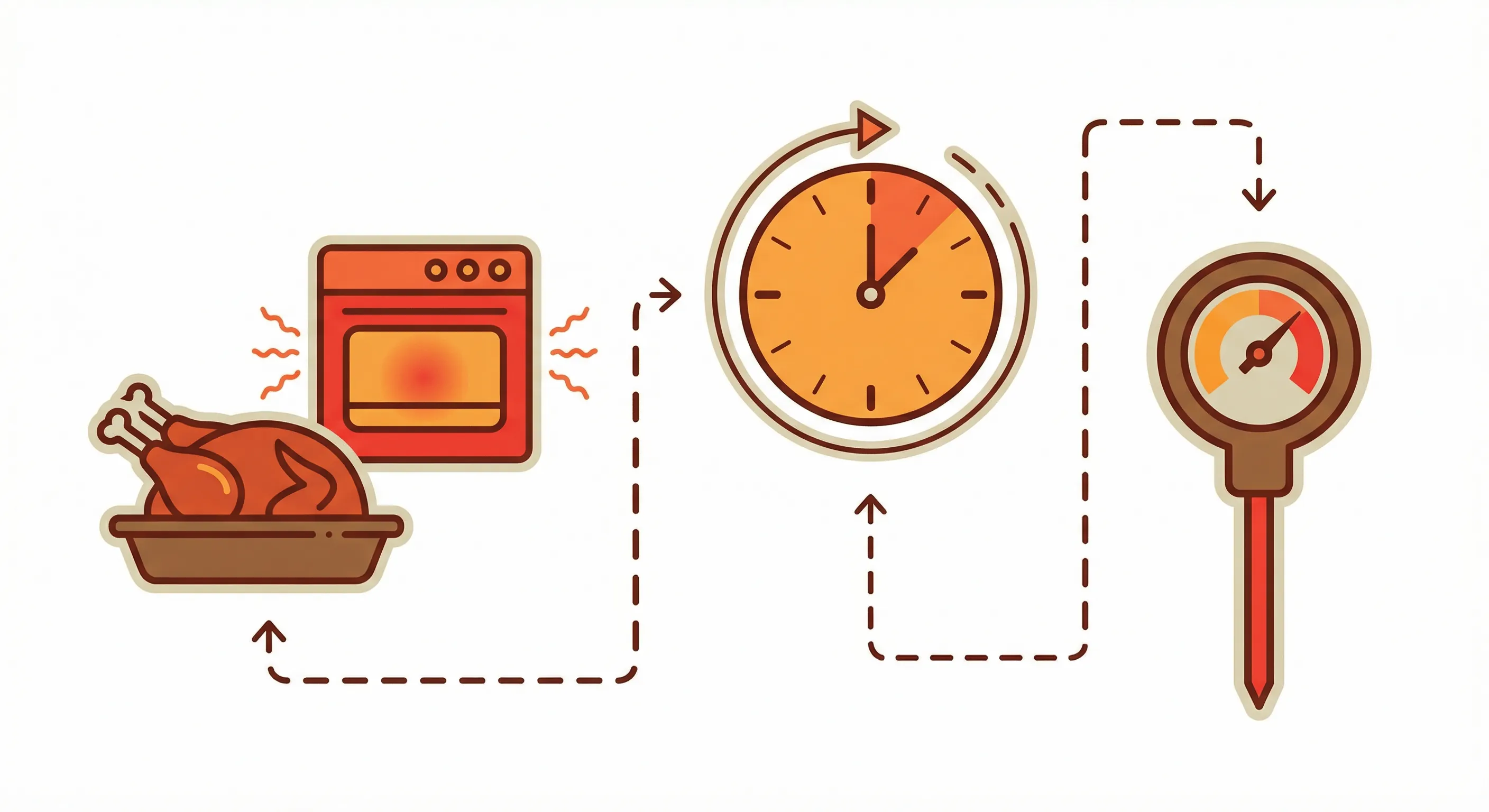
Cooking Time Calculator: How Long to Cook Meat by Weight
Cooking Time Calculator: How Long to Cook Meat by Weight The basic formula for roasting is 15-20 minutes per pound at 350°F (175°C). A 4-pound chicken takes about 80-90 minutes; a 12-pound turkey takes 3-3.5 hours. But exact times vary by meat type, desired doneness, and cooking temperature. Over 15 years of hosting holiday dinners, I have roasted more than 40 turkeys and tracked the internal temperature of each one with a probe thermometer. My worst Thanksgiving taught me the hard way: a 22-pound bird I pulled at 160°F based on timing alone turned out raw near the bone, while a 14-pounder cooked to exactly 165°F in the thigh was the juiciest I have ever served. Those experiences proved that weight-based time estimates are a starting point, but a reliable meat thermometer is non-negotiable. Use our Cooking Time Calculator(/tools/unit-converter) to get precise timing for any roast based on weight and...
Oven Temperature Conversion: Fahrenheit, Celsius & Gas Mark Guide
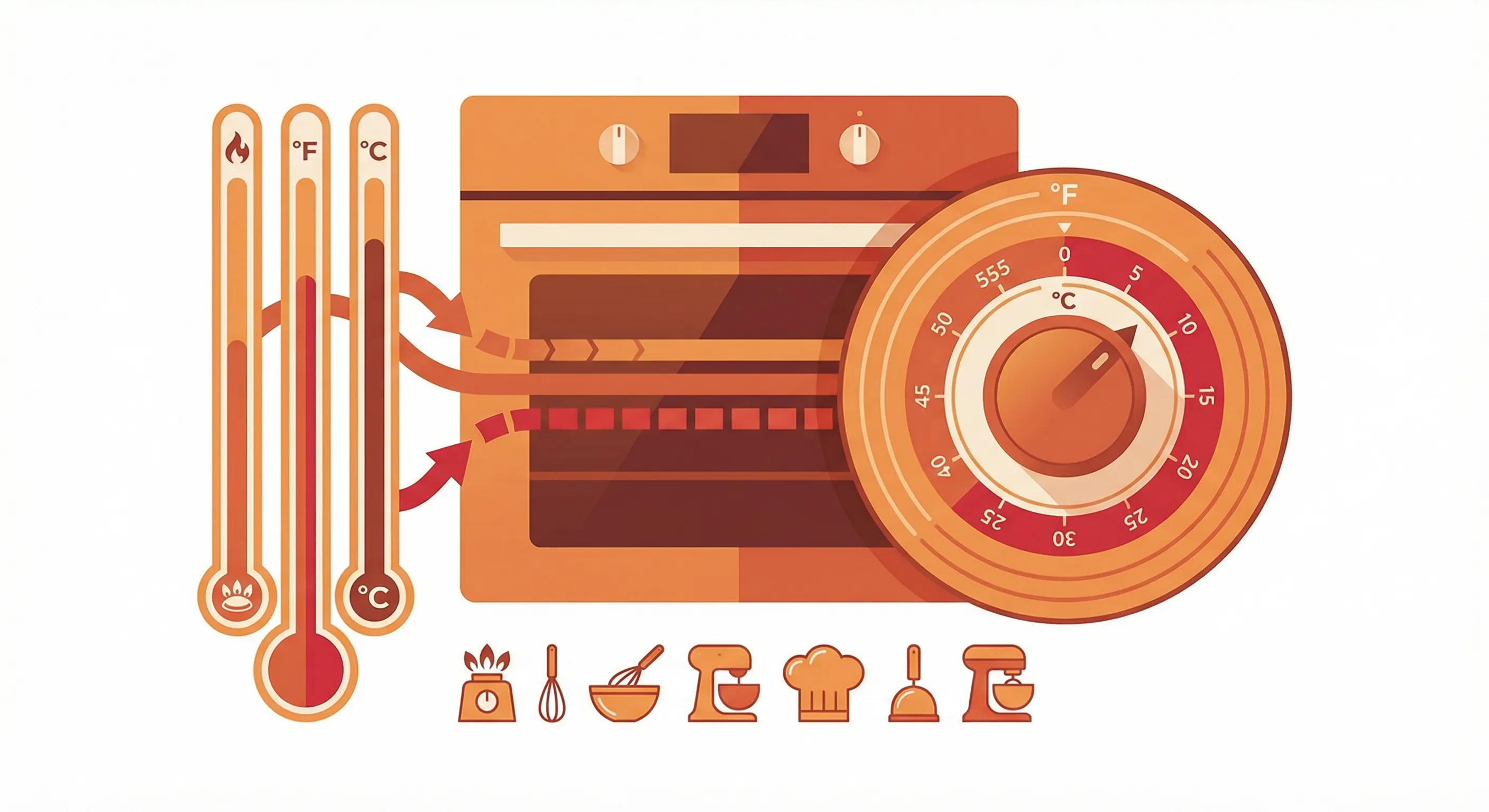
Oven Temperature Conversion: Fahrenheit, Celsius & Gas Mark Guide Quick conversion: Fahrenheit to Celsius = (°F - 32) × 5/9. For common oven temps: 350°F = 175°C = Gas Mark 4. Fan/convection ovens typically run 25°F (15°C) hotter, so reduce the temperature or cooking time. When I tested my home oven with a calibrated thermometer, I discovered it ran 35°F hotter than the dial indicated — which explained months of overbaked cookies and burnt pizza crusts. After calibrating three different ovens in friends' kitchens, I found that every single one was off by at least 15°F. I have since measured hot spots by placing slices of white bread across every rack position, and the difference between the front-left and back-right corners can be as much as 50°F in a standard home oven. Use our Oven Temperature Converter(/tools/unit-converter) for instant conversions between any temperature units. !Oven temperature scale chart showing Fahrenheit...
Recipe Scaler: How to Double or Halve Any Recipe
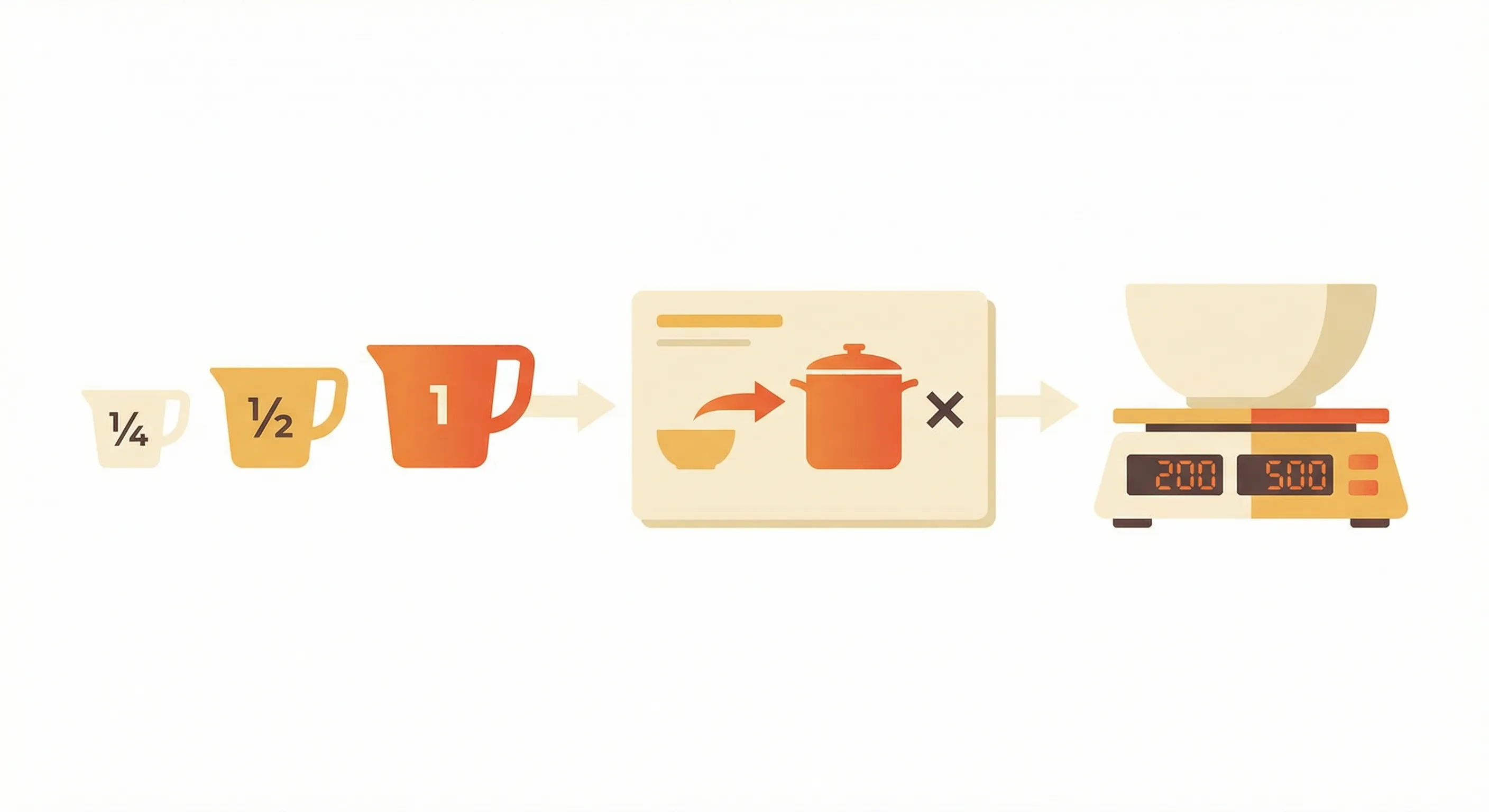
Recipe Scaler: How to Double or Halve Any Recipe To scale a recipe, multiply each ingredient by your scaling factor. To double a recipe, multiply by 2. To halve it, multiply by 0.5. For a recipe that serves 4 when you need 6 servings, multiply everything by 1.5 (6 ÷ 4 = 1.5). I learned recipe scaling the hard way when I quadrupled my chili recipe for a Super Bowl party of 40 guests — 12 pounds of ground beef, 8 cans of tomatoes, and a full cup of chili powder. The meat and tomatoes scaled perfectly, but the spice level nearly sent people running for milk. After catering over 50 events ranging from 10 to 200 servings, I discovered that seasonings, leaveners, and cooking times all follow different scaling rules than the main ingredients. Use our Recipe Calculator(/tools/unit-converter) to instantly scale any recipe to your desired serving size. !Recipe...