When to Start Seeds Indoors: Frost Date Calculator & Planting Schedule
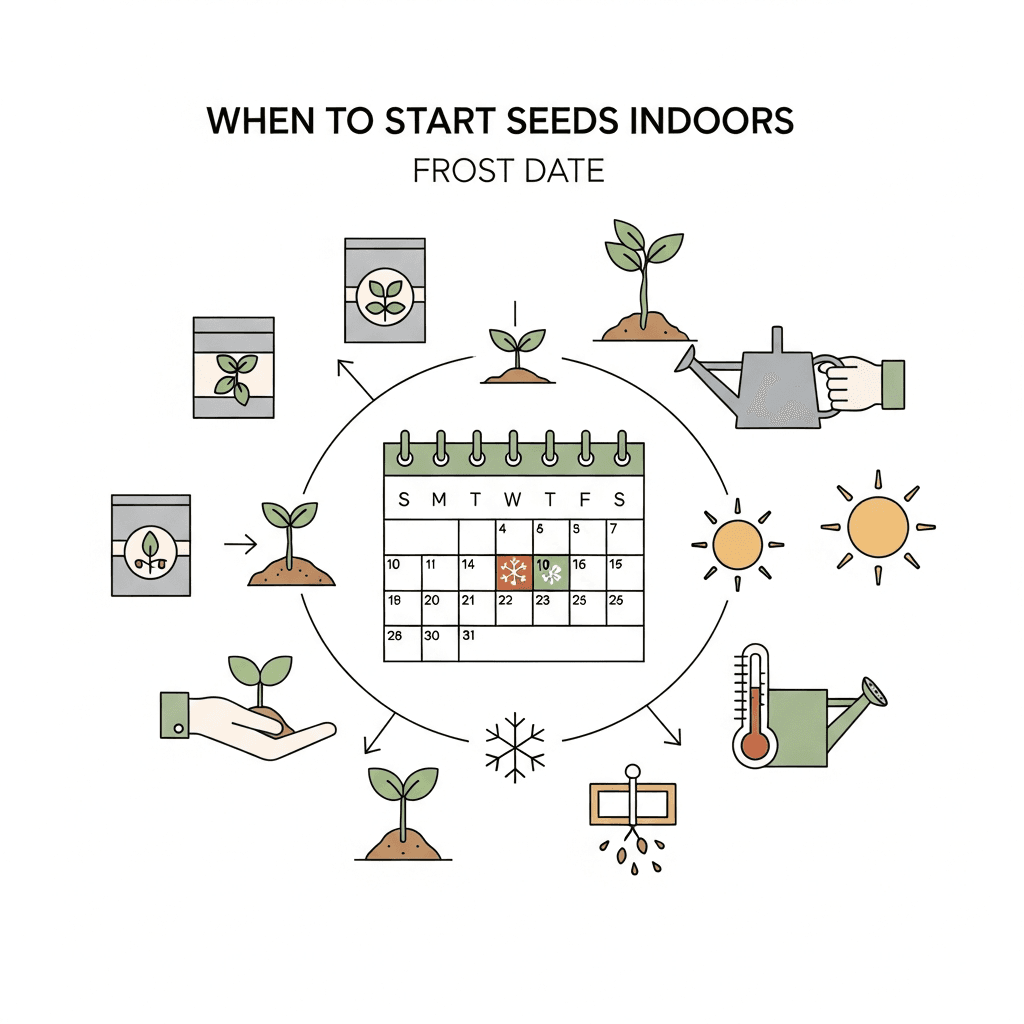
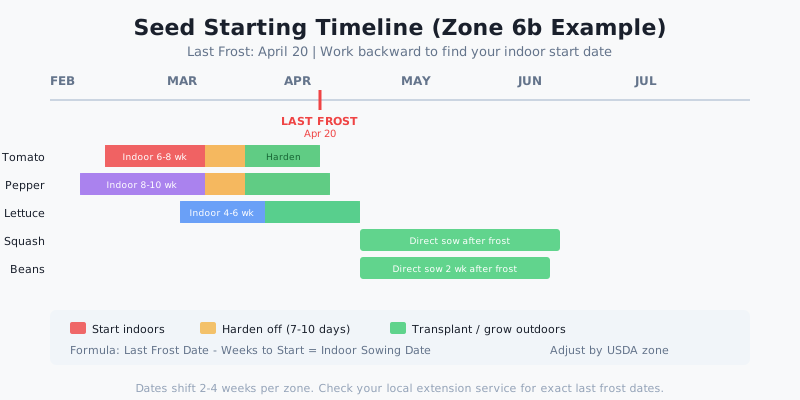
Start most warm-season vegetable seeds indoors 6-8 weeks before your last frost date, and cool-season crops 4-6 weeks before last frost. The formula is simple: Last Frost Date minus Weeks to Start equals Sowing Date. A tomato in Zone 6b (last frost April 20) should go into trays between February 23 and March 9. Plant too early and seedlings get leggy; plant too late and you lose weeks of productive growing season.
An eager gardener I advised in Zone 6b (average last frost: April 20) transplanted $180 worth of warm-season seedlings -- tomatoes, peppers, squash, and basil -- outdoors on April 5 to "get a head start." A late frost on April 12 dropped temperatures to 28F. Every single transplant died. She replanted with store-bought transplants after the confirmed last frost, but the selection at the garden center was picked over, and she spent another $140 on inferior varieties. Total loss: $320. Had she used a cold frame or row cover ($25), she could have planted early with protection. Or she could have waited two more weeks and kept the $180 intact. Calculate before you plant.
Use our Frost Date Calculator to find your last and first frost dates, then build a seed starting schedule that eliminates guesswork.
Understanding Your Last Frost Date
Your last frost date is the average date in spring when the probability of frost (32F or below) drops below 50%. It is an average, not a guarantee. In any given year, the actual last frost can arrive 1-3 weeks earlier or later than the average.
The USDA Plant Hardiness Zone Map was updated in 2023 to reflect 30 years of climate data (1991-2020). Many locations shifted half a zone warmer compared to the 2012 map. Check your current zone -- it may have changed.
Last Frost Dates by USDA Zone
| USDA Zone | Average Last Spring Frost | Average First Fall Frost | Frost-Free Days | Example Cities |
|---|---|---|---|---|
| 3a-3b | May 15 - June 1 | Sept 1 - Sept 15 | 90 - 120 | Duluth MN, International Falls MN |
| 4a-4b | May 1 - May 15 | Sept 15 - Oct 1 | 120 - 150 | Minneapolis MN, Green Bay WI |
| 5a-5b | April 15 - May 1 | Oct 1 - Oct 15 | 150 - 180 | Denver CO, Des Moines IA |
| 6a-6b | April 1 - April 20 | Oct 15 - Nov 1 | 170 - 200 | St. Louis MO, Louisville KY |
| 7a-7b | March 15 - April 1 | Nov 1 - Nov 15 | 200 - 230 | Oklahoma City OK, Nashville TN |
| 8a-8b | Feb 15 - March 15 | Nov 15 - Dec 1 | 240 - 280 | Dallas TX, Atlanta GA |
| 9a-9b | Jan 15 - Feb 15 | Dec 1 - Dec 15 | 280 - 330 | Houston TX, Phoenix AZ |
| 10a-10b | Frost rare | Frost rare | 330 - 365 | Miami FL, Southern CA coast |
Important
These are averages based on historical data. Microclimates (south-facing walls, hilltops, urban heat islands, low-lying frost pockets) can shift your effective last frost date by 1-2 weeks in either direction. Use the Frost Date Calculator with your specific ZIP code for the most accurate local data.
Seed Starting Schedule by Crop
The number of weeks before last frost tells you when to sow indoors. The "days to maturity" on the seed packet tells you when to expect your first harvest after transplanting.
Indoor Seed Starting Timeline
| Crop | Start Indoors (weeks before last frost) | Days to Maturity (from transplant) | Min. Soil Temp for Germination | Frost Tolerance |
|---|---|---|---|---|
| Onions | 10-12 | 90-120 | 50F | Hardy |
| Peppers | 8-10 | 60-90 | 65F | Tender (dies at 32F) |
| Eggplant | 8-10 | 65-80 | 65F | Tender |
| Tomatoes | 6-8 | 60-85 | 60F | Tender |
| Broccoli | 6-8 | 55-70 | 45F | Semi-hardy (handles light frost) |
| Cauliflower | 6-8 | 55-75 | 45F | Semi-hardy |
| Cabbage | 6-8 | 60-100 | 45F | Hardy (handles 20F) |
| Lettuce | 4-6 | 30-60 | 40F | Semi-hardy |
| Kale | 4-6 | 50-65 | 45F | Very hardy (handles 15F) |
| Basil | 4-6 | 55-75 | 65F | Very tender (dies at 35F) |
| Cucumber | 3-4 | 50-70 | 60F | Tender |
| Squash/Zucchini | 3-4 | 45-65 | 60F | Tender |
| Melons | 3-4 | 70-90 | 65F | Very tender |
Worked Example: Zone 6b (Last Frost April 20)
For a Zone 6b garden with a last frost date of April 20:
- Onions: Start January 27 - February 10 (10-12 weeks before)
- Peppers: Start February 10 - February 24 (8-10 weeks before)
- Tomatoes: Start February 23 - March 9 (6-8 weeks before)
- Broccoli: Start February 23 - March 9 (6-8 weeks before)
- Lettuce: Start March 9 - March 23 (4-6 weeks before)
- Cucumbers: Start March 23 - March 30 (3-4 weeks before)
- Squash: Start March 23 - March 30 (3-4 weeks before)
Use the Seed Starting Calculator to generate a customized schedule for your specific zone and crop list.
Tip
Peppers and eggplant need 8-10 weeks because they germinate slowly (7-14 days) and grow slowly in the seedling stage. Tomatoes only need 6-8 weeks because they germinate in 5-7 days and grow vigorously. Starting tomatoes too early (10+ weeks) produces tall, leggy plants that struggle after transplant.
How to Start Seeds Indoors: Step by Step
6-8 weeks sounds like plenty of time, but each step matters. Here is the complete process from seed to transplant.
Step 1: Gather supplies. You need seed starting trays or cell packs, a sterile seed starting mix (not garden soil), a spray bottle, plant labels, and a warm location (65-75F). Optional but recommended: a heat mat ($15-25) and grow lights. Use the Grow Light Calculator to determine the right light intensity for your setup.
Step 2: Fill trays with moistened seed starting mix. Pre-moisten the mix in a bucket until it holds together when squeezed but is not dripping. Fill cells to 1/4 inch below the rim. Do not pack tightly -- roots need air.
Step 3: Sow seeds at the correct depth. The general rule is plant seeds at a depth of 2 times their diameter. Tiny seeds (lettuce, basil) go on the surface and get pressed in but not covered. Large seeds (squash, cucumber) go 1/2 to 1 inch deep. Plant 2 seeds per cell and thin to the strongest after germination.
Step 4: Provide bottom heat for germination. Most warm-season seeds germinate best at soil temperatures of 65-80F. A seedling heat mat raises soil temperature 10-20F above ambient. According to the Oregon State University Extension Service, tomato germination rate increases from 50% at 60F to 95% at 75F.
Step 5: Provide light immediately after germination. Seedlings need 14-16 hours of light per day starting the moment they emerge. A south-facing window provides 4-6 hours of direct light -- insufficient for stocky growth. Supplement with fluorescent or LED grow lights hung 2-4 inches above the seedlings. Raise the lights as plants grow. Use the Grow Light Calculator to determine wattage and hanging height.
Step 6: Water from the bottom. Set trays in a shallow container of water and let the seed starting mix wick moisture upward. This prevents damping off (a fungal disease that kills seedlings at the soil line) and encourages downward root growth. Let the surface dry slightly between waterings.
Step 7: Fertilize after the first true leaves appear. Seed starting mix contains no nutrients. Once seedlings develop their first set of true leaves (the second pair after the round cotyledons), begin feeding with a diluted liquid fertilizer at 1/4 strength once per week.
Step 8: Harden off for 7-10 days before transplanting. Seedlings grown indoors have never experienced wind, UV radiation, or temperature swings. Move them outdoors to a sheltered, shaded location for 1-2 hours on day one. Increase exposure by 1-2 hours each day, gradually introducing more sun and wind. By days 7-10, leave them out overnight if temperatures stay above 50F. This is the most commonly skipped step and the most common reason transplants fail.
Warning
Skipping hardening off is like sending a greenhouse plant into a windstorm. Unhardened transplants suffer sunscald (white patches on leaves), wind damage (snapped stems), and transplant shock that sets growth back 2-3 weeks. That "head start" from indoor sowing disappears if you skip the transition.
Succession Planting: Extend Your Harvest
36 lettuce plants all maturing on the same day gives you a two-week harvest window and then nothing. Succession planting staggers your sowing dates so you harvest continuously for weeks or months.
The Succession Planting Formula
Number of Sowings = Growing Season (weeks) / Harvest Window (weeks)
Sowing Interval = Harvest Window (weeks)
For lettuce in Zone 6b:
- Growing season for cool-season lettuce: March 9 to May 25 (11 weeks spring) + September 1 to November 1 (9 weeks fall) = 20 weeks total
- Lettuce harvest window: 2-3 weeks per planting
- Number of sowings: 20 / 2.5 = 8 succession plantings
- Sow every 2.5 weeks (roughly every 17 days)
Succession Planting Schedule for Common Crops
| Crop | Sow Every | Plants per Sowing | Season (Zone 6b) | Total Harvests |
|---|---|---|---|---|
| Lettuce | 2-3 weeks | 12-18 | March - May, Sept - Nov | 7-10 |
| Radishes | 2 weeks | 20-30 | March - May, Sept - Oct | 6-8 |
| Bush beans | 3 weeks | 12-20 | May - July | 4-5 |
| Cilantro | 3 weeks | 8-12 | March - May, Sept - Oct | 5-7 |
| Spinach | 2-3 weeks | 12-18 | March - May, Sept - Nov | 6-8 |
| Carrots | 3-4 weeks | 30-50 | April - July | 4-5 |
Use the Seed Spacing Calculator to plan how many plants fit in each succession planting based on your bed dimensions.
Seed Viability: How Long Do Seeds Last?
Not every seed packet needs to be fresh. Many vegetable seeds remain viable for 2-5 years when stored properly (cool, dry, dark). Knowing viability saves you from buying new seeds every season.
Seed Viability Chart
| Crop | Viability (years) | Germination Rate (fresh) | Germination Rate (end of viability) |
|---|---|---|---|
| Onions, leeks | 1-2 | 85-95% | 50-60% |
| Parsnips | 1-2 | 60-75% | 30-40% |
| Corn | 2-3 | 90-95% | 60-70% |
| Peppers | 2-3 | 80-90% | 50-60% |
| Lettuce | 3-5 | 85-95% | 60-70% |
| Tomatoes | 4-5 | 85-95% | 65-75% |
| Beans | 3-4 | 85-95% | 60-70% |
| Cucumbers | 5-6 | 85-95% | 65-75% |
| Squash, melons | 4-6 | 85-95% | 65-75% |
| Radishes | 4-5 | 85-95% | 65-75% |
| Carrots | 3-4 | 70-85% | 40-55% |
| Brassicas (broccoli, cabbage) | 3-5 | 85-95% | 60-70% |
According to Texas A&M AgriLife Extension, seed viability depends primarily on storage conditions. Seeds stored in a cool (40-50F), dry (below 50% relative humidity) location last 2-3 times longer than seeds stored in a warm, humid garage. A sealed jar in the refrigerator is ideal.
Tip
Test old seeds before relying on them. Place 10 seeds on a damp paper towel, fold it, seal in a plastic bag, and set in a warm place (70-75F). Check after the expected germination time for that crop. If 7 out of 10 sprout, you have 70% viability -- usable but sow a bit more densely. Below 50%, buy fresh seed.
Protecting Transplants from Late Frost
Even with perfect timing, unexpected late frosts happen. The soil doesn't lie -- but the weather forecast sometimes does. Here are proven protection strategies ranked by cost and effectiveness.
| Protection Method | Cost | Temperature Protection | Reusable? | Best For |
|---|---|---|---|---|
| Row cover (floating) | $10-25 per 50 ft | 2-6F below frost | 2-3 seasons | Large beds, broad coverage |
| Cold frame | $25-100 | 10-15F below frost | 5+ years | Starting hardening off, season extension |
| Wall-o-Water | $3-5 each | 10-15F below frost | 2-3 seasons | Individual tomato/pepper plants |
| Plastic cloches | $1-3 each (or free from milk jugs) | 3-5F below frost | 1-2 seasons | Individual plants |
| Bedsheets/blankets | Free (you own them) | 2-4F below frost | N/A | Emergency single-night frost protection |
A $25 row cover protecting $180 in transplants is the best insurance in gardening. Every square foot counts -- protect what you've invested.
When to Remove Frost Protection
Remove covers once daytime temperatures consistently exceed 70F and nighttime lows stay above 50F. Leaving covers on too long traps heat and humidity, encouraging fungal diseases. Monitor your specific conditions with the Frost Date Calculator.
Greenhouse and Indoor Growing Extensions
For gardeners in short-season zones (3-5), an unheated greenhouse or high tunnel extends the growing season 4-8 weeks on each end. Use the Greenhouse Calculator to size a greenhouse and estimate heating costs if needed.
Key greenhouse seed starting advantages:
- Start seeds 2-4 weeks earlier than indoor-only setups (better light quality)
- Harden off seedlings passively (they are already in a semi-outdoor environment)
- Grow cold-tolerant crops (lettuce, spinach, kale) through winter in Zones 6-8
- Germinate heat-loving seeds (peppers, eggplant) more reliably with solar heating
Frequently Asked Questions
When should I start tomato seeds indoors?
Start tomato seeds indoors 6-8 weeks before your last frost date. In Zone 6b (last frost April 20), that means sowing between February 23 and March 9. Tomatoes germinate in 5-10 days at 65-80F soil temperature and need 14-16 hours of light daily after emergence. Starting earlier than 8 weeks produces leggy, overgrown transplants. Use the Seed Starting Calculator for your exact zone timing.
How do I find my last frost date?
Your last frost date is based on your USDA Hardiness Zone and local weather station records. Enter your ZIP code in our Frost Date Calculator to get your average last spring frost and first fall frost dates. You can also check with your local cooperative extension service or the USDA Plant Hardiness Zone Map for zone information.
What happens if I start seeds too early?
Seedlings started too early become tall, leggy, and root-bound before outdoor conditions are warm enough for transplanting. Leggy plants have weak stems prone to snapping in wind, and root-bound plants establish slowly because their roots are tangled in a tight ball. The ideal transplant is 6-8 inches tall with a thick stem and a root ball that holds together when removed from the cell but is not circling the container.
Can I direct sow instead of starting indoors?
Yes, for some crops. Fast-maturing, frost-tolerant crops (radishes, lettuce, peas, spinach, beans, corn, squash) do well direct-sown into garden soil after the last frost date. Slow-maturing, heat-loving crops (tomatoes, peppers, eggplant, onions) benefit from indoor starting because they need 60-120 days to mature and would not have time to produce fruit if direct-sown in short-season zones. Check the Seed Spacing Calculator for direct sow spacing guidelines.
How much light do seedlings need?
Seedlings need 14-16 hours of light per day. A south-facing window provides 4-6 hours of direct sunlight, which is insufficient for most vegetable seedlings. Supplement with LED or fluorescent grow lights positioned 2-4 inches above the plant canopy. As seedlings grow, raise the light to maintain the 2-4 inch gap. Use our Grow Light Calculator to determine the wattage and coverage area you need.
What is hardening off and why is it important?
Hardening off is the 7-10 day process of gradually introducing indoor-grown seedlings to outdoor conditions (sun, wind, temperature fluctuations). Start by placing seedlings outdoors in a sheltered, shaded spot for 1-2 hours on day one, then increase exposure daily. Without hardening off, transplants suffer sunscald, wind damage, and shock that can delay growth by 2-3 weeks or kill the plant entirely. It is the single most important step between indoor growing and outdoor planting.
Related Calculators
- Frost Date Calculator -- Find your last and first frost dates by ZIP code
- Seed Starting Calculator -- Generate a customized sowing schedule for your zone and crops
- Seed Spacing Calculator -- Plan planting density for direct sow and transplant spacing
- Grow Light Calculator -- Determine light wattage and hanging height for indoor seedlings
- Greenhouse Calculator -- Size a greenhouse for season extension and year-round growing
Related Articles
- How to Build a Raised Bed Garden: Complete Soil & Materials Calculator Guide -- Build the beds your seedlings will grow in
- Composting for Beginners: C:N Ratios, Methods & Calculator Guide -- Create nutrient-rich compost for transplant day soil amendments
- Vegetable Garden Spacing & Yield Guide -- Maximize yield per square foot once your seedlings are in the ground
This article provides general seed starting and planting guidance for educational purposes. Frost dates are averages based on historical weather data and vary year to year. Always monitor local weather forecasts before transplanting and consult your local cooperative extension service for region-specific planting calendars.
This article is provided for informational and educational purposes only. Content should not be considered professional financial, medical, legal, or other advice. Always consult a qualified professional before making important decisions. UseCalcPro is not responsible for any actions taken based on the information in this article.
Try These Calculators
Look up frost dates by USDA zone and get a planting schedule for vegetables and herbs. See last spring frost, first fall frost, and growing season length.
Find exactly when to start seeds indoors by USDA zone. Get a personalized planting schedule with indoor start dates, transplant timing, and harvest windows.
Plan your garden layout with correct plant and row spacing. Enter bed dimensions and crop type to get exact plant counts, row counts, and seed quantities.
Calculate weekly water needs for lawns, vegetables, shrubs, and trees by soil type, sun exposure, and climate. Get gallons, runtime, and drip emitter counts.
Find the best companion planting pairs for your garden. Check compatibility for 20+ vegetables, herbs, and flowers with spacing tips and clear reasons.