Raised Bed vs In-Ground Garden Cost in 2026 (Full Comparison)
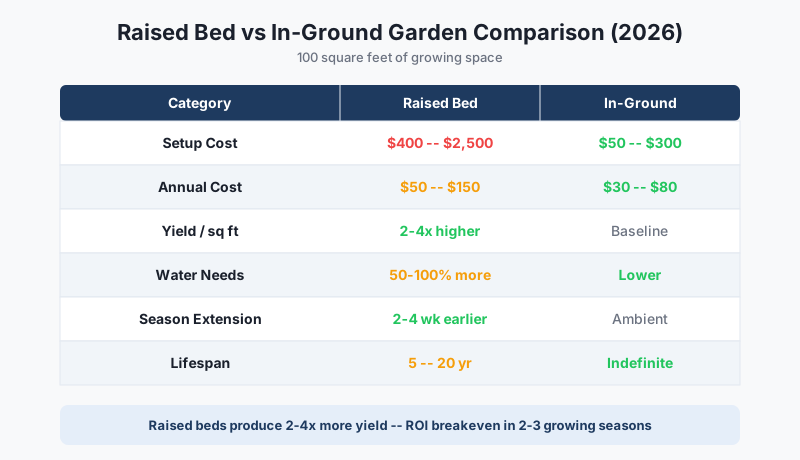
A raised bed garden costs $100-$900 per 4x8 bed in 2026, depending on frame material and soil fill, while an in-ground garden costs near zero to $200 if your native soil is workable. Raised beds produce 2-4x more yield per square foot through intensive spacing and controlled soil, but they require 50-100% more water due to faster drainage. For 100 square feet of growing space, expect $400-$2,500 in first-year raised bed costs versus $50-$300 for in-ground, with ongoing annual costs of $50-$150 and $30-$80, respectively.
Consider a real 100-square-foot comparison in USDA Zone 6b: three 4x8 cedar raised beds at 12 inches deep, filled with 32 cubic feet each of a 40/40/20 topsoil-compost-vermiculite mix. Total first-year cost: $870 for lumber, hardware, and 4.2 cubic yards of bulk soil blend. A neighboring in-ground plot -- same 100 square feet, tilled and amended with 3 inches of compost and a 10-10-10 fertilizer application -- cost $95 total. By August, the raised beds had produced 147 pounds of tomatoes, peppers, and squash from intensive 12-inch spacing. The in-ground plot yielded 68 pounds from standard 24-inch row spacing. The soil doesn't lie. Both methods work, but the cost-per-pound math tells a very different story depending on how many seasons you plan to grow.
Use the Raised Bed Calculator to estimate soil volume, material costs, and yield projections for your specific bed dimensions before committing to either method.
Side-by-Side Comparison
Before diving into the details, here is how raised beds and in-ground gardens stack up across every factor that affects your growing season and your budget:
| Factor | Raised Bed Garden | In-Ground Garden |
|---|---|---|
| Setup Cost (100 sq ft) | $400-$2,500 | $50-$300 |
| Annual Ongoing Cost | $50-$150 | $30-$80 |
| Yield Per Square Foot | 2-4x higher (intensive spacing) | Baseline (row spacing) |
| Water Requirements | 50-100% more (faster drainage) | Lower (retains moisture longer) |
| Soil Control | Complete (custom pH, drainage, NPK) | Depends on native soil quality |
| Season Extension | 2-4 weeks earlier start in spring | Follows ambient ground temperature |
| Accessibility | Excellent at 24-36 inches height | Requires bending/kneeling |
| Scalability | Expensive to expand | Nearly unlimited at low cost |
| Lifespan | 5-20 years (material dependent) | Indefinite |
| Best For | Small spaces, poor native soil, mobility needs | Large plots, good native soil, budget priority |
The numbers in this table come from university extension research and 2026 supplier pricing. The yield multiplier deserves special attention: raised beds achieve higher output not because the plants are inherently different, but because square-foot gardening eliminates wasted row space and the controlled soil environment pushes growth rates higher. Nature runs on ratios -- learn them, and you can predict which method pays off faster for your situation.
Raised Bed Gardens: Full Cost Breakdown
The total cost of a raised bed breaks into two categories: the frame and the fill. Frame material drives the biggest cost variation, while soil fill is surprisingly consistent across most regions.
Frame Materials by Type
| Material | Cost Per 4x8 Bed | Lifespan | Maintenance | Notes |
|---|---|---|---|---|
| Cedar | $150-$300 | 5-10 years | None (naturally rot-resistant) | Most popular; weathers to silver-gray |
| Galvanized Steel | $200-$400 | 15-20 years | Minimal (no rot, no pests) | Heats soil faster in spring |
| Composite/Recycled Plastic | $250-$500 | 15-20 years | None | No leaching concerns; heavier |
| Stone/Concrete Block | $300-$900 | 20+ years | Minimal (repoint mortar occasionally) | Permanent; can raise soil pH slightly |
| Untreated Pine | $60-$120 | 2-4 years | Annual sealing recommended | Cheapest option but shortest life |
Cedar remains the standard choice for most home gardeners. A 4x8 bed at 12 inches deep uses approximately 48 linear feet of 2x12 lumber plus corner hardware. At $4-$6 per linear foot for cedar 2x12 boards in 2026, the lumber alone runs $192-$288 before screws and brackets.
Galvanized steel panels have gained significant ground since 2022. They warm the soil 2-3 degrees Fahrenheit faster than wood in spring, which matters in Zones 3-5 where the last frost date can push into late May. The trade-off is that steel beds also heat soil more in summer, which can stress shallow-rooted crops like lettuce in Zones 7 and above.
Soil Fill Costs
A 4x8 bed at 12 inches deep requires 32 cubic feet of growing medium, which equals 1.19 cubic yards. With the standard 15-20% settling overage, plan on ordering 1.4 cubic yards.
| Soil Source | Cost Per Cubic Yard | Cost for 1.4 Cu Yd (One 4x8 Bed) | Quality |
|---|---|---|---|
| Bulk topsoil/compost blend | $40-$80 | $56-$112 | Good for most vegetables |
| Bulk triple mix (topsoil/compost/peat) | $55-$100 | $77-$140 | Excellent drainage and nutrition |
| Bagged raised bed mix | $120-$200 per cu yd equivalent | $168-$280 | Premium but expensive at scale |
The optimal raised bed soil recipe follows a ratio that university extension programs have validated repeatedly: 40% topsoil, 40% compost, and 20% drainage material (perlite, vermiculite, or coarse sand). This blend targets a pH of 6.2-6.8, which suits 90% of common vegetables. Every square foot counts -- do not fill expensive frames with cheap topsoil alone. A 50/50 topsoil-compost blend without drainage amendment compacts within two seasons, reducing root penetration by 30-40%.
Total First-Year Raised Bed Costs
For 100 square feet of growing area (three 4x8 beds plus one 4x4 bed):
| Component | Cedar Frame | Steel Frame | Stone/Block |
|---|---|---|---|
| Frames | $500-$1,000 | $650-$1,300 | $1,000-$3,000 |
| Soil fill (5.6 cu yd) | $224-$560 | $224-$560 | $224-$560 |
| Hardware/liner | $40-$80 | $20-$40 | $0-$50 |
| Total | $764-$1,640 | $894-$1,900 | $1,224-$3,610 |
Ongoing annual costs run $50-$150, covering 2-3 inches of compost top-dressing ($20-$50), organic fertilizer ($15-$30), and occasional soil amendments like lime or sulfur to maintain target pH ($10-$25).
In-Ground Gardens: Full Cost Breakdown
An in-ground garden starts with what you already have: native soil. The cost depends entirely on what that soil needs to become productive.
Soil Testing (Essential First Step)
A basic soil test through your county extension office costs $10-$25 and tells you pH, phosphorus, potassium, and organic matter content. Without this data, you are guessing at amendments. A common and costly mistake is dumping $80 of lime onto soil that is already at pH 7.2 -- a complete waste that pushes calcium levels into the range where iron and manganese become unavailable to plants. Calculate before you plant.
First-Year Amendment Costs
| Amendment | Purpose | Cost Per 100 Sq Ft | When to Apply |
|---|---|---|---|
| Compost (3-inch layer) | Organic matter, soil structure | $25-$60 | Spring, 2-4 weeks before planting |
| 10-10-10 fertilizer | NPK baseline | $8-$15 | At planting, side-dress mid-season |
| Lime (if pH below 6.0) | Raise pH | $5-$12 | Fall (takes 2-3 months to activate) |
| Sulfur (if pH above 7.5) | Lower pH | $8-$15 | Fall (slow-acting) |
| Gypsum (clay soils) | Improve drainage without changing pH | $10-$20 | Spring or fall |
| Tiller rental (one-time) | Break compacted soil | $50-$80/day | Initial garden prep only |
Total first-year in-ground cost for 100 square feet: $50-$200, depending on native soil condition and whether you need a tiller rental. If your soil is already loose, well-drained loam with a pH between 6.0 and 7.0, you may spend under $40 on compost and fertilizer alone.
Ongoing Annual Costs
In-ground gardens need annual organic matter replenishment. Compost at 1-2 inches per year ($15-$40 for 100 square feet), plus fertilizer ($8-$15) and any pH corrections ($5-$15) bring the yearly total to $30-$80. The cost stays flat year over year because you are maintaining existing soil rather than replacing a contained volume.
Yield Comparison: What the Research Shows
This is where raised beds justify their higher cost. University extension research consistently shows that raised beds produce 2-4x more harvestable produce per square foot than traditional in-ground row gardens.
Why Raised Beds Yield More
Three factors drive the yield difference:
Intensive spacing. Square-foot gardening in raised beds eliminates the 24-36 inch row spacing that in-ground gardens require for walking paths and cultivation access. A 4x8 raised bed plants tomatoes at 12-18 inch centers instead of 36 inches. That density translates directly to more plants per unit area.
Superior soil conditions. Custom soil blends in raised beds deliver the ideal 25% air space, 25% water holding, and 50% solid particle ratio that root systems need. Native in-ground soil rarely hits this profile without years of amendment. According to Oregon State University Extension, vegetable root growth rates increase 20-40% in optimized raised bed soil compared to average garden soil.
Fewer pest and weed pressures. Raised beds with landscape fabric bottoms reduce weed germination by 60-80%. Less weed competition means more water and nutrients reach your crops. The elevated position also discourages some ground-dwelling pests, though it does not eliminate them entirely.
Yield Data by Crop
| Crop | In-Ground Yield (per sq ft) | Raised Bed Yield (per sq ft) | Multiplier |
|---|---|---|---|
| Tomatoes | 0.8-1.2 lbs | 2.0-3.5 lbs | 2.5-3x |
| Lettuce | 0.5-0.8 lbs | 1.0-1.5 lbs | 2x |
| Peppers | 0.4-0.7 lbs | 1.0-1.8 lbs | 2.5x |
| Bush Beans | 0.3-0.5 lbs | 0.6-1.0 lbs | 2x |
| Zucchini | 1.0-1.5 lbs | 2.5-4.0 lbs | 2.5x |
| Carrots | 0.5-0.8 lbs | 1.2-2.0 lbs | 2.5x |
These figures assume experienced gardeners using appropriate spacing for each method. A first-year gardener will see lower yields in both systems, but the relative advantage of raised beds holds. The data is consistent with findings from Gardener's Supply Company trials and multiple university extension programs including Cornell and Oregon State.
When to Choose Raised Beds
Raised beds are the clear winner in five specific scenarios:
Poor native soil. If your property sits on heavy clay (drainage takes hours, not minutes), compacted fill (common in new construction), or highly acidic/alkaline soil (pH below 5.5 or above 8.0), building up is faster and cheaper than fixing native soil. Amending heavy clay to a depth of 12 inches across 100 square feet requires 3-5 years of intensive compost application and cover cropping. A raised bed gives you productive soil in week one.
Drainage problems. Properties with high water tables, seasonal flooding, or poor grading benefit immediately from the elevation. A 12-inch raised bed lifts the root zone above standing water. In Zones 5-7 where spring snowmelt saturates low-lying ground through April, raised beds can start growing 3-4 weeks earlier simply because the soil drains and warms faster.
Accessibility needs. Beds built at 24-36 inches eliminate bending and kneeling entirely. For gardeners with back injuries, knee replacements, or mobility limitations, this is not a luxury -- it is the difference between gardening and not gardening. The additional frame cost ($100-$200 more for tall walls) is trivial compared to the accessibility gain.
Small urban spaces. Patios, rooftops, driveways, and other hardscaped areas can support raised beds where in-ground planting is physically impossible. A single 4x8 cedar bed on a concrete patio produces 40-80 pounds of vegetables per season.
Rental properties. Raised beds are portable (sort of). Cedar and steel frames can be disassembled and moved. You cannot take an in-ground garden with you when the lease ends.
When to Choose In-Ground
In-ground gardens win decisively in four situations:
Large-scale growing. If you want 500 or 1,000 square feet of growing space, raised beds become prohibitively expensive. At $400-$2,500 per 100 square feet for raised bed setup, scaling to 500 square feet costs $2,000-$12,500. In-ground setup for the same area runs $250-$1,000. Every additional square foot of in-ground garden costs pennies. Every additional square foot of raised bed costs dollars.
Budget priority. When the goal is maximum food production per dollar invested, in-ground gardens deliver faster payback. A $150 investment in compost, fertilizer, and seeds for 200 square feet of in-ground garden can produce $400-$600 of grocery-value produce in the first season. The same $150 does not even cover the frame for a single 4x8 raised bed.
Good native soil. If your soil test comes back with pH 6.2-6.8, adequate phosphorus and potassium, 3-5% organic matter, and good drainage, you already have what raised bed gardeners pay hundreds of dollars to create. Adding compost annually maintains this quality at minimal cost. Some of the most productive gardens are decades-old in-ground plots where generations of compost application built 18 inches of rich, living topsoil that no purchased blend can replicate.
Established gardens. Converting an existing in-ground garden to raised beds rarely makes sense. Mature garden soil that has received years of organic amendment is a biological asset -- billions of mycorrhizal fungi networks, earthworm populations, and beneficial bacteria colonies that take years to establish. Scraping that away to install frames and imported soil is a step backward.
Total Cost of Ownership
Here is the cumulative cost comparison for 100 square feet of growing space over five years, alongside the estimated produce value each method generates:
| Year | Raised Bed (Cedar) Cost | In-Ground Cost | Raised Bed Produce Value | In-Ground Produce Value |
|---|---|---|---|---|
| Year 1 | $764-$1,640 | $50-$200 | $300-$500 | $150-$250 |
| Year 2 | $814-$1,790 | $80-$280 | $600-$1,000 | $300-$500 |
| Year 3 | $864-$1,940 | $110-$360 | $900-$1,500 | $450-$750 |
| Year 4 | $914-$2,090 | $140-$440 | $1,200-$2,000 | $600-$1,000 |
| Year 5 | $964-$2,240 | $170-$520 | $1,500-$2,500 | $750-$1,250 |
Produce value estimates assume $4-$6 per pound for organic-equivalent vegetables at 2026 grocery prices, with yields based on the per-square-foot data from the yield comparison section.
Key takeaways from the five-year model:
In-ground gardens break even in season one. At $50-$200 in setup costs and $150-$250 of first-year produce, even conservative estimates show positive ROI within 12 months.
Raised beds break even in seasons two to three. Cedar-frame raised beds at the low end ($764 setup) generate enough cumulative produce value to cover costs by mid-season two. At the high end ($1,640 setup), break-even extends into season three. Steel and stone frames push break-even to seasons three and four.
By year five, both methods are profitable, but in-ground shows a higher return on investment percentage. Raised beds produce more total value, but the upfront investment means the net return (produce value minus costs) does not pull ahead of in-ground until year four or five.
Use the Raised Bed Calculator to model these numbers with your specific bed dimensions, local soil prices, and material preferences.
Climate Zone Considerations
The raised-bed-versus-in-ground decision shifts meaningfully across USDA hardiness zones. Season extension -- the ability to start planting earlier and harvest later -- is the variable that changes most.
Zones 3-5 (northern climates, last frost mid-May to early June). Raised beds deliver the strongest season extension advantage here. Soil in a 12-inch raised bed warms to 50 degrees Fahrenheit (the minimum for cool-season crops) 2-4 weeks before ground-level soil reaches the same temperature. In Zone 4, that can mean planting peas and lettuce in mid-April instead of early May. Over a short 120-140 day growing season, gaining 2-4 weeks at each end adds 20-30% more productive days. Steel and stone beds warm fastest due to thermal mass absorption.
Zones 6-7 (mid-Atlantic, upper South, Pacific Northwest). The season extension benefit is moderate -- about 1-3 weeks earlier planting. The bigger advantage in these zones is drainage control during wet spring months. Zones 6-7 often receive 3-5 inches of rain in March and April, which saturates in-ground beds and delays planting. Raised beds drain within hours.
Zones 8-10 (southern and coastal climates, last frost February or earlier). Season extension is nearly irrelevant because the growing season already exceeds 250 days. In these zones, the raised bed advantage shifts to soil control (managing sandy coastal soil or heavy southern clay) and water management. Note that raised beds in Zones 9-10 require significantly more irrigation -- the combination of fast drainage, high evaporation rates, and year-round growing can double water consumption compared to in-ground beds in the same area.
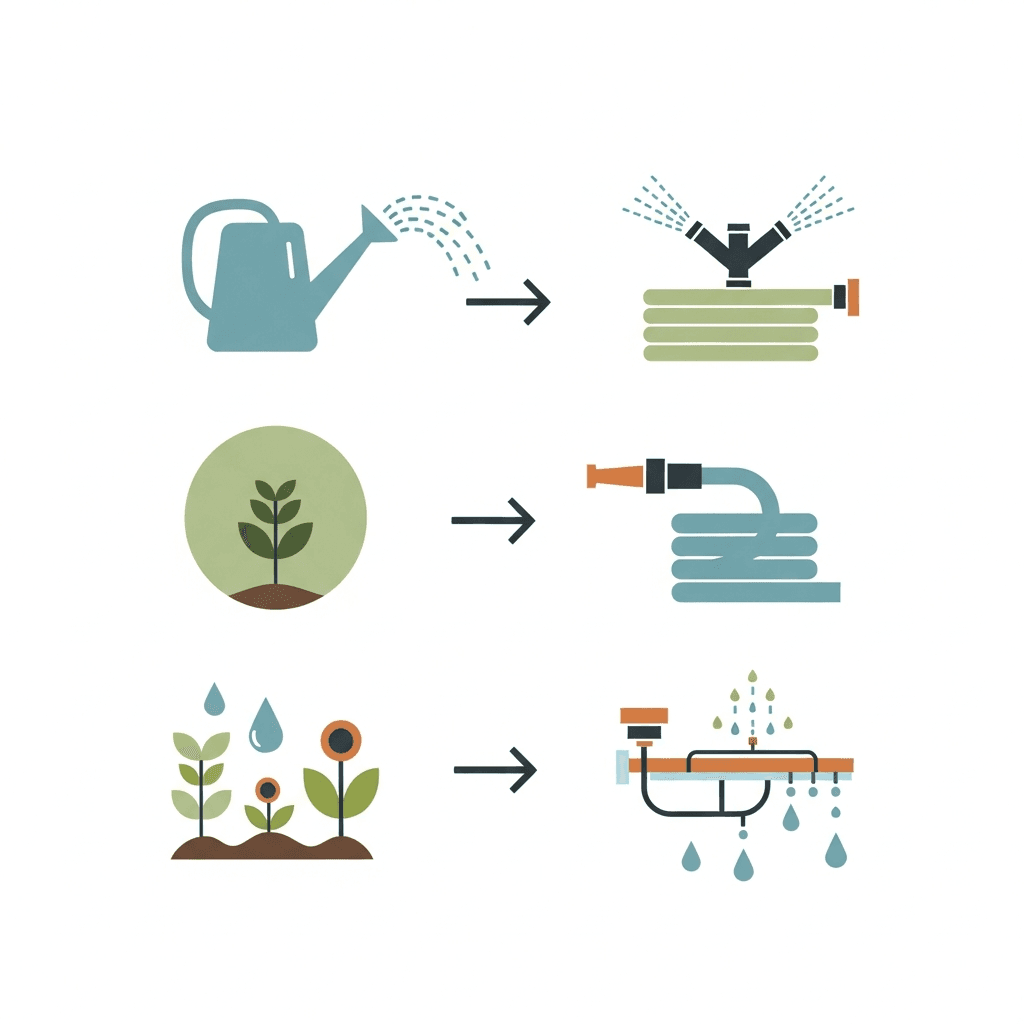
Water usage across all zones. Raised beds need 50-100% more water than in-ground gardens because the elevated, well-drained soil profile loses moisture faster through both lateral drainage and increased surface evaporation. In arid zones (parts of Zones 7-10), this is a meaningful cost factor. A drip irrigation system ($50-$150 per 100 square feet) becomes nearly essential for raised beds in these climates, while in-ground gardens often perform adequately with sprinkler or hand watering.
Frequently Asked Questions
How much does it cost to build a 4x8 raised bed in 2026?
A 4x8 raised bed at 12 inches deep costs $230-$450 for cedar (frame plus soil fill), $280-$560 for galvanized steel, $330-$700 for composite, and $380-$1,060 for stone or concrete block. The frame accounts for roughly 60-70% of the total cost, while soil fill runs $80-$200 depending on whether you buy bulk or bagged. Bulk soil delivered by the cubic yard costs $40-$80 per cubic yard, and a 4x8x12-inch bed needs 1.4 cubic yards (including settling overage). Bagged raised bed mix from garden centers runs $120-$200 per cubic yard equivalent, making it 2-3x more expensive than bulk for the same volume. Hardware (screws, corner brackets, landscape fabric) adds $15-$40. If you are building multiple beds, bulk soil delivery becomes cost-effective at two or more beds, saving $50-$100 compared to bagged alternatives.
Are raised beds really worth the extra cost over in-ground gardens?
Raised beds are worth the cost when your native soil is poor, your growing space is limited, or you need accessibility at standing height. The 2-4x yield advantage per square foot means a 4x8 raised bed (32 square feet) can produce as much harvestable food as 64-128 square feet of in-ground row garden. That productivity premium justifies the higher cost when space is the constraint. However, if you have 500 or more square feet of workable native soil, in-ground gardening produces more total food per dollar invested. The break-even calculation depends on your specific conditions. A cedar raised bed at $350 total cost that produces $250-$400 of vegetables per season pays for itself in one to two years. An in-ground garden at $75 setup cost pays for itself in the first harvest. Both are excellent investments compared to buying produce, but the in-ground garden has a higher return on investment percentage despite the lower absolute yield.
How much more water do raised beds need compared to in-ground gardens?
Raised beds require 50-100% more water than equivalent in-ground growing space. The elevated, well-drained soil profile that makes raised beds excellent for root development also means water passes through faster. A 4x8 raised bed at 12 inches deep holds approximately 10-15 gallons of plant-available water after drainage, compared to the same area of in-ground soil which holds 20-30 gallons due to greater soil depth and the capillary connection to the water table below. In practice, raised beds in Zones 6-7 need watering every 2-3 days during peak summer, while in-ground gardens in the same zone may go 4-5 days between waterings. Drip irrigation reduces water waste by 30-50% compared to overhead watering and is strongly recommended for raised beds. The annual water cost difference is modest -- roughly $20-$60 per 100 square feet in most municipal water districts -- but in arid climates or during drought restrictions, water availability can become the deciding factor.
How long do raised bed frames last before replacement?
Frame lifespan varies dramatically by material. Untreated pine and fir last 2-4 years before rot compromises structural integrity. Cedar, the most popular choice, lasts 5-10 years depending on climate and ground contact -- western red cedar performs best, lasting closer to 10 years in dry climates and 5-7 years in humid Zones 7-9 where fungal pressure is higher. Galvanized steel frames last 15-20 years with minimal degradation. Composite and recycled plastic materials match steel at 15-20 years with zero rot risk. Stone, concrete block, and brick last 20 years or more -- essentially permanent structures that may need mortar repointing every 10-15 years. When calculating cost per year of service, cedar runs $15-$30 per year for a 4x8 bed, while steel runs $10-$27 per year, and stone runs $15-$45 per year. Cedar wins on aesthetics and ease of construction. Steel wins on longevity per dollar. Stone wins on permanence but costs the most upfront.
Can I convert an in-ground garden to raised beds later?
You can, but think carefully before doing it. Converting an established in-ground garden means losing the biological soil ecosystem you have built over years of composting and cultivation. Mycorrhizal fungi networks, earthworm populations, and beneficial bacterial colonies take 3-5 years to fully establish in new soil. If your existing in-ground soil is productive, consider building raised beds in a new area rather than replacing what already works. If conversion is necessary -- for example, due to drainage problems or accessibility needs -- save the top 6-8 inches of your existing garden soil and use it as part of your raised bed fill mix. This carries beneficial organisms into the new beds and reduces the soil establishment period from years to months. The construction process involves building frames directly over the existing garden area, adding a layer of cardboard at the bottom to suppress weeds (it decomposes within one season), then filling with your soil blend. Do not install landscape fabric at the bottom of converted beds -- you want earthworms and soil organisms to migrate upward from the native soil below.
What is the best raised bed material for my climate zone?
Material selection should match your USDA zone and primary growing challenges. In Zones 3-5, galvanized steel is the strongest choice because it absorbs and radiates heat, warming soil 2-3 degrees faster in spring -- a meaningful advantage when your growing season is 120-140 days. Steel also handles freeze-thaw cycles without the cracking risk that affects concrete block in northern winters. In Zones 6-7, cedar remains the all-around best option because moderate temperatures do not create extreme thermal stress on any material, and cedar's natural rot resistance handles the moderate moisture levels well. In Zones 8-10, composite or recycled plastic materials outperform cedar because the combination of heat, humidity, and year-round moisture accelerates wood decay. Cedar that lasts 8-10 years in Zone 5 may last only 4-6 years in Zone 9. Stone and concrete block work in all zones but are most practical in Zones 7-10 where their thermal mass moderates soil temperature swings during hot days and cool nights. Avoid untreated pine in any zone south of Zone 5 -- the combination of moisture and warmth breaks it down in 1-3 years, making it a false economy.
Cost and yield data sourced from Oregon State University Extension, Cornell Cooperative Extension, Gardener's Supply Company, and Epic Gardening. Pricing reflects 2026 national averages for materials and bulk soil delivery. Actual costs vary by region, supplier, and soil conditions.
This article is provided for informational and educational purposes only. Content should not be considered professional financial, medical, legal, or other advice. Always consult a qualified professional before making important decisions. UseCalcPro is not responsible for any actions taken based on the information in this article.
Try These Calculators
Calculate how much soil your raised bed needs in cubic feet and cubic yards. Get mix ratios for topsoil, compost, and amendments by bed size and depth.
Plan a square foot garden with plant-per-square spacing for 20+ vegetables. Calculate soil volume, bed layout, harvest value estimates, and total costs.
Estimate your garden's total harvest and grocery store value per square foot. Select vegetables, allocate growing area, and see detailed yield breakdowns.
Plan your garden layout with correct plant and row spacing. Enter bed dimensions and crop type to get exact plant counts, row counts, and seed quantities.
Calculate wainscoting panels, chair rail, and base molding needed for any room. Estimate material and installation costs by style, material, and room size.