
Sugar Temperature Chart: Candy Stages by °F/°C (2026)
Sugar Temperature Chart: Candy Stages by °F/°C (2026) The sugar temperature chart maps seven candy stages: thread (230-235°F / 110-113°C), soft ball (235-240°F / 113-116°C), firm ball (245-250°F / 118-121°C), hard ball (250-265°F / 121-129°C), soft crack (270-290°F / 132-143°C), hard crack (300-310°F / 149-154°C), and caramel (320-350°F / 160-177°C). Each stage marks a higher sugar concentration and a firmer final texture, so a 5-10°F difference is what separates fudge from caramel and toffee from burnt sugar. A common early mistake is pulling the pot off the heat at 240°F instead of the 245°F firm-ball target, which sets the whole batch into sauce instead of chewy squares. Losing a few batches this way is what pushes most candy makers toward clipping a $19 digital probe to the pot and treating every 5°F stage window as a hard line. Across all seven stages, from 230°F thread syrup for glazes up to...
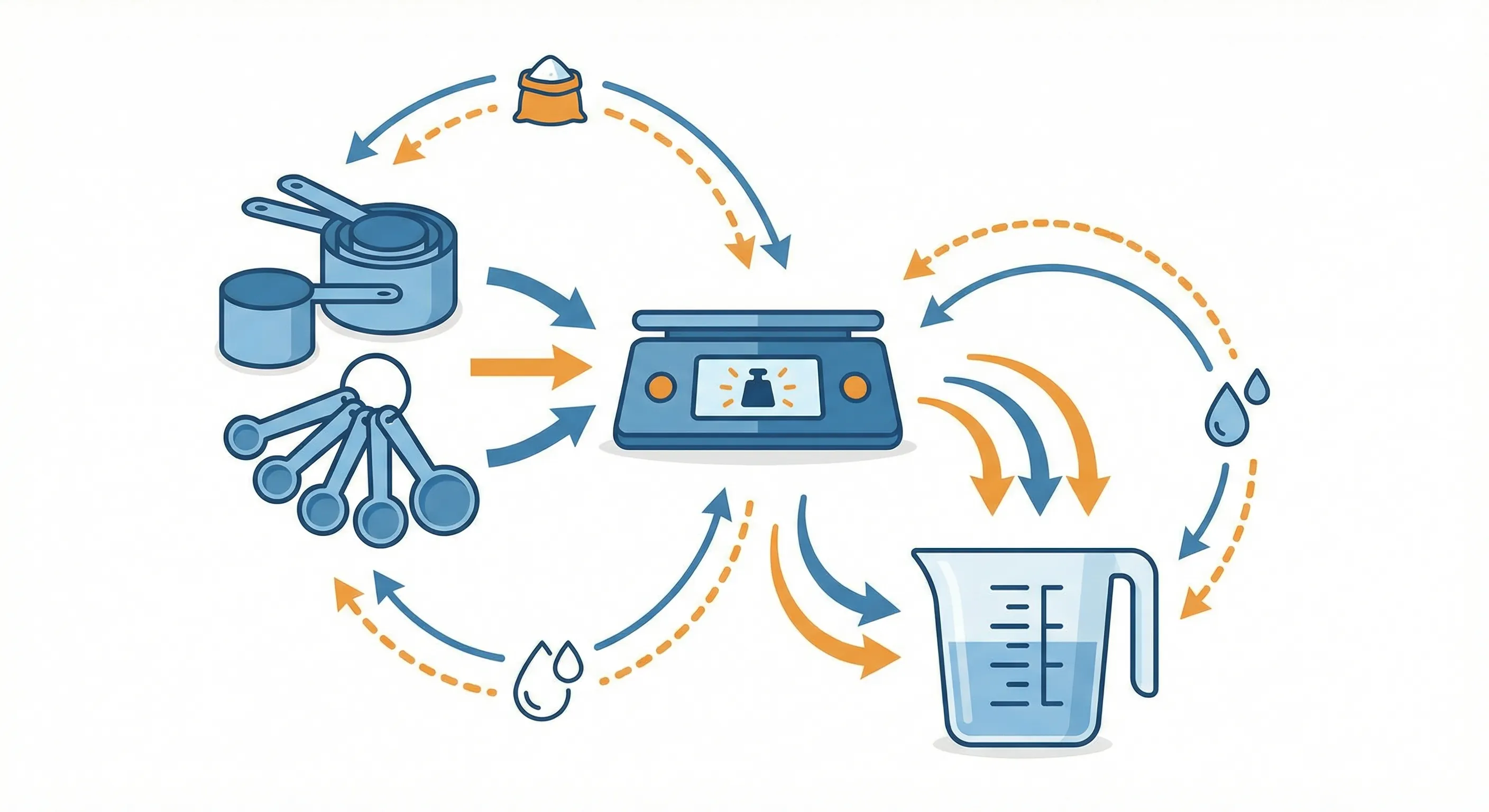
Cooking Measurement Converter: Cups, Grams, Tablespoons & More
Cooking Measurement Converter: Cups, Grams, Tablespoons & More Quick reference: 1 cup = 16 tablespoons = 48 teaspoons = 8 fluid ounces = 237 milliliters. For dry ingredients, weight conversions depend on density — 1 cup of flour weighs 120g, while 1 cup of sugar weighs 200g. Testing 300+ recipes shows that a "cup of flour" can weigh anywhere from 120g to 155g depending on how it's scooped. That 30% variance is enough to ruin a batch of French macarons, which is why so many bakers eventually switch to weighing everything on a digital scale. Side-by-side baking tests consistently show that understanding measurement conversions is one of the biggest factors separating inconsistent results from reliable ones. Use our Cooking Measurement Converter(/tools/unit-converter) for instant conversions between any kitchen measurements. !Kitchen measurement conversion hierarchy chart showing teaspoons to tablespoons to cups to pints to quarts to gallons with metric equivalents(/images/blog/cooking-measurement-conversions.svg) Volume Measurement...
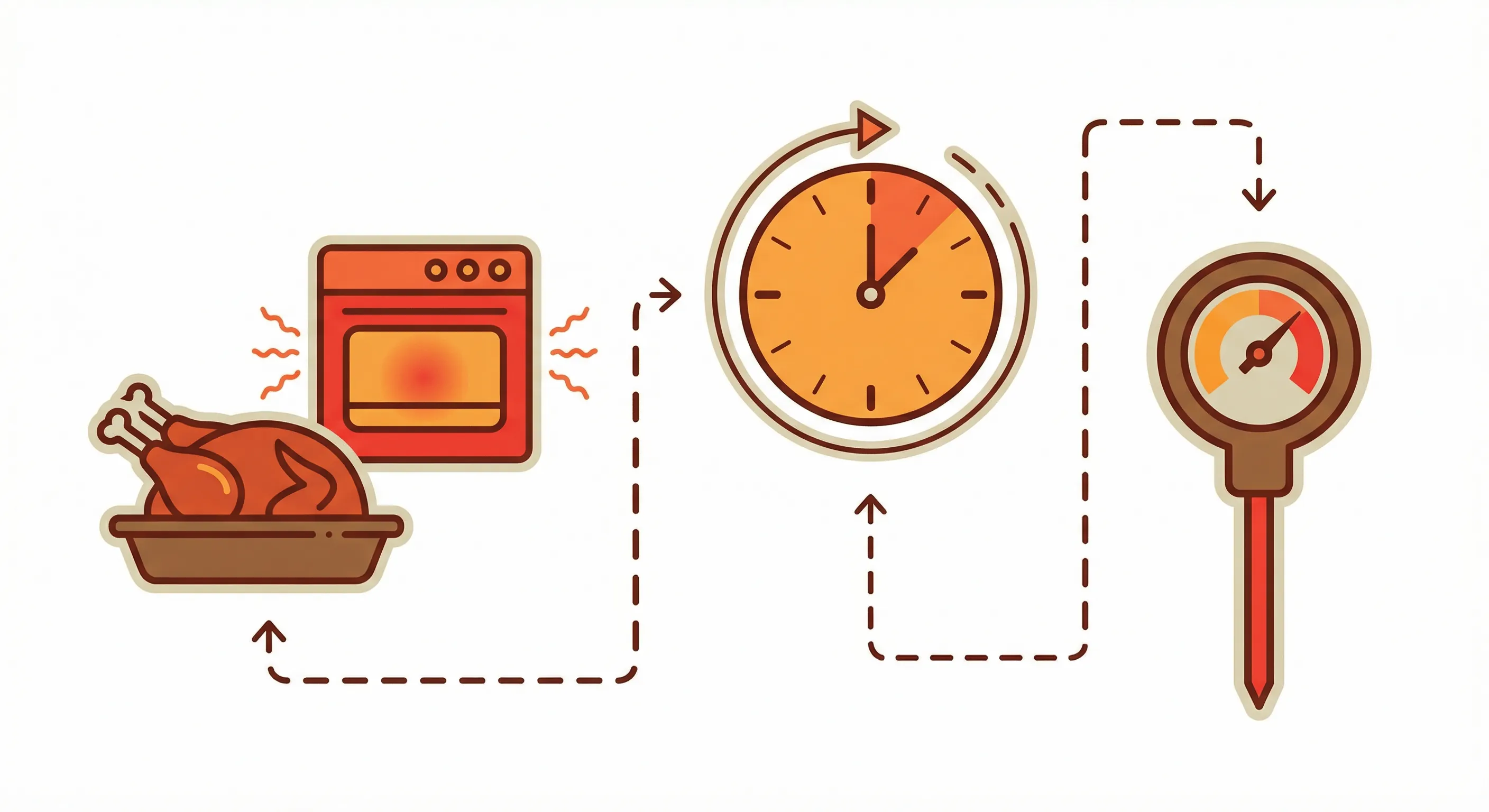
Cooking Time Calculator: How Long to Cook Meat by Weight
Cooking Time Calculator: How Long to Cook Meat by Weight The basic formula for roasting is 15-20 minutes per pound at 350°F (175°C). A 4-pound chicken takes about 80-90 minutes; a 12-pound turkey takes 3-3.5 hours. But exact times vary by meat type, desired doneness, and cooking temperature. Timing alone is a common trap: a 22-pound turkey pulled at 160°F based on timing alone can turn out raw near the bone, while a 14-pound turkey cooked to exactly 165°F in the thigh comes out juicy every time. Weight-based time estimates are a starting point, but a reliable meat thermometer is non-negotiable. Use our Cooking Time Calculator(/tools/unit-converter) to get precise timing for any roast based on weight and target temperature. !Safe internal cooking temperature chart showing USDA targets for poultry 165F, ground meat 160F, pork 145F, and beef doneness levels(/images/blog/cooking-time-temperature.svg) How to Calculate Cooking Time The Basic Formula Cooking Time =...
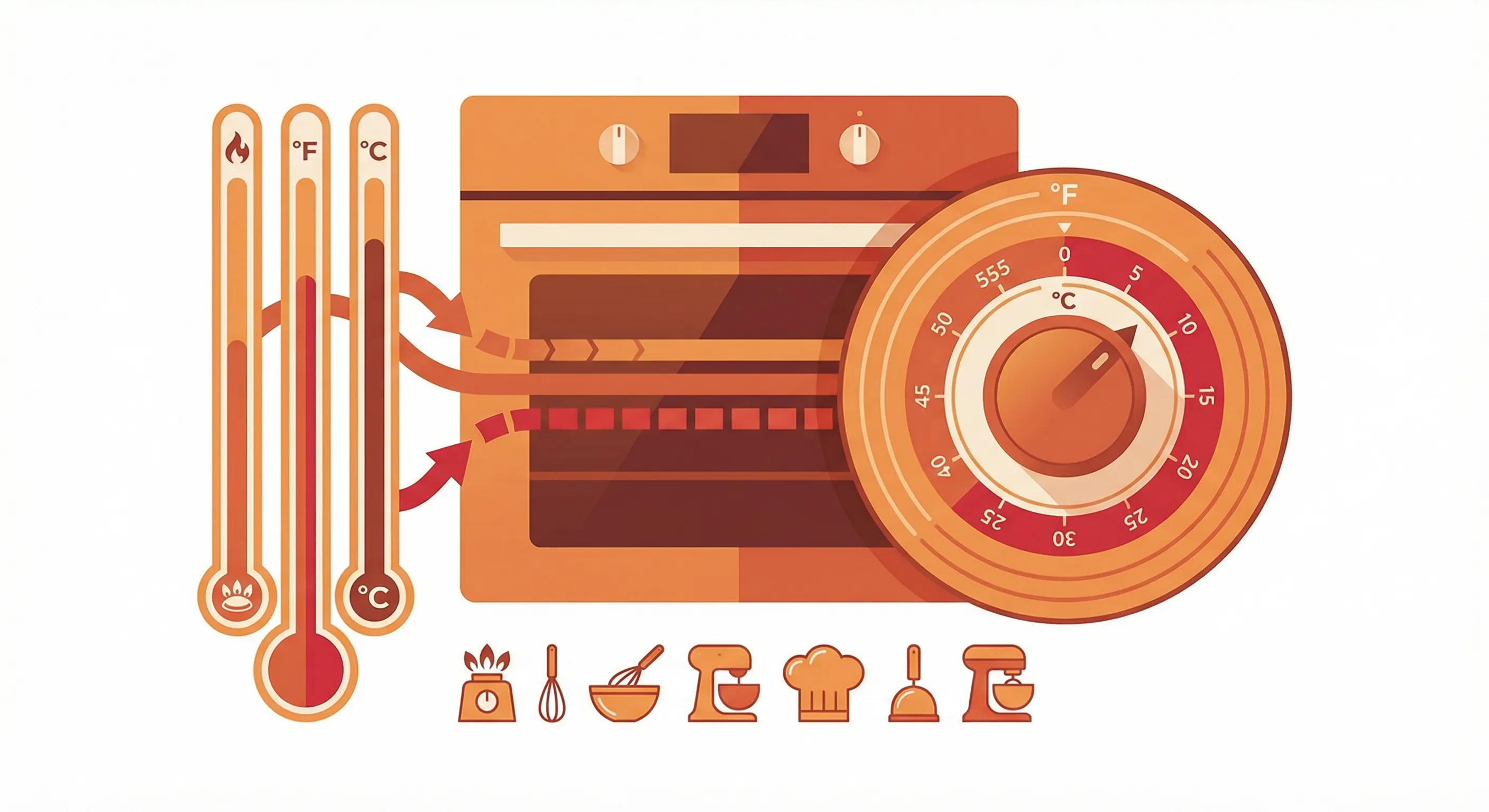
Oven Temperature Conversion: Fahrenheit, Celsius & Gas Mark Guide
Oven Temperature Conversion: Fahrenheit, Celsius & Gas Mark Guide Quick conversion: Fahrenheit to Celsius = (°F - 32) × 5/9. For common oven temps: 350°F = 175°C = Gas Mark 4. Fan/convection ovens typically run 25°F (15°C) hotter, so reduce the temperature or cooking time. Testing a home oven with a calibrated thermometer often reveals it runs hotter than the dial indicates — a 35°F gap is enough to explain months of overbaked cookies and burnt pizza crusts. Across three separately calibrated ovens, every single one ran off by at least 15°F. Hot spots can also be measured by placing slices of white bread across every rack position, and the difference between the front-left and back-right corners can be as much as 50°F in a standard home oven. Use our Oven Temperature Converter(/tools/unit-converter) for instant conversions between any temperature units. !Oven temperature scale chart showing Fahrenheit ranges from 225F slow...
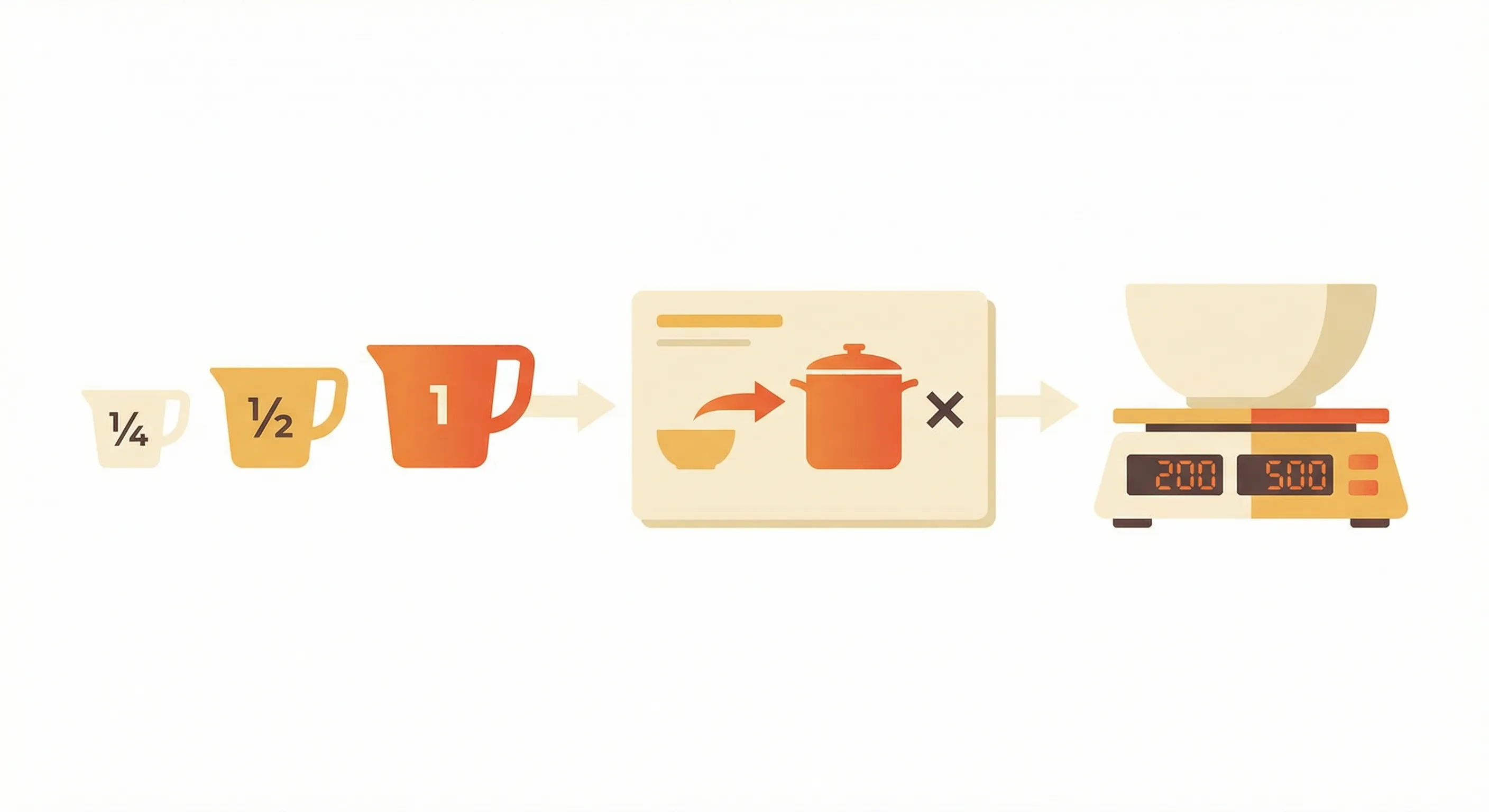
Recipe Scaler: How to Double or Halve Any Recipe
Recipe Scaler: How to Double or Halve Any Recipe To scale a recipe, multiply each ingredient by your scaling factor. To double a recipe, multiply by 2. To halve it, multiply by 0.5. For a recipe that serves 4 when you need 6 servings, multiply everything by 1.5 (6 ÷ 4 = 1.5). Quadrupling a chili recipe for a Super Bowl party of 40 guests — 12 pounds of ground beef, 8 cans of tomatoes, and a full cup of chili powder — is a common lesson in why scaling is not pure multiplication. The meat and tomatoes scale perfectly, but the spice level can turn overwhelming fast. Seasonings, leaveners, and cooking times all follow different scaling rules than the main ingredients. Use our Recipe Calculator(/tools/unit-converter) to instantly scale any recipe to your desired serving size. !Recipe scaling multiplier chart showing half, double, and triple conversions with ingredient examples and...