
Elena Morozova
Master Gardener & Permaculture Designer
I killed my first 200 seedlings in a single weekend — wrong soil pH, zero drainage, full Texas sun on shade-loving transplants. That $340 lesson launched a 15-year obsession with the science of soil, spacing, and seasons. Now a certified Master Gardener (Texas A&M) and permaculture design certificate holder, I manage a 2,800 sq ft food garden that produces 400+ lbs of vegetables per year. Every square inch is calculated.
Articles by Elena Morozova (7)
Raised Bed vs In-Ground Garden Cost in 2026 (Full Comparison)
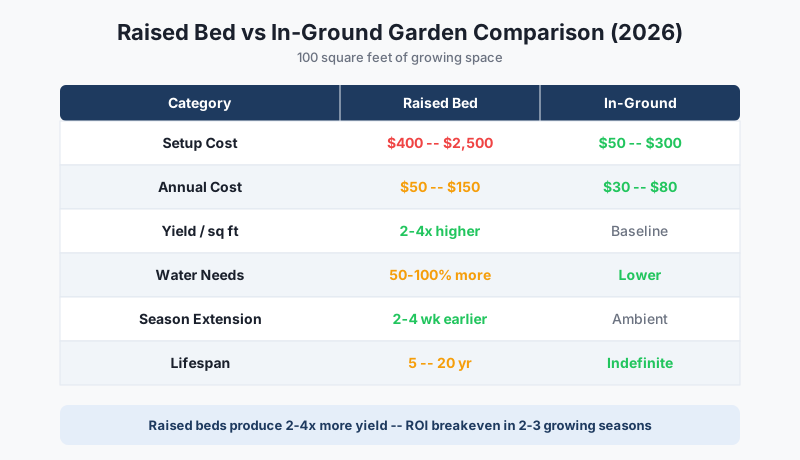
Raised Bed vs In-Ground Garden: Cost, Yield & ROI Compared (2026) A raised bed garden costs $100-$900 per 4x8 bed in 2026, depending on frame material and soil fill, while an in-ground garden costs near zero to $200 if your native soil is workable. Raised beds produce 2-4x more yield per square foot through intensive spacing and controlled soil, but they require 50-100% more water due to faster drainage. For 100 square feet of growing space, expect $400-$2,500 in first-year raised bed costs versus $50-$300 for in-ground, with ongoing annual costs of $50-$150 and $30-$80, respectively. Last spring I helped a neighbor plan 100 square feet of growing space in USDA Zone 6b. She built three 4x8 cedar raised beds at 12 inches deep, filling each with 32 cubic feet of a 40/40/20 topsoil-compost-vermiculite mix. Total first-year cost: $870 for lumber, hardware, and 4.2 cubic yards of bulk soil blend....
Composting for Beginners: C:N Ratios, Methods & Calculator Guide
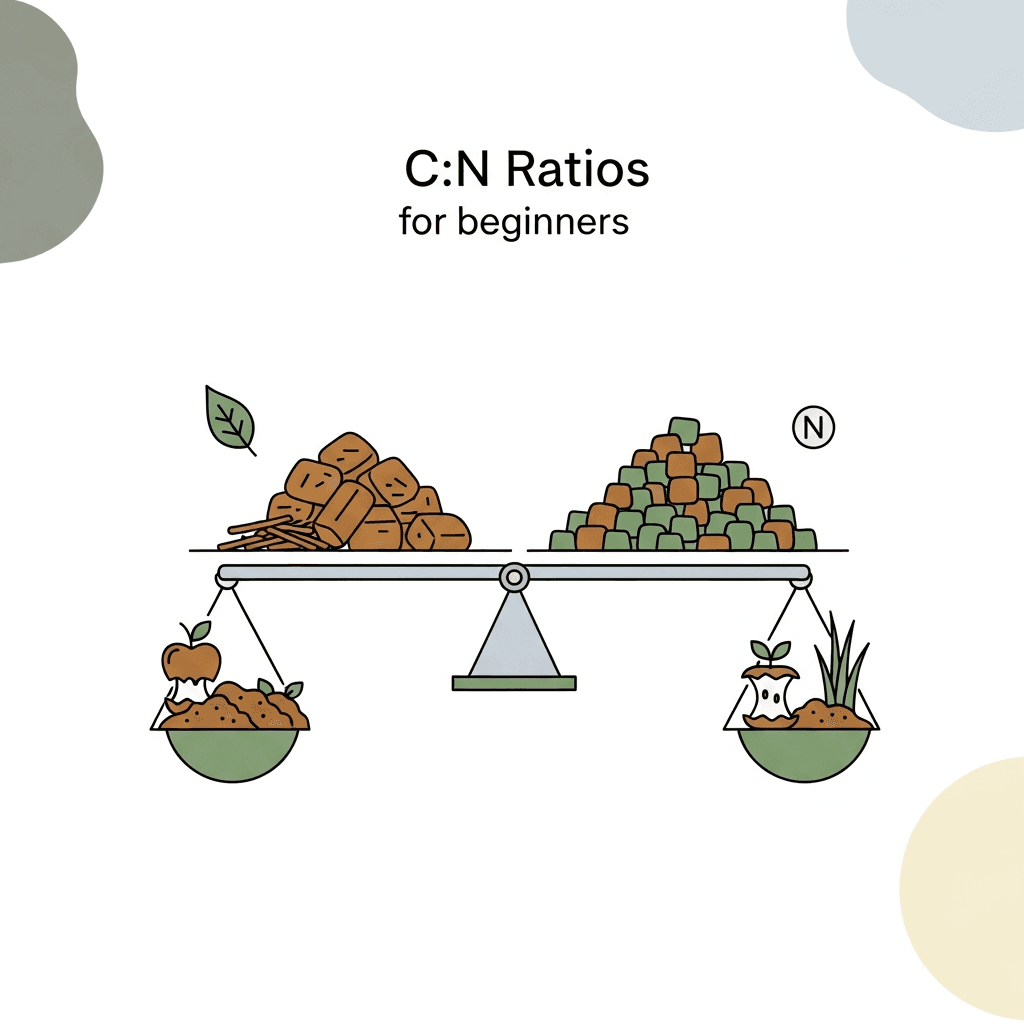
Composting for Beginners: C:N Ratios, Methods & Calculator Guide Successful composting requires a carbon-to-nitrogen (C:N) ratio between 25:1 and 30:1, a minimum pile size of 3x3x3 feet (1 cubic yard), and internal temperatures of 131-170F for hot composting. Get the ratio wrong and your pile either smells (too much nitrogen) or sits inert for months (too much carbon). Nature runs on ratios -- learn them, and your compost practically makes itself. A homeowner I worked with dumped 200 lbs of grass clippings into a 4x4x3-foot bin with no brown material. The C:N ratio was approximately 20:1 -- too nitrogen-heavy. Within 48 hours the pile went anaerobic: slimy, foul-smelling, attracting flies. He tried turning it, but without carbon sources, it re-compacted immediately. The fix cost him a weekend and a truck bed full of dry leaves: add 150 lbs of leaves (C:N 60:1) and shredded cardboard (C:N 350:1) to bring the...
Garden Watering Calculator: How Much Water Does Your Garden Really Need?
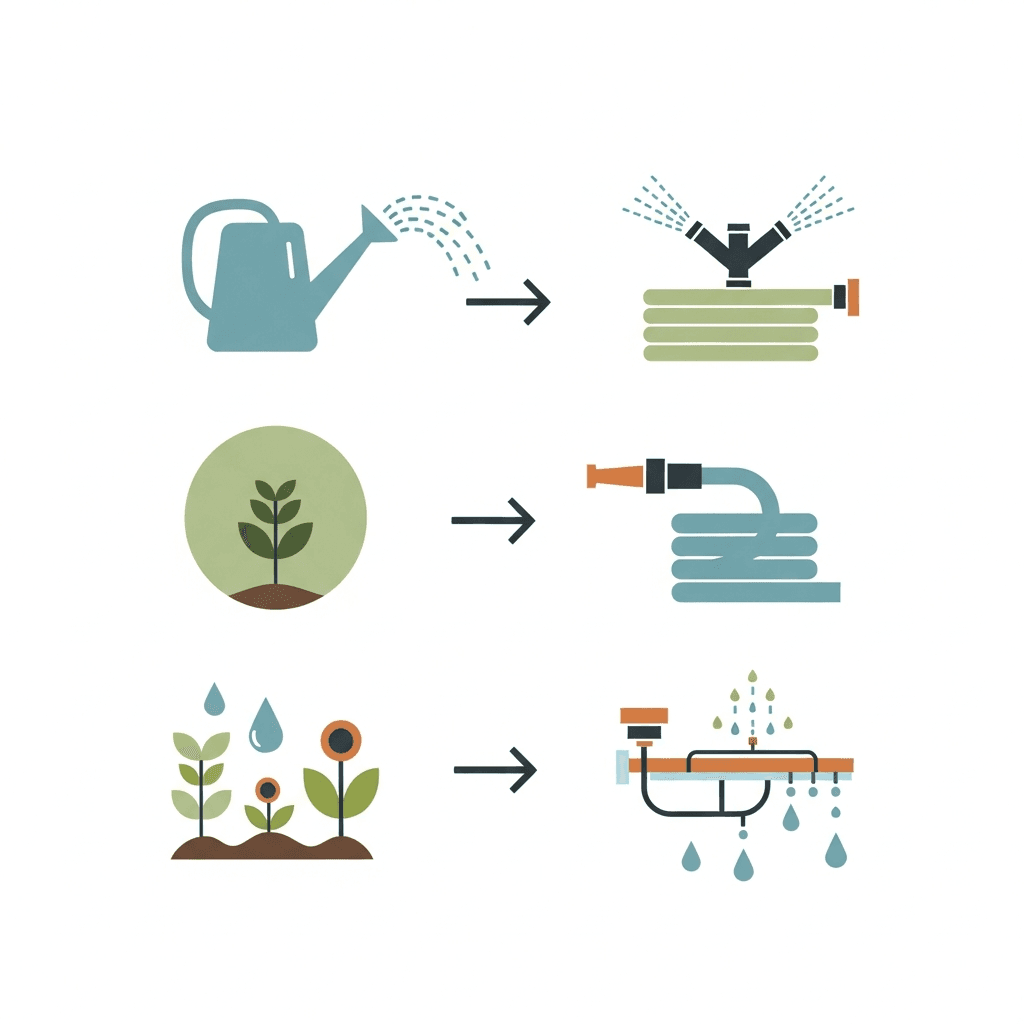
Garden Watering Calculator: How Much Water Does Your Garden Really Need? Most vegetable gardens need 1 to 1.5 inches of water per week, which equals 0.623 gallons per square foot per inch of depth. A 200-square-foot garden at 1 inch per week requires roughly 125 gallons weekly, but the actual amount depends on your soil type, irrigation method efficiency, local rainfall, and evapotranspiration rate. I tracked water usage across three garden plots totaling 480 square feet over two full growing seasons in Zone 6b. Switching from overhead sprinklers to drip irrigation cut my water bill from $38/month to $14/month during peak summer, a 63% reduction. The $55 drip kit paid for itself in six weeks. More importantly, my tomato plants stopped developing the fungal leaf spots that plagued every sprinkler-watered season before. The soil doesn't lie -- when you measure moisture at 4-inch depth with a $12 probe, you see...
Rain Barrel Calculator: How Many Barrels Do You Need for Rainwater Harvesting?
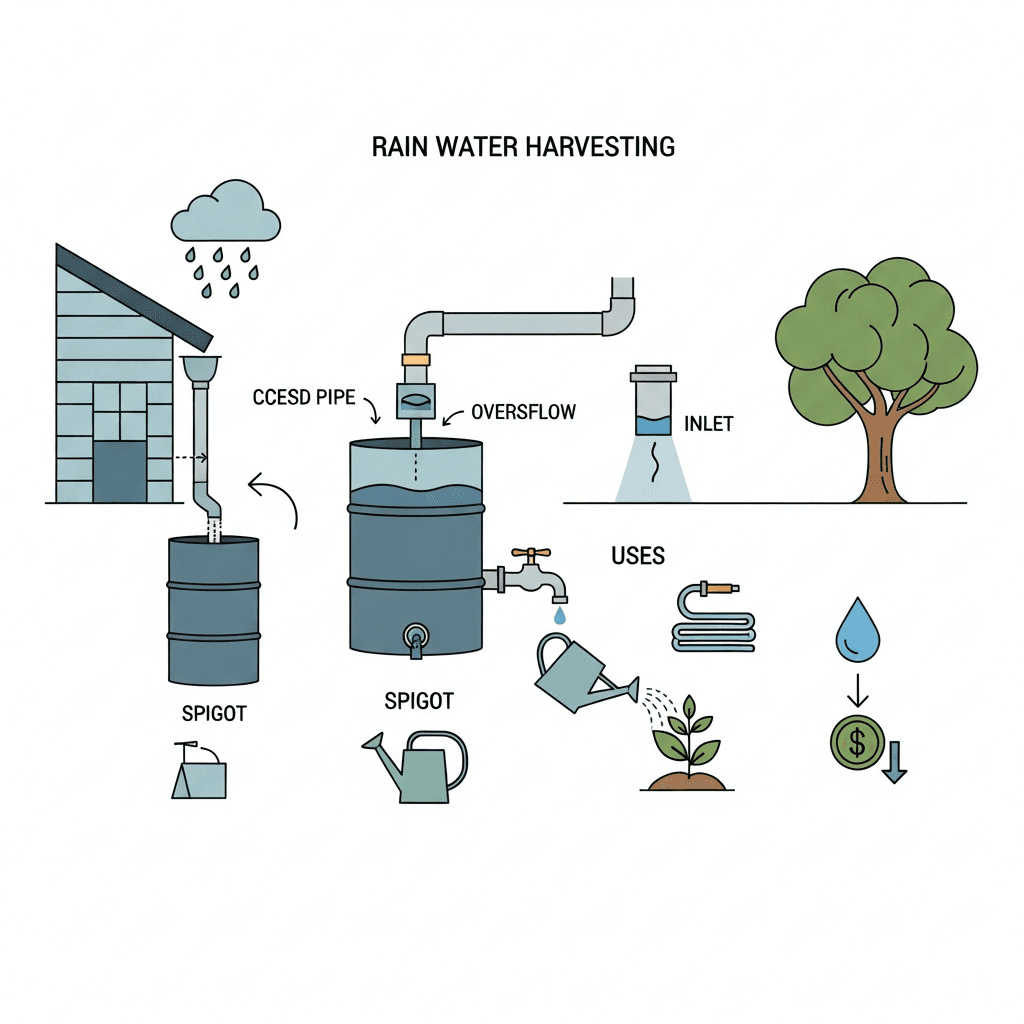
Rain Barrel Calculator: How Many Barrels Do You Need for Rainwater Harvesting? A 1,000-square-foot roof section sheds approximately 623 gallons of water per 1 inch of rainfall, calculated as roof area (sq ft) x rainfall (inches) x 0.623. A single 50-gallon rain barrel captures only 8% of that water. Most homeowners need 2-4 barrels connected in series, with overflow directed to a rain garden or dry well. I installed a 3-barrel system (165 gallons total) under a 900-square-foot roof section at my Zone 6b property two years ago. The total cost was $185 for three recycled food-grade barrels, $42 in fittings, and $28 for a first-flush diverter -- $255 total versus $420 for comparable prefabricated units. Over 22 rain events last season, I captured roughly 2,800 gallons that would have otherwise eroded the foundation bed. At my local water rate of $0.008 per gallon, that is $22.40 in saved water...
How to Build a Raised Bed Garden: Complete Soil & Materials Calculator Guide
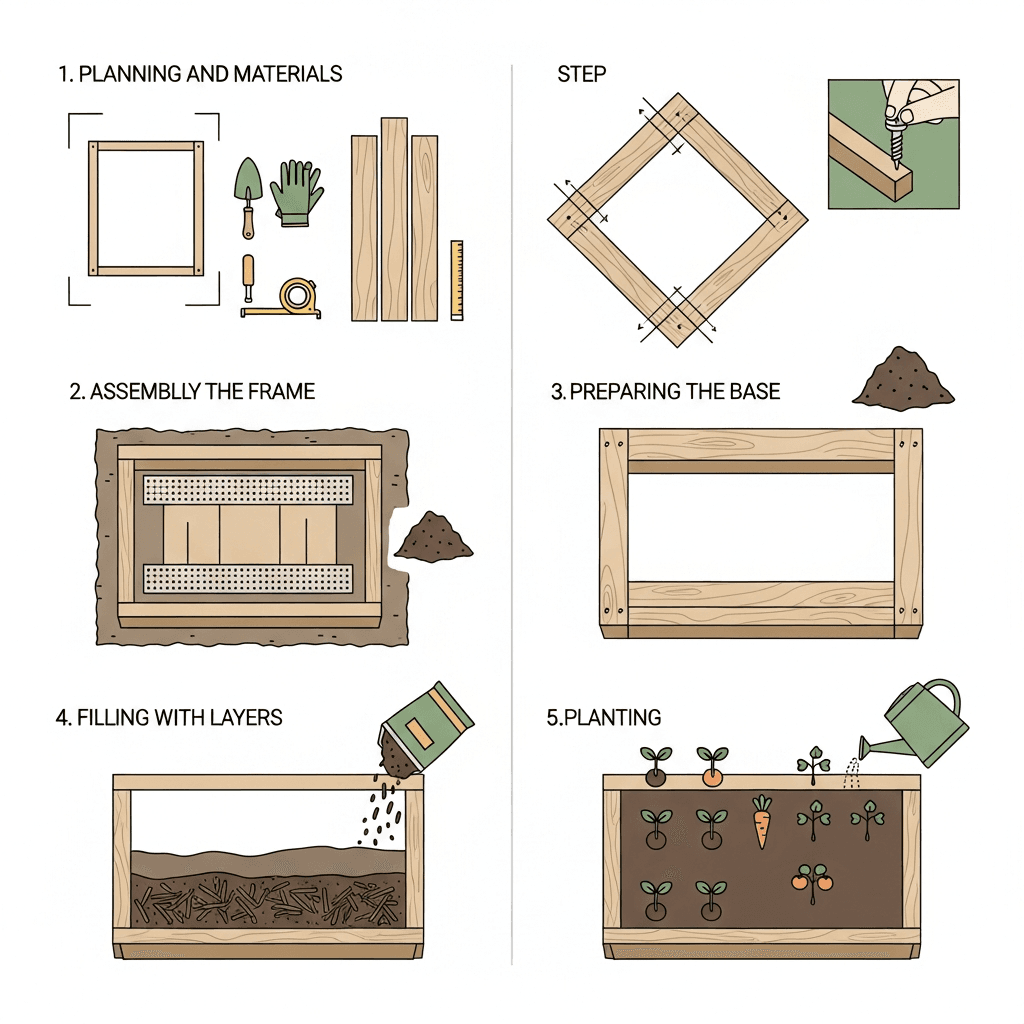
How to Build a Raised Bed Garden: Complete Soil & Materials Calculator Guide A standard 4x8-foot raised bed 12 inches deep requires 32 cubic feet (1.19 cubic yards) of soil mix, but you should order 1.4 cubic yards to account for 15-20% settling in the first growing season. The formula is simple: Length (ft) x Width (ft) x Depth (ft) = Volume in cubic feet, then divide by 27 for cubic yards. Material costs range from $20-40 for pine to $80-150 for cedar to $100-400 for steel, before you spend a single dollar on soil. A first-year gardener I advised built a 4x8x12-inch raised bed and ordered exactly 1.0 cubic yard of a 50/30/20 topsoil-compost-perlite mix. The calculated volume was 32 cu ft, which equals 1.19 cubic yards, but she rounded down after the supplier said "one yard is plenty." After filling, the bed was 3 inches short of the...
When to Start Seeds Indoors: Frost Date Calculator & Planting Schedule
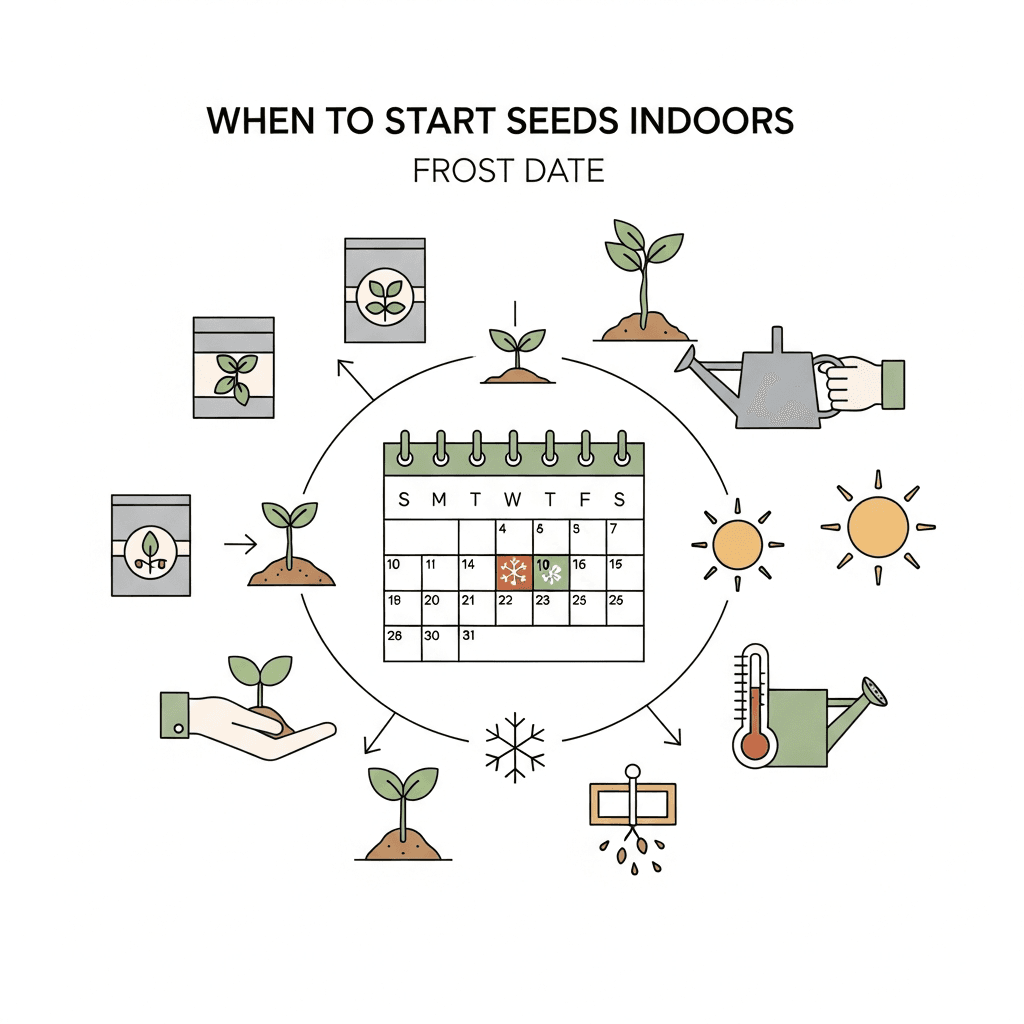
When to Start Seeds Indoors: Frost Date Calculator & Planting Schedule Start most warm-season vegetable seeds indoors 6-8 weeks before your last frost date, and cool-season crops 4-6 weeks before last frost. The formula is simple: Last Frost Date minus Weeks to Start equals Sowing Date. A tomato in Zone 6b (last frost April 20) should go into trays between February 23 and March 9. Plant too early and seedlings get leggy; plant too late and you lose weeks of productive growing season. An eager gardener I advised in Zone 6b (average last frost: April 20) transplanted $180 worth of warm-season seedlings -- tomatoes, peppers, squash, and basil -- outdoors on April 5 to "get a head start." A late frost on April 12 dropped temperatures to 28F. Every single transplant died. She replanted with store-bought transplants after the confirmed last frost, but the selection at the garden center was...
Vegetable Garden Spacing Chart: Plant Spacing Calculator and Yield Guide
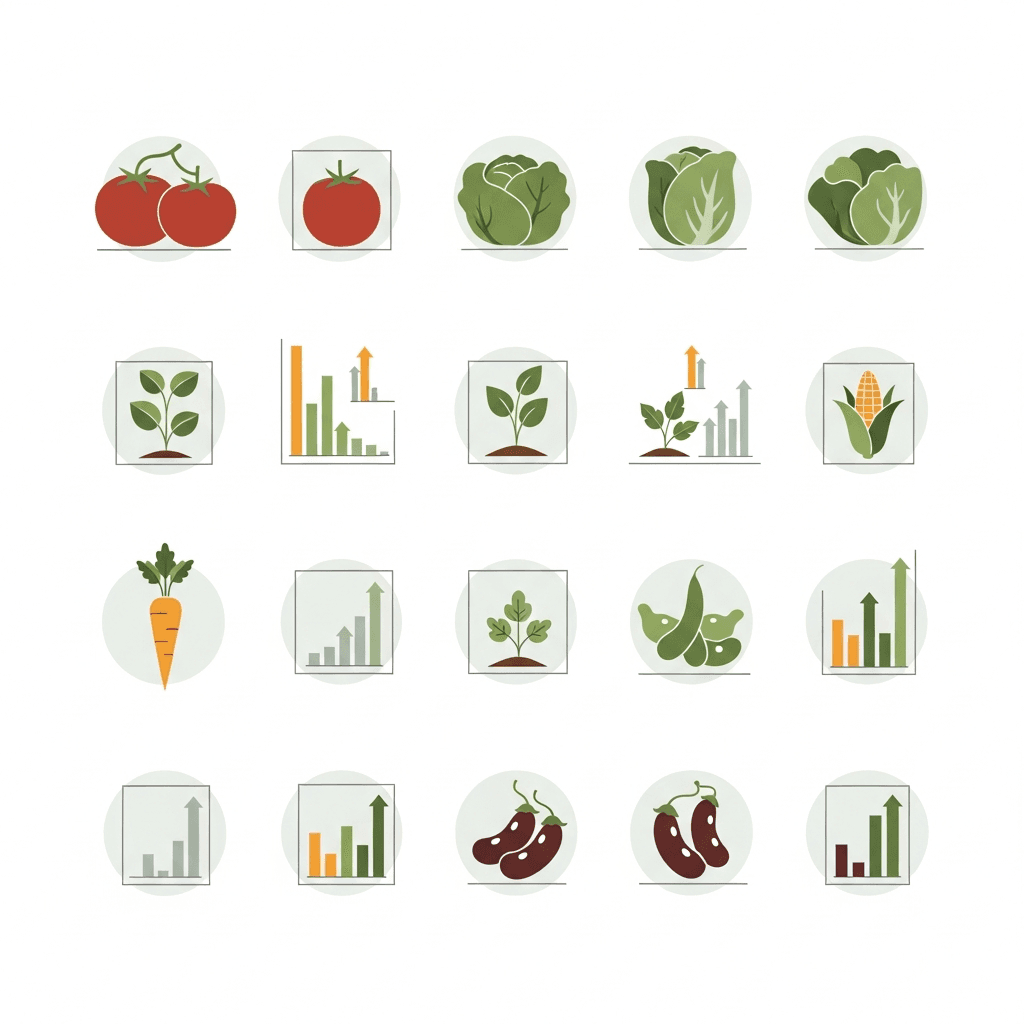
Vegetable Garden Spacing Chart: Plant Spacing Calculator and Yield Guide Vegetable garden spacing follows a simple density formula: divide the square footage of your bed by the spacing area each plant needs (in square feet) to get total plants per bed. A 4x8 raised bed (32 sq ft) fits 8 tomatoes at 24-inch spacing, 32 peppers at 12-inch spacing, or 128 carrots at 3-inch spacing. Getting this number wrong is the fastest way to lose an entire season to disease and poor yields. I have tracked plant counts, spacing, and harvest weights across 14 raised beds over four growing seasons in Zone 6b. In my worst experiment, I crammed 20 basil plants into a 4x4 bed (16 sq ft) at 4-inch spacing where 9 plants at 6-inch spacing was correct. Every single plant developed downy mildew by July. In my best season, 8 properly spaced indeterminate tomatoes in a 4x8...