Macro Tracking Guide: How to Count Macros for Weight Loss and Muscle Gain
Tracking macros can save a lot of frustration — and make eating out with friends much easier.
Rigid diet rules (no bread, no dessert, no eating after 7 PM) often fail long-term. Macro tracking allows for pizza with friends (as long as it fits the numbers) while still supporting results like losing 35 pounds. Sustainable weight loss doesn't require perfection or deprivation.
Calculate Your Macros
Use our free macro calculator below to get personalized protein, carbohydrate, and fat targets based on your goals.
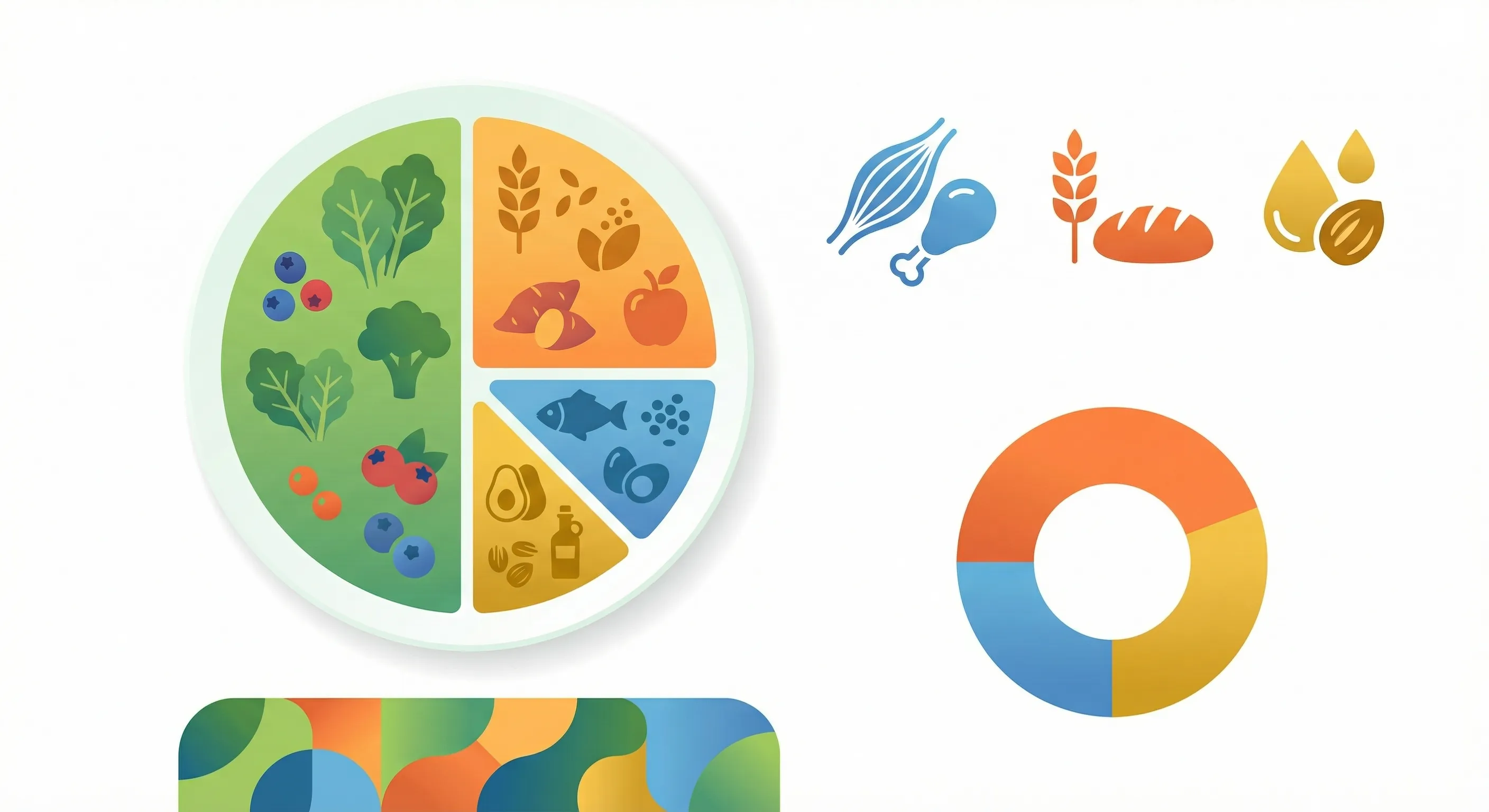
Macros (macronutrients) are the three main nutrients that provide calories: protein (4 cal/g), carbohydrates (4 cal/g), and fat (9 cal/g). For weight loss, a typical macro split is 30% protein, 35% carbs, and 35% fat. For a 2,000-calorie diet, this equals approximately 150g protein, 175g carbs, and 78g fat. Tracking macros gives you more control than calorie counting alone, helping you preserve muscle during fat loss or build muscle while minimizing fat gain.
Tip
Protein is the most important macro. Whether losing fat or building muscle, prioritizing protein intake leads to better body composition results than focusing on calories alone.
What Are Macronutrients?
Macronutrients are nutrients your body needs in large amounts. Each serves different functions:
The Three Macros
| Macro | Calories/gram | Primary Functions |
|---|---|---|
| Protein | 4 | Muscle building/repair, enzymes, hormones, satiety |
| Carbohydrates | 4 | Energy (especially for brain and muscles), fiber |
| Fat | 9 | Hormone production, vitamin absorption, energy storage |
Why Macros Matter More Than Just Calories
Two diets with identical calories can produce very different results:
Diet A: 1,800 calories
- 180g protein (40%)
- 135g carbs (30%)
- 60g fat (30%)
- Result: Preserves muscle, good satiety, steady energy
Diet B: 1,800 calories
- 60g protein (13%)
- 300g carbs (67%)
- 40g fat (20%)
- Result: Muscle loss likely, hunger spikes, energy crashes
Same calories, very different outcomes.
How to Calculate Your Macros
Step 1: Determine Your Calorie Target
First, you need to know your Total Daily Energy Expenditure (TDEE). See our TDEE Calculator Guide for detailed instructions.
Then adjust based on your goal:
- Fat loss: TDEE - 300 to 500 calories
- Maintenance: TDEE
- Muscle gain: TDEE + 200 to 300 calories
For complete calorie guidance, see: Calorie Deficit Complete Guide
Step 2: Set Your Protein Target
Protein is the priority macro. Set it first based on body weight:
| Goal | Protein Target |
|---|---|
| Fat loss (preserve muscle) | 0.8-1.0g per lb body weight |
| Maintenance | 0.7-0.9g per lb body weight |
| Muscle gain | 0.8-1.2g per lb body weight |
| Athlete/heavy training | 1.0-1.4g per lb body weight |
Example: 170 lb person losing fat = 136-170g protein/day
For detailed protein recommendations, see: Protein Intake Guide: How Much Protein Do You Really Need?
Step 3: Set Your Fat Target
Fat should be at least 20% of calories to support hormone function:
| Goal | Fat Target |
|---|---|
| Minimum healthy intake | 0.3g per lb body weight |
| General recommendation | 0.35-0.45g per lb body weight |
| Higher fat preference | 0.5-0.6g per lb body weight |
Example: 170 lb person = 51-77g fat/day (minimum 51g)
Warning
Don't go too low on fat. Fat is essential for hormone production (including testosterone and estrogen), vitamin absorption, and brain function. Below 20% of calories can cause hormonal issues.
Step 4: Fill Remaining Calories with Carbs
After setting protein and fat, remaining calories come from carbohydrates:
Formula: Carbs (g) = [Total Calories - (Protein g × 4) - (Fat g × 9)] ÷ 4
Example Calculation:
- Calories: 2,000
- Protein: 150g (600 calories)
- Fat: 70g (630 calories)
- Remaining: 2,000 - 600 - 630 = 770 calories
- Carbs: 770 ÷ 4 = 193g carbohydrates
Macro Ratios for Different Goals
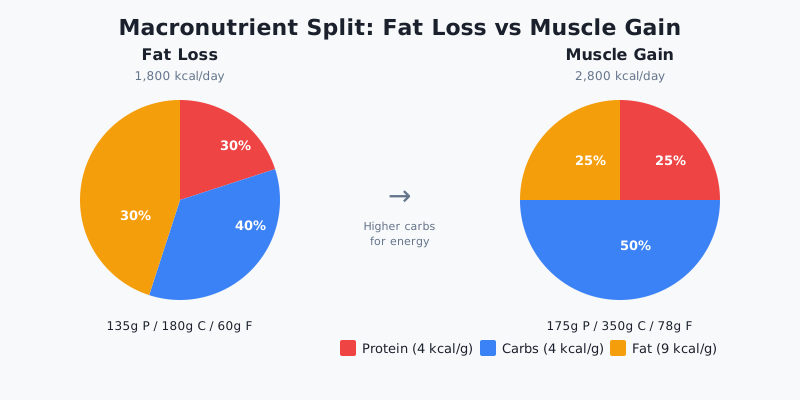
Fat Loss Macros
Prioritize protein to preserve muscle while in a calorie deficit.
| Macro | Percentage | At 1,800 cal |
|---|---|---|
| Protein | 30-35% | 135-158g |
| Fat | 25-30% | 50-60g |
| Carbs | 35-45% | 158-203g |
Key principles:
- Keep protein high (minimum 0.8g/lb)
- Moderate carbs for energy and gym performance
- Adequate fat for hormones and satiety
Muscle Gain Macros
Higher carbs fuel workouts and recovery. Moderate surplus prevents excessive fat gain.
| Macro | Percentage | At 2,800 cal |
|---|---|---|
| Protein | 25-30% | 175-210g |
| Fat | 25-30% | 78-93g |
| Carbs | 40-50% | 280-350g |
Key principles:
- Protein at 0.8-1g/lb is sufficient (more isn't better)
- Higher carbs for energy and performance
- Don't neglect fat for hormone health
Maintenance Macros
Balanced approach for long-term sustainability.
| Macro | Percentage | At 2,200 cal |
|---|---|---|
| Protein | 25-30% | 138-165g |
| Fat | 25-30% | 61-73g |
| Carbs | 40-50% | 220-275g |
Keto/Low-Carb Macros
For those following ketogenic diets:
| Macro | Percentage | At 2,000 cal |
|---|---|---|
| Protein | 20-25% | 100-125g |
| Fat | 70-75% | 156-167g |
| Carbs | 5-10% | 25-50g |
Info
Keto isn't magic for fat loss. Ketogenic diets work through calorie restriction, not metabolic advantage. They're a tool, not a requirement. Choose the approach you can sustain.
High-Macro Foods List
High-Protein Foods
| Food | Serving | Protein | Calories |
|---|---|---|---|
| Chicken breast | 4 oz (113g) | 26g | 120 |
| Greek yogurt (0%) | 1 cup (245g) | 23g | 130 |
| Egg whites | 4 large | 14g | 68 |
| Salmon | 4 oz (113g) | 23g | 180 |
| Lean ground beef (93%) | 4 oz (113g) | 24g | 170 |
| Cottage cheese (2%) | 1 cup (226g) | 27g | 180 |
| Whey protein | 1 scoop (30g) | 24g | 120 |
| Tofu (firm) | 4 oz (113g) | 15g | 90 |
| Lentils (cooked) | 1 cup (198g) | 18g | 230 |
| Tuna (canned) | 3 oz (85g) | 20g | 70 |
High-Carb Foods (Quality Sources)
| Food | Serving | Carbs | Fiber | Calories |
|---|---|---|---|---|
| Oatmeal | 1 cup cooked | 27g | 4g | 150 |
| Brown rice | 1 cup cooked | 45g | 4g | 215 |
| Sweet potato | 1 medium (150g) | 26g | 4g | 105 |
| Quinoa | 1 cup cooked | 39g | 5g | 220 |
| Banana | 1 medium | 27g | 3g | 105 |
| Whole wheat bread | 1 slice | 12g | 2g | 70 |
| Black beans | 1 cup cooked | 41g | 15g | 225 |
| Apple | 1 medium | 25g | 4g | 95 |
Healthy Fat Sources
| Food | Serving | Fat | Calories |
|---|---|---|---|
| Avocado | 1/2 medium | 15g | 160 |
| Almonds | 1 oz (28g) | 14g | 165 |
| Olive oil | 1 tbsp | 14g | 120 |
| Peanut butter | 2 tbsp | 16g | 190 |
| Salmon | 4 oz (113g) | 8g | 180 |
| Eggs (whole) | 2 large | 10g | 140 |
| Chia seeds | 1 oz (28g) | 9g | 140 |
| Dark chocolate (85%) | 1 oz (28g) | 12g | 170 |
How to Track Macros
Method 1: Food Tracking Apps
The easiest way to track macros is with a smartphone app:
Popular Options:
- MyFitnessPal (free with premium option)
- Cronometer (detailed micronutrients)
- MacroFactor (AI-adjusted targets)
- Lose It! (simple interface)
Tips for accurate tracking:
- Use a food scale for portions (cups and spoons are inaccurate)
- Scan barcodes when available
- Log meals as you eat them (not from memory)
- Create custom foods for home recipes
- Track everything, including cooking oils and sauces
Method 2: Hand Portions (Simplified)
If detailed tracking feels overwhelming, use hand portions:
| Food Type | Portion Size | Approximate Macros |
|---|---|---|
| Protein | Palm of hand | 20-30g protein |
| Carbs (grains) | Cupped hand | 25-35g carbs |
| Vegetables | Two fists | 5-10g carbs |
| Fat | Thumb | 10-15g fat |
Daily targets (example for 170 lb male losing fat):
- 5-6 palm portions of protein
- 4-5 cupped hand portions of carbs
- 3-4 thumb portions of fat
- Unlimited non-starchy vegetables
Method 3: Meal Templates
Create standardized meals that hit your macros:
Example Template (500 calories, balanced macros):
- 5 oz protein source (35g protein)
- 1 cup starchy carb (40g carbs)
- 2 cups vegetables (10g carbs)
- 1 tbsp cooking oil (14g fat)
Build 3-4 templates and rotate them for simplicity.
Common Macro Tracking Mistakes
Mistake 1: Obsessing Over Exact Numbers
Problem: Trying to hit exactly 150g protein, 200g carbs, 65g fat every day.
Solution: Aim for ranges. Within 10g of each macro target is perfectly fine. Weekly averages matter more than daily perfection.
Mistake 2: Ignoring Fiber
Problem: Hitting carb targets with refined foods only.
Solution: Aim for 25-35g fiber daily. Choose whole grains, vegetables, fruits, and legumes for most carbs.
Mistake 3: Not Tracking Cooking Oils
Problem: Adding a tablespoon of olive oil (120 calories, 14g fat) without logging it.
Solution: Measure cooking oils. They're the most commonly underreported calories.
Mistake 4: Eating "Clean" Without Tracking
Problem: Assuming healthy foods can't cause weight gain.
Solution: Nutritious foods still have calories. Nuts, avocado, and olive oil are healthy but calorie-dense. Track them.
Mistake 5: Borrowing from Tomorrow
Problem: "I'll eat less tomorrow to make up for today's overeating."
Solution: This rarely works and creates an unhealthy cycle. Accept today's intake, move on, and resume normal eating tomorrow.
Tip
Consistency beats perfection. Hitting 80% of your targets consistently beats hitting 100% for a week then giving up.
Flexible Dieting (IIFYM)
"If It Fits Your Macros" (IIFYM) is a flexible approach where no foods are off-limits as long as they fit your daily targets.
Pros of Flexible Dieting
- No food is forbidden
- More sustainable long-term
- Better relationship with food
- Social eating is easier
- Reduces binge-restrict cycles
How to Do It Right
80/20 Rule: Get 80% of your food from whole, nutritious sources. Use the remaining 20% for flexibility.
Example Day (1,800 calories, 150g protein, 180g carbs, 60g fat):
| Meal | Foods | Macros |
|---|---|---|
| Breakfast | Greek yogurt, berries, granola | 25g P / 40g C / 8g F |
| Lunch | Chicken salad, whole grain bread | 40g P / 35g C / 15g F |
| Snack | Protein bar | 20g P / 25g C / 8g F |
| Dinner | Salmon, rice, vegetables | 35g P / 45g C / 18g F |
| Dessert | Small ice cream (fits remaining macros) | 5g P / 30g C / 10g F |
| Total | 125g P / 175g C / 59g F |
Warning
Flexible doesn't mean junk food diet. IIFYM works when most food is nutritious. Using all your carbs on candy leaves you hungry and nutritionally deficient.
Adjusting Your Macros
Your macros aren't permanent. Adjust based on results and changing goals.
When to Adjust
- Weight loss stalls for 2+ weeks (and you're tracking accurately)
- Goal changes (switching from fat loss to maintenance or muscle gain)
- Activity level changes (new job, new training program)
- Performance suffers (gym performance, energy levels)
- Every 10-15 lbs of weight change
How to Adjust for Fat Loss Plateau
- First: Verify tracking accuracy (are you weighing food?)
- Option A: Reduce carbs by 20-30g
- Option B: Reduce fat by 10-15g
- Option C: Add 1-2 cardio sessions per week
- Never reduce: Protein (keep it high)
How to Adjust for Muscle Gain
If not gaining weight after 2-3 weeks:
- Add 15-20g carbs (60-80 calories)
- Reassess after another 2 weeks
- Repeat if needed
Sample Macro Meal Plans
Fat Loss: 1,600 Calories (140P/150C/55F)
| Meal | Foods | Macros |
|---|---|---|
| Breakfast | 3 egg whites + 1 whole egg, 2 slices whole wheat toast, 1/2 avocado | 22g P / 30g C / 14g F |
| Lunch | 5 oz grilled chicken, large salad, 2 tbsp light dressing, apple | 38g P / 35g C / 8g F |
| Snack | Greek yogurt (200g), 1/4 cup berries | 20g P / 18g C / 3g F |
| Dinner | 5 oz salmon, 1 cup roasted sweet potato, steamed broccoli | 32g P / 35g C / 14g F |
| Snack | Protein shake with water | 25g P / 3g C / 2g F |
| Total | 137g P / 121g C / 41g F |
Muscle Gain: 2,800 Calories (180P/340C/85F)
| Meal | Foods | Macros |
|---|---|---|
| Breakfast | 4 whole eggs, 2 slices toast, 1 cup oatmeal, banana | 32g P / 75g C / 24g F |
| Snack | Protein shake, 2 tbsp peanut butter, 1 cup milk | 38g P / 25g C / 18g F |
| Lunch | 6 oz chicken breast, 1.5 cups rice, vegetables, 1 tbsp olive oil | 48g P / 70g C / 18g F |
| Snack | Greek yogurt, granola, berries | 22g P / 50g C / 8g F |
| Dinner | 6 oz steak, large baked potato, salad with dressing | 42g P / 65g C / 22g F |
| Total | 182g P / 285g C / 90g F |
Frequently Asked Questions
Do I need to track macros to lose weight?
No. Tracking macros is a tool, not a requirement. Many people lose weight through portion control, mindful eating, or simpler calorie counting. Macro tracking is most useful when you want to optimize body composition (preserve muscle while losing fat).
What's more important: hitting macros or hitting calories?
Calories determine weight change. Macros determine body composition. For weight loss, hitting your calorie target matters most. For optimizing how you look and feel, hitting protein matters most among the macros.
Can I eat the same thing every day?
Yes. "Meal monotony" simplifies tracking and often improves adherence. Just ensure you're getting variety in fruits, vegetables, and protein sources for micronutrient coverage.
How do I track restaurant food?
Look up similar items in your tracking app (most chains have nutrition info). Add 200-300 calories as a buffer for cooking oils and hidden ingredients. Don't stress about perfection - one meal won't derail you.
Should macros be the same every day?
Not necessarily. Some people prefer:
- Higher carbs on training days (more energy for workouts)
- Lower carbs on rest days (less activity = less need)
- Weekly macro targets instead of daily
This is called "carb cycling" and can work well for some people.
What if I can't hit my protein target?
Focus on protein-dense foods first, and consider a protein supplement (whey, casein, or plant-based) to fill gaps. One scoop typically provides 20-25g protein.
Conclusion
Tracking macros gives you precision and flexibility that calorie counting alone doesn't offer. Start by calculating your needs, focus on hitting protein first, and use a food scale for accurate tracking.
Use our Macro Calculator to get personalized targets, and combine it with our Protein Intake Calculator for detailed protein recommendations.
Remember: macros are a tool to help you reach your goals, not a prison. Track with 80% consistency, prioritize protein, and adjust based on results. The best diet is the one you can actually follow.
This article is provided for informational and educational purposes only. Content should not be considered professional financial, medical, legal, or other advice. Always consult a qualified professional before making important decisions. UseCalcPro is not responsible for any actions taken based on the information in this article.
Try These Calculators
Calculate your optimal daily macros (protein, carbs, fat) based on your goals - weight loss, maintenance, or muscle gain. Get personalized macro ratios.
Set your calorie deficit and get protein, carb, and fat targets tuned for fat loss. Adjusts macros to preserve muscle while cutting with IIFYM flexibility.
Choose a protein, carb, and fat ratio then convert percentages to daily grams. Compare popular splits like 30/40/30 or 40/35/25 for your calorie target.
Build your perfect smoothie and calculate calories, protein, carbs, and fat per serving. Choose from 7 fruits, 6 bases, protein add-ins, and sweeteners.
Find out how many calories your dog or cat needs each day. Enter pet weight, age, and activity level to get daily feeding amounts in cups, grams, and kcal.