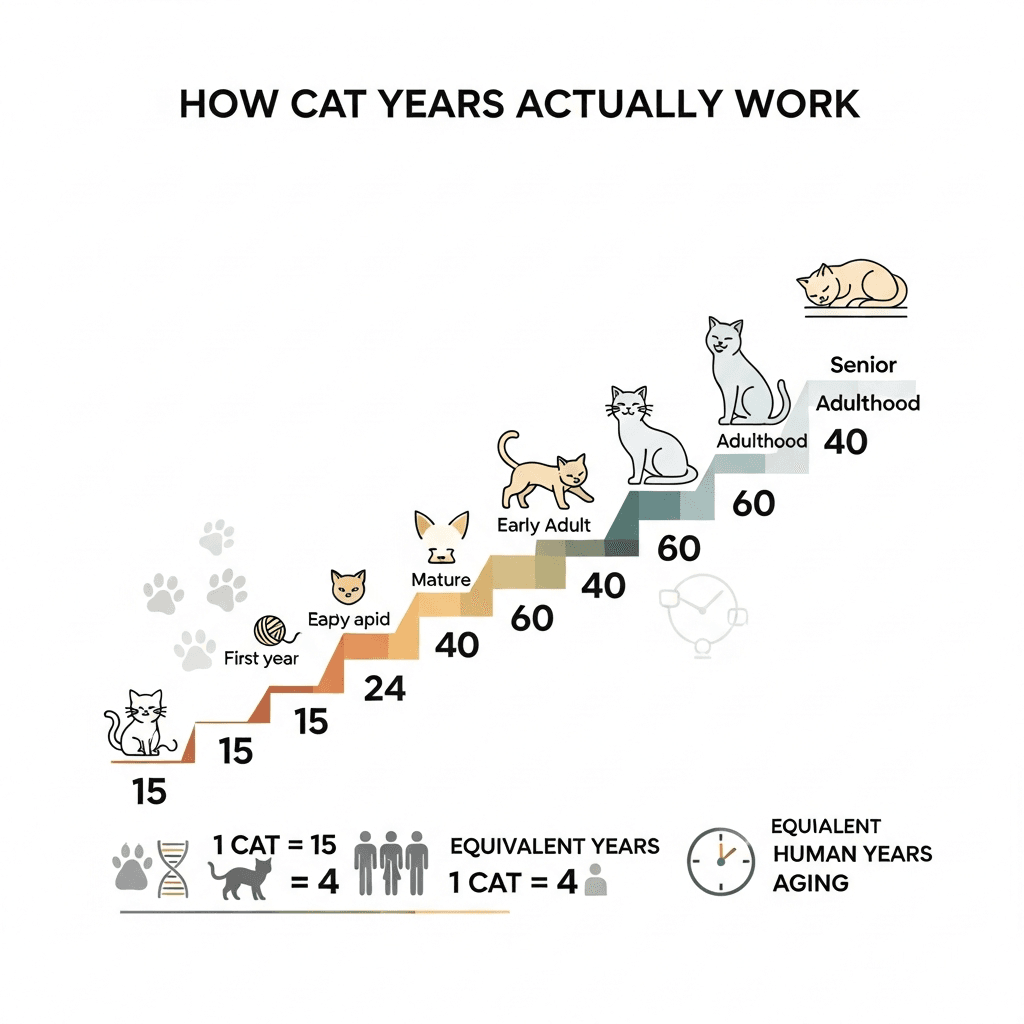
How Cat Years Actually Work: Why Indoor Cats Live a Decade Longer
How Cat Years Actually Work: Why Indoor Cats Live a Decade Longer The "multiply by 7" rule is wrong for cats — even more wrong than it is for dogs. A 1-year-old cat is not 7 in human terms; it's 15, a sexually mature young adult. By age 2, your cat is 24 in human years. After that, each cat year adds only 4 human years. But here's the number that actually matters: indoor cats live 15-20 years on average, while outdoor cats average just 2-5 years. That's not a small difference — a UC Davis veterinary study(https://healthtopics.sf.ucdavis.edu/sites/g/files/dgvnsk6721/files/inline-files/Cats-Indoors-or-Outdoors.pdf) found indoor cats live up to 3.5 times longer than outdoor cats. Where your cat lives is a bigger predictor of lifespan than breed, diet, or genetics. At UseCalcPro, we built our cat age calculator after noticing something in the data: cat owners consistently overestimate young cats' ages and underestimate senior cats'....
How Dog Years Actually Work: The Science Behind Your Dog's Real Age
How Dog Years Actually Work: The Science Behind Your Dog's Real Age The "multiply by 7" rule for dog years is wrong, and veterinary science has known this for decades. A 1-year-old dog is not 7 in human terms — it's closer to 15, a sexually mature adolescent. After age 2, the aging rate diverges by size: a 10-year-old Chihuahua is roughly 56 in human years, while a 10-year-old Great Dane is 80. The gap exists because large dogs carry up to 28 times more IGF-1 growth hormone, which accelerates cellular aging and cancer risk. At UseCalcPro, we built our dog age conversion around the size-adjusted formula that veterinary researchers now consider standard. But the deeper you go into the science, the more fascinating — and practically useful — it becomes. This guide covers what your dog's age number actually means at the cellular level, why your Great Dane is...
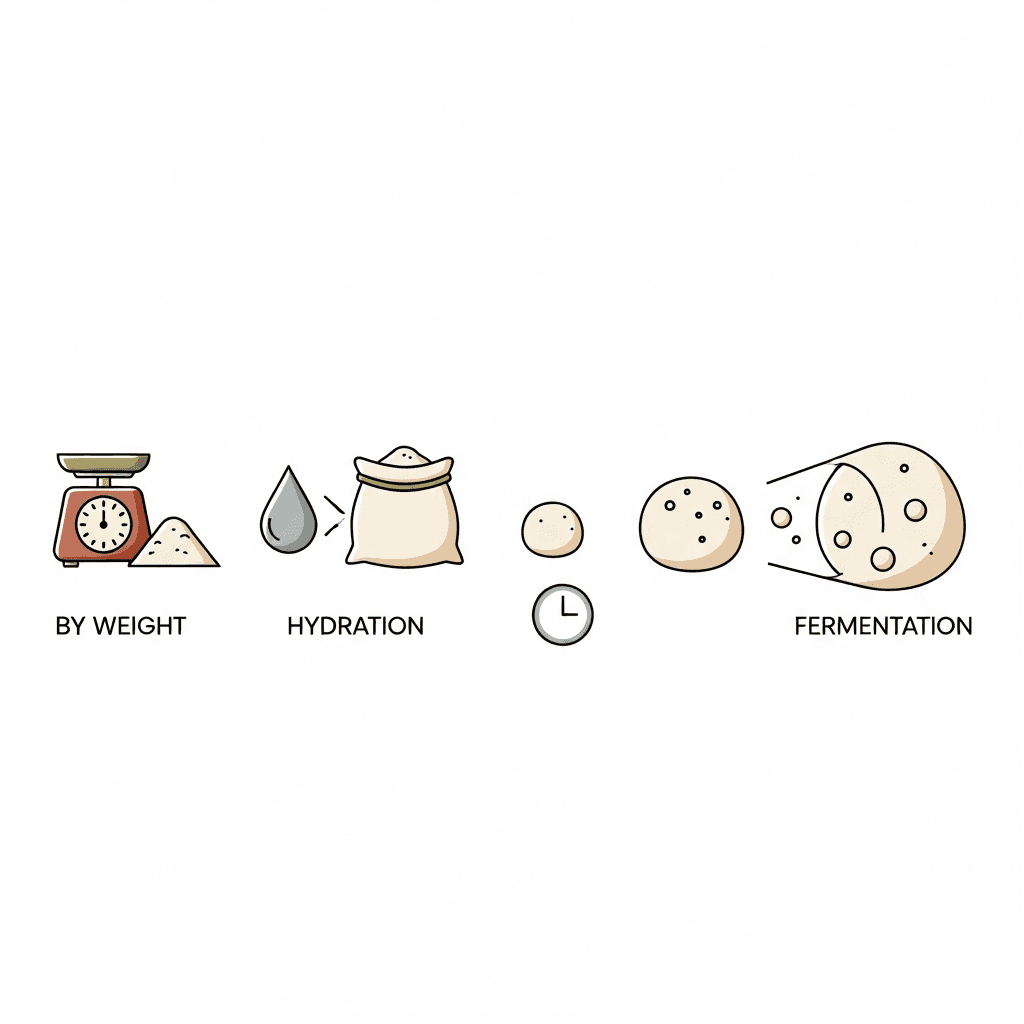
Pizza Dough by Weight: Hydration, Fermentation & Style Guide for Home Ovens
Pizza Dough by Weight: Hydration, Fermentation & Style Guide for Home Ovens Pizza dough is a four-ingredient formula where small percentage changes produce dramatically different results. A 12-inch Neapolitan pizza needs 250g of dough at 62% hydration, while the same size New York slice requires 280g at 63% hydration with added oil and sugar. The difference between a puffy, charred Neapolitan rim and a foldable New York slice isn't talent or a secret recipe — it's baker's percentage math. Cold-fermenting that dough for 24-72 hours in your fridge then develops flavor compounds that same-day dough simply cannot produce, including reduced glycemic response according to a 2025 PMC study on Neapolitan pizza digestibility(https://pmc.ncbi.nlm.nih.gov/articles/PMC12027146/). At UseCalcPro, we built our pizza dough calculator after watching thousands of home bakers guess at ingredient amounts with cup measurements — and consistently end up with dough that's either too wet to shape or too dry to...
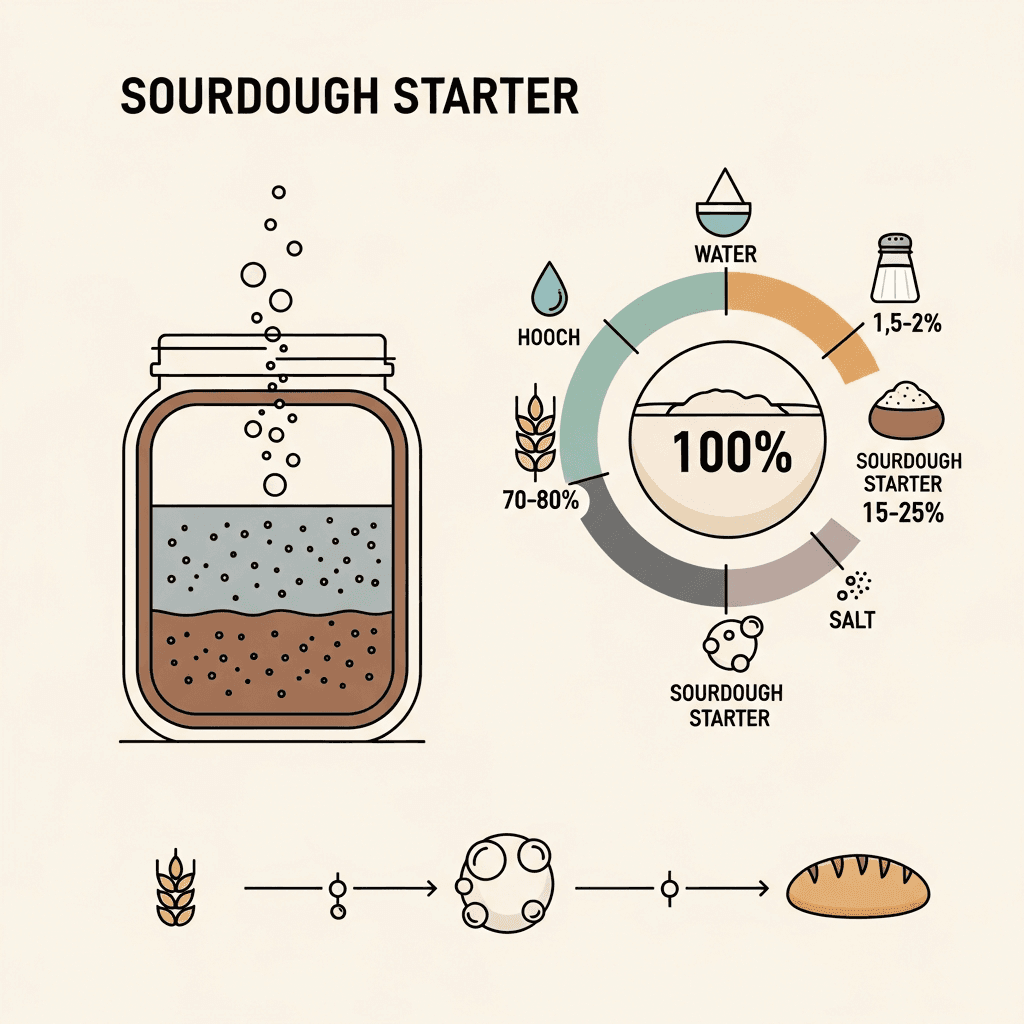
How Baker's Percentage Works: The Math and Science Behind Sourdough Fermentation
How Baker's Percentage Works: The Math and Science Behind Sourdough Fermentation Baker's percentage is a ratio system where every ingredient is expressed relative to total flour weight, which is always 100%. A "70% hydration" dough contains 700 grams of water per 1,000 grams of flour. This single number — hydration — determines whether your crumb is tight and uniform (60-65%) or wild and open (80-85%). But the percentage only sets the stage. What actually builds your bread is fermentation: a biochemical process where wild yeast produces CO2 for rise while lactic acid bacteria produce the acids that define sourdough's flavor, extend its shelf life, and reduce its glycemic index by up to 25 points compared to commercial bread. At UseCalcPro, we've watched thousands of bakers plug numbers into our sourdough tool and then ask the same question: "I got the right amounts, but my bread still came out wrong —...
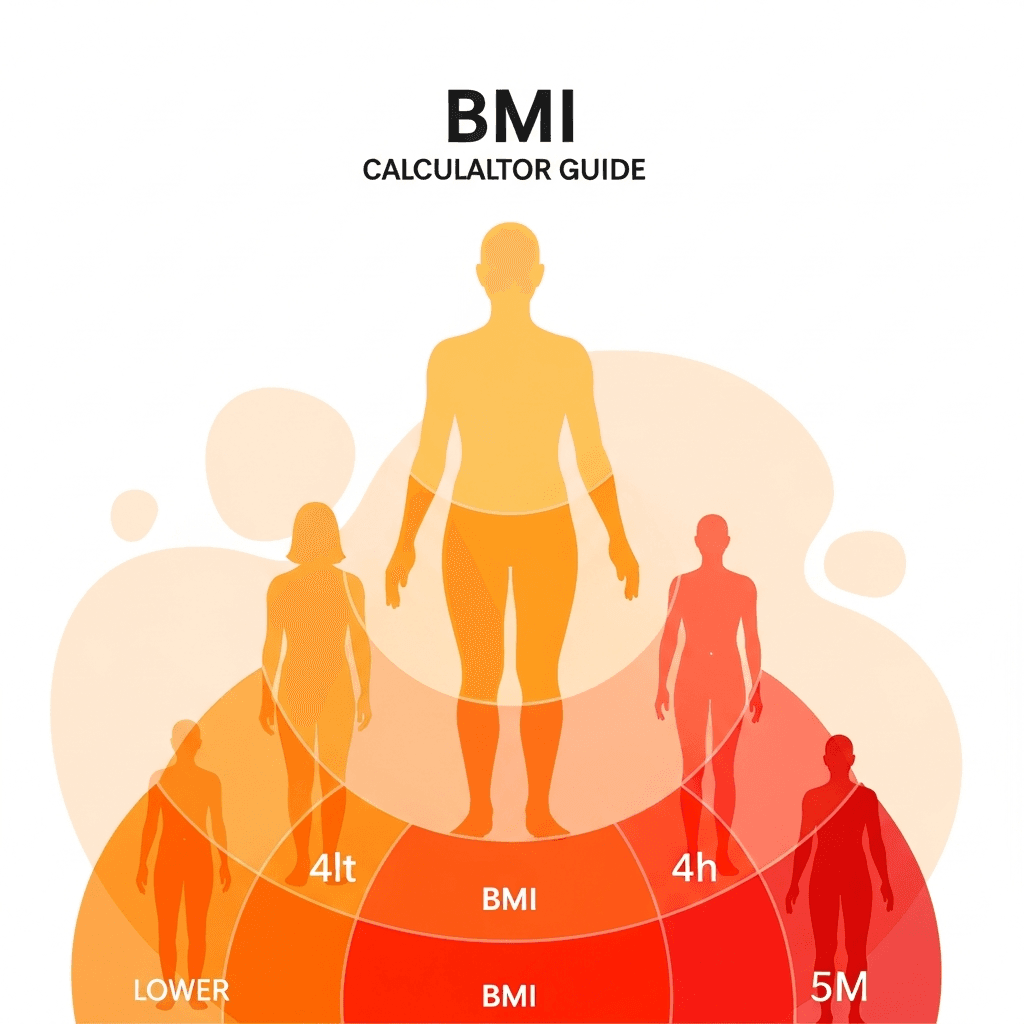
What BMI Actually Measures (and What It Misses): The Science Behind the Number
What BMI Actually Measures (and What It Misses) Body Mass Index divides your weight by height squared to produce a single number between roughly 15 and 50. That number sorts you into one of four categories: underweight, healthy, overweight, or obese. But a 2024 Lancet Commission concluded that BMI alone should no longer be used to diagnose obesity, and the Pentagon adopted waist-to-height ratio as an official body composition standard in 2026. At UseCalcPro, we've processed hundreds of thousands of BMI calculations. The data tells a clear story: users with identical BMI scores have wildly different body compositions. A 5'10" man at 200 lbs gets a BMI of 28.7 whether he's a competitive powerlifter at 12% body fat or a sedentary office worker at 32% body fat. Same number, completely different health profiles. This guide explains what BMI actually captures, where it breaks down, and which newer metrics do a...
How to Calculate Your Mortgage Payment: Formula Guide (2026)
How to Calculate Your Mortgage Payment Your monthly mortgage payment is determined by three numbers: the loan amount, the interest rate, and the loan term. The standard amortization formula M = P x r(1+r)^n / (1+r)^n - 1 converts these inputs into a fixed payment that fully repays the loan over time. On a $280,000 loan at 6.5% for 30 years, the formula produces $1,770 per month in principal and interest. At UseCalcPro, we've processed over 2 million mortgage calculations since launching. The most common mistake we see: people focus on the monthly number without understanding why it is what it is. That understanding is the difference between confidently negotiating with a lender and blindly signing paperwork. This guide walks through the math behind every mortgage payment, so you know exactly where each dollar goes. Try It Yourself widget { "type": "calculator-embed", "id": "mortgage-embed", "title": "Interactive Mortgage Payment Calculator", "description":...