Implantation: Timeline, Symptoms, and What to Expect
The two-week wait. If you're trying to conceive, you know this period all too well—those nail-biting days between ovulation and when you can finally take a pregnancy test. During this time, something remarkable may be happening inside your body: implantation.
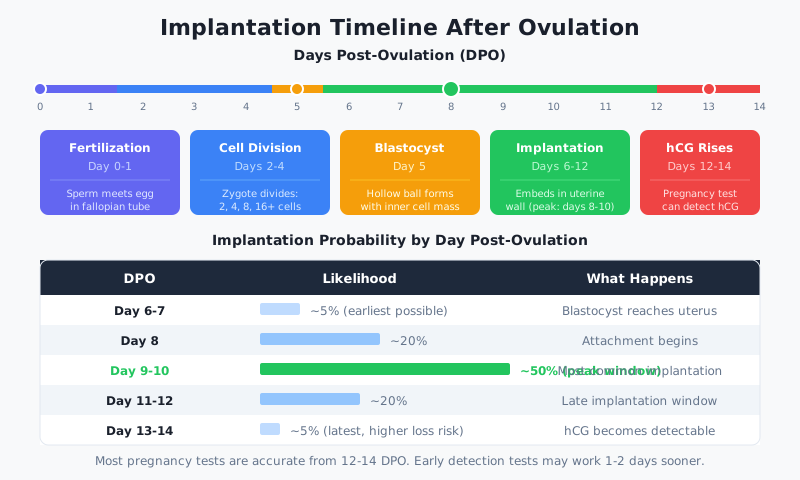
Quick answer: Implantation typically occurs 6-12 days after ovulation (DPO), with most implantation happening between days 8-10. This is when the fertilized egg (now a blastocyst) attaches to your uterine wall, marking the true beginning of pregnancy.
Consider a representative case: faint pink spotting at 9 DPO that lasts less than a day -- different from typical pre-period spotting, which tends to be brown and start around 12 DPO. Mild, pulling cramps low in the abdomen at 8 DPO can feel distinctly different from typical PMS cramping. Testing at 11 DPO with an early detection test might show a faint positive that darkens over the next 3 days. This kind of variability in implantation timing and symptoms is exactly why it helps to know what is normal before analyzing every twinge during the wait.
Use our Implantation Calculator to estimate when implantation may occur based on your ovulation date or last menstrual period.
Understanding implantation can help you interpret early symptoms, know when to test, and understand why timing matters.
What Is Implantation?
Implantation is the process by which a fertilized egg attaches to the lining of the uterus. It's a critical milestone—without successful implantation, pregnancy cannot occur.
The Journey to Implantation
After fertilization, the embryo doesn't immediately attach. Instead, it goes through a remarkable journey:
| Day Post-Ovulation | Stage | What's Happening |
|---|---|---|
| Day 0 | Ovulation | Egg released from ovary |
| Day 0-1 | Fertilization | Sperm penetrates egg in fallopian tube |
| Day 1-2 | 2-cell stage | First cell division |
| Day 2-3 | 4-8 cell stage | Continued division |
| Day 3-4 | Morula | Solid ball of 16+ cells |
| Day 4-5 | Blastocyst | Hollow ball forms |
| Day 5-6 | Hatching | Blastocyst breaks out of zona pellucida |
| Day 6-12 | Implantation | Attachment to uterine wall |
According to the National Institutes of Health, implantation is a complex process that requires the embryo and uterine lining to be perfectly synchronized.
Info
Why day 8-10 is most common: While the implantation window spans days 6-12, studies show that most successful pregnancies involve implantation around days 8-10 post-ovulation. Earlier or later implantation is associated with higher miscarriage risk.
The Implantation Process
Implantation isn't instantaneous—it's a multi-step process that takes about 1-3 days to complete.
Step 1: Apposition
The blastocyst loosely positions itself against the uterine lining (endometrium). During this initial contact phase:
- The embryo "finds" a suitable spot
- The outer cells begin preparing to attach
- The uterine lining is at its most receptive
Step 2: Adhesion
The blastocyst more firmly attaches to the endometrial surface:
- Molecular "handshake" between embryo and uterus
- Cell surface proteins lock together
- Attachment becomes stable
Step 3: Invasion
The blastocyst burrows into the uterine lining:
- Outer cells (trophoblast) penetrate the endometrium
- Embryo embeds completely
- Connection to maternal blood supply begins
- This invasion may cause light bleeding
The American College of Obstetricians and Gynecologists (ACOG) notes that after implantation, the trophoblast cells will eventually form the placenta.
Implantation Symptoms: What You Might Feel
Not everyone experiences implantation symptoms—in fact, many women don't notice anything at all. But some women do experience subtle signs.
1. Implantation Bleeding (Spotting)
The most commonly discussed symptom, implantation bleeding occurs when the embryo burrows into the blood-rich uterine lining.
Characteristics of implantation bleeding:
| Feature | Implantation Bleeding | Period |
|---|---|---|
| Color | Light pink, brown, or rust | Bright red to dark red |
| Amount | Very light (spots only) | Moderate to heavy flow |
| Duration | 1-2 days maximum | 3-7 days typically |
| Timing | 6-12 days post-ovulation | 14+ days post-ovulation |
| Consistency | Light, may be intermittent | Steady, increasing |
According to the American Pregnancy Association, about 25-30% of pregnant women experience some spotting during implantation.
Warning
When to contact your doctor: While light spotting is normal, heavy bleeding, severe pain, or bleeding with fever warrants immediate medical attention, especially if you know you're pregnant.
2. Implantation Cramping
Light cramping is common during implantation as the embryo burrows in and the uterus responds.
What implantation cramps feel like:
- Mild, dull aching in lower abdomen
- May be one-sided or central
- Less intense than menstrual cramps
- Comes and goes rather than constant
- Duration: minutes to 1-2 days
3. Other Possible Symptoms
While less reliable, some women report:
Physical symptoms:
- Breast tenderness (starting after implantation as hCG rises)
- Fatigue
- Bloating
- Headaches
- Increased urination
Temperature changes:
- Implantation dip: Some women see a one-day temperature drop on their BBT chart around implantation (see below)
- Temperature rise continues after the dip
Tip
Don't over-analyze symptoms. Many "implantation symptoms" are identical to PMS symptoms caused by progesterone in the second half of your cycle. The most reliable sign of pregnancy is a positive test.
The Implantation Dip: Fact or Fiction?
You may have heard about the "implantation dip"—a sudden temperature drop on your BBT chart around the time of implantation. But is it real?
What the Research Shows
A study analyzing BBT charts from the fertility app Fertility Friend found:
- 11% of charts with confirmed pregnancy showed a dip
- 9% of charts without pregnancy also showed a dip
- The dip occurred most commonly on days 7-8 post-ovulation
Conclusion: While an implantation dip can occur, it's not a reliable predictor of pregnancy. A dip without pregnancy is almost as common.
If You See a Temperature Dip
| Dip Observed | What It Could Mean |
|---|---|
| Single-day dip, temperature rises next day | Possibly implantation, could be random variation |
| Dip continues or doesn't recover | Possibly luteal phase defect, period approaching |
| No dip observed | Doesn't mean you're not pregnant |
The most important pattern is a sustained temperature elevation for 16+ days—this is much more indicative of pregnancy than a single-day dip.
When to Take a Pregnancy Test After Implantation
After implantation, your body begins producing human chorionic gonadotropin (hCG)—the hormone pregnancy tests detect.
hCG Timeline After Implantation
| Days Post-Implantation | hCG Level | Test Detection |
|---|---|---|
| Day 1 | ~1-5 mIU/mL | Too low to detect |
| Day 2-3 | ~5-20 mIU/mL | Earliest detection possible |
| Day 4-5 | ~20-50 mIU/mL | Early detection tests may show |
| Day 6-7 | ~50-100+ mIU/mL | Most tests will show positive |
Since implantation typically occurs 8-10 days post-ovulation (DPO), and hCG takes 2-3 days to reach detectable levels:
Earliest positive test: 10-12 DPO (for early detection tests) Reliable positive test: 14 DPO (first day of missed period)
Important
Testing too early leads to false negatives. If you test at 10 DPO and get a negative, it doesn't mean you're not pregnant—implantation may have just occurred or not happened yet. Wait and retest.
Recommended Testing Strategy
- 10-11 DPO: If using early detection test, understand a negative isn't conclusive
- 12-14 DPO: More reliable results; retest if negative but period doesn't arrive
- First day of missed period: Most accurate timing for standard tests
- Use first morning urine: Most concentrated hCG levels
See our Pregnancy Calculator to track timing and milestones.
Factors Affecting Implantation
Successful implantation requires perfect coordination between a healthy embryo and a receptive uterine lining.
Embryo Quality
The embryo's health significantly impacts implantation success:
- Chromosomal abnormalities are the most common cause of failed implantation
- Embryo development rate matters—embryos that develop too slowly or quickly may have issues
- Blastocyst formation is critical—embryos that don't properly form this stage often fail
According to the Cleveland Clinic, about 50% of miscarriages and failed implantations are due to chromosomal abnormalities in the embryo.
Uterine Lining (Endometrium)
The endometrium must be properly prepared:
| Optimal Conditions | Issues That Can Affect |
|---|---|
| Thick enough (8-12mm ideal) | Thin lining |
| Trilaminar pattern on ultrasound | Uterine fibroids |
| Adequate blood flow | Polyps |
| Receptive window properly timed | Adhesions (Asherman's syndrome) |
| Proper progesterone support | Chronic endometritis |
Hormonal Environment
Key hormones for implantation:
- Estrogen: Builds the uterine lining
- Progesterone: Maintains the lining and supports implantation
- hCG: Signals the corpus luteum to keep producing progesterone
A luteal phase defect (inadequate progesterone) can prevent successful implantation.
Lifestyle Factors
Research suggests several lifestyle factors may impact implantation:
Potentially helpful:
- Balanced nutrition
- Moderate exercise
- Stress management
- Adequate sleep
- Maintaining healthy weight
Potentially harmful:
- Smoking
- Excessive alcohol
- High caffeine intake (>300mg/day)
- Extreme exercise during the luteal phase
- Very high or very low BMI
The March of Dimes emphasizes the importance of achieving a healthy weight before trying to conceive.
Failed Implantation
Unfortunately, not all fertilized eggs successfully implant. Understanding this can help manage expectations.
How Common Is Failed Implantation?
- 30-40% of fertilized eggs fail to implant
- Many of these are never detected (very early loss)
- 10-25% of known pregnancies end in miscarriage (after positive test)
The American Society for Reproductive Medicine notes that most implantation failures are due to embryo abnormalities that are not preventable.
Signs of Failed Implantation
When implantation fails, you'll simply get your period at the expected time. There's typically no way to know the difference between a cycle where fertilization didn't occur and one where the embryo failed to implant.
When to Seek Help
Consider consulting a reproductive specialist if:
- You've had multiple early pregnancy losses
- You've been trying for 12+ months (under 35) or 6+ months (35+)
- You have known uterine abnormalities
- You've had multiple IVF failures
Implantation in IVF
For those undergoing IVF, the implantation window is carefully managed.
Timing of IVF Implantation
| Transfer Type | When Implantation Occurs |
|---|---|
| Day 3 embryo | 1-3 days after transfer |
| Day 5 blastocyst | 1-2 days after transfer |
With IVF, the embryo is placed directly in the uterus, skipping the fallopian tube journey. Implantation typically occurs sooner after transfer than it would after natural conception.
IVF Two-Week Wait
IVF patients experience the same implantation symptoms (or lack thereof) as natural conception. The wait from transfer to blood test (beta hCG) is typically:
- 9-12 days for day 5 blastocyst transfer
- 12-14 days for day 3 embryo transfer
Tip
For IVF patients: Resist the urge to home test too early. Blood tests at your clinic are more accurate and less emotionally draining than interpreting faint lines.
Day-by-Day: The Two-Week Wait
Here's what's happening during the waiting period after ovulation:
Days 1-3 Post-Ovulation (1-3 DPO)
- Fertilized egg divides from 2 to 8+ cells
- Embryo travels through fallopian tube
- No symptoms possible—too early
Days 4-5 Post-Ovulation (4-5 DPO)
- Morula becomes blastocyst
- Embryo enters the uterus
- Hatching from zona pellucida begins
- Still too early for symptoms
Days 6-9 Post-Ovulation (6-9 DPO)
- Implantation window opens
- Blastocyst attaches to uterine lining
- Possible implantation bleeding or cramping
- hCG production may begin late in this window
Days 10-12 Post-Ovulation (10-12 DPO)
- Implantation should be complete
- hCG levels rising if pregnant
- Earliest possible positive pregnancy test
- Symptoms may begin (or may not)
Days 13-14 Post-Ovulation (13-14 DPO)
- hCG should be detectable if pregnant
- Most tests accurate by now
- If not pregnant, period will arrive
Use our Implantation Calculator to get personalized day-by-day timing.
Myths About Implantation
Myth 1: "You'll Feel It When It Happens"
Reality: Most women feel nothing during implantation. The embryo is microscopic and the process is gentle. Any symptoms are subtle and easily confused with PMS.
Myth 2: "Bed Rest Helps Implantation"
Reality: Normal activity doesn't prevent implantation. While extreme exercise might be worth avoiding, lying in bed won't make implantation more likely. The embryo is securely burrowed—it won't fall out.
Myth 3: "No Symptoms Means No Pregnancy"
Reality: Many women with successful pregnancies report zero symptoms before their positive test. Symptom presence or absence is not predictive.
Myth 4: "Heavy Bleeding Is Implantation"
Reality: Implantation bleeding is light—spotting only. Heavy bleeding is not implantation bleeding and should be evaluated if you're pregnant.
Myth 5: "The Embryo Can Implant Anywhere"
Reality: Successful pregnancy requires implantation in the uterus. Ectopic pregnancy (implantation in the fallopian tube or elsewhere) is a medical emergency requiring treatment.
Frequently Asked Questions
How long after ovulation does implantation occur?
Implantation typically occurs 6-12 days after ovulation, with most successful pregnancies seeing implantation around days 8-10. Use our Implantation Calculator to estimate your specific window based on your ovulation date.
What does implantation bleeding look like?
Implantation bleeding is typically very light—pink, light red, or brownish spotting. It's much lighter than a period, often just appearing when you wipe. It usually lasts 1-2 days maximum and doesn't increase in flow like a period would.
Can implantation occur without any symptoms?
Absolutely. Most women don't experience noticeable implantation symptoms. The embryo is tiny and the process is gentle. Many women only learn they're pregnant from a positive test, having felt no implantation signs whatsoever.
How soon after implantation can I test positive?
hCG begins rising after implantation completes but takes 2-3 days to reach detectable levels. If implantation occurs at 9 DPO, the earliest possible positive might be 11-12 DPO. However, waiting until 14 DPO (first day of missed period) gives more reliable results.
Can stress prevent implantation?
While extreme, chronic stress may potentially affect reproductive function, normal day-to-day stress is unlikely to prevent implantation. The process is remarkably resilient. That said, stress management is good for overall health and wellbeing during the TTC journey.
Is cramping a good sign of implantation?
Cramping during the implantation window (6-12 DPO) could potentially be related to implantation, but it could also be progesterone effects, digestive issues, or pre-period symptoms. Cramping alone is not a reliable indicator of pregnancy.
Can you feel the exact moment of implantation?
Very unlikely. The blastocyst is microscopic and implantation is a gradual process. Any sensations you feel are more likely due to hormonal changes in your body rather than the physical act of implantation.
Does implantation bleeding mean a healthy pregnancy?
Implantation bleeding is just a sign that implantation occurred—it doesn't indicate anything about the health or viability of the pregnancy. Many healthy pregnancies have no bleeding; many with bleeding are also healthy.
Related Articles
- Complete Pregnancy Journey: From Conception to Due Date — The full pregnancy timeline from start to finish
- How to Track Ovulation: Complete Guide for TTC — Methods for pinpointing ovulation before conception
- When Did I Conceive? Understanding Conception Dates — Calculating when fertilization occurred
- Due Date Calculator: How Accurate Is Your Due Date? — Understanding due date predictions
- Pregnancy Week by Week Guide — What happens after implantation through delivery
Related Calculators
- Implantation Calculator — Estimate when implantation may occur
- Ovulation Calculator — Find your ovulation date and fertile window
- Conception Calculator — Calculate your conception date
- Pregnancy Calculator — Track pregnancy milestones
- Due Date Calculator — Calculate your estimated delivery date
This article provides general information for educational purposes. Implantation and early pregnancy experiences vary widely. For medical concerns, especially regarding bleeding or pain in early pregnancy, consult your healthcare provider promptly.
This article is provided for informational and educational purposes only. Content should not be considered professional financial, medical, legal, or other advice. Always consult a qualified professional before making important decisions. UseCalcPro is not responsible for any actions taken based on the information in this article.
Try These Calculators
Estimate when implantation may occur based on your last menstrual period and average cycle length. See the 6-12 DPO window and earliest pregnancy test date.
Work backward from a due date or forward from your last period to find when conception likely happened. See the fertile window and estimated due date.
When is your baby due? Enter your last period or conception date to get an estimated due date, trimester timeline, and key pregnancy milestones week by week.
Estimate 2026 manicure, pedicure, and mani-pedi combo prices by finish, nail art, and salon tier. A gel mani-pedi usually runs about $70 to $110 with tip.
Calculate your ovulation date and fertile window based on your menstrual cycle. Track your most fertile days for conception planning or natural family planning.