Pregnancy Week by Week: Complete Trimester Guide and Fetal Development
Every week of pregnancy brings new developments. From a cluster of cells smaller than a poppy seed to a fully-formed baby ready for the world, the transformation is nothing short of miraculous.
Quick orientation: Pregnancy lasts 40 weeks and is divided into three trimesters. The first trimester (weeks 1-13) is when all major organs form. The second trimester (weeks 14-27) is when baby grows rapidly and you start feeling movement. The third trimester (weeks 28-40) is when baby gains weight and prepares for birth.
Many parents check what's happening week by week obsessively -- first flutters commonly show up around week 19, the anatomy scan lands at week 20, and OBs typically recommend starting kick counts at week 28. A baby might arrive anywhere from 37 to 42 weeks, with 40 weeks and 3 days being a common full-term example. That week-by-week tracking helps people feel grounded when symptoms come and go unexpectedly: knowing what's normal at each stage genuinely eases the anxiety.
Use our Pregnancy Calculator to find your current week and see key milestones for your stage.
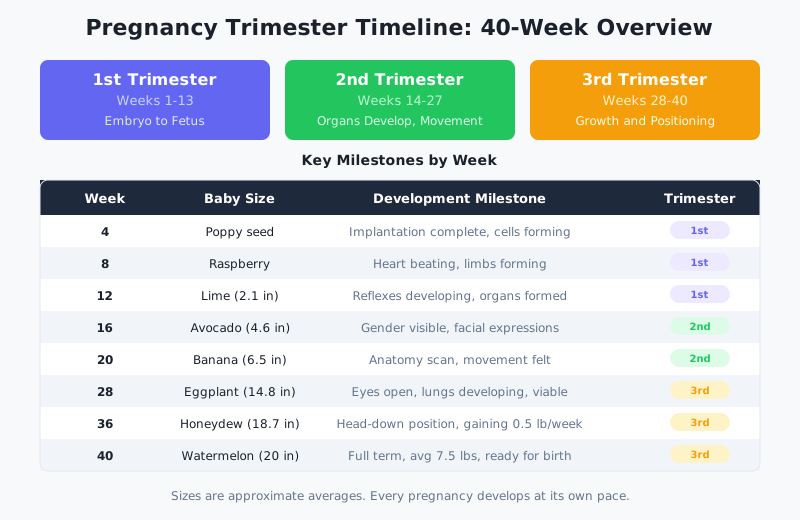
This comprehensive guide walks you through every week of pregnancy—what's developing, what you might feel, and what to expect.
How Pregnancy Weeks Are Counted
Before diving into the week-by-week breakdown, understand the counting system:
- Gestational age: Counted from the first day of your last menstrual period (LMP)
- Fetal age: Counted from conception (about 2 weeks less)
When we say "week 8," we mean gestational age—your baby has actually been developing for about 6 weeks since conception.
Info
Week 1-2 paradox: You're not actually pregnant during "weeks 1-2" of pregnancy. These weeks are counted because pregnancy dating begins from your LMP, but conception doesn't occur until around week 2-3 (ovulation).
First Trimester: Weeks 1-13
The first trimester is the most critical period for development. By week 13, all major organ systems are in place.
Weeks 1-4: Conception and Implantation
Week 1-2: Preparation
- Your body prepares for ovulation
- Uterine lining builds up
- Not technically pregnant yet
Week 3: Conception
- Ovulation occurs (typically around day 14)
- Fertilization happens if sperm meets egg
- The zygote begins dividing
Week 4: Implantation
- Blastocyst implants in uterine wall (around day 22-28)
- hCG production begins
- You might miss your period by week's end
| Week 4 Stats | |
|---|---|
| Baby size | Poppy seed (0.1 mm) |
| Development | Implantation completing, placenta forming |
| Your symptoms | May feel nothing; possible light cramping |
Learn more about this stage in our Implantation Guide.
Week 5: The Heart Begins
This is often when women discover they're pregnant—a missed period prompts a test.
| Week 5 Stats | |
|---|---|
| Baby size | Sesame seed (2 mm) |
| Development | Heart begins to beat; neural tube forming |
| Your symptoms | Fatigue, breast tenderness, possible nausea |
What's forming:
- Primitive heart begins pulsating
- Neural tube (future brain and spinal cord)
- Early circulatory system
Week 6: Facial Features Start
| Week 6 Stats | |
|---|---|
| Baby size | Lentil (4-5 mm) |
| Development | Eyes, nose, ears, jaw forming |
| Your symptoms | Morning sickness may begin; fatigue |
What's forming:
- Facial features beginning to develop
- Arm and leg buds appearing
- Brain developing rapidly
Warning
Morning sickness peaks weeks 6-10. Despite the name, nausea can occur any time of day. Small, frequent meals and staying hydrated can help. Contact your provider if you can't keep any food or fluids down.
Week 7: Hands and Feet
| Week 7 Stats | |
|---|---|
| Baby size | Blueberry (8-11 mm) |
| Development | Hands/feet forming; brain growing rapidly |
| Your symptoms | Nausea, food aversions, frequent urination |
What's forming:
- Fingers and toes (webbed at first)
- Mouth and tongue
- Both brain hemispheres
Week 8: Major Organs Present
A milestone week—by now, all major organs are present in primitive form.
| Week 8 Stats | |
|---|---|
| Baby size | Kidney bean (1.5 cm) |
| Development | All major organs present; tail disappearing |
| Your symptoms | Peak nausea; breasts enlarging |
What's forming:
- Heart now has 4 chambers
- Intestines developing
- Bones beginning to form
- Embryo now called a "fetus"
According to the American Pregnancy Association, by week 8, the embryo has a distinct human appearance.
Weeks 9-10: Movement Begins
| Week 9-10 Stats | |
|---|---|
| Baby size | Grape to kumquat (2-3 cm) |
| Development | Muscles forming; can wiggle (you won't feel it) |
| Your symptoms | Continued nausea; possible mood swings |
What's forming:
- All essential organs continue developing
- Tiny movements begin (not felt yet)
- External genitalia forming (too early to determine sex)
- Fingers and toes separating
Weeks 11-12: Reflexes Develop
| Week 11-12 Stats | |
|---|---|
| Baby size | Lime (4-5 cm) |
| Development | Reflexes, sucking, swallowing developing |
| Your symptoms | Nausea often begins to ease |
What's forming:
- Reflexes emerging (grasping, sucking)
- Fingernails and toenails
- Tooth buds under gums
- Vocal cords
Week 13: End of First Trimester
| Week 13 Stats | |
|---|---|
| Baby size | Peach (6-7 cm) |
| Development | All major systems in place; now refinement |
| Your symptoms | Energy often returns; appetite increasing |
Milestone: The risk of miscarriage drops significantly after week 13, which is why many families announce their pregnancy around this time.
Second Trimester: Weeks 14-27
Often called the "honeymoon phase"—morning sickness typically subsides, energy returns, and you'll start to show and feel baby move.
Week 14-15: Gender Forming
| Week 14-15 Stats | |
|---|---|
| Baby size | Lemon to apple (8-10 cm) |
| Development | External genitalia distinguishable; making expressions |
| Your symptoms | More energy; reduced nausea |
What's developing:
- Sex organs are differentiating
- Baby can squint, frown, grimace
- Sucking reflex strengthening
- Body is growing faster than head
Week 16-17: Hearing Develops
| Week 16-17 Stats | |
|---|---|
| Baby size | Avocado (11-13 cm) |
| Development | Can hear sounds; skeleton hardening |
| Your symptoms | May feel first movements (quickening) |
What's developing:
- Ears are functional—baby can hear your voice
- Skeletal bones hardening
- Baby can make facial expressions
- Hair pattern forming on head
Tip
Quickening: First-time mothers often feel baby's first movements between 18-22 weeks. Second-time mothers may feel them as early as 16 weeks. These early movements feel like flutters, bubbles, or gentle tapping.
Week 18-20: Anatomy Scan
| Week 18-20 Stats | |
|---|---|
| Baby size | Bell pepper to banana (14-16 cm) |
| Development | Detailed anatomy visible on ultrasound |
| Your symptoms | Clear movement; growing belly visible |
Key milestone: The anatomy scan (typically 18-22 weeks)
This detailed ultrasound checks:
- Brain structure
- Heart chambers and function
- Spine alignment
- Kidney function
- Limb development
- Placenta location
- Often: baby's sex (if you want to know)
The Cleveland Clinic notes this is one of the most comprehensive scans of pregnancy.
Week 21-22: Taste Buds Active
| Week 21-22 Stats | |
|---|---|
| Baby size | Carrot (18-19 cm) |
| Development | Taste buds active; eyebrows visible |
| Your symptoms | Regular movement patterns; possible heartburn |
What's developing:
- Taste buds can detect flavors in amniotic fluid
- Eyebrows and eyelashes growing
- Hearing more refined—baby recognizes your voice
- Sleep-wake cycles beginning
Week 23-24: Viability Milestone
| Week 23-24 Stats | |
|---|---|
| Baby size | Corn on the cob (21-22 cm) |
| Development | Lungs developing; viability if born early |
| Your symptoms | Braxton Hicks may begin; back pain common |
Milestone at 24 weeks: This is considered the "age of viability"—with intensive medical care, babies born at 24 weeks have about a 40-70% survival rate, though often with significant health challenges.
Week 25-27: Rapid Brain Growth
| Week 25-27 Stats | |
|---|---|
| Baby size | Rutabaga to cauliflower (23-36 cm) |
| Development | Rapid brain development; eyes can open |
| Your symptoms | Leg cramps; swelling; glucose test time |
What's developing:
- Brain is growing rapidly
- Eyes can open and close
- Baby responds to light
- Lungs continuing to mature
Glucose screening: Around weeks 24-28, you'll have a glucose challenge test to screen for gestational diabetes.
Third Trimester: Weeks 28-40+
The home stretch! Baby is gaining weight rapidly, and your body is preparing for labor.
Week 28-30: Practice Breathing
| Week 28-30 Stats | |
|---|---|
| Baby size | Eggplant to cabbage (38-40 cm) |
| Development | Practicing breathing; eyes track light |
| Your symptoms | Shortness of breath; frequent urination |
What's developing:
- Lungs producing surfactant
- Practice breathing movements
- Brain developing wrinkles (gyri)
- Adding body fat
Important
Kick counts begin: Starting around week 28, monitor baby's movements. You should feel at least 10 movements within 2 hours. Contact your provider if movements significantly decrease.
Week 31-33: Immune System Building
| Week 31-33 Stats | |
|---|---|
| Baby size | Coconut to pineapple (42-44 cm) |
| Development | Receiving antibodies; storing iron |
| Your symptoms | Difficulty sleeping; Braxton Hicks increasing |
What's developing:
- Immune system building
- Bones fully developed (but still soft)
- Baby is urinating about a pint per day
- Most babies are head-down by now
Week 34-36: Preparing for Descent
| Week 34-36 Stats | |
|---|---|
| Baby size | Cantaloupe to honeydew (46-48 cm) |
| Development | Lungs nearly mature; baby "dropping" into pelvis |
| Your symptoms | Increased pelvic pressure; possible lightening |
Important milestones:
- At 34 weeks: Most babies would do well if born (may need some support)
- At 35-37 weeks: Group B Strep (GBS) test
- At 36 weeks: Considered "late preterm" if born
According to the March of Dimes, babies born at 34-36 weeks generally do well but may need some extra support initially.
Week 37-38: Early Term
| Week 37-38 Stats | |
|---|---|
| Baby size | Winter melon (49-50 cm, ~6-7 lbs) |
| Development | Lungs and brain continuing final maturation |
| Your symptoms | Increased Braxton Hicks; nesting instinct |
"Early term" classification:
- Baby is considered viable
- All systems functional
- Still some brain and lung development occurring
- Delivery is safe if medically necessary
Week 39-40: Full Term
| Week 39-40 Stats | |
|---|---|
| Baby size | Watermelon (50+ cm, 7-8 lbs average) |
| Development | Ready for birth; fat stores for temperature regulation |
| Your symptoms | Very ready to be done! |
Full term means:
- Optimal development complete
- Best outcomes for baby
- Lower respiratory issues
- Better temperature regulation
Tip
Due date arrives: Remember, only 5% of babies arrive on their exact due date. Most babies arrive within 2 weeks before or after. See our Due Date Accuracy Guide for more on timing.
Week 41+: Late Term and Post-Term
| Week 41+ Stats | |
|---|---|
| Baby size | Large watermelon (may exceed 8 lbs) |
| Development | Fully developed; placenta may begin aging |
| Your symptoms | Waiting... lots of waiting |
What happens:
- Increased monitoring (NSTs, fluid checks)
- Discussion of induction
- Most providers recommend delivery by 42 weeks
Symptoms by Trimester: What to Expect
First Trimester Symptoms
| Symptom | Why It Happens | Relief |
|---|---|---|
| Nausea | hCG hormone surge | Small meals, ginger, B6 |
| Fatigue | Progesterone increase | Rest when possible |
| Breast tenderness | Hormonal changes | Supportive bra |
| Frequent urination | uterus pressing bladder | Limit evening fluids |
| Food aversions | Hormonal changes | Eat what appeals |
| Mood swings | Hormone fluctuations | Self-care, communication |
Second Trimester Symptoms
| Symptom | Why It Happens | Relief |
|---|---|---|
| Round ligament pain | Uterus expanding | Slow position changes |
| Heartburn | Relaxed esophageal sphincter | Small meals, avoid lying flat |
| Nasal congestion | Increased blood volume | Saline spray, humidifier |
| Leg cramps | Pressure, circulation changes | Stretching, hydration |
| Skin changes | Melanin increase | Sunscreen, embrace it |
| Back pain | Shifting center of gravity | Good posture, prenatal yoga |
Third Trimester Symptoms
| Symptom | Why It Happens | Relief |
|---|---|---|
| Shortness of breath | Baby pressing diaphragm | Good posture, rest |
| Swelling | Fluid retention, circulation | Elevate feet, stay hydrated |
| Insomnia | Discomfort, anxiety, hormones | Pillows, relaxation techniques |
| Braxton Hicks | Uterus practicing | Change positions, hydrate |
| Pelvic pressure | Baby dropping | Pelvic support belt |
| Hemorrhoids | Pressure, constipation | Fiber, sitz baths |
Prenatal Appointment Schedule
Your visit frequency changes throughout pregnancy:
| Weeks | Visit Frequency | Key Tests/Events |
|---|---|---|
| 4-28 | Every 4 weeks | Dating scan, genetic screening, anatomy scan |
| 28-36 | Every 2 weeks | Glucose test, GBS test, positioning check |
| 36-40 | Every week | Cervical checks, NST if needed |
| 40+ | 1-2x weekly | Monitoring, induction discussion |
Key Milestones Summary
| Week | Major Milestone |
|---|---|
| Week 4 | Positive pregnancy test possible |
| Week 6 | Heartbeat visible on ultrasound |
| Week 8 | All major organs present |
| Week 12 | Miscarriage risk drops significantly |
| Week 13 | Enter second trimester |
| Week 18-20 | Anatomy scan; learn sex if desired |
| Week 20 | Halfway point! |
| Week 24 | Viability milestone |
| Week 28 | Enter third trimester; kick counts begin |
| Week 37 | Considered early term |
| Week 39 | Full term begins |
| Week 40 | Due date |
Frequently Asked Questions
How do I know what week of pregnancy I'm in?
Count from the first day of your last menstrual period (LMP). If your LMP was 8 weeks ago, you're 8 weeks pregnant. Our Pregnancy Calculator can determine your exact week and display relevant milestones.
When will I start showing?
Most first-time mothers begin showing noticeably around 12-16 weeks, though body type affects this significantly. Second-time mothers often show earlier. By 20 weeks, most women have an obvious bump.
When should I feel baby move?
First-time mothers typically feel movement between 18-22 weeks. Second-time mothers may feel it as early as 16 weeks. Early movements feel like flutters or bubbles. Strong kicks become apparent by 24-28 weeks.
What if I don't feel movement every day?
In early pregnancy, intermittent movement is normal. By week 28, you should feel regular movement and begin kick counts. If you notice a significant decrease in movement, drink cold water, lie on your side, and count movements. Contact your provider if you don't feel 10 movements in 2 hours.
Can my baby hear me?
Yes! Hearing develops around weeks 16-18, and by week 24, babies can clearly hear and recognize familiar voices. Talk, read, or sing to your baby—they're listening.
What determines baby's size at birth?
Multiple factors affect birth weight: genetics, placental function, gestational age, maternal health, and nutrition. Birth weight typically ranges from 5.5-10 lbs, with 7.5 lbs being average for full-term babies.
Is it safe to exercise during pregnancy?
For most healthy pregnancies, exercise is beneficial and encouraged. Walking, swimming, prenatal yoga, and modified strength training are generally safe. Consult your provider for personalized guidance, especially with high-risk pregnancies.
What are the most important nutrients during pregnancy?
Key nutrients include:
- Folic acid: Neural tube development (especially first trimester)
- Iron: Blood production
- Calcium: Bone development
- DHA: Brain development
- Protein: Overall growth
Prenatal vitamins help ensure adequate intake.
Related Articles
- Complete Pregnancy Journey: From Conception to Due Date — Overview of the entire pregnancy experience
- How to Track Ovulation — For those planning pregnancy
- When Did I Conceive? — Understanding conception timing
- Implantation Guide — The earliest pregnancy days
- Due Date Accuracy Guide — Understanding when baby will actually arrive
Related Calculators
- Pregnancy Calculator — Track your current week and milestones
- Due Date Calculator — Calculate your estimated delivery date
- Conception Calculator — Determine when conception occurred
- Ovulation Calculator — For planning future pregnancies
- Implantation Calculator — Estimate early pregnancy timing
This article provides general information for educational purposes. Every pregnancy progresses differently. For personalized guidance about your pregnancy, consult with your healthcare provider.
This article is provided for informational and educational purposes only. Content should not be considered professional financial, medical, legal, or other advice. Always consult a qualified professional before making important decisions. UseCalcPro is not responsible for any actions taken based on the information in this article.
Try These Calculators
Enter your last period date to estimate your due date, trimester timeline, and key milestones. Track your pregnancy week by week from LMP or conception.
Calculate the ideal litter box size and litter quantity for your rabbits. Get dimensions based on breed size and recommendations for safe litter types.
Calculate horse trailer size, weight capacity, and tow vehicle requirements by horse count and breed size. Get GVWR, dimensions, and towing recommendations.
Calculate hedgehog cage size, exercise wheel diameter, and heating pad wattage. Get habitat recommendations by cage type, hedgehog count, and temperature.
Find out how many calories your dog or cat needs each day. Enter pet weight, age, and activity level to get daily feeding amounts in cups, grams, and kcal.