How to Track Ovulation: Complete Guide for TTC Success
"When do I ovulate?"
This single question sends millions of women to Google every month. That makes sense—when you're trying to conceive, pinpointing that fertile window feels like cracking a code that could change your life.
Here's the direct answer: Most women ovulate 12-16 days before their next period starts. For a typical 28-day cycle, that's around day 14. But here's what many resources don't tell you—individual patterns vary significantly, and even your own cycle can shift from month to month.
Consider a representative case: tracking ovulation for 11 consecutive cycles using OPKs, BBT charting, and cervical mucus monitoring simultaneously. Cycles ranged from 26 to 33 days, with ovulation consistently landing on cycle days 15-19 rather than the textbook day 14. In one particularly variable month, the LH surge came on day 12, but BBT confirmed ovulation did not actually happen until day 16 -- a full 4 days later. That kind of real-world variability is exactly why combining multiple tracking methods works better than relying on any single one.
Use our Ovulation Calculator to estimate your fertile window based on your cycle length.
The good news? Once you learn to read your body's signals, tracking ovulation becomes second nature. Let's dive into every method available.
Why Ovulation Tracking Matters
Understanding your ovulation pattern isn't just helpful—it's the single most important factor in timing conception. Here's why:
The Fertility Math
| Factor | Duration | Implication |
|---|---|---|
| Egg viability | 12-24 hours | Very short window after ovulation |
| Sperm survival | Up to 5 days | Sperm can wait for the egg |
| Fertile window | ~6 days | 5 days before + ovulation day |
| Optimal timing | 1-2 days before ovulation | Sperm already present when egg releases |
According to the American Pregnancy Association, couples who time intercourse correctly have about a 20-25% chance of conceiving each cycle. Those who don't track may only have a 10-15% chance.
Tip
The golden rule of TTC: Having intercourse every 1-2 days during your fertile window gives you the best chances. You don't need to pinpoint the exact ovulation day—just need to be in the window.
Method 1: Ovulation Predictor Kits (OPKs)
Ovulation predictor kits are the most popular tracking method for good reason—they're easy, affordable, and provide advance warning.
How OPKs Work
OPKs detect the luteinizing hormone (LH) surge that triggers ovulation. LH levels spike about 24-36 hours before the egg is released, giving you a heads-up to time intercourse.
Using OPKs effectively:
- Start testing 2-3 days before expected ovulation (typically day 10-11 for a 28-day cycle)
- Test at the same time daily (afternoon is often best—LH surge often occurs early morning and takes a few hours to show in urine)
- Don't use first morning urine (can give false positives)
- Read results within the time window specified by the manufacturer
Interpreting OPK Results
| Result | What It Means | Action |
|---|---|---|
| Negative | LH is low; ovulation not imminent | Continue testing daily |
| Positive (surge) | LH surge detected; ovulation in 24-36 hours | Have intercourse today and tomorrow |
| Peak (digital tests) | Highest fertility detected | Prime conception window |
Important
OPKs don't confirm ovulation occurred. They only detect the LH surge. In some cycles, you may have an LH surge but not actually ovulate (called an anovulatory cycle). Combining OPKs with BBT tracking confirms ovulation happened.
OPK Options
Basic strip tests:
- Cost: $15-30 for 50+ strips
- Pros: Very affordable, accurate
- Cons: Requires interpretation
Digital tests (Clearblue, etc.):
- Cost: $25-50 for 10-20 tests
- Pros: Easy to read (smiley face = positive)
- Cons: More expensive per test
Advanced digital monitors:
- Cost: $150-300 plus test sticks
- Pros: Tracks estrogen AND LH for wider fertile window
- Cons: High upfront cost
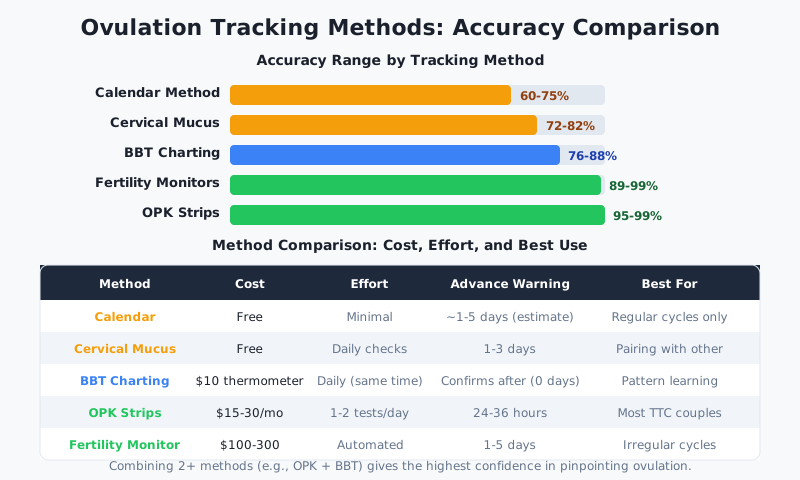
The Mayo Clinic notes that when used correctly, OPKs are about 99% accurate at detecting the LH surge.
Method 2: Basal Body Temperature (BBT) Charting
BBT tracking is the gold standard for confirming ovulation actually occurred. It requires more commitment but provides valuable data.
How BBT Works
Your basal body temperature—your temperature at complete rest—rises slightly after ovulation due to progesterone. This rise is small (0.3-0.5°F or 0.2-0.3°C) but consistent.
The pattern:
- Pre-ovulation: Lower temperatures (97.0-97.5°F / 36.1-36.4°C typical)
- Post-ovulation: Sustained rise of 0.3-0.5°F (0.2-0.3°C)
- Sustained elevation: Lasts until period starts (or continues if pregnant)
BBT Charting Protocol
- Take temperature immediately upon waking (before sitting up, talking, or going to the bathroom)
- Use a basal thermometer (reads to 1/100th degree; regular thermometers aren't precise enough)
- Take at the same time daily (within 30 minutes)
- Record daily on a chart or app
- Look for the pattern over multiple cycles
Reading Your BBT Chart
| Pattern | What It Indicates |
|---|---|
| Lower temperatures (follicular phase) | Pre-ovulation; egg developing |
| Temperature dip (some women) | May occur right before ovulation |
| Sustained rise for 3+ days | Ovulation occurred |
| Elevated for 16+ days | Possible pregnancy |
| Drop back down | Period is coming |
Warning
Factors that affect BBT accuracy:
- Illness or fever
- Alcohol consumption the night before
- Poor sleep or waking at different times
- Traveling across time zones
- Some medications
BBT Limitations
BBT only confirms ovulation after it happens—you'll see the temperature rise the day AFTER ovulation. This means BBT alone doesn't give you advance warning. That's why combining BBT with OPKs or cervical mucus tracking is most effective.
Method 3: Cervical Mucus Monitoring
Your cervical mucus changes throughout your cycle in response to hormones, providing real-time fertility clues. This method is free and always available.
Cervical Mucus Patterns
| Cycle Phase | Mucus Type | Fertility Level |
|---|---|---|
| Post-period | Dry or absent | Low |
| Pre-ovulation | Sticky, white, tacky | Low-Medium |
| Approaching ovulation | Creamy, lotion-like | Medium |
| Peak fertility | Egg white (clear, stretchy, slippery) | HIGH |
| Post-ovulation | Returns to sticky/dry | Low |
How to Check Cervical Mucus
- Wash hands thoroughly
- Check externally (wipe with toilet paper before urinating) or internally
- Note color, texture, and stretchiness
- Record observations daily
The key sign is egg white cervical mucus (EWCM)—clear, stretchy, and slippery like raw egg whites. When you see EWCM, you're in your fertile window.
According to Cleveland Clinic, the presence of fertile-quality cervical mucus is highly predictive of ovulation within the next few days.
Tip
Dehydration affects mucus. Drink plenty of water throughout your cycle to support healthy cervical mucus production.
Method 4: Fertility Apps and Technology
Modern technology has made tracking easier than ever, with apps and devices that analyze multiple fertility signs.
Popular Fertility Apps
Basic cycle tracking:
- Flo
- Clue
- Period Tracker
These apps use algorithm-based predictions from your cycle history. Good for regular cycles but less accurate for irregular ones.
Symptom-based apps:
- Fertility Friend (gold standard)
- Kindara
- Ovia
These combine BBT, OPK results, and cervical mucus data for more accurate predictions.
Wearable Fertility Trackers
| Device | What It Tracks | How It Works |
|---|---|---|
| Tempdrop | BBT while sleeping | Armband worn at night |
| Ava Bracelet | Temperature, pulse, breathing | Wrist sensor overnight |
| Oura Ring | Temperature patterns | Ring worn 24/7 |
| Natural Cycles | BBT + algorithm | Thermometer + app |
These devices are especially helpful if you have irregular sleep or struggle with morning BBT readings.
Info
FDA-cleared options: Natural Cycles is FDA-cleared as a contraceptive (and by extension, for conception). It uses a more sophisticated algorithm than basic apps.
Method 5: Physical Signs and Symptoms
Your body gives other ovulation clues beyond mucus and temperature.
Secondary Ovulation Signs
Mittelschmerz (ovulation pain):
- Sharp or dull pain on one side of lower abdomen
- Lasts minutes to hours
- Occurs around ovulation
- Reported by about 20% of women
Ovulation spotting:
- Light pink or brown spotting
- Occurs mid-cycle
- Caused by hormonal shift
- Not all women experience this
Other signs:
- Increased libido (nature's design)
- Breast tenderness
- Heightened sense of smell
- Mild bloating
- Slight cervical position changes
Cervical Position Tracking
Your cervix changes position throughout your cycle:
| Phase | Position | Texture |
|---|---|---|
| Non-fertile | Low, firm, closed | Like tip of nose |
| Approaching ovulation | Rising, softening | Getting softer |
| Peak fertility | High, soft, open | Like lips |
| Post-ovulation | Returns to low, firm | Firmer again |
This takes practice to learn but provides additional confirmation.
Creating Your Tracking Protocol
For the best results, combine multiple methods. Here's a recommended approach:
Beginner Protocol
- Track cycles for 2-3 months to learn your pattern
- Use OPKs starting day 10 (for 28-day cycles)
- Monitor cervical mucus daily
- Use our Ovulation Calculator to estimate your window
Intermediate Protocol
Add to the beginner approach:
- BBT charting every morning
- Track secondary symptoms (mittelschmerz, etc.)
- Use a fertility app like Fertility Friend to analyze patterns
Advanced Protocol
For those who want maximum data:
- All of the above, plus:
- Wearable tracker for continuous temperature monitoring
- Advanced digital OPKs that track estrogen rise
- Cervical position checking
Special Situations
Tracking with Irregular Cycles
Irregular cycles make prediction harder but not impossible:
- Start OPKs earlier (day 8-9 instead of day 10-11)
- Continue testing longer (you might ovulate later than expected)
- Rely more on physical signs (mucus, OPK positive) than calendar predictions
- Consider seeing a specialist if cycles are very irregular (under 21 days or over 35 days)
For irregular cycles, our Ovulation Calculator adjusts estimates based on your typical cycle length.
After Hormonal Birth Control
It can take several months for ovulation to regulate after stopping hormonal contraception:
- The pill: Most women ovulate within 1-3 months
- IUD (hormonal): Usually immediate return
- Depo shot: Can take 6-12+ months
- Implant: Usually quick return
Track diligently during this transition period—your cycles may be unpredictable initially.
PCOS and Ovulation
Polycystic ovary syndrome (PCOS) can cause:
- Multiple LH surges without ovulation
- Long or absent cycles
- False positive OPKs
Women with PCOS should:
- Rely heavily on BBT to confirm ovulation
- Work with a reproductive endocrinologist
- Consider monitoring with ultrasound
The American College of Obstetricians and Gynecologists (ACOG) recommends that women with PCOS who are trying to conceive work with their healthcare provider for proper monitoring.
Common Tracking Mistakes to Avoid
Mistake 1: Only Having Sex on Ovulation Day
The egg only lives 12-24 hours. If you wait for confirmed ovulation, you might miss the window. Solution: Have sex during the fertile window, including days before expected ovulation.
Mistake 2: Testing OPKs Wrong
Using first morning urine or testing at random times reduces accuracy. Solution: Test in afternoon, same time daily.
Mistake 3: Stopping Too Early
If you have a longer cycle, you might ovulate later than day 14. Solution: Keep testing until you confirm ovulation or your period arrives.
Mistake 4: Ignoring Cervical Mucus
This free, real-time indicator is often overlooked. Solution: Learn to check and interpret your mucus patterns.
Mistake 5: Obsessing Over Data
Stress can actually delay ovulation. Solution: Track consistently but don't let it consume you.
Tip
The "every other day" approach: If tracking feels overwhelming, simply have intercourse every other day from day 10 through day 20 of your cycle. This catches most fertile windows without precise tracking.
When to Seek Help
Consider consulting a fertility specialist if:
- You're under 35 and haven't conceived after 12 months of trying
- You're 35-40 and haven't conceived after 6 months
- You're over 40 and want to start trying
- You have very irregular or absent periods
- You've had multiple miscarriages
- You have known conditions affecting fertility (PCOS, endometriosis, etc.)
The CDC reports that about 12% of women ages 15-44 have difficulty getting or staying pregnant.
Frequently Asked Questions
How do I know if I'm ovulating?
The most reliable signs of ovulation are: a positive OPK (LH surge), followed by a sustained BBT rise, and the presence of egg-white cervical mucus around the same time. Together, these signs confirm you're ovulating. Some women also experience mittelschmerz (one-sided pelvic pain) around ovulation.
Can I ovulate without having a period?
Yes, but it's uncommon. Ovulation can occur before your first period returns (such as after pregnancy or while breastfeeding). However, if you're not getting periods at all, it may indicate you're not ovulating regularly, which warrants a doctor's evaluation.
How accurate are ovulation calculator predictions?
Calculators are most accurate for women with regular cycles. They use averages and algorithms based on your cycle length. For a 28-day cycle, predictions are usually within 1-2 days. For irregular cycles, accuracy decreases. That's why combining calculator estimates with physical signs (OPKs, mucus) is most effective.
Can you ovulate twice in one cycle?
You can release multiple eggs within a 24-hour window (which is how fraternal twins occur), but you cannot have two separate ovulation events days apart in the same cycle. Once ovulation occurs, progesterone rises and prevents additional ovulation until the next cycle.
Why didn't I conceive even though I timed everything right?
Even with perfect timing, there's only about a 20-25% chance of conception each cycle. Many factors affect fertilization and implantation. If you've been timing intercourse correctly for several months without success, continue trying—most couples conceive within 6-12 months. After that, consider consulting a specialist.
Do OPKs work with PCOS?
OPKs can be less reliable with PCOS because some women with this condition have elevated baseline LH levels, causing frequent false positives. If you have PCOS, rely more on BBT charting to confirm ovulation and consider working with a reproductive endocrinologist for monitoring.
What's the best time of day to test for ovulation?
For OPKs, afternoon testing (between 2-8 PM) is generally most reliable. The LH surge often begins early morning and takes several hours to appear in urine. First morning urine can sometimes give false positives. For BBT, you must test immediately upon waking, before any activity.
Related Articles
- Complete Pregnancy Journey: From Conception to Due Date — The full timeline from ovulation through delivery
- When Did I Conceive? Understanding Conception Dates — Calculate your conception date and window
- Implantation: Timeline, Symptoms, and What to Expect — What happens after conception
- Due Date Calculator: How Accurate Is Your Due Date? — Understanding due date predictions
- Pregnancy Week by Week Guide — What to expect each week after conception
Related Calculators
- Ovulation Calculator — Find your fertile window and best days to conceive
- Pregnancy Calculator — Track pregnancy from conception
- Conception Calculator — Estimate when conception occurred
- Due Date Calculator — Calculate your estimated delivery date
- Implantation Calculator — Predict your implantation window
This article provides general information for educational purposes. Consult with your healthcare provider for personalized fertility advice, especially if you have concerns about ovulation or difficulty conceiving.
This article is provided for informational and educational purposes only. Content should not be considered professional financial, medical, legal, or other advice. Always consult a qualified professional before making important decisions. UseCalcPro is not responsible for any actions taken based on the information in this article.
Try These Calculators
Calculate your ovulation date and fertile window based on your menstrual cycle. Track your most fertile days for conception planning or natural family planning.
Estimate when implantation may occur based on your last menstrual period and average cycle length. See the 6-12 DPO window and earliest pregnancy test date.
Work backward from a due date or forward from your last period to find when conception likely happened. See the fertile window and estimated due date.
When is your baby due? Enter your last period or conception date to get an estimated due date, trimester timeline, and key pregnancy milestones week by week.
Check your BMI and see which weight category you fall into based on WHO standards. View health ranges, get personal recommendations, and track your metrics.