
Compare Extended-Stay Hotels Total Value: Parking, Laundry, Breakfast & Snacks (2026)
Compare Extended-Stay Hotels Total Value: Parking, Laundry, Breakfast & Snacks (2026) To compare extended-stay hotels on total value, start with the sticker rate, add parking and any paid laundry, then subtract the dollar value of free breakfast and evening snacks to get the effective nightly cost. For a single traveler, a typical $119 extended-stay suite with free parking, $1/night guest laundry, a $12/day hot breakfast, and a $4/night evening social works out to a $104 effective nightly cost ($119 + $1 − $12 − $4), not the $119 on the booking page. The cheapest sticker rate is almost never the best value once amenities are priced. Use our Hotel Comparison Calculator(/travel/hotel-comparison-calculator) to rank options by their real effective rate. Consider the math on a 23-night work relocation: an extended-stay suite listed at $124/night, so 23 nights of room charge was $2,852. Free hot breakfast saved $12/day ($276 total), three free...

Compare Multipacks for the Best Per-Unit Price (2026 Guide)
Compare Multipacks for the Best Per-Unit Price To compare multipacks, divide each pack's price by its count and pick the lowest number: a 12-pack of sparkling water at $5.49 is $0.46 per can ($5.49 ÷ 12), while a 24-pack at $9.99 is $0.42 per can ($9.99 ÷ 24), so the 24-pack wins by $0.04 a can. The bigger sticker price is not the deal; the lower per-unit price is. Run any two to six options side by side with the Price Per Unit Calculator(/tools/price-per-unit-calculator) and it normalizes the math for you. Consider a 14-week tracking period of grocery receipts, logging 312 line items by hand. Switching to the best per-unit price on nine staples bought every month dropped the monthly grocery bill from $742 to $663. That is $79 a month, or $948 a year, from one habit: reading the small number, not the big one. This guide shows the...

Hotels With Free Parking vs Paid Parking: Total Cost, Amenities, and Reviews Compared (2026)
Hotels With Free Parking vs Paid Parking: Total Cost, Amenities, and Reviews Compared (2026) A $109 hotel with free parking beats a $99 hotel that charges $45/night for valet by $35/night: $109 versus $144 for room plus parking, before either bill is taxed. Free parking wins any time the parking fee is larger than the gap between the two room rates, and in 2026 that is most of the time, because hotel parking now runs $18-$70/night while room-rate differences between two comparable hotels are often $10-$30. Drop both options into the Hotel Comparison Calculator(/travel/hotel-comparison-calculator) and it ranks them by true nightly cost in seconds. Consider a work trip where a downtown hotel at $119/night looks $20 cheaper than a suburban property at $139 -- until the downtown hotel turns out to have no self-parking, only $52/night valet, while the suburban one parks cars free. The $20/night saved on the room...

Trenchless vs. Traditional Sewer Repair Cost Comparison (2026)
Trenchless vs. Traditional Sewer Repair Cost Comparison (2026) Trenchless sewer repair runs $60-$250 per foot installed in 2026 (pipe bursting $60-$200/ft, cured-in-place lining $80-$250/ft), while traditional open-trench dig-up runs $50-$125 per foot for the pipe work plus $750-$7,500 in surface restoration. A typical 75-foot home lateral lands at $4,500-$9,000 traditional, $5,500-$13,500 pipe bursting, or $7,000-$16,000 CIPP. The method that wins on total cost depends almost entirely on what sits above the pipe -- plain grass favors digging, while driveways and patios favor trenchless. Price your exact run with the Sewer Line Replacement Cost Calculator(/construction/sewer-line-replacement-cost-calculator) before you collect bids. On a 1968 ranch I scoped last spring, the camera showed a 6-foot collapsed clay section 40 feet out, right under a paver walkway. The dig-up bid came in at $7,800 -- $4,100 to trench and replace 55 feet of clay lateral at about $75 a foot, plus $3,000 to demo and...

Summer Vacation Cost Comparison: 2026 Trip Budget Guide
Summer Vacation Cost Comparison for 2026 A summer vacation cost comparison in 2026 shows road trips and national park stays as the lowest-cost options at roughly $1,200-$3,500 for a family of four, while beach resorts, cruises, and major city trips commonly land between $3,500 and $8,000+. The biggest cost drivers are lodging nights, airfare, restaurant meals, rental car or fuel, resort fees, and paid activities. Use the Summer Vacation Calculator(/finance/summer-vacation-calculator) to compare trip types with your dates and family size. The most useful vacation comparison is not "cheap vs expensive." It is two versions of the same seven days: a $2,650 national park road trip and a $6,900 beach resort week. A family does not have to cancel the beach trip because of the number; two levers can change the outcome. Driving instead of flying and renting a condo with a kitchen can bring the same trip near $4,400. The...
Compare BOP Insurance Quotes by Industry: 2026 Cost Averages
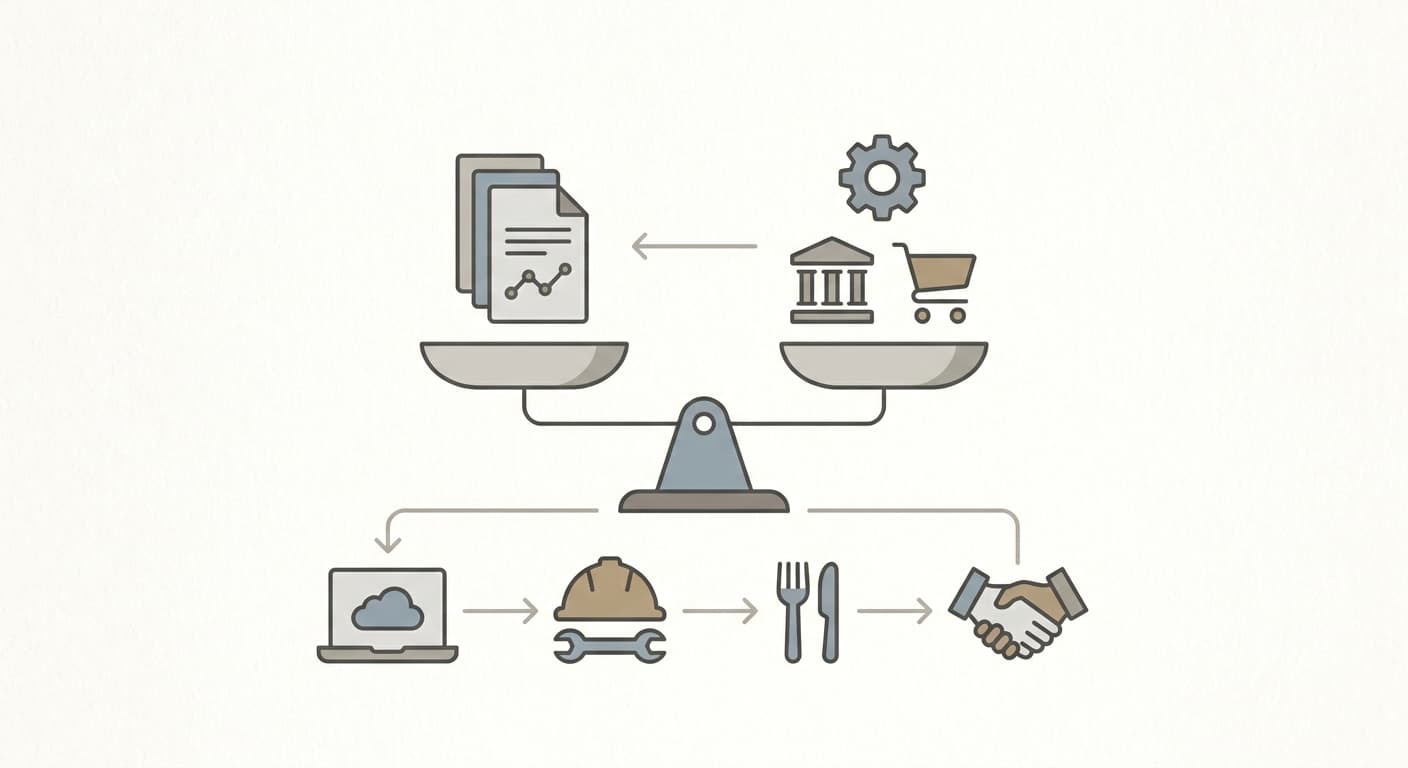
Compare BOP Insurance Quotes by Industry: 2026 Cost Averages A Business Owner's Policy (BOP) bundles general liability and commercial property coverage into one policy, and in 2026 it runs a median of about $83 per month (roughly $1,000/year) for a typical small business per Insureon — though MoneyGeek's broader sample puts the mean closer to $1,767/year — and the price swings from about $25/month for a drone photographer to $1,346/month for a pressure-washing contractor. Industry classification, not size or revenue, is the single biggest reason two businesses get wildly different quotes. To compare BOP insurance quotes by industry against real 2026 averages, run your details through the Small Business Insurance Quote Calculator(/finance/small-business-insurance-quote-calculator) before you call a single broker. The most expensive mistake in comparing commercial coverage for small businesses is accepting the first quote. On one retail boutique account, the spread between the cheapest and most expensive carrier on identical...
Total Hotel Cost Including Fees: How to Compare the Real Price (2026)
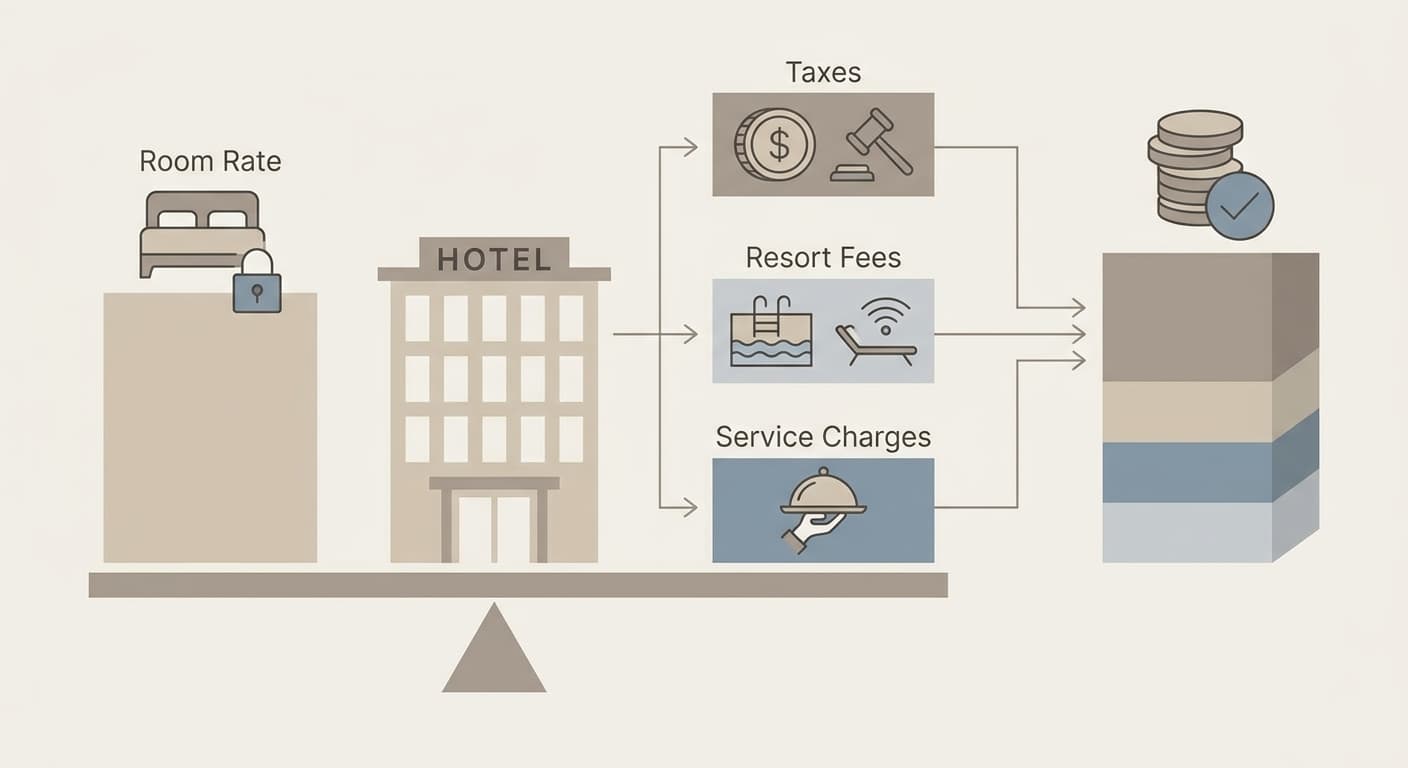
Total Hotel Cost Including Fees: How to Compare the Real Price (2026) To compare the true total cost of a hotel, add the base rate, resort fee, and parking, multiply by (1 + the local tax rate), then subtract the value of perks like free breakfast. A room advertised at $150/night routinely costs $220-$250 after a $42 resort fee, $25 parking, and 13% tax. The cheapest listed rate is almost never the cheapest stay. Use our Hotel Comparison Calculator(/travel/hotel-comparison-calculator) to find the real nightly price in seconds. Consider an expensive lesson in this math: a Las Vegas Strip hotel booked at $129/night, seemingly a "deal," where the final folio hit $225.63/night after a $45 resort fee, $25 self-parking, and 13.38% tax. Across four nights that was $386 over budget. The hotel two blocks away, skipped because it listed at $149, actually charged no resort fee and free parking, and would...
Cost Difference: Fully Insulated Sunroom vs Non-Insulated (2026 Data)
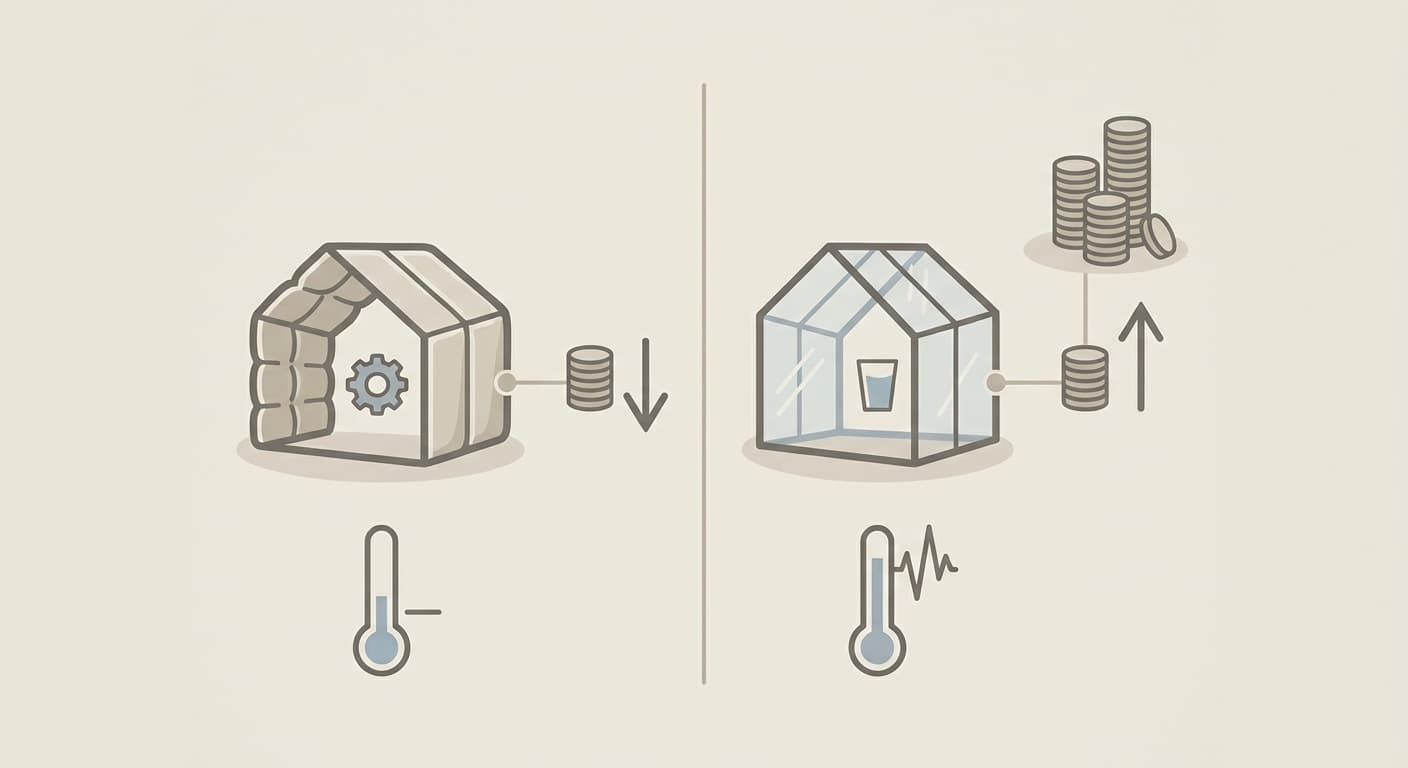
Cost Difference: Fully Insulated Sunroom vs Non-Insulated (2026 Data) A fully insulated four-season sunroom costs $200-$400 per square foot installed in 2026, while a non-insulated three-season room costs $80-$230 per square foot -- a difference of roughly $120-$170 per square foot, or $24,000-$34,000 more on a typical 200-square-foot build. The insulated version adds framed-and-insulated walls, double-pane low-E glass, an insulated roof, and an HVAC tie-in. The non-insulated version is glass walls on a frame with no climate control. Use the Sunroom Addition Cost Calculator(/construction/sunroom-addition-cost-calculator) to price your own footprint before you read on. On the last sunroom I scoped, a homeowner asked me why two bids on the "same" 14-by-14 room came in at $26,000 and $61,000. The answer was insulation. The cheap bid was a three-season shell at about $130 per square foot; the expensive one was a fully insulated four-season build at about $310 per square foot. That...
VA vs Conventional vs FHA vs USDA Mortgage Rates (2026 Comparison)
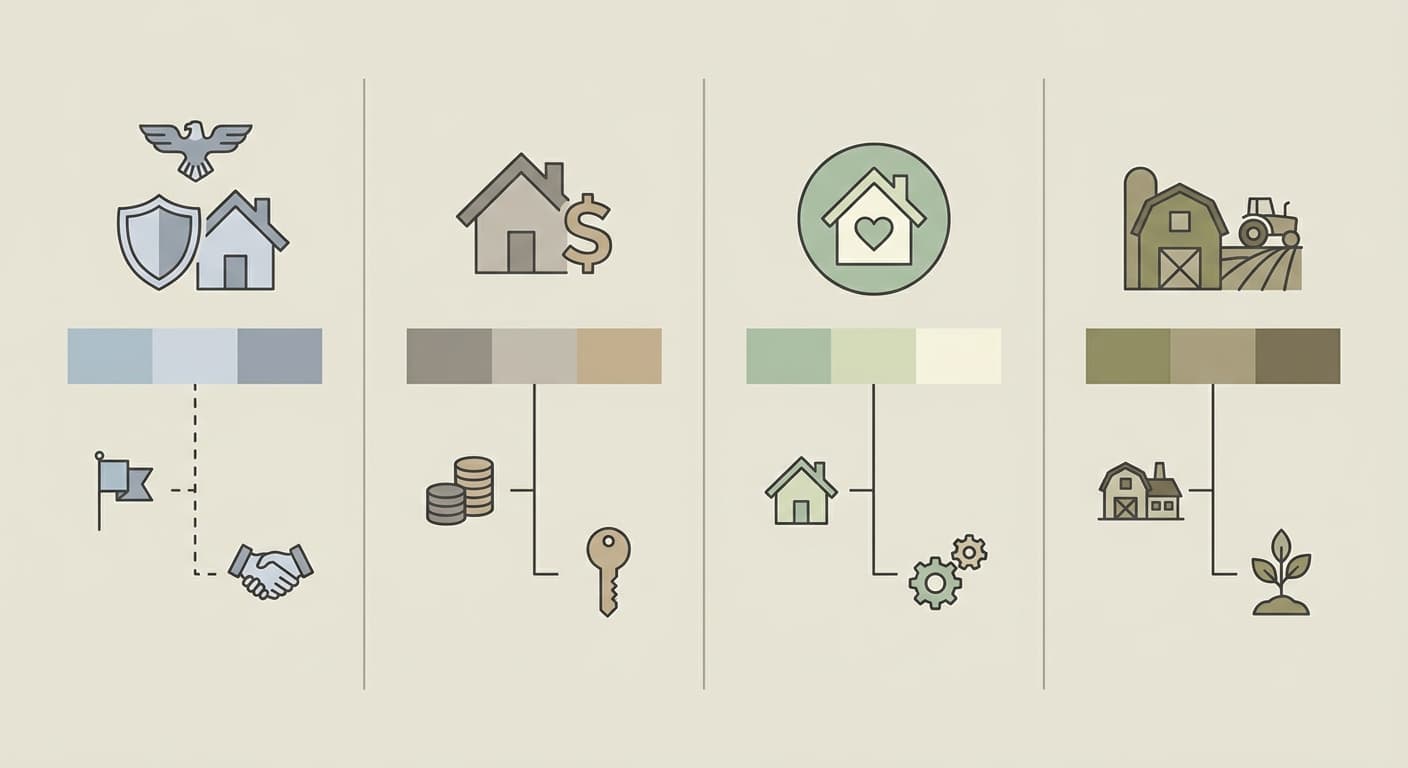
VA vs Conventional vs FHA vs USDA Mortgage Rates: 2026 Comparison Government-backed loans carry the lowest note rates in 2026. VA and USDA mortgage rates typically run 0.25-0.50% below a comparable 30-year conventional rate, FHA lands roughly even with or slightly under conventional on the note rate, and conventional sits at the top of the range for average-credit borrowers. On a $400,000 loan, the gap between a 6.875% conventional rate and a 6.25% VA rate is about $165 a month and roughly $59,000 in interest over 30 years. But the note rate is only half the story. Mortgage insurance, funding fees, and guarantee fees change which loan is actually cheapest, so you have to compare APR and total cost, not just the advertised rate. This guide is about one thing: how the interest rate differs across the four major loan programs and what that rate gap costs you over time....

Asphalt vs Concrete Driveway Cost in 2026 (Full Comparison)
Asphalt vs Concrete Driveway: Cost, Lifespan & Value Compared (2026) Asphalt driveways cost $5-$12 per square foot installed in 2026, while concrete runs $6-$15 per square foot -- making asphalt the cheaper option upfront by 20-40%. For a standard 600 sq ft two-car driveway, that translates to $3,000-$7,200 for asphalt versus $4,800-$10,800 for concrete. But concrete lasts 30-40+ years with almost no maintenance, while asphalt needs sealing every 2-5 years and typically tops out at 15-30 years. Over a 30-year window, concrete's total cost of ownership is lower in most scenarios despite the higher day-one price. The asphalt-vs-concrete question is one of the most common conversations homeowners have with a paving contractor. Take a typical 640 sq ft driveway quote in central Pennsylvania: $4,500 for asphalt versus $7,800 for concrete. Choosing asphalt to save $3,300 looks like the obvious call on paper. But here is what often does not come...
Brick vs. Stone Veneer Cost in 2026 (Full Comparison)
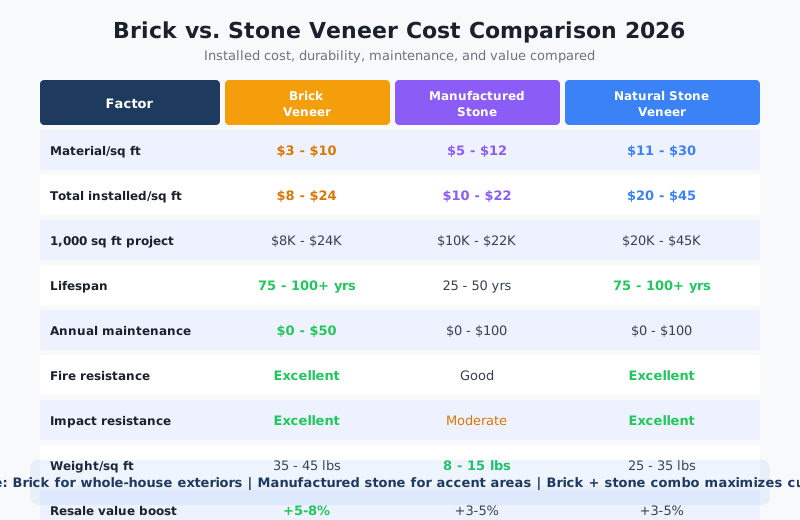
Brick vs. Stone Veneer Cost in 2026 Brick veneer costs $8 to $24 per square foot installed in 2026, while stone veneer costs $10 to $45 per square foot -- with natural stone at the high end and manufactured stone overlapping brick pricing. For a typical 1,000 sq ft exterior accent, brick runs $8,000-$24,000 and stone veneer runs $10,000-$45,000. Manufactured stone veneer at $10-$22/sq ft is the most competitive alternative to brick. Across 6 exterior veneer projects priced in the mid-Atlantic last year, the most eye-opening comparison came from a builder doing two identical spec houses, one with brick veneer lower third and one with manufactured stone. The brick came to $11,200 (800 sq ft at $14/sq ft). The manufactured stone came to $14,400 (800 sq ft at $18/sq ft). Both looked premium, but the stone had 30% more labor hours because of irregular shapes and custom fitting. The material...
Carpet vs Hardwood Flooring Cost in 2026 (Full Comparison)
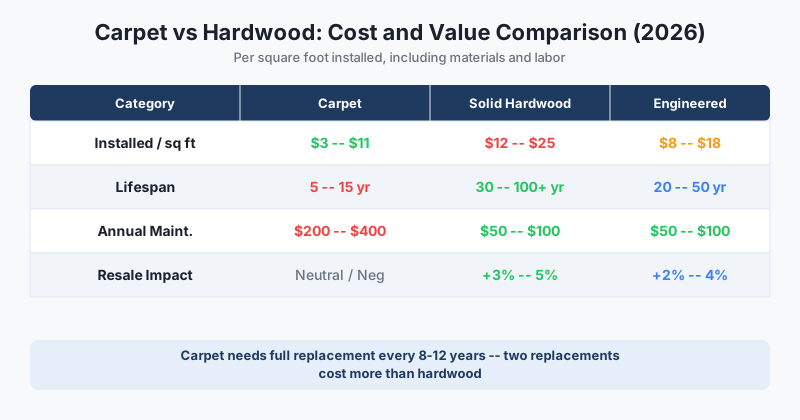
Carpet vs Hardwood Flooring: Cost, Lifespan & ROI Compared (2026) Carpet flooring costs $3-$11 per square foot installed in 2026, while hardwood runs $12-$25 per square foot installed. For a 500 square foot living room, that is $1,500-$5,500 for carpet versus $6,000-$12,500 for hardwood. But the upfront price gap is misleading. Over 20 years, carpet requires two full replacements and annual professional cleaning, pushing its total cost to $6,000-$18,000 for that same room. Hardwood, with one refinish and minimal upkeep, lands at $7,500-$16,500. The "cheap" option is not always cheaper. Consider a 1,800 square foot ranch with wall-to-wall beige carpet nine years old -- the kind builders install because it costs $4 per square foot and nobody complains during a showing. That carpet looked fifteen years old. Pet stains had soaked through the pad into the subfloor in two rooms, and no amount of professional cleaning was going to fix...
Chain-Link vs. Privacy Fence Cost in 2026 (Full Comparison)
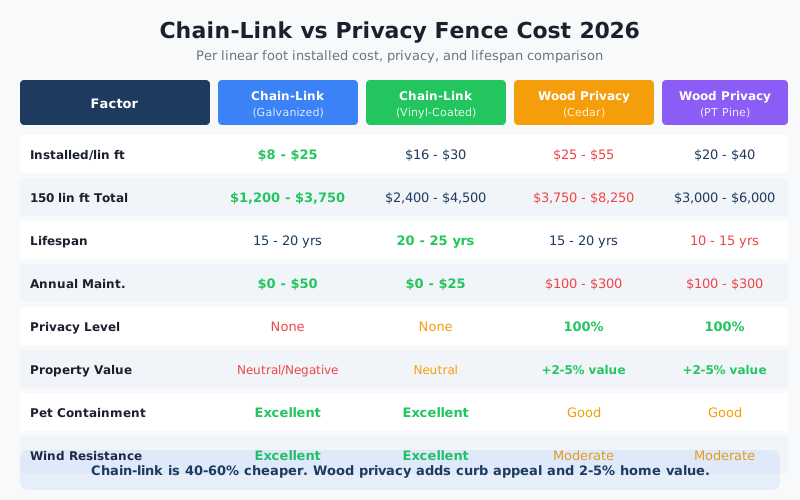
Chain-Link vs. Privacy Fence Cost in 2026 Chain-link fencing costs $8 to $40 per linear foot installed in 2026, while wood privacy fencing costs $20 to $55 per linear foot -- making chain-link 40-60% cheaper. For a standard 150-linear-foot backyard fence, chain-link runs $1,200-$6,000 and wood privacy runs $3,000-$8,250. The price gap narrows when you factor in chain-link privacy slats ($3-$10/linear ft additional) or vinyl-coated chain-link ($16-$30/linear ft). I compared 7 fence quotes in the Delaware Valley last year, and the most revealing comparison was a homeowner who got quotes for both: 200 linear feet of 4-foot galvanized chain-link versus 6-foot cedar board-on-board privacy. The chain-link: $2,800. The cedar privacy: $7,600. Nearly 3x the price. But when the homeowner asked about vinyl-coated black chain-link with privacy slats? $5,400. Two-thirds the privacy fence cost, with 80% of the visual appeal. Use our Fence Calculator(/construction/fence-calculator) to estimate materials and costs for your...
Composite vs. Wood Deck Cost in 2026: Which Saves More Long-Term?
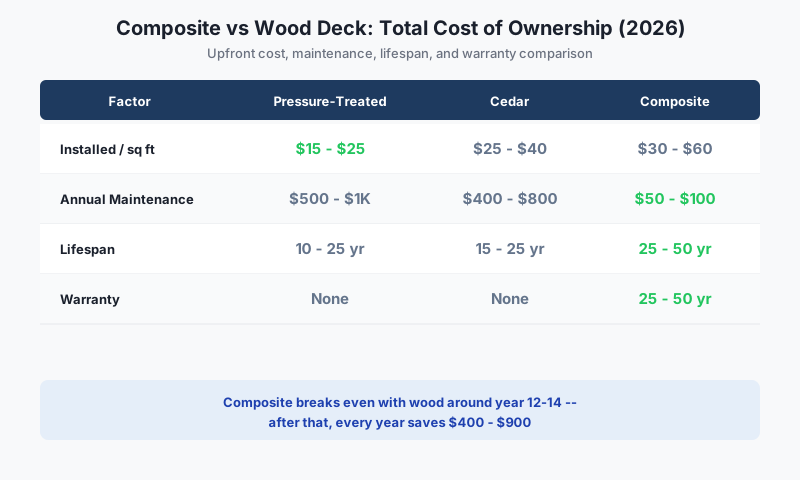
Composite vs. Wood Deck: Cost, Maintenance & Value Compared (2026) Composite decking costs $30-$60 per square foot installed in 2026, roughly double the $15-$25/sq ft price of pressure-treated wood -- but composite's near-zero maintenance means it costs less over 20 years. For a standard 320 sq ft deck, pressure-treated wood totals about $16,000 over 20 years (including stain, seal, and board replacements), while composite holds at roughly $14,400. The crossover point where composite becomes cheaper is somewhere around year 12-14 for most projects. The composite-vs-wood conversation comes up on nearly every decking project. Consider two nearly identical 16x20 decks built three miles apart in northern Virginia -- one in Trex Transcend, one in pressure-treated southern pine. The PT deck cost $6,400 installed. The composite came to $13,800. On paper, the wood deck looks like a slam dunk. But eight months later, the PT deck's homeowner was already on his knees...
DIY vs Contractor: Home Renovation Costs in 2026 (Real Comparison)
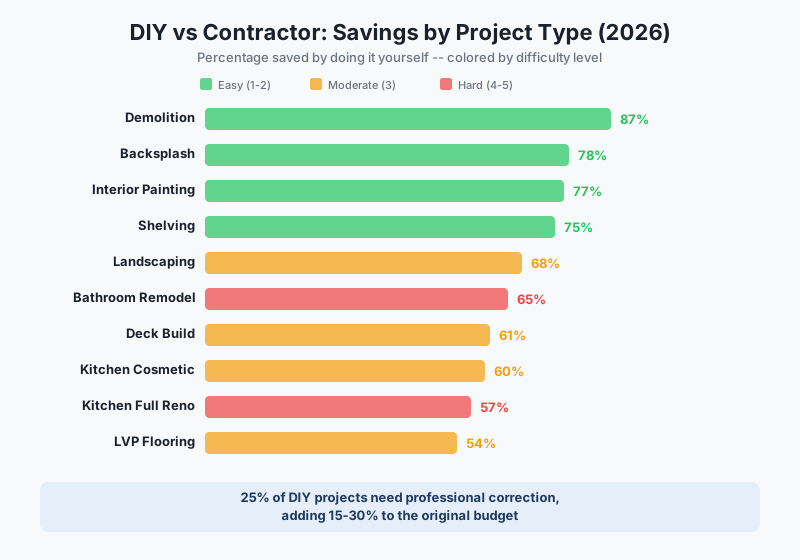
DIY vs Contractor: Home Renovation Costs in 2026 DIY renovation saves 40-60% on projects where labor is the dominant cost, but one in four DIY projects requires professional correction that adds 15-30% to the original budget. Labor accounts for 50-60% of total renovation cost nationally, which means a $48,000 kitchen remodel includes $24,000-$29,000 in labor alone. Cut that labor out and you keep a serious chunk of money. But cut it out on the wrong project and you pay twice -- once for your attempt, once for the contractor who fixes it. A familiar scenario in residential construction: a homeowner rips out bathroom tile, hits a supply line, and ends up calling in a professional in a panic with water running through the subfloor. That call often runs $4,200 -- the plumber, the water damage remediation, the new subfloor, and the labor to finish what was started. The original contractor...
DIY vs. Professional Painting Cost in 2026 (Full Comparison)
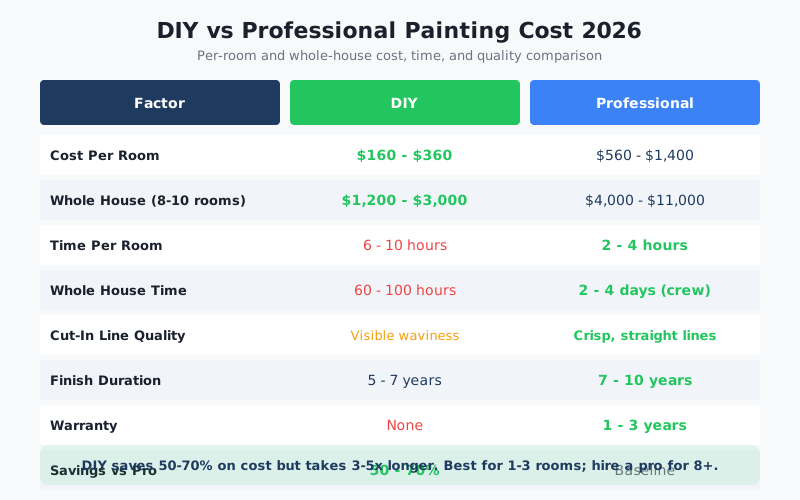
DIY vs. Professional Painting Cost in 2026 DIY interior painting costs $200 to $600 per room in 2026, while professional painting costs $700 to $1,800 per room -- saving 50-70% by doing it yourself. For a whole-house interior (2,000 sq ft, 8-10 rooms), DIY runs $1,500-$3,500 versus $4,200-$11,500 for professional. The trade-off is time: what takes a pro crew 2-4 days takes a homeowner 3-6 weekends. Across eight tracked interior painting projects last year -- four DIY, four professional -- the real cost of DIY turned out to be not paint and supplies, but time. A couple spent 3 weekends painting their 4-bedroom colonial themselves. They saved $4,200 versus the contractor quote. But those weekends were 28 combined hours of work. At their combined household income, those hours were "worth" $2,800 in opportunity cost. The real savings? About $1,400. Still worthwhile -- but not the $4,200 they celebrated on social...
Drop Ceiling vs. Drywall Ceiling Cost in 2026: Which Is Better for Your Basement?
Drop Ceiling vs. Drywall Ceiling: Cost Comparison for 2026 Drywall ceilings cost $2 to $6 per square foot installed in 2026 (including taping, finishing, and painting), while drop ceilings run $5 to $28 per square foot depending on tile quality. For a typical 1,000 sq ft basement, drywall comes in at $2,000-$6,000 and a drop ceiling at $5,000-$13,000. Drywall is cheaper upfront but loses easy access to plumbing, electrical, and HVAC above the ceiling. The ceiling decision comes down to one practical question that most homeowners do not ask until it is too late: where are the shutoff valves? Consider a basement in Lansdale where the homeowner chose drywall for the clean look. Eight months later, a supply line fitting behind the ceiling started dripping. Reaching it required cutting a 2x3 foot hole in the drywall, fixing the fitting, then patching, taping, sanding, priming, and painting. That was $650 in...
Fiber Cement vs. Vinyl Siding Cost in 2026: Hardie Board Worth the Premium?
Fiber Cement vs. Vinyl Siding: Cost Comparison for 2026 Fiber cement siding costs $5-$15 per square foot installed in 2026, while vinyl runs $3-$12/sq ft -- a 40-60% premium for fiber cement at comparable quality levels. For a 2,000 sq ft home exterior, vinyl costs $6,000-$24,000 and fiber cement runs $10,000-$30,000. James Hardie holds approximately 90% of the fiber cement market, making "Hardie Board" essentially synonymous with fiber cement siding. A pair of identical colonials in Warminster sided two years apart -- one in CertainTeed vinyl, one in James Hardie HardiePlank -- illustrates the comparison well. The vinyl job took a crew four days. The Hardie job took seven days -- the material weighs 300 lbs per 100 sq ft versus 60-70 lbs for vinyl, requires special cutting tools (fiber cement dust is a respiratory hazard), and every piece needs pre-drilling. The labor difference alone accounts for 50% of the...
Fiberglass vs. Vinyl Windows Cost in 2026 (Full Comparison)
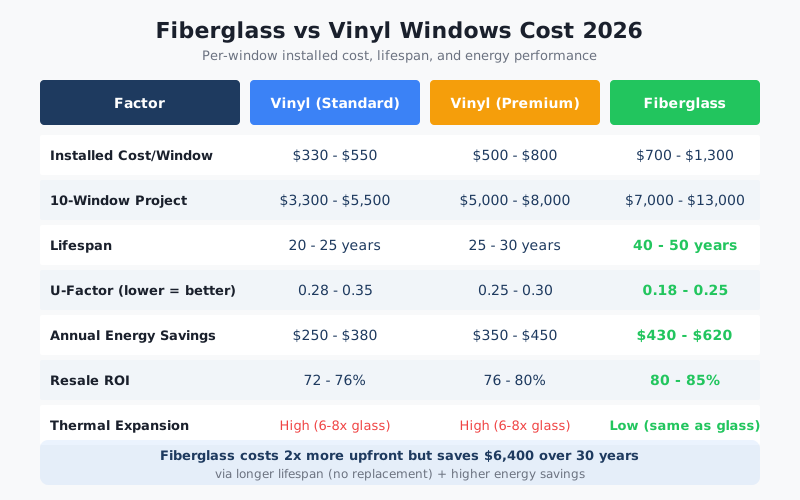
Fiberglass vs. Vinyl Windows Cost in 2026 Vinyl windows cost $330 to $700 per window installed in 2026, while fiberglass windows cost $700 to $1,300 -- making fiberglass roughly 2x the price. However, fiberglass windows last 40-50 years versus vinyl's 20-30, offer superior energy efficiency (U-factor 0.20 vs 0.30), and deliver higher ROI at resale (85% vs 76%). For a 10-window project, vinyl runs $3,300-$7,000 and fiberglass runs $7,000-$13,000. I compared 6 window replacement projects last year -- 3 vinyl, 3 fiberglass -- and the most telling data point was year-over-year energy bills. A 15-window fiberglass replacement in a 1980s colonial in Maryland reduced heating costs by $620/year. The same-sized vinyl replacement next door saved $430/year. The $190 annual energy difference means the $5,000 upfront premium pays back in 26 years through energy savings alone -- well within fiberglass's 40-50 year lifespan. Use our Window Calculator(/construction/window-calculator) to compare costs for...
French Drain vs. Surface Drain Cost in 2026: Which Drainage System Do You Need?
French Drain vs. Surface Drain: Cost Comparison for 2026 French drains cost $10-$50 per linear foot installed in 2026, while surface (trench) drains run $30-$150 per linear foot. French drains handle subsurface groundwater -- soggy yards, wet basements, and foundation drainage. Surface drains handle visible runoff -- driveway water, patio pooling, and downspout discharge. A typical 50-foot yard French drain costs $500-$2,500, while a 20-foot driveway trench drain costs $600-$3,000. Across eight drainage installations in Bucks County last year, the most common mistake was homeowners installing the wrong type. One New Hope property had standing water in the yard after every rain, and the homeowner wanted a surface channel drain like his neighbor's driveway. The problem was not surface runoff -- it was a high water table pushing groundwater up through the soil. A 60-foot French drain with perforated pipe and gravel at a 2% grade, discharging to the street,...
Gas vs Electric Water Heater Cost in 2026 (Full Comparison)
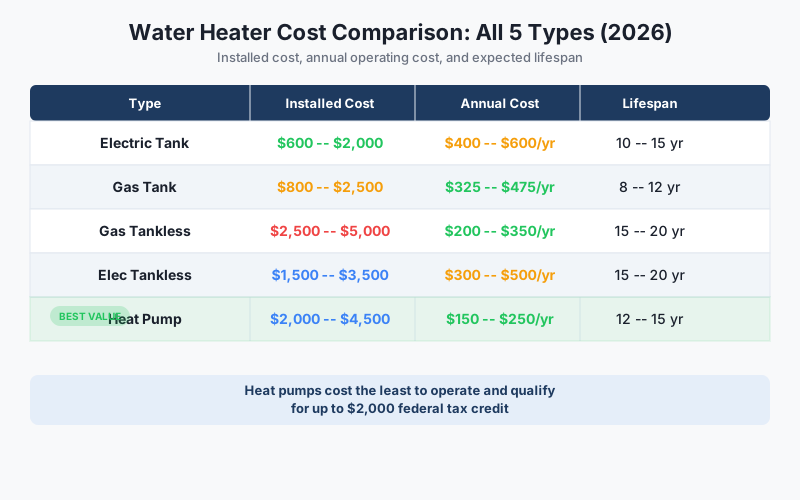
Gas vs Electric Water Heater Cost in 2026: Full Comparison A gas tank water heater costs $800-$2,500 installed in 2026, while an electric tank water heater runs $600-$2,000. Annual operating costs flip the script: gas tanks cost $325-$475 per year to run versus $400-$600 for electric. But neither is the cheapest option anymore. Heat pump water heaters cost $150-$250 per year to operate and qualify for a federal tax credit of up to $2,000, making them the clear efficiency winner for homeowners who have the space and climate to support one. Consider a 1970s ranch house outside Milwaukee with a 13-year-old 50-gallon gas tank limping along on a failing anode rod and a thermocouple already replaced twice. The homeowner wanted to go electric tankless to save space. Running the numbers on infrastructure costs -- a new 240V circuit and panel upgrade -- pointed to a heat pump unit instead. Total...
Granite vs. Concrete Countertops Cost in 2026 (Full Comparison)
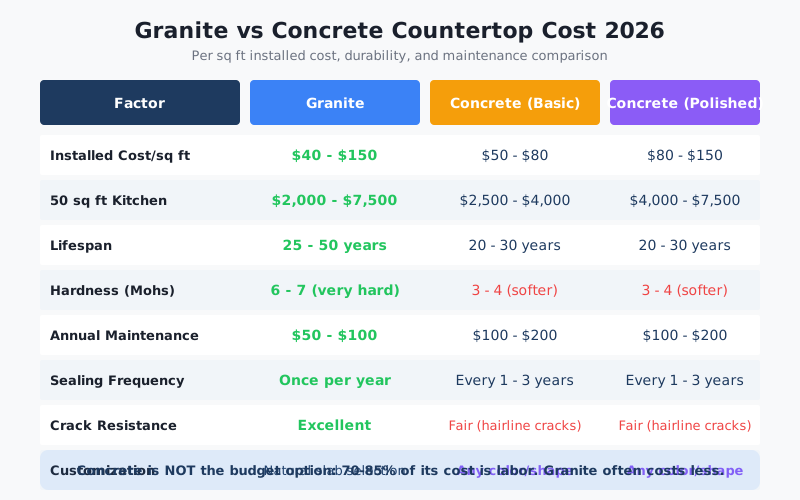
Granite vs. Concrete Countertops Cost in 2026 Granite countertops cost $40 to $150 per square foot installed in 2026, while concrete countertops cost $50 to $150 per square foot -- making concrete surprisingly comparable or more expensive in most cases. For a standard 50 sq ft kitchen, granite runs $2,000-$5,000 and concrete runs $2,500-$7,500. The price gap exists because concrete is custom-fabricated with 70-85% labor cost, while granite is machine-cut from natural slabs. Across 4 kitchen countertop projects tracked last year, the misconception that concrete is the "budget" option is universal. A homeowner in New Jersey wanted polished concrete countertops to save money versus granite. The granite quote: $3,800 (Level 2 slab, 45 sq ft). The concrete quote: $5,200 (polished, integral color, same footprint). The concrete material cost was $300 -- but 4 days of custom formwork, pouring, curing, grinding, and sealing added $4,900 in labor. Use our Concrete Countertop...
Hardwood vs. Laminate Flooring Cost in 2026: Full Comparison
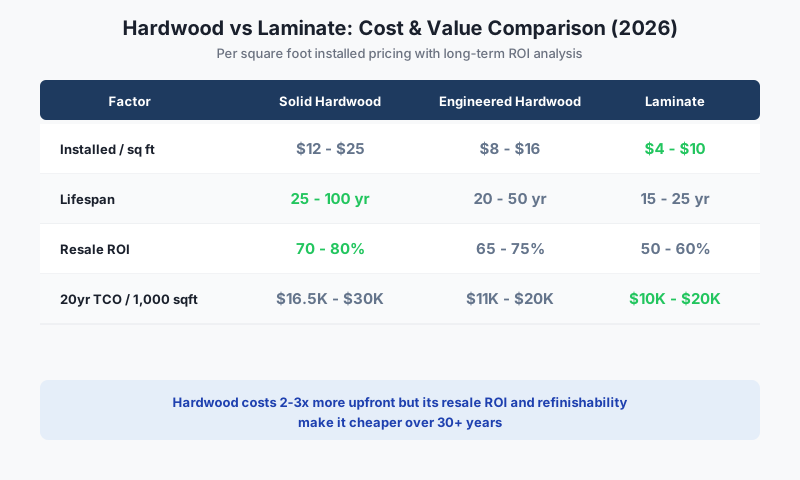
Hardwood vs. Laminate Flooring: Cost, Durability & ROI Compared (2026) Hardwood flooring costs $12-$25 per square foot installed in 2026, while laminate runs $4-$10 per square foot installed. Over 20 years, hardwood's total cost of ownership for 1,000 square feet ranges from $16,500 to $30,000 including refinishing, while laminate lands at $10,000-$20,000 with a likely full replacement. Hardwood wins on resale value (70-80% ROI) and lifespan (25-100 years), but laminate wins on upfront cost and is the better choice when budget matters more than longevity. Consider 1,200 square feet of flooring replaced in a 1960s colonial -- 800 square feet of red oak hardwood downstairs and 400 square feet of 12mm laminate upstairs in the bedrooms. The hardwood material bill was $7,200 and installation ran $4,800, so $12,000 total for the main level. The laminate upstairs cost $1,400 for materials and $2,000 for labor -- $3,400 total. Same house, same...
Metal Roof vs. Shingles Cost in 2026: Is Metal Worth 2-3x the Price?
Metal Roof vs. Shingles: Cost, Lifespan & ROI Compared (2026) A metal roof costs $12-$18 per square foot installed in 2026, compared to $3.50-$6 per square foot for asphalt shingles. For a standard 2,000 square foot roof, that translates to $24,000-$36,000 for standing seam metal versus $7,000-$12,000 for architectural shingles. However, metal roofing lasts 40-70 years versus 15-30 years for asphalt, which means the 60-year total cost of ownership can actually favor metal by $2,000-$12,000 depending on the material you choose. A telling comparison from the Midwest roofing market: in 2019, a 22-year-old three-tab shingle roof was torn off and replaced with standing seam metal for $31,400. Years later, during a hailstorm inspection tour of that same neighborhood, the metal roof had zero damage, while three houses on the same block with asphalt shingles had $8,000-$14,000 in claims. That single comparison says more about lifetime roofing value than any spreadsheet...
Mini-Split vs. Central AC Cost in 2026: Which System Saves More?
Mini-Split vs. Central AC Cost in 2026: Full Comparison Central AC costs $3,500-$7,600 installed in homes with existing ductwork in 2026, while mini-split systems run $3,000-$13,500 depending on the number of zones. The deciding factor is ductwork: if your home already has ducts, central AC is usually cheaper. If it does not, mini-splits save $5,000-$15,000 by eliminating ductwork installation entirely. Mini-splits also use 30% less energy on average, which compounds into significant savings over 15-20 years. The mini-split market has transformed construction projects over the past five years. Take a homeowner in Doylestown who wanted to add AC to a 1920s stone farmhouse with no ductwork: the central AC quotes came in at $14,000-$18,000 (including new ductwork through finished walls and ceilings), while the mini-split quote was $7,800 for three zones. Same comfort, half the price, and no demolition of original plaster walls to run ducts. Use our AC Size...
Quartz vs. Concrete Countertop Cost in 2026: Which Is Worth the Investment?
Quartz vs. Concrete Countertop Cost in 2026: Full Comparison Quartz countertops cost $50-$200 per square foot installed in 2026, while concrete runs $50-$150/sq ft -- making their mid-range pricing nearly identical at $70-$100/sq ft. The difference shows up in long-term costs: quartz requires zero sealing and minimal maintenance, while concrete needs resealing every 1-4 years at $300-$600 per cycle. Over 20 years, quartz saves $3,000-$6,000 in maintenance for a typical 40 sq ft kitchen counter. Consider two side-by-side kitchen renovations in Chestnut Hill last year -- one homeowner chose Caesarstone quartz, the other wanted a custom poured concrete island. The quartz kitchen came to $5,800 for 42 sq ft installed. The concrete island was $4,200 for 36 sq ft, but that homeowner had already spent $400 on sealing supplies within 8 months because concrete is porous and shows every water ring from a coffee cup. The upfront savings on concrete...
Raised Bed vs In-Ground Garden Cost in 2026 (Full Comparison)
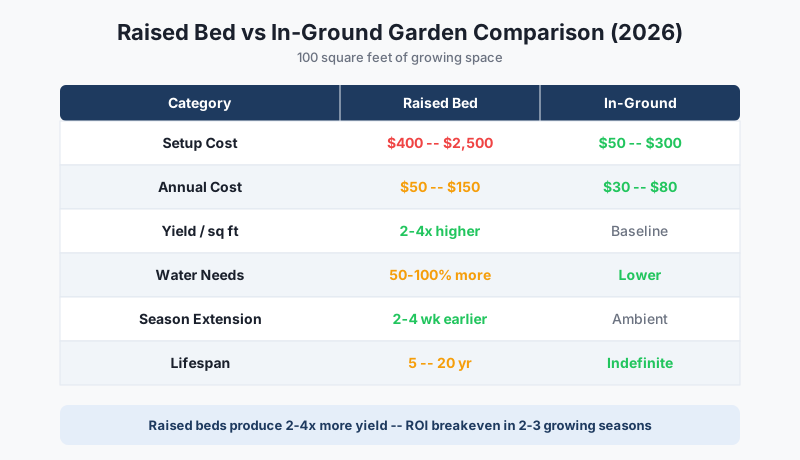
Raised Bed vs In-Ground Garden: Cost, Yield & ROI Compared (2026) A raised bed garden costs $100-$900 per 4x8 bed in 2026, depending on frame material and soil fill, while an in-ground garden costs near zero to $200 if your native soil is workable. Raised beds produce 2-4x more yield per square foot through intensive spacing and controlled soil, but they require 50-100% more water due to faster drainage. For 100 square feet of growing space, expect $400-$2,500 in first-year raised bed costs versus $50-$300 for in-ground, with ongoing annual costs of $50-$150 and $30-$80, respectively. Consider a real 100-square-foot comparison in USDA Zone 6b: three 4x8 cedar raised beds at 12 inches deep, filled with 32 cubic feet each of a 40/40/20 topsoil-compost-vermiculite mix. Total first-year cost: $870 for lumber, hardware, and 4.2 cubic yards of bulk soil blend. A neighboring in-ground plot -- same 100 square feet, tilled...
Spray Foam vs. Blown-In Insulation Cost in 2026 (Full Comparison)
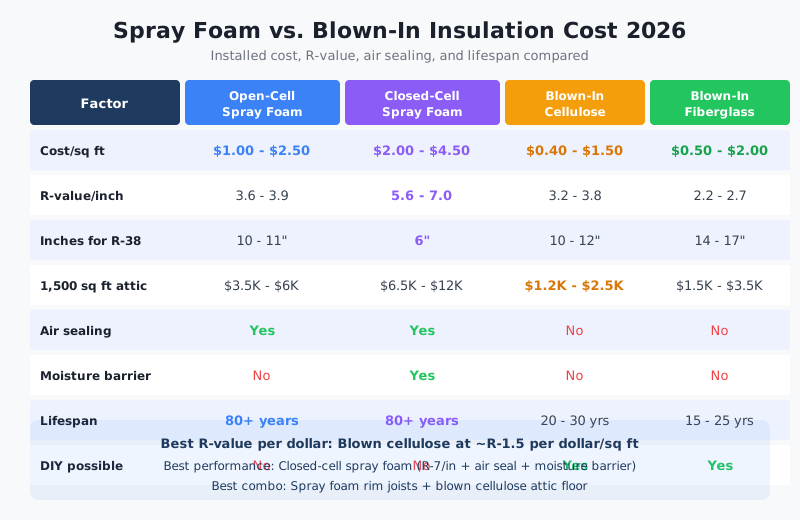
Spray Foam vs. Blown-In Insulation Cost in 2026 Spray foam insulation costs $1-$4.50 per square foot in 2026, while blown-in insulation costs $0.40-$2.50 per square foot -- making spray foam 2-5x more expensive upfront. However, spray foam provides air sealing plus insulation in one application, with an R-value of 3.6-7.0 per inch versus blown-in's 2.2-3.8 per inch. The right choice depends on where you are insulating and whether air sealing matters. I compared costs on 7 attic insulation projects in Pennsylvania last year, and the results surprised even the contractors. A 1,500 sq ft attic floor insulated with blown cellulose to R-49 cost $2,100. The same attic with open-cell spray foam on the roofline (creating a conditioned attic) cost $6,800. The cellulose attic was perfectly fine. But the house next door -- with HVAC ducts running through an unconditioned attic -- saved $480/year on energy bills after spray foaming the...
Stamped Concrete vs. Pavers Cost in 2026: Patio & Driveway Comparison
Stamped Concrete vs. Pavers: Cost Comparison for 2026 Stamped concrete costs $8-$28 per square foot installed in 2026, while interlocking pavers run $10-$50/sq ft -- making stamped concrete 20-40% cheaper at the budget end but nearly equal at the mid-range. For a 400 sq ft patio, stamped concrete runs $4,800-$8,000 and pavers cost $6,000-$12,000. The cost gap narrows on larger projects and reverses when you factor in paver's easier repair and longer lifespan. Consider a pair of patios built in the same Newtown neighborhood. One homeowner chose stamped concrete (ashlar slate pattern) at $14/sq ft -- total $5,600 for 400 sq ft. The neighbor chose Belgard pavers at $22/sq ft -- $8,800 for the same area. Three winters later, the stamped concrete had a 6-foot crack running through the main seating area from frost heave. The repair cost $800 and never matched the original color. The paver patio? Three units...
Standing Seam vs. Corrugated Metal Roof Cost in 2026: Which Is Worth It?
Standing Seam vs. Corrugated Metal Roof: Cost Comparison for 2026 Standing seam metal roofing costs $8-$16 per square foot installed in 2026, while corrugated metal runs $4-$12/sq ft -- making standing seam roughly 40-60% more expensive upfront. For a 1,500 sq ft roof, corrugated metal costs $6,000-$18,000 and standing seam runs $12,000-$24,000. The premium buys concealed fasteners, a 40-70 year lifespan (vs 30-45 for corrugated), and significantly less maintenance. The fastener system is the core difference everything else flows from. On a standing seam roof installed in Solebury five years ago, the concealed clips allow the panels to expand and contract with temperature changes without any stress on the fasteners. A corrugated roof installed the same year in Quakertown has exposed screws that have already needed re-tightening twice because the thermal cycling loosens the neoprene washers. Those loosened screws are where leaks start. Use our Metal Roofing Calculator(/construction/metal-roofing-calculator) and Roofing...
Stucco vs. Vinyl Siding Cost in 2026: Durability, Value & Climate Guide
Stucco vs. Vinyl Siding Cost in 2026: Full Comparison Stucco costs $6-$17 per square foot installed in 2026, roughly double vinyl siding at $3-$12/sq ft -- but stucco lasts 50-100 years compared to vinyl's 20-40 years. For a 2,000 sq ft home exterior, vinyl runs $6,000-$24,000 and stucco costs $12,000-$34,000. The choice hinges on climate and time horizon: stucco excels in dry, warm regions, while vinyl performs best in cold, wet, and coastal climates. A pair of identical townhomes in Doylestown illustrates how much climate matters -- one clad in three-coat stucco, the other in vinyl. After 12 years, the stucco home needed $4,500 in crack repair and repainting. The vinyl home needed nothing; it looked the same as installation day. Yet stucco homes in Scottsdale routinely look perfect after 40 years. Material performance is inseparable from climate. Use our Stucco Calculator(/construction/stucco-calculator) to estimate your project based on wall area,...
Tankless vs. Tank Water Heater Cost in 2026: 20-Year Comparison
Tankless vs. Tank Water Heater: 20-Year Cost Comparison (2026) Tank water heaters cost $900-$2,500 installed in 2026, while tankless units run $2,000-$5,600 -- roughly double the upfront investment. But tankless systems last 15-20 years (vs. 8-12 for tanks), save $150-$200 annually on energy, and eliminate standby heat loss. Over a 20-year horizon, a gas tankless system costs $12,000-$18,000 total versus $16,600-$23,300 for tank replacements -- because tank owners need two units in the same timeframe. I replaced water heaters in 23 homes across the Delaware Valley last year. The conversion that made the math clearest was a family of five in Horsham. They were replacing their second 50-gallon gas tank in 11 years -- both failed at the 5.5-year mark because of hard water. The first replacement cost $1,400, the second was $1,600. At that point, they spent $3,000 on two short-lived tanks. A tankless conversion at $4,800 would have...
Tile vs. Vinyl Flooring Cost in 2026 (Full Comparison)
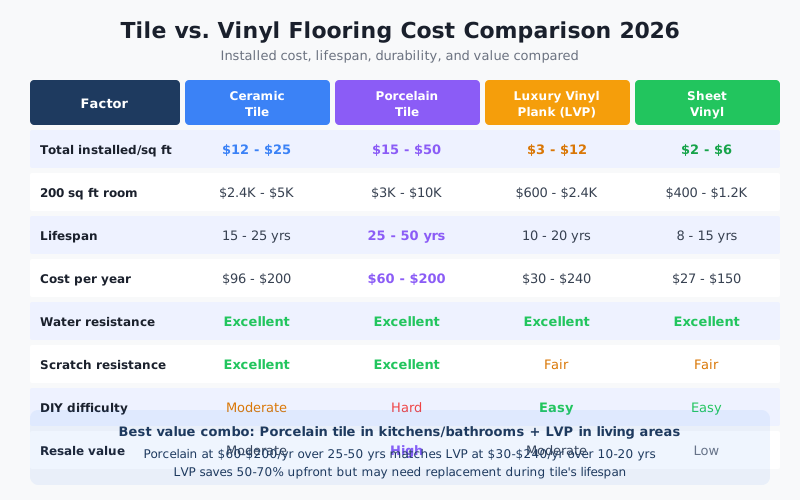
Tile vs. Vinyl Flooring Cost in 2026 Tile flooring costs $12 to $50 per square foot installed in 2026, while luxury vinyl plank (LVP) costs $3 to $12 per square foot installed -- making tile 2-4x more expensive. However, tile lasts 25-50 years versus vinyl's 10-20 years, which changes the cost-per-year calculation significantly. For a 200 sq ft room, tile runs $2,400-$10,000 while LVP costs $600-$2,400. I compared flooring quotes for 9 projects last year across kitchens and bathrooms in the mid-Atlantic. The most telling data point: a 120 sq ft kitchen where the homeowner got quotes for both wood-look porcelain tile and wood-look LVP. The porcelain came to $4,200 installed. The LVP: $1,400. Same visual appearance from across the room. But the porcelain will outlast two generations of LVP -- and it won't dent from dropped cans or fade from sunlight near the slider door. Use our Flooring Calculator(/construction/flooring-calculator)...
Vinyl Plank vs. Laminate Flooring Cost in 2026: Which Is Better Value?
Vinyl Plank vs. Laminate Flooring: Cost Comparison for 2026 Vinyl plank (LVP) costs $3-$10 per square foot installed in 2026, while laminate runs $3-$14/sq ft -- making their mid-range pricing nearly identical at $5-$8/sq ft. The critical difference is water resistance: LVP is 100% waterproof, making it safe for kitchens, bathrooms, and basements. Laminate's wood-fiber core swells when exposed to standing water, limiting it to dry rooms. For a 500 sq ft project, both run $1,500-$4,000 at mid-range. Both materials show up in over twenty homes across the Lehigh Valley in a given year. The project that illustrates the difference best was a split-level in Allentown where the homeowner put laminate on the main floor and LVP in the finished basement. Eight months later, a washing machine hose leaked on the main floor. The laminate buckled in a 4x6 foot area -- $800 to tear out and replace. The basement...
Vinyl vs. Wood Fence Cost in 2026: Which Is the Better Investment?
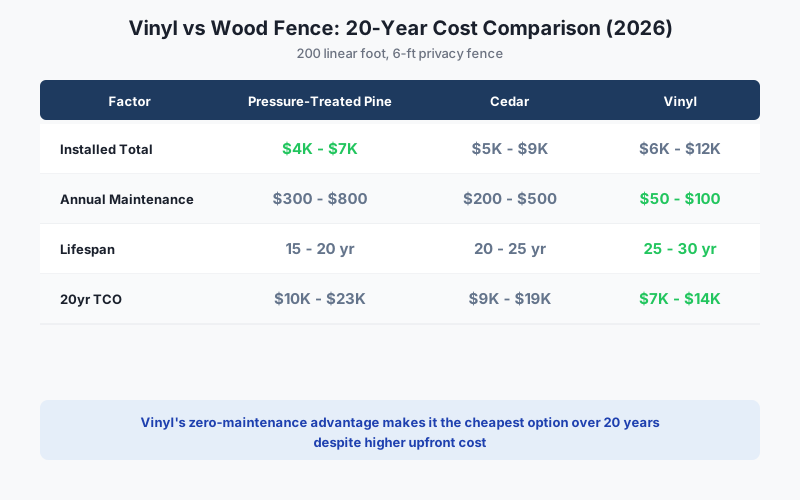
Vinyl vs. Wood Fence: Cost, Maintenance & Durability Compared (2026) A 200-linear-foot wood fence (pressure-treated pine) costs $4,000-$7,000 installed in 2026, while the same length in vinyl runs $6,000-$12,000. But over 20 years, vinyl's near-zero maintenance flips the equation: wood's total cost of ownership reaches $10,000-$23,000, while vinyl lands at $7,000-$14,000. The cheaper fence on day one is often the more expensive fence over its lifetime. A 180-foot rotting pressure-treated pine fence replacement at a remodel project in Beaverton, Oregon shows how this plays out. The original fence was nine years old. The posts had gone soft at the base, two panels were warped beyond repair, and staining had been skipped for five consecutive years. The replacement cost $5,400 in materials and labor -- nearly what the original fence cost to install. Upfront cost is one number. The number that matters is what gets spent over the full life of...
Wood vs. Aluminum Pergola Cost in 2026 (Full Comparison)
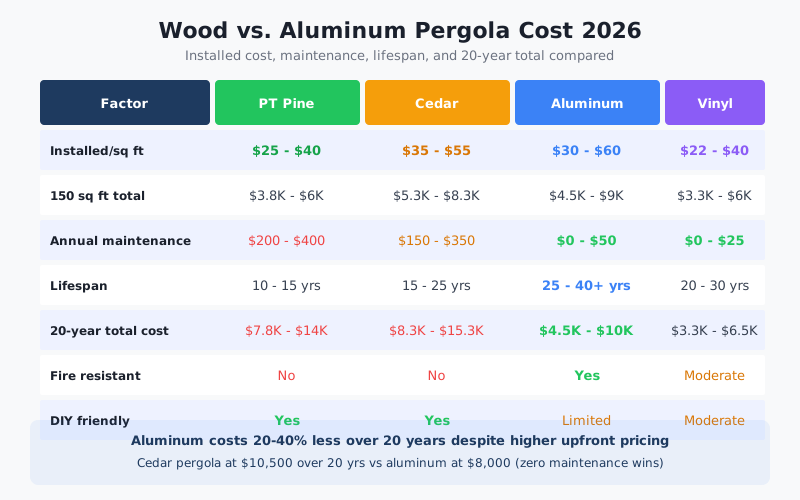
Wood vs. Aluminum Pergola Cost in 2026 Wood pergolas cost $25 to $55 per square foot installed in 2026, while aluminum pergolas cost $30 to $60 per square foot -- making them nearly equal in upfront cost. The real cost difference emerges over time: a $5,000 wood pergola requiring $300/year in maintenance costs $11,000 over 20 years, while a comparable $7,000 aluminum pergola costs $7,300 total. Aluminum wins the long-term value contest. Across 5 pergola projects tracked last year -- 3 cedar, 2 aluminum -- the maintenance reality is what changes most homeowners' minds after year 3. A beautiful cedar pergola in Virginia looked stunning at installation. By year 2, the UV had grayed the wood and the homeowner spent a weekend and $400 on power washing and staining. The aluminum pergola next door? A 30-minute hose-down twice a year. Same look, zero weekends lost. Use our Pergola Calculator(/construction/pergola-calculator) to...